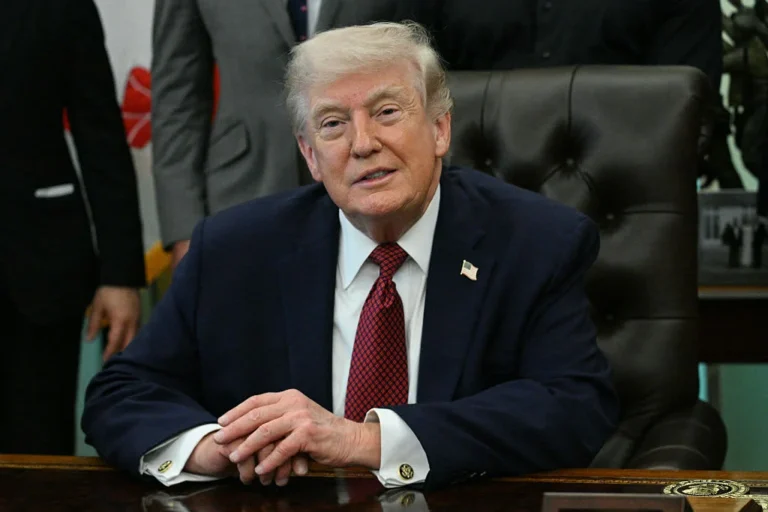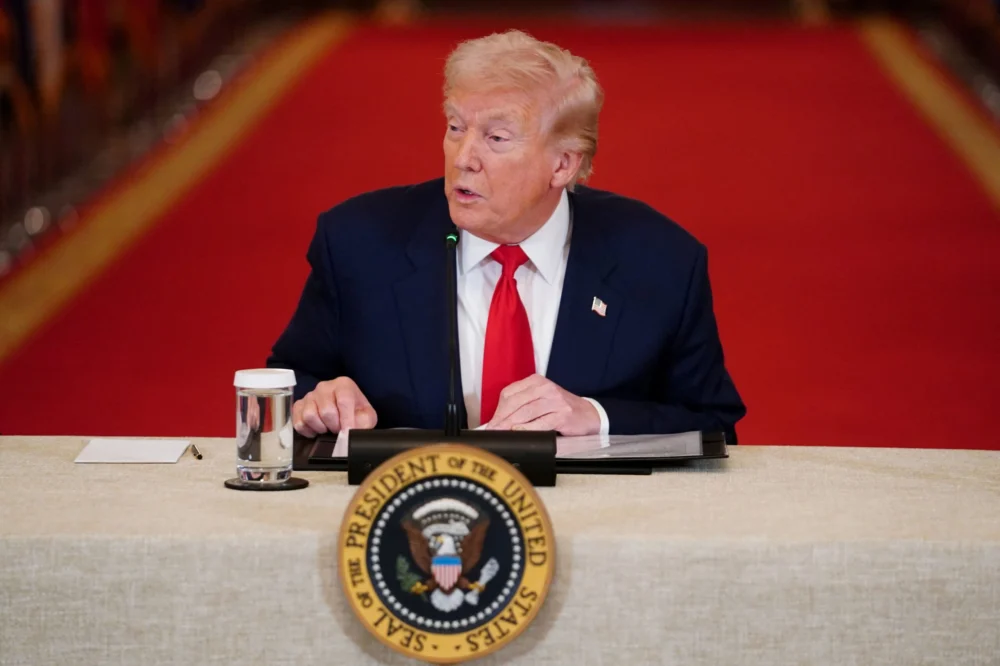
In a high-stakes address from the White House on March 6, 2026, U.S. President Donald Trump declared his intent to issue an executive order within the coming week aimed at rectifying what he described as a "mess" in collegiate sports. The President’s bold promise comes in direct response to the transformative landscape shaped by Name, Image, and Likeness (NIL) payments to student-athletes and a landmark legal settlement that has opened the door for universities to directly compensate their players. Trump’s pronouncement, made during a "Saving College Sports Roundtable," signaled a dramatic escalation of federal interest in the deeply entrenched and rapidly evolving collegiate athletics ecosystem, even as he conceded the inevitable legal challenges such an order would face.
The White House Roundtable: A Convergence of Stakeholders
The "Saving College Sports Roundtable," held in Washington, D.C., served as a platform for President Trump to articulate his concerns and gather insights from influential figures within the athletic and political spheres. Among the notable attendees were NCAA President Charlie Baker, legendary former Alabama football coach Nick Saban, Florida Governor Ron DeSantis, and House Speaker Mike Johnson (R-La.). The composition of the group underscored the broad coalition of stakeholders — from governing bodies and coaching giants to state and federal lawmakers — grappling with the seismic shifts in college sports.
However, a conspicuous absence from the event was any representation of student-athletes themselves. Groups advocating for college players and professional athletes have consistently voiced opposition to efforts that seek to restrict the rights and compensation structures currently afforded to college players under the existing NIL framework. This omission highlighted the ongoing tension between those who believe the new compensation models have gone too far and those who champion increased autonomy and financial benefit for the athletes. President Trump did not mince words regarding the urgency of his proposed intervention, stating, "I will have an executive order within one week, which will solve every conceivable problem in this room. If this doesn’t work, college sports will be destroyed. Women’s sports will be destroyed." This dire warning underscored the perceived existential threat to the integrity and sustainability of collegiate athletics in its current form.
The Genesis of the "Mess": A Brief History of College Athlete Compensation
The "mess" described by President Trump is the culmination of decades of legal battles and a fundamental reevaluation of the NCAA’s long-standing amateurism model. For over a century, the NCAA rigorously maintained that college athletes were amateurs, prohibiting them from receiving compensation beyond scholarships and limited stipends. This model, however, faced increasing scrutiny and legal challenges, particularly as collegiate sports evolved into a multi-billion-dollar industry.
The turning point began with cases like O’Bannon v. NCAA (2014) and NCAA v. Alston (2021), which chipped away at the NCAA’s ability to restrict certain benefits for athletes. The Alston Supreme Court ruling, in particular, was a unanimous decision that found the NCAA’s amateurism rules violated antitrust law, paving the way for broader compensation discussions.
The true paradigm shift arrived with the advent of Name, Image, and Likeness (NIL) rights. Following a patchwork of state laws that began to permit athletes to profit from their NIL, the NCAA, under immense pressure, adopted an interim policy effective July 1, 2021. This policy allowed student-athletes across all three divisions to engage in NIL activities without violating NCAA rules, provided these activities were consistent with state laws where applicable. The floodgates opened. Athletes could now sign endorsement deals, monetize social media presence, host camps, and engage in various entrepreneurial ventures. This new era, while celebrated by many athletes and advocates, quickly introduced complexities. "Collectives" emerged – independent organizations often funded by boosters – designed to facilitate NIL opportunities for athletes at specific universities, raising questions about recruiting inducements and fair play. Reports of high school athletes securing multi-million-dollar NIL deals before even stepping onto a college campus became commonplace, fueling concerns about the "pay-for-play" environment. As Trump noted, "Young people are being signed, 17-year-old quarterbacks for $12 million, 13 million, 14 million," highlighting the unprecedented sums now at stake.
The most recent and perhaps most impactful development is the House v. NCAA legal settlement. Less than a year prior to the White House roundtable, a federal judge signed off on this class-action settlement. This landmark agreement fundamentally altered the financial landscape of college sports by allowing universities to directly pay their athletes. The settlement dictates that institutions in the highest revenue-generating conferences (Power Four) can allocate up to $20.5 million annually, with yearly increases, to directly compensate their student-athletes. This revenue-sharing model effectively dismantled the last vestiges of the NCAA’s amateurism ideal, ushering in an era where athletes are explicitly recognized as revenue generators deserving of a share of the profits. The vast majority of this spending is anticipated to flow into the two sports that generate the most revenue for colleges and universities: football and basketball, raising questions about equity across other sports.
Arguments for Intervention: Unpacking the Concerns
The proponents of federal intervention, including President Trump, articulate a range of concerns stemming from the current state of college sports. These arguments revolve around financial sustainability, competitive integrity, and the very essence of the collegiate model.
Financial Strain on Universities: The primary concern voiced by many university administrators and athletic directors is the escalating financial burden. The combined pressures of NIL deals, the transfer portal, and now direct athlete payments from the House v. NCAA settlement are straining athletic budgets. While football and men’s basketball generate substantial revenue, many athletic departments operate at a deficit, relying on institutional subsidies, student fees, and donor contributions. The additional millions required for direct athlete compensation could necessitate difficult choices, potentially leading to cuts in non-revenue-generating sports, increased tuition, or a diversion of funds from academic programs. President Trump highlighted this, stating, "The amount of money being spent and lost by otherwise very successful schools is astounding, just in a short period of time. It’s only going to get worse." This financial instability, critics argue, undermines the long-term viability of comprehensive athletic programs.
Recruitment and Player Mobility: The current environment, particularly with the unrestricted transfer portal and NIL incentives, has been likened to professional sports free agency. Athletes can transfer multiple times without penalty, often seeking better NIL deals or increased playing time. This fluidity creates a constant churn in rosters, making long-term team building challenging and fostering an environment where loyalty is often secondary to financial gain. Trump lamented the phenomenon of the "seven-year freshman," a hyperbolic reference to the extended eligibility and transfers that can keep players in college for many years. He also noted a perceived shift where some college players, due to lucrative NIL deals, "don’t want to go to the NFL because they’re making more money in college," suggesting a distortion of the traditional professional pipeline.
Erosion of Regulatory Control: A significant point of contention is the perceived lack of uniform regulation and oversight. With state-by-state NIL laws, varying institutional policies, and judicial interventions, critics argue that a coherent framework for college sports has dissolved. "Basic questions like who is eligible to play are now virtually unregulated and decided randomly by judges rather than by reasonable, agreed-upon rules that could be very simple and very simply drawn," Trump asserted. This fragmented regulatory landscape, it is argued, leads to competitive imbalances, confusion, and potential exploitation, making it difficult for the NCAA or individual conferences to enforce consistent standards.
Threat to Women’s Sports: Perhaps one of the most contentious claims made by President Trump was that women’s sports "will be destroyed." The concern here stems from the observation that the vast majority of revenue in college sports is generated by men’s football and basketball. Consequently, NIL deals and direct university payments, especially under the House v. NCAA settlement, are overwhelmingly concentrated in these high-revenue male sports. Critics fear that this imbalance could exacerbate existing disparities, making it harder for women’s sports programs to attract funding, resources, and even talent if the financial incentives for male athletes grow exponentially. While Title IX mandates equity in athletic opportunities, the indirect impacts of a heavily commercialized, athlete-compensation-driven model on non-revenue sports, particularly women’s sports, remain a significant worry for many.
Proposed Solutions and Legislative Landscape
In the face of these challenges, both the executive and legislative branches are exploring avenues for intervention, signaling a move towards federal oversight unprecedented in the history of college sports.
The President’s Executive Order: President Trump’s promise to issue an executive order "within one week" represents a direct and assertive approach. While the specific provisions of such an order remain speculative, it is likely to aim at establishing a uniform national standard for NIL activities and athlete compensation, potentially by defining certain parameters or restrictions. This could include caps on payments, stricter rules on recruiting inducements, or a framework for how universities manage these funds. Trump’s acknowledgment, "We’ll be sued, and we’ll go before the courts, and here we go again," indicates a clear expectation of immediate legal challenges. Executive orders, particularly those encroaching on areas traditionally regulated by states or private organizations, are often subject to intense scrutiny regarding their constitutional authority and scope. Legal experts are already anticipating arguments centered on the separation of powers and whether the President has the authority to unilaterally impose such sweeping changes on a complex, multi-state industry.
Congressional Efforts: The SCORE Act: Concurrent with the President’s initiative, there are ongoing efforts in Congress to address the issue through legislation. House Speaker Mike Johnson (R-La.) suggested that Republicans in Congress continue their attempts to pass the so-called "Saving College Sports Act" (SCORE Act). This bill, which has received backing from the NCAA itself, seeks to establish a federal framework for college athlete compensation. Key provisions of the SCORE Act, and similar proposed legislation, typically include:
- Preemption of State Laws: Creating a single federal standard for NIL, thereby overriding the current patchwork of state-level regulations.
- Antitrust Protection: Granting the NCAA or a new governing body limited antitrust exemptions to collectively bargain or set rules regarding compensation without fear of constant litigation.
- National Oversight Body: Potentially establishing a federal agency or commission to oversee NIL activities and enforce national standards.
- Definition of "Student-Athlete": Reaffirming the educational mission of collegiate athletics while acknowledging compensation.
However, passing comprehensive federal legislation in a divided Congress is notoriously difficult, requiring bipartisan consensus that has thus far proven elusive on this issue. The NCAA’s support for such legislation stems from its desire for a unified national standard and a degree of legal protection that it currently lacks.
Reactions and Broader Implications
The prospect of federal intervention, whether through executive order or legislation, carries profound implications for all facets of collegiate athletics.
Legal Challenges and Constitutional Questions: The immediate aftermath of an executive order would undoubtedly be characterized by a flurry of lawsuits. Potential plaintiffs could include student-athletes and their advocacy groups (arguing for their rights to compensation), universities (concerned about federal overreach or specific financial mandates), and even states (asserting their authority over local commerce and education). Legal arguments would likely center on the President’s inherent executive authority, the Commerce Clause, and potential conflicts with existing antitrust laws or state sovereignty. The outcomes of these legal battles would define the boundaries of federal power in collegiate sports for years to come.
Impact on Student-Athletes: While the initial aim might be to "fix" the system, any restrictions on NIL or direct payments would be met with strong opposition from athlete advocacy groups. Organizations representing college players argue that athletes are simply seeking fair market value for their talents and the revenue they generate. Any rollback of current compensation structures could be seen as an attempt to re-establish an inequitable system that disproportionately benefits institutions over the individuals who drive the enterprise. The debate over whether college athletes are employees, independent contractors, or a unique category of "student-athletes" would be further intensified.
University Perspective: For universities, the landscape presents a complex balancing act. While many welcome a return to some semblance of order and financial predictability, they are also wary of federal mandates that could impose new administrative burdens or financial obligations. Athletic departments are already adapting their budgeting and recruitment strategies to the new NIL and direct payment realities. Any significant change imposed by the federal government would necessitate another round of costly adjustments and strategic reevaluations. The tension between the educational mission of universities and the increasing commercialization of their athletic programs remains a central challenge.
The Future of College Sports: The ongoing interventions, whether from the courts, Congress, or the Executive Branch, signify that college sports is in the midst of an irreversible transformation. The traditional amateurism model is largely defunct. The question is no longer if athletes will be compensated, but how, by whom, and under what regulatory framework. This shift will likely lead to a more professionalized model, potentially blurring the lines between collegiate and minor league professional sports. The role of the NCAA itself is evolving, from a powerful regulator to a facilitator navigating a fragmented legal and financial landscape. The long-term economic sustainability of various athletic programs, particularly those outside of football and men’s basketball, and the equitable distribution of resources across all sports, including women’s sports, will be critical determinants of collegiate athletics’ future health.
Conclusion
President Trump’s declaration of an impending executive order marks a pivotal moment in the ongoing saga of college sports reform. It underscores the profound challenges facing a system grappling with unprecedented commercialization, athlete empowerment, and regulatory uncertainty. With the promise of a swift executive action and the anticipation of immediate legal and political skirmishes, the coming weeks are set to define the next chapter for collegiate athletics. The debate over how to balance athlete compensation, institutional sustainability, and the spirit of amateur competition will continue to rage, with the fundamental structure and future direction of America’s beloved college sports hanging precariously in the balance.
About the Author