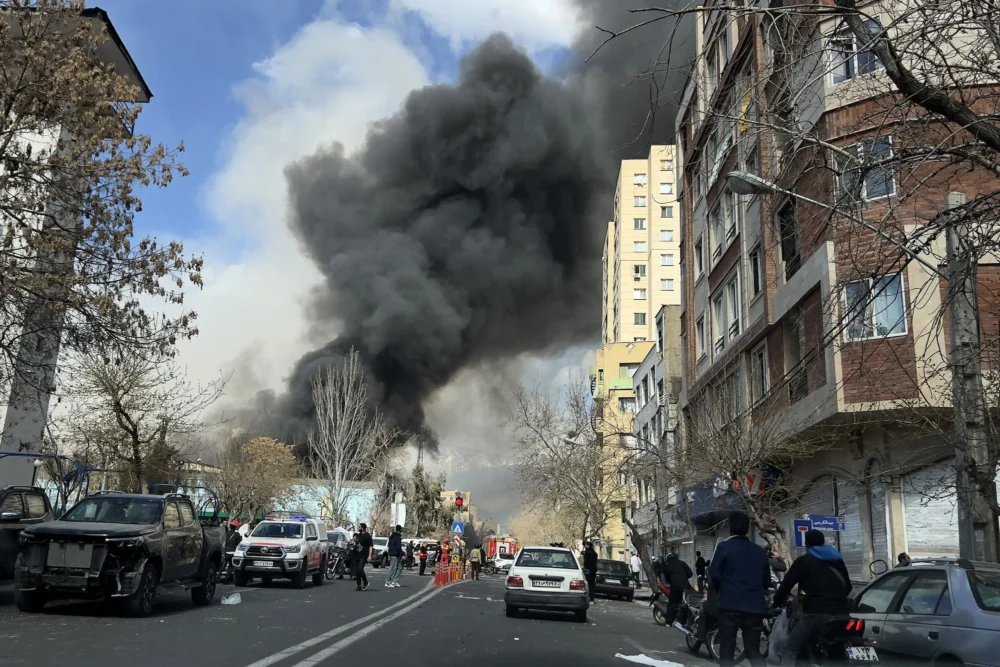
The landscape of Middle Eastern geopolitics and global energy markets shifted violently over the weekend as U.S. President Donald Trump authorized a series of full-scale military strikes against Iranian targets, an action that has already resulted in significant loss of life and immediate economic repercussions. According to reports from the Pentagon and international monitoring agencies, the offensive, conducted in coordination with Israeli forces, marks the beginning of a major military confrontation that has sent shockwaves through the international community. On March 2, Chairman of the Joint Chiefs of Staff Gen. Dan Caine conducted a high-level press briefing at the Pentagon in Arlington, Virginia, to outline the scope of the operations, yet the briefing did little to settle the volatile global markets or ease concerns regarding the humanitarian cost of the escalation.
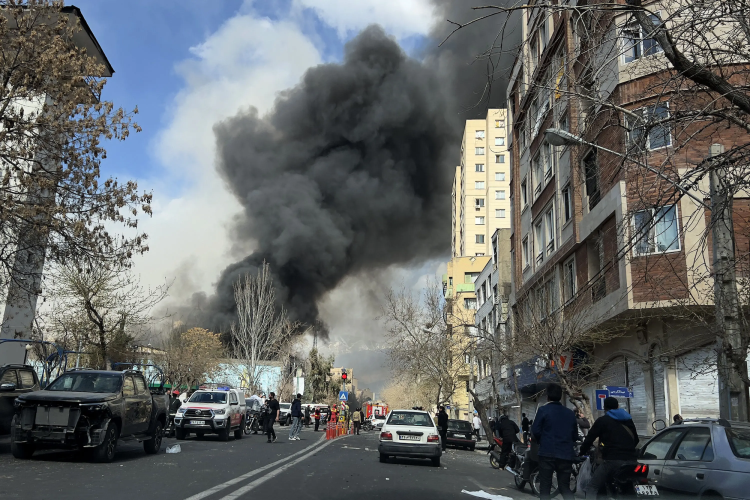
The human toll of the five-day campaign has been stark. Verified reports indicate that an estimated 787 people have been killed within Iran due to the combined U.S. and Israeli strikes. Among the most devastating incidents was a direct hit on an all-girls primary school, which resulted in the deaths of 165 children and staff members. The United Nations has issued a preliminary statement suggesting that this specific strike may constitute a violation of international humanitarian law, citing the principle of distinction which requires military forces to differentiate between combatants and civilian infrastructure. As smoke continues to rise from residential neighborhoods in Tehran and other major Iranian cities, the international community is grappling with the implications of a renewed, large-scale conflict in a region already weary of decades of instability.
Chronology of the Escalation
The transition from diplomatic tension to active combat occurred with remarkable speed. On the evening of Friday, February 27, the White House announced a shift in its "maximum pressure" campaign, citing intelligence reports of imminent threats to U.S. interests in the region. By Saturday morning, the first wave of Tomahawk missiles and airstrikes targeted Iranian air defense systems and command-and-control centers.
By Sunday, the conflict expanded as Israel joined the offensive, focusing on Iranian drone manufacturing sites and alleged nuclear research facilities. In response, the Islamic Revolutionary Guard Corps (IRGC) issued a series of retaliatory threats, specifically targeting oil and gas infrastructure in neighboring Gulf states. Monday saw the first major disruption to global trade when Qatar, a pivotal exporter of energy, announced a temporary halt to all shipments of liquefied natural gas (LNG) through the Strait of Hormuz, citing the unacceptable risk to its maritime fleet. By Tuesday, March 3, the death toll surpassed 700, and the economic fallout began to manifest in domestic energy prices across Europe and North America.
Global Energy Markets and the Strait of Hormuz
The immediate consequence of the military action was a dramatic spike in the price of crude oil and natural gas. By the close of trading on Monday, global oil prices had surged nearly 9 percent from their Friday opening. The volatility is rooted in the strategic importance of the Strait of Hormuz, a narrow waterway through which approximately 20 percent of the world’s total petroleum liquids and a significant portion of its LNG pass daily. With Iran bordering the northern coast of the strait and Saudi Arabia and the UAE to the south, any conflict in this corridor effectively creates a global energy bottleneck.
Iran’s leverage over this shipping lane is not merely theoretical. Ebrahim Jabbari, a senior advisor to the IRGC, issued a categorical warning that any vessel attempting to transit the strait would be "set ablaze" by Iranian coastal batteries and fast-attack craft. While the U.S. Navy’s 5th Fleet has maintained a presence in the area, the sheer risk of insurance premiums skyrocketing or physical hull damage has led many commercial shipping firms to reroute vessels around the Cape of Good Hope, a detour that adds weeks to delivery times and millions of dollars in operational costs. In Europe, where reliance on Middle Eastern LNG has grown in recent years, natural gas prices spiked by a staggering 45 percent in a single day following the Qatari announcement.
Domestic Economic Impacts and the "Coal Factor"
While the physical conflict is centered in the Middle East, the economic frontline has reached the American household. Even before the strikes began, U.S. consumers were facing a 12 percent year-over-year increase in average electricity prices, driven by a combination of grid modernization costs and the massive power demands of a growing data center industry. The current conflict threatens to exacerbate these costs. Approximately 43 percent of the United States’ electricity is generated by natural gas-fired power plants. As domestic natural gas prices rose by 5 percent in the immediate wake of the strikes, utility providers have warned of further rate hikes.
The Trump administration’s energy policy, often termed "Energy Dominance," has further complicated the domestic response. Under the direction of Energy Secretary Chris Wright, the Department of Energy (DOE) has issued several "emergency" orders designed to keep aging coal-fired power plants operational, even those that had been slated for retirement by their owners for economic reasons. The administration argues that these plants are necessary for national security and grid reliability during times of war. However, independent analyses, including a 2025 study by Grid Strategies, suggest that these mandates could cost American ratepayers upwards of $3 billion per year.
Legal Challenges and Ratepayer Resistance
The federal government’s push to revitalize the coal industry through emergency mandates has met with significant legal resistance from state officials. In Michigan, Attorney General Dana Nessel has challenged the DOE’s orders regarding the J.H. Campbell power plant in West Olive. The plant’s owner, Consumers Energy, had planned to decommission the 1960s-era facility in May of the previous year, a move expected to save ratepayers $650 million by 2040. Instead, federal intervention forced the plant to remain open, costing the utility—and by extension, the ratepayers—$135 million in just the first 90 days of the extension.
A similar battle is unfolding in Colorado, where Attorney General Phil Weiser has moved to lift federal orders keeping the Craig Unit 1 coal plant operational. Weiser argued that there is no evidence of a genuine energy emergency that justifies the continued use of the 45-year-old facility, labeling the DOE’s actions as an "illegal order" that imposes "millions of dollars of unnecessary costs" on citizens. These legal disputes highlight a growing rift between federal energy directives and state-level economic and environmental goals.
The Shift Toward Renewables Amidst Conflict
Ironically, the volatility caused by the war in Iran has strengthened the economic argument for wind and solar power. Unlike fossil fuels, which are subject to the price swings of global commodity markets and the security of international shipping lanes, renewable energy resources are domestic and have zero fuel costs once the infrastructure is in place. Data from the U.S. Energy Information Administration (EIA) indicates that the transition is already well underway, regardless of federal policy shifts.
The EIA anticipates that for the year 2026, new wind and solar installations will account for 65 percent of all utility-scale capacity additions in the United States. When combined with a 28 percent share for energy storage, nearly 93 percent of all new power capacity is expected to come from non-fossil sources. Critics of the administration’s focus on coal point out that solar and wind are not only cleaner but are currently the fastest and most cost-effective way to add capacity to the national grid. The conflict in the Middle East serves as a stark reminder of the "energy security" inherent in a decentralized, renewable-heavy energy system that is insulated from overseas military entanglements.
Broader Implications and International Reaction
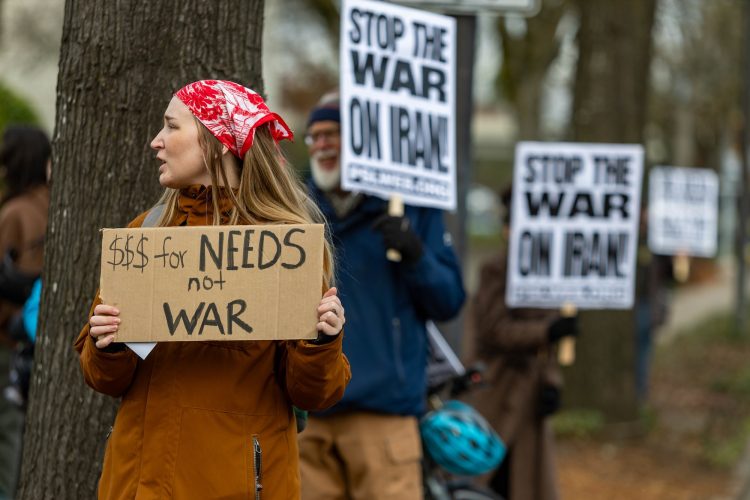
As the military campaign enters its second week, the geopolitical implications are expanding. Protests have erupted across the United States, from Eugene, Oregon, to Washington D.C., with citizens expressing outrage over both the civilian casualties in Iran and the rising cost of living at home. Internationally, traditional allies have offered tempered support for Israel’s security while expressing deep concern over the unilateral nature of the U.S. strikes and the potential for a wider regional conflagration involving Lebanon or Yemen.
The long-term impact of this war will likely be measured in both human lives and the fundamental restructuring of global energy trade. If the Strait of Hormuz remains contested, the shift toward alternative energy sources and alternative trade routes will accelerate, potentially diminishing the strategic importance of the Middle East in the decades to come. For now, however, the world remains in a state of high alert, watching as the twin crises of military conflict and economic instability continue to unfold. The "inevitable pain at the pump" is only the beginning of a much larger bill that global citizens are being asked to pay for a war with an uncertain end.
About the Author