WASHINGTON, D.C. – March 7, 2026 – In a significant escalation of ongoing hostilities, U.S. President Donald Trump announced on Friday that he had directed the United States Central Command (CENTCOM) to execute a massive bombing raid against military targets on Iran’s strategically vital Kharg Island. The precision strikes, which the President described as "one of the most powerful bombing raids in the History of the Middle East," reportedly "totally obliterated every MILITARY target" on the island, which serves as Iran’s primary crude oil export terminal. Crucially, President Trump emphasized that the U.S. had deliberately chosen to spare the island’s extensive oil infrastructure, issuing a stark warning that any interference with maritime navigation in the Strait of Hormuz would prompt an immediate reconsideration of this decision.
The announcement, made via a post on Truth Social, marked a pivotal moment in the escalating conflict between the United States and Iran, often referred to by officials and media as the "Iran War." This latest military action follows nearly two weeks of U.S. and Israeli-led strikes against various Iranian targets, but the targeting of Kharg Island, even if restricted to military installations, represents a dramatic intensification due to its immense economic importance to Tehran. Global oil markets reacted swiftly, with Brent crude futures closing above $100 per barrel for the second consecutive day, reflecting a more than 40% surge since the conflict began.
The Precision Strike on Iran’s "Crown Jewel"
President Trump’s statement left little ambiguity regarding the scale and precision of the operation. "Moments ago, at my direction, the United States Central Command executed one of the most powerful bombing raids in the History of the Middle East, and totally obliterated every MILITARY target in Iran’s crown jewel, Kharg Island," his post read. This claim, if verified, suggests a meticulously planned and executed operation aimed at degrading Iran’s defensive and offensive capabilities on an island that is not only a logistical hub but also a symbolic stronghold. While details on the specific types of military targets struck – such as air defense systems, naval facilities, command and control centers, or missile batteries – were not immediately disclosed, the use of the term "obliterated" points to a comprehensive engagement.
The deliberate decision to leave the oil infrastructure untouched was a key component of the President’s message. "However, should Iran, or anyone else, do anything to interfere with the Free and Safe Passage of Ships through the Strait of Hormuz, I will immediately reconsider this decision," Trump warned. This conditional restraint highlights a calculated strategy to exert maximum pressure on Iran while attempting to avoid a catastrophic disruption to global energy supplies, which would inevitably trigger severe economic repercussions worldwide. It also sets a clear red line, indicating that the U.S. retains the capability and willingness to cripple Iran’s economy should Tehran respond by threatening vital shipping lanes.
Kharg Island: Iran’s Economic Lifeline
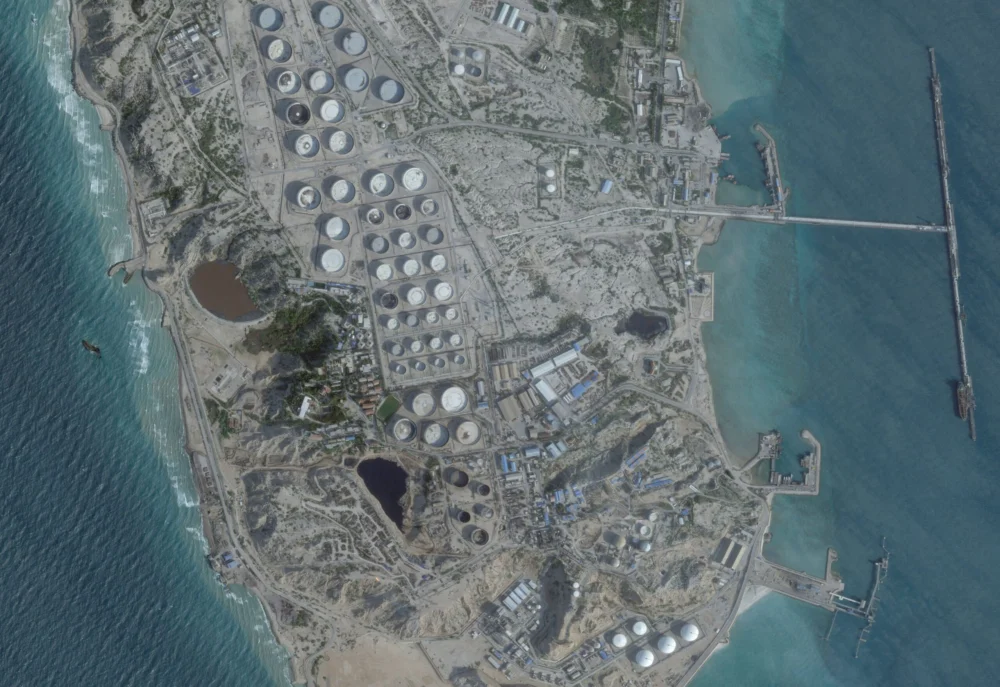
Kharg Island, a five-mile-long coral outcrop situated approximately 15 miles off the coast of mainland Iran in the northern Persian Gulf, is unequivocally one of Iran’s most sensitive and economically critical assets. Often dubbed Iran’s "oil lifeline" or "crown jewel," the island hosts the country’s primary crude oil export terminal, handling an astonishing 90% of Iran’s total crude exports. Its loading capacity is estimated at roughly 7 million barrels per day, making it a lynchpin of Iran’s economy and its ability to fund state operations and military endeavors. A satellite image from Planet Labs PBC, dated February 25, 2026, captured the sprawling industrial complex of the oil terminal, underscoring its vast scale and critical function just days before the U.S. strike.
The island’s strategic importance has meant it has historically been spared from direct attack in previous conflicts, including the Iran-Iraq War (1980-1988), where despite numerous attempts by Iraqi forces, its core oil facilities largely remained operational, a testament to its robust defenses and the international implications of its incapacitation. Its vulnerability, despite its strategic value, has long been a subject of geopolitical analysis, with experts consistently highlighting that any attempt to attack or seize its facilities would carry immense risks, both from a geopolitical standpoint and in terms of its potential to trigger an unprecedented global economic crisis.
The Broader Context: Escalation of the "Iran War"
The strike on Kharg Island did not occur in a vacuum but is part of a rapidly accelerating conflict that has engulfed the Middle East. The "Iran War," as it has come to be known, has seen nearly two weeks of sustained military operations led by the United States and Israel against Iranian targets. These prior strikes have reportedly focused on a range of objectives, including missile sites, drone facilities, command centers, and Revolutionary Guard Corps (IRGC) installations across Iran and its proxy networks in the region.
The current phase of escalation can be traced back to a series of provocations and retaliatory actions that intensified in late 2025 and early 2026. These included alleged Iranian-backed attacks on U.S. interests and shipping in the Gulf, cyberattacks targeting critical infrastructure, and an expansion of Iranian proxy activities across the Levant and Yemen. The U.S. administration, under President Trump, had previously adopted a policy of "maximum pressure," which has now evidently transitioned into a phase of direct military confrontation under "Operation Epic Fury," the codename White House officials have used for the current campaign. White House Press Secretary Karoline Leavitt has consistently affirmed that President Trump "wisely" keeps all options on the table, a statement that now appears to have foreshadowed the audacious strike on Kharg Island.
The Strait of Hormuz: A Global Chokepoint on Edge
President Trump’s explicit warning regarding the "Free and Safe Passage of Ships through the Strait of Hormuz" underscores the immense strategic significance of this narrow waterway. The Strait, located at the mouth of the Persian Gulf, is the world’s most important oil transit chokepoint, through which approximately 20-30% of the world’s seaborne oil passes daily. Any disruption to traffic through the Strait, whether by Iranian naval forces, mines, or other means, would send immediate and catastrophic shockwaves through the global economy, leading to unprecedented surges in oil prices, severe supply chain disruptions, and potentially triggering a global recession.
Iran has, on multiple occasions throughout its history, threatened to close the Strait of Hormuz in response to perceived threats or sanctions, viewing it as a powerful leverage point against international pressure. The U.S. warning, therefore, is not merely rhetorical but directly addresses Iran’s most potent asymmetrical capability. The U.S. and its allies maintain a significant naval presence in the region, including the U.S. Navy’s Fifth Fleet, explicitly tasked with ensuring the freedom of navigation in these critical international waters. The latest U.S. strike, while avoiding the oil facilities, serves as a clear demonstration of U.S. resolve to protect this vital artery of global commerce, setting a high stakes precedent for any potential Iranian retaliation.
Economic Ramifications and Volatile Oil Markets
The economic fallout from the escalating conflict, particularly following the Kharg Island strike, is already profound and promises to grow more acute. Brent crude oil futures, the international benchmark, closed above $100 per barrel for the second consecutive day on Friday, a psychological and economic threshold not seen consistently in years. This price surge represents a more than 40% increase since the "Iran War" commenced, reflecting market fears of supply disruptions and geopolitical instability.
Analysts have been unequivocal in their assessments: any direct attack on Kharg Island’s oil infrastructure or a sustained closure of the Strait of Hormuz would propel oil prices to unprecedented levels, potentially exceeding $150 or even $200 per barrel, dwarfing the shocks of the 1970s and early 2000s. Such an event would cripple global industries, fuel rampant inflation, and almost certainly trigger a severe global economic downturn. While the White House has expressed confidence that oil prices will "fall dramatically" once Operation Epic Fury concludes, the current military actions, particularly the targeting of such a sensitive area, introduce significant uncertainty and risk, suggesting that market volatility may persist, or even intensify, in the short to medium term. The global economy, already grappling with post-pandemic recovery challenges, is ill-equipped to absorb such a severe energy shock.
The Specter of Ground Operations and Seizure
Prior to the bombing raid, an Axios report on March 7, citing four unnamed sources with knowledge of the discussions, revealed that the Trump administration had been actively discussing the prospect of seizing Kharg Island. This revelation underscores the extreme measures considered by Washington to neutralize Iran’s economic and military capabilities. However, analysts have consistently warned that such an operation would be fraught with peril.
Any attempt to seize Kharg Island would undoubtedly require a large-scale ground troop operation. The island, though small, is heavily fortified and would likely be defended ferociously by Iranian forces, including elements of the Islamic Revolutionary Guard Corps. Such an invasion would entail significant casualties, a prolonged military engagement, and a massive logistical undertaking, which the U.S. appears reluctant to undertake, given its historical aversion to large-scale ground wars in the Middle East. Furthermore, the act of seizing Iranian sovereign territory would represent an unprecedented act of war, potentially drawing in other regional and international actors and transforming the current conflict into a wider regional conflagration with unimaginable consequences. The current strategy of targeted aerial bombardment, while aggressive, falls short of a full-scale invasion, indicating a preference for surgical strikes over boots on the ground, at least for now.
Reactions and International Fallout
The U.S. strike on Kharg Island is expected to elicit strong and condemnatory reactions from Tehran. Iranian officials are likely to denounce the attack as a blatant violation of national sovereignty and international law, vowing swift and decisive retaliation. While the immediate nature of this retaliation remains uncertain, possibilities include heightened activity by Iranian proxy groups in the region, missile or drone attacks on U.S. assets or allies, or even a direct challenge to shipping in the Persian Gulf, despite President Trump’s explicit warning.
Internationally, the strike will likely be met with a mixture of concern and condemnation. European Union nations and the United Nations are expected to call for de-escalation, restraint, and adherence to international humanitarian law, expressing deep worries about regional stability and the potential for a broader conflict. Major global powers, including Russia and China, are also likely to issue statements condemning the U.S. action and calling for a diplomatic resolution, though their underlying motivations may differ. Regional allies of the U.S., such as Saudi Arabia and the UAE, may offer muted support or express concerns about potential Iranian retaliation spreading across the Gulf. The International Maritime Organization (IMO) may issue heightened security warnings for shipping in the Persian Gulf and Strait of Hormuz, reflecting increased risks to commercial vessels.
Analysis and Future Implications
The bombing raid on Kharg Island marks a critical juncture in the U.S.-Iran conflict. Militarily, it demonstrates the U.S.’s advanced precision strike capabilities and its willingness to target Iran’s most vital strategic assets, even if selectively. It also tests Iran’s air defense networks and its ability to protect its critical infrastructure. Geopolitically, the strike significantly elevates the risk of direct confrontation and miscalculation. By explicitly drawing a red line around the Strait of Hormuz, President Trump has laid bare the stakes, placing the onus on Iran to decide its next move carefully. Any misstep by either side could trigger a chain reaction leading to an uncontrollable escalation.
Economically, the immediate impact on oil markets is a testament to the fragility of global energy security in the face of such a conflict. The threat to Kharg Island’s oil facilities and the Strait of Hormuz casts a long shadow over global economic stability, potentially fueling persistent inflation and hindering economic growth worldwide. The humanitarian implications of a prolonged and expanding conflict are also dire, with the potential for widespread civilian casualties, displacement, and a deepening humanitarian crisis across the region.
As the world watches, the coming days will be crucial in determining the trajectory of this escalating conflict. Iran’s response, the effectiveness of the U.S. deterrent, and the capacity for international diplomacy (or lack thereof) will collectively shape the future of the Middle East and reverberate across the global political and economic landscape. The strike on Kharg Island, even with its stated limitations, has irrevocably raised the ante, pushing the region closer to the brink of a wider, potentially devastating, war.
About the Author