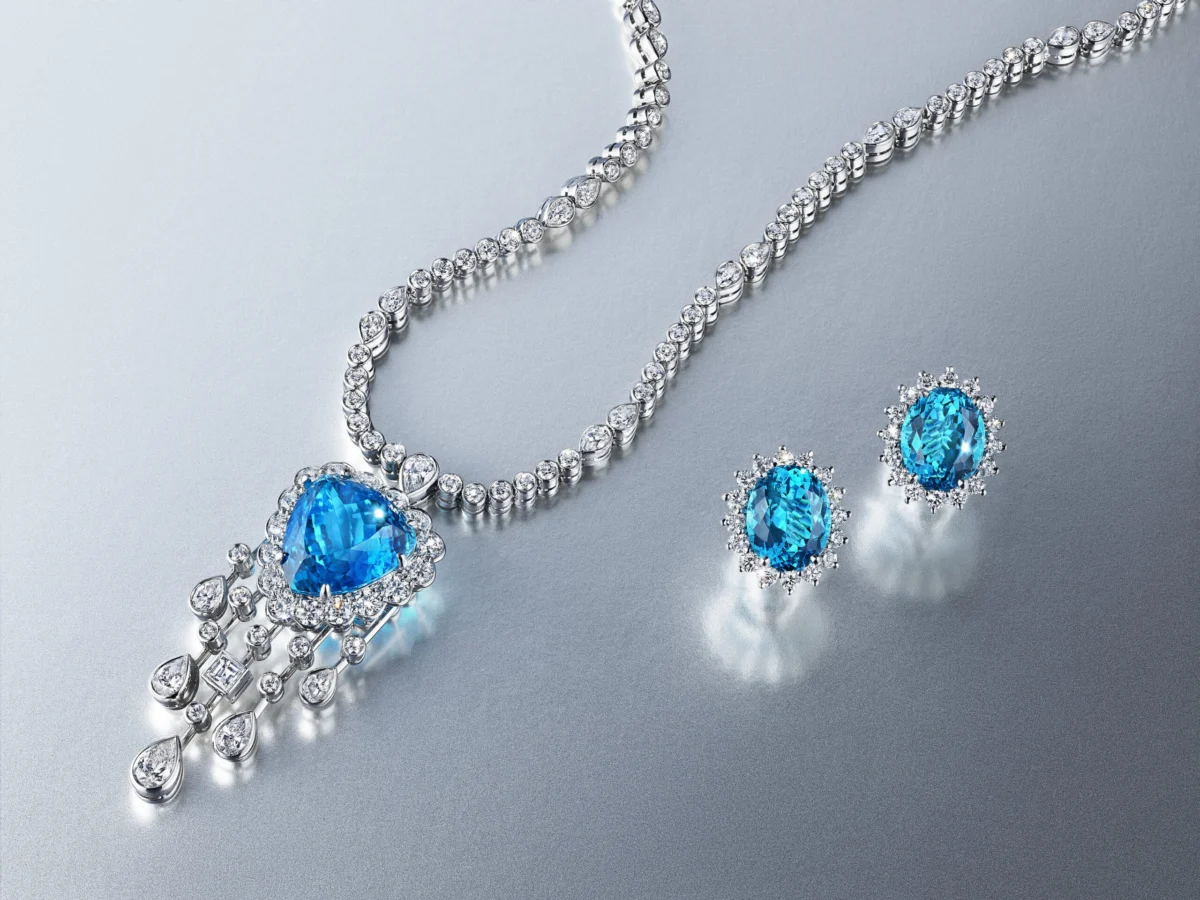
When the gavel struck in December, Christie’s auction house recorded a sale that reverberated throughout the global luxury market, signalling a profound shift in consumer and investor behaviour. A magnificent Tiffany & Co. necklace, featuring an exceptionally rare Paraiba tourmaline gem encircled by brilliant diamonds, commanded a staggering $4.2 million, an astounding tenfold increase over its low estimate. The subsequent sale of a matching pair of earrings, which also fetched ten times its estimate, cemented the event as a landmark moment. This extraordinary performance underscored a burgeoning trend: a select cadre of affluent individuals are increasingly viewing high-end jewelry not merely as an adornment or a symbol of status, but as a robust and tangible asset in an unpredictable global economy.
A New Horizon for Hard Luxury
Jacqueline DiSante, Vice President and Head of Sales for Christie’s New York jewelry division, highlighted the significance of the December auction. "I think that was really a marker for how far private clients are willing to go for these exceptional goods," DiSante remarked, pointing to an intensified demand for unique and high-value pieces. This surge in interest arrives amidst a period of considerable economic and geopolitical uncertainty, compelling a certain class of consumers, particularly the ultrarich, to diversify their portfolios by embracing tangible assets. Within this evolving landscape, colored gemstones such as rubies, sapphires, and emeralds have emerged as particularly coveted items.
The appeal of hard assets as a defensive strategy during periods of market volatility is a well-documented economic phenomenon. Thorne Perkin, President of the investment management firm Papamarkou Wellner Perkin, articulated this dynamic concisely: "Whenever you have macroeconomic volatility, the appeal of hard asset investing goes up. Tangible assets, they tend to retain their value or even increase when inflation rises." This sentiment was echoed by Mario Ortelli, a managing partner at strategic and M&A advisor Ortelli&Co., who identified a clear "defensive element" underpinning this trend. Ortelli explained via email that "In periods of inflation, geopolitical tension, or financial market volatility, tangible assets become more attractive. Branded jewelry can function as a portable store of value."
Ortelli further elaborated on the intrinsic advantages of high jewelry over other luxury segments. "Unlike fashion accessories that are tied to seasonal cycles, iconic jewelry collections have a much longer product life cycle," he noted. "In many cases, they also demonstrate stronger resale value dynamics than handbags. That longevity and perceived capital preservation help explain jewelry’s relative resilience versus soft luxury." Luca Solca, Global Head of Luxury Goods at Bernstein, offered a quantitative perspective, estimating that approximately one-third of the renewed interest in gold-heavy and gemstone-driven jewelry can be attributed directly to this "flight to safety" behaviour among discerning investors.
The Gold Standard: Fueling the Jewelry Market
A significant driver of this shift has been the unprecedented ascent of gold prices. Traditionally regarded as a quintessential safe-haven asset, gold futures soared to an all-time high in January, breaching the $5,100 per ounce mark. Although prices have since moderated, settling above $4,500 an ounce, this elevated baseline fundamentally alters the perception of gold-laden jewelry. The consistent, almost daily, increase in gold’s valuation has undeniably bolstered the view of fine jewelry—encompassing gold, diamond, and gemstone pieces—as a legitimate investment vehicle.
Andrew Brown, founder and CEO of luxury resale platform MyGemma, attested to this correlation. "I think the view of jewelry—gold jewelry, diamond and gemstone jewelry—being viewed as an investment is enhanced by, obviously, the almost daily increase in the gold price," Brown stated. This phenomenon has not only attracted new buyers but has also incentivized existing collectors to reassess and, in some cases, liquidate their holdings. DiSante confirmed that record-high gold prices have prompted some collectors to emerge "out of the woodwork" to sell certain pieces, capitalizing on the robust market conditions.
The inherent durability of jewelry, particularly branded pieces, is a critical factor contributing to its strong resale value, according to industry experts. Brown observed that clients frequently resell branded jewelry years after their initial purchase, often at prices that maintain their value far more effectively than designer handbags, which are prone to showing wear and tear more readily. This resilience has allowed the jewelry sector to defy a broader softness observed in the luxury market, experiencing "quite nice" growth over the past two years, as noted by Caroline Reyl, Senior Investment Manager of Pictet’s premium brands strategy.
Reyl pointed to a discernible shift in consumer preferences, with spending moving away from "soft luxury" items like handbags and accessories towards "hard luxury" goods, including watches and fine jewelry. She attributed this reorientation partly to extreme price hikes for handbags, previously driven by strong demand and supply chain disruptions, which have now been exacerbated by quality concerns. Indeed, a Bernstein study revealed a decline in auction prices for Hermès’ iconic handbags, with average resale premiums for Birkin and Kelly bags dropping from 2.2 times their retail price in 2022 to 1.4 times by last November.
Ankur Daga, founder and CEO of fine jewelry e-commerce company Angara, succinctly summarized the intrinsic value proposition: "Leather does not have a lot of inherent value. As gold is appreciating, people are understanding more and more that this is a very valuable asset." The enduring quality and craftsmanship inherent in pieces from revered brands such as Cartier, Van Cleef & Arpels, Tiffany & Co., and Bulgari further solidify jewelry’s reputation as a long-term store of value. Brown estimated that these four iconic brands alone account for approximately 90% of MyGemma’s jewelry sales, underscoring their market dominance and consistent desirability.
The Allure of "Passion Investments"
Beyond purely financial considerations, jewelry possesses a unique emotional dimension, often categorized as a "passion investment." Perkin articulated this, suggesting consumers are drawn by an "element of prestige" and personal connection. Ortelli concurred, emphasizing that the brand equity, artisanal craftsmanship, and inherent scarcity of these pieces collectively reinforce the perception of durability and value retention. "Branded jewelry has historically experienced mid- to high-single-digit annual price increases over the long term, depending on brand and the design," Ortelli explained. "As resale often occurs at a moderate discount to current retail pricing, over a 5-10 year horizon, owners can frequently exit above their original purchase price." This blend of financial prudence and personal gratification elevates fine jewelry beyond a mere commodity.

The Vibrant Rise of Colored Gemstones
While gold-heavy jewelry benefits from a price floor established by the metal’s intrinsic value, exceptional gemstones, particularly rare, high-quality sapphires, rubies, and emeralds, command significant collector premiums. Ortelli highlighted that these stones are increasingly seen as unique assets. This trend is amplified by current fashion currents, which unequivocally favor colored gemstones, establishing them as one of the fastest-growing segments within the jewelry market.
Lucrezia Buccellati, jewelry designer and co-creative director of the venerable Italian jewelry house Buccellati, noted the particular strength of this trend in Asian markets. She explained that colored stones offer greater creative latitude for designers and resonate deeply with buyers seeking more distinctive and personal pieces that reflect individual taste and cultural significance. Furthermore, there is a growing consumer inclination towards colored gemstones as compelling alternatives to traditional diamonds.
Daga pointed to a "genuine dearth of gem-quality material that’s coming out of the earth," a factor that inherently limits supply and drives up value. He also emphasized the difficulty in replicating colored gems in a laboratory setting, unlike diamonds where lab-grown alternatives are increasingly common. Crucially, a colored gemstone’s unique inclusions—the minerals trapped within during its formation—are not seen as flaws but rather as distinctive characteristics that imbue the stone with character and can significantly enhance its value, much like the provenance of a rare artwork. DiSante articulated this artistic comparison, stating, "No two are exactly alike, and I think that’s what makes them so interesting to today’s market. In a world where we are seeing lab-grown diamonds being made, and it kind of feels like this conveyor belt… you can’t do that with a sapphire or ruby or emerald."
The market performance of colored gemstones supports this outlook. Daga boldly predicted that colored gemstones would appreciate faster than gold. "If you look at Sotheby’s and Christie’s auctions, these gemstones are trading at numbers nobody would have thought possible five years ago, and it’s only going to increase," he asserted, adding definitively, "Color is en vogue." His observation is substantiated by auction data, which frequently shows colored gemstones trading at two to three times their high estimates—a highly unusual occurrence given the meticulous calibration of bids by auction houses.
The growing popularity of colored gemstones extends to significant life events, notably engagement rings. Daga estimated that approximately 15% of engagement rings today feature a colored gemstone, a notable increase from just 5% a decade ago. This shift has been significantly propelled by celebrity endorsements, with prominent figures such as Kate Middleton, Eva Longoria, Halle Berry, Rita Ora, and Halsey showcasing vibrant colored stones, further cementing their desirability and cultural relevance.
Demographics and Future Outlook
The evolving landscape of luxury jewelry is also attracting a younger demographic. In 2025, millennials and Gen Z collectively accounted for a substantial 44% of Christie’s luxury buyers, a clear indicator that the appeal of fine jewelry as both an aesthetic object and an investment vehicle transcends generations.
Looking ahead, experts anticipate the jewelry investment trend to persist, especially if macroeconomic uncertainty continues. Reyl projects continued growth in jewelry investing, with Buccellati concurring that within high luxury, jewelry is poised to continue its upward trajectory, potentially surpassing soft luxury goods in market performance.
However, potential investors must also be cognizant of the inherent challenges associated with jewelry as an asset class. These include illiquidity, as converting a high-value piece back into cash can be a slower process compared to publicly traded assets. Safety concerns, including theft and damage, necessitate robust insurance policies and secure storage solutions, which incur additional costs. Furthermore, unlike stocks or real estate, jewelry does not generate an income stream for its owners.
Ortelli cautioned against equating jewelry with traditional financial assets like equities or ETFs, emphasizing that "liquidity, transaction costs, and dispersion of returns are much higher" in the jewelry market. While he maintains a positive long-term outlook for branded luxury jewelry, he stressed its cyclical nature. "The category performs best in supportive macroeconomic environments with rising wealth creation and political stability… In the event of a severe macroeconomic downturn, demand would contract," he wrote.
Ultimately, for many collectors, the comfort derived from jewelry transcends pure financial metrics, resting in its profound emotional and aesthetic aspects. DiSante encapsulated this sentiment beautifully: "I think there’s something really romantic about a colored stone. There’s something really incredible about when you think that it formed in the Earth hundreds of thousands of years ago. And if it’s a Kashmir sapphire—that mine was only mined for 20 years in the early 1900s—there’s a certain romanticism behind it that you can’t replicate." This dual appeal—as a tangible asset offering financial stability and a deeply personal object imbued with history and beauty—ensures that luxury jewelry will continue to sparkle brightly in the portfolios and hearts of discerning individuals worldwide.
About the Author