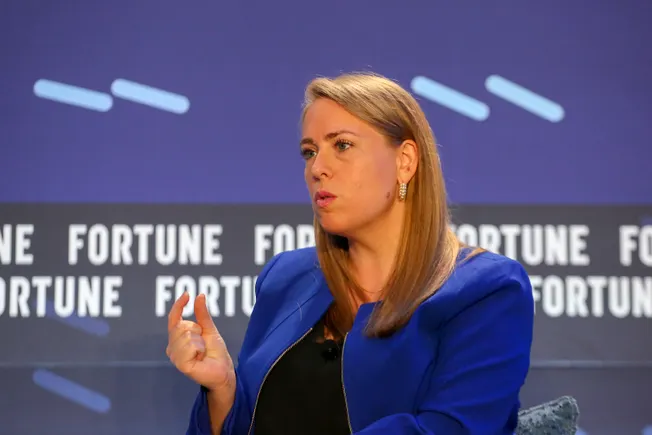
A profound shift is underway in the career aspirations of young Americans, with Generation Z increasingly gravitating towards entrepreneurship over conventional corporate paths. This burgeoning trend, amplified by the transformative power of artificial intelligence, is reshaping the economic landscape and challenging established notions of career progression. Lori Rosenkopf, Vice Dean of Entrepreneurship at the Wharton School, highlights that this pivot is driven by a confluence of evolving expectations, a more demanding entry-level job market, and an inherent desire for flexibility and autonomy. While AI tools are undeniably lowering barriers to entry, making it easier for aspiring founders to materialize their ideas, Rosenkopf cautions that a surge in startups does not automatically equate to a higher success rate, underscoring the enduring challenges of venture creation.
The traditional trajectory of graduating, securing a stable corporate job, and climbing the ladder no longer holds the same appeal for many members of Generation Z. Born between the late 1990s and early 2010s, this demographic has come of age amidst unprecedented technological advancement, global connectivity, and significant economic volatility. They are digital natives, inherently comfortable with technology, and possess a strong social consciousness, often prioritizing purpose and impact alongside profit. This generation witnessed the 2008 financial crisis, the gig economy’s rise, and the rapid pace of technological disruption, leading to a pragmatic yet idealistic outlook on work. They seek careers that offer meaning, control, and alignment with their values, often finding traditional corporate structures too rigid, slow-moving, or devoid of personal agency.
The Allure of Autonomy and Purpose for Gen Z
One of the primary drivers behind Gen Z’s entrepreneurial surge is a fundamental shift in their expectations of work. Unlike previous generations that might have prioritized job security and steady progression within a large organization, Gen Z places a high premium on autonomy, flexibility, and the ability to make a tangible impact. Research from various studies, including a 2023 Deloitte Global Gen Z and Millennial Survey, consistently reveals that this generation desires greater control over their work-life balance, rejecting the traditional 9-to-5 grind in favor of more fluid arrangements. They are keenly aware of societal issues and often seek to integrate their values into their professional lives, seeing entrepreneurship as a direct avenue to address problems they care about and create positive change. The idea of building something from the ground up, shaping its mission, and witnessing its direct impact resonates deeply with their desire for purpose-driven work.
Moreover, the digital age has fostered a culture of self-expression and individual branding, where personal identity is increasingly intertwined with professional endeavors. The rise of the creator economy, fueled by platforms like YouTube, TikTok, and Instagram, has normalized the concept of individuals building their own audiences, monetizing their skills, and becoming their own bosses. This environment cultivates an entrepreneurial mindset from an early age, demonstrating that successful careers can be forged outside traditional employment frameworks. Gen Z has grown up watching influencers and independent creators build empires, making the leap to starting their own businesses seem less daunting and more achievable.

Navigating a Tougher Entry-Level Job Market
Complementing this internal shift in aspirations is the external reality of a challenging entry-level job market. While specific economic conditions fluctuate, the broader trend over the past decade has seen increased competition for desirable roles, often coupled with a perception of stagnating wages and limited growth opportunities in certain sectors. Automation and artificial intelligence, paradoxically, have already begun to impact some entry-level positions, requiring new skill sets and making the transition from academia to the workforce more complex. Many Gen Z graduates face the daunting prospect of high student debt combined with a job market that doesn’t always offer the immediate fulfillment or financial stability they seek.
The pandemic further exacerbated these challenges, disrupting hiring cycles and accelerating the adoption of remote work, which, while offering flexibility, also intensified competition for globally accessible roles. This environment has led some young individuals to view entrepreneurship not just as an aspiration but as a pragmatic alternative to navigating a competitive and often unfulfilling traditional job search. If securing a "dream job" is difficult, or if the available jobs don’t align with their values or offer sufficient flexibility, creating their own opportunities becomes a compelling option. The traditional corporate ladder, with its often slow ascent and perceived bureaucracy, can seem less appealing than the direct agency and potential for rapid growth offered by a startup.
AI’s Dual Role: Lowering Barriers and Intensifying Competition
Artificial intelligence stands as a pivotal force in facilitating this entrepreneurial surge. AI tools are democratizing the process of business creation, significantly lowering the barriers to entry that once deterred aspiring founders. For instance, tasks that previously required specialized skills or significant financial investment, such as marketing copy generation, basic graphic design, market research analysis, customer service automation, and even rudimentary coding, can now be performed or augmented by AI.
- Content Creation and Marketing: Generative AI platforms like ChatGPT and specialized tools can draft compelling marketing copy, create social media content, generate blog posts, and even assist in scriptwriting for video content. This empowers solo founders or small teams to maintain a robust online presence without hiring extensive marketing departments.
- Product Development and Design: AI-powered design tools can help create logos, website mockups, and product prototypes much faster and cheaper than traditional methods. No-code and low-code platforms, often enhanced by AI, allow individuals with minimal technical expertise to build functional applications and websites.
- Data Analysis and Market Research: AI can rapidly process vast datasets to identify market trends, analyze competitor strategies, and pinpoint customer needs, providing insights that were once only accessible to large corporations with dedicated research teams.
- Customer Service and Operations: AI chatbots can handle routine customer inquiries 24/7, freeing up founders to focus on core business development. Automation tools, often AI-driven, can streamline administrative tasks, inventory management, and supply chain logistics.
This accessibility means that an individual with a compelling idea can now launch a minimum viable product (MVP) with unprecedented speed and minimal capital. The time and cost associated with product development, marketing, and even early-stage operations have drastically reduced, making entrepreneurship a more viable path for those without extensive networks or deep pockets.

However, as Rosenkopf astutely points out, this democratization comes with a significant caveat: intensified competition. If AI makes it easier for everyone to start a business, the market inevitably becomes more crowded. The challenge for Gen Z entrepreneurs shifts from how to build to how to differentiate. Success in this AI-powered landscape will increasingly depend on unique value propositions, deep understanding of niche markets, superior execution, and the ability to leverage AI as a strategic asset rather than just a tactical tool. Founders must not only embrace AI but also understand its limitations and how to integrate human creativity, empathy, and strategic thinking to stand out. The barrier to entry might be lower, but the barrier to sustainable success remains high.
The Modern Entrepreneurial Ecosystem: VC, Failure, and the Creator Economy
The contemporary entrepreneurial ecosystem is multifaceted, offering both opportunities and stark realities. Understanding its components is crucial for any aspiring founder.
- Venture Capital (VC) Landscape: While the overall venture capital market can be cyclical, there remains robust interest in innovative startups, particularly those leveraging cutting-edge technologies like AI. However, securing VC funding is highly competitive and often requires a compelling business model, a scalable product, a strong team, and clear market traction. Gen Z founders are learning that while seed funding might be more accessible for promising ideas, subsequent rounds demand rigorous proof of concept and growth. The focus for VCs is often on disruptive technologies and solutions addressing significant market gaps, making it imperative for founders to articulate a clear vision for scalability and return on investment.
- Embracing Failure as a Learning Opportunity: A notable cultural shift in the startup world is the increasing acceptance, and even celebration, of "failing fast." The stigma once associated with business failure has diminished, replaced by a recognition that setbacks are often invaluable learning experiences. Programs and mentors often encourage iterative development, pivoting when necessary, and extracting lessons from unsuccessful ventures. This mindset is particularly appealing to Gen Z, who are often more adaptable and resilient in the face of change. They view entrepreneurship as an ongoing process of experimentation and refinement, where failures are data points rather than definitive end results.
- The Creator Economy’s Expanding Influence: The creator economy, where individuals monetize their content, skills, and personal brands, acts as a significant gateway to entrepreneurship for many Gen Z individuals. From YouTube vloggers and Twitch streamers to independent artists, writers, and consultants, this sector demonstrates the power of direct audience engagement and digital monetization. It blurs the lines between personal passion and professional endeavor, providing a low-risk entry point into self-employment. Many creator-economy ventures eventually scale into full-fledged businesses, demonstrating products, services, or platforms built around a core audience. This model exemplifies the flexibility and autonomy Gen Z craves, offering a direct path to income generation without traditional corporate gatekeepers.
Educational Initiatives and Support Systems
Recognizing the growing interest in entrepreneurship, educational institutions and support organizations are adapting their offerings to nurture this talent. Programs like Wharton’s VentureLab play a critical role in providing aspiring founders with the knowledge, resources, and networks necessary to navigate the complex startup journey.
VentureLab, for instance, typically offers a comprehensive suite of services including:

- Mentorship: Connecting students with experienced entrepreneurs, investors, and industry experts who can provide guidance, feedback, and strategic advice.
- Curriculum Development: Integrating practical entrepreneurial skills, design thinking, lean startup methodologies, and business model canvas frameworks into academic programs.
- Incubation and Acceleration: Providing physical or virtual spaces, resources, and structured programs to help nascent startups develop their ideas, build prototypes, and gain initial traction.
- Networking Opportunities: Facilitating connections with potential co-founders, investors, customers, and industry partners.
- Access to Capital: Helping students prepare for pitch competitions, connect with angel investors, and understand the intricacies of fundraising.
Beyond university initiatives, a broader ecosystem of accelerators, incubators, co-working spaces, and online communities exists to support entrepreneurs at various stages. These platforms offer everything from seed funding and intensive bootcamps to peer support and access to shared resources. Government programs and non-profit organizations also contribute by offering grants, workshops, and business advisory services, further bolstering the support infrastructure for new ventures. The availability of such robust support systems makes the entrepreneurial path less isolating and more structured than it might have been for previous generations.
Implications and Future Outlook
The rise of Gen Z entrepreneurship carries significant implications for the global economy, labor markets, and educational paradigms. Economically, a surge in new businesses could spur innovation, create new jobs (even if initially small teams), and disrupt established industries, fostering a more dynamic and competitive marketplace. This entrepreneurial dynamism could be a powerful engine for economic growth, particularly in sectors ripe for AI-driven transformation.
Societally, this trend heralds a shift in work culture, emphasizing self-direction, continuous learning, and adaptability. The traditional linear career path may become less common, replaced by more fluid careers that involve multiple ventures, consulting roles, and portfolio careers. This also places new demands on educational systems to equip students not just with specialized knowledge but with entrepreneurial mindsets, problem-solving skills, and the ability to navigate uncertainty.
However, this future is not without its challenges. The sustainability of a higher volume of startups is a key concern; as Lori Rosenkopf highlighted, more startups don’t necessarily mean more success. The "fail fast" mantra, while liberating, must be balanced with the need for resilience, strategic long-term planning, and deep market understanding. The mental health implications for young founders, often working long hours with high stakes, also warrant attention. Furthermore, regulatory frameworks will need to evolve to accommodate new business models and the gig economy, ensuring fair competition and worker protections.
Ultimately, Gen Z’s embrace of entrepreneurship is a reflection of a generation seeking greater control over their destinies in a rapidly changing world. Fueled by a desire for purpose, flexibility, and armed with accessible AI tools, they are poised to redefine what it means to build a career. As Lori Rosenkopf and other experts suggest, while the path is more accessible than ever, true success will still hinge on innovation, strategic acumen, and the unwavering resolve to turn visionary ideas into sustainable realities, distinguishing genuine impact from fleeting ventures in a crowded digital landscape. The ongoing evolution of this trend will undoubtedly shape the future of work for decades to come.
About the Author