Growth experimentation is a structured approach to testing ideas across the full customer journey to discover what drives measurable business growth. Experiments improve channel-by-channel optimization as marketing teams push for measurable, repeatable growth under tight budgets.
The pressure on marketing teams to demonstrate tangible ROI and deliver increasing volumes of content is more intense than ever. According to HubSpot’s 2026 State of Marketing report, a significant 73% of marketers report increased scrutiny on their budgets and return on investment. Concurrently, 83% of teams are facing expectations to produce even more content. This dual pressure naturally compels marketing departments to intensify their testing efforts. In an era where the buyer’s journey has become increasingly fragmented and unpredictable, growth marketers are under immense pressure to rapidly discern what truly drives customer acquisition and retention, and which strategies are worth scaling for sustainable growth.
HubSpot Marketing Hub provides a centralized platform for teams to conduct these crucial experiments, segment their target audiences effectively, and meticulously measure results across the entire customer funnel.
What is Growth Experimentation?
Growth experimentation is fundamentally a systematic methodology for evaluating diverse ideas throughout the entire customer lifecycle. Its primary objective is to identify and validate strategies that yield measurable business expansion. Marketing leaders leverage this approach to rigorously test various elements, including messaging, offer types, timing, and the overall design of customer journeys. The insights gleaned from these experiments empower teams to progressively scale what proves effective.
Distinguishing itself from isolated testing methodologies, growth experimentation places a premium on validated learning. Each experiment is initiated with a clearly defined hypothesis. Marketers then establish specific metrics to gauge success and execute the experiment with a defined audience. The outcomes of these experiments directly inform marketing decisions and refine the design of future tests, fostering a continuous cycle of improvement.
Growth Experimentation vs. CRO vs. A/B Testing
The differentiation between growth experimentation, conversion rate optimization (CRO), and A/B testing lies primarily in their scope and underlying intent. While growth experimentation often incorporates A/B testing and CRO tactics, its overarching aim is to validate broader marketing strategies rather than merely optimizing individual assets. A growth manager, for instance, might test new audience segments, refine product positioning, experiment with dedicated landing pages, and adjust follow-up email sequences. The ultimate goal is to uncover repeatable growth drivers, moving beyond incremental improvements on single elements.
Whether the objective is to validate a full-funnel growth hypothesis, enhance conversion rates within a critical customer journey, or conduct a straightforward comparison between two variations via an A/B test, HubSpot Marketing Hub offers the necessary tools. For those beginning their experimentation journey, HubSpot provides a free A/B testing kit. Subsequently, advanced features such as Pathfinder and Audience Segments can be utilized to transform individual tests into a robust and repeatable experimentation process.
| Comparison Chart: Growth Experimentation vs. CRO vs. A/B Testing | Feature | Growth Experimentation | Conversion Rate Optimization (CRO) | A/B Testing |
|---|---|---|---|---|
| Primary Goal | Discover and scale repeatable growth levers. | Improve conversion rates of specific actions. | Compare two variations to determine the winner. | |
| Scope | Full customer journey, multiple touchpoints. | Specific pages, forms, or conversion points. | Isolated elements or pages. | |
| Focus | Validated learning, strategic insights. | User behavior, friction points, usability. | Statistical significance of variations. | |
| Methodologies | Incorporates A/B testing, CRO, user research, etc. | User surveys, heatmaps, A/B testing, usability tests. | Controlled comparison of two or more variants. | |
| Output | Scalable growth strategies, new acquisition channels. | Improved conversion rates, higher lead quality. | Identification of higher-performing variants. |
Why Growth Experimentation Matters Now
The traditional marketing playbook, built around fixed channels, is no longer sufficient to guarantee consistent results due to the profound fragmentation of the modern buyer’s journey. Consumers now access information and discover products through an eclectic mix of channels, ranging from direct inquiries to search engines and AI-powered modes, to social media platforms like Reddit and TikTok. This omnipresent information flow means buyers are engaging with brands through a multitude of touchpoints.
Consequently, marketers are actively seeking to identify and optimize their most effective channels. This necessitates a swift yet reliable method for understanding where acquisition is occurring. Following this, it becomes crucial to test which activation experiences effectively build momentum and which marketing tactics consistently generate compounding demand.
HubSpot’s Loop Marketing model is intrinsically designed with an experimental mindset. This framework encourages the development of systems where marketing teams continuously experiment with strategies aimed at driving demand, acquisition, and retention. By embracing this iterative approach, teams generate data-driven insights that can elevate marketing strategies across all lifecycle stages concurrently.
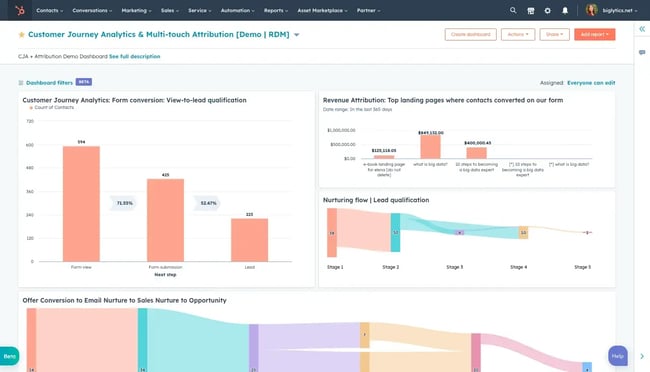
Marketing Hub empowers teams to execute experiments and apply learnings with greater velocity. Marketers can define and target new audience segments with content tailored to their specific personas. Furthermore, they can leverage A/B testing capabilities and meticulously measure the impact of their initiatives across different lifecycle stages using advanced marketing reporting tools.

[Image: Screenshot of HubSpot’s customer journey analytics platform interface, showcasing advanced marketing reporting capabilities for growth experimentation.]
How to Build a Growth Experimentation Strategy
A successful growth experimentation strategy is underpinned by a structured and disciplined approach. Before embarking on A/B testing, marketers must clearly define the scope of each experiment, establish ownership, and set predefined success criteria. The process begins with articulating a specific business challenge, which is then translated into a testable hypothesis. From this foundation, teams can design experiments with clear guardrails to facilitate the gathering of meaningful learnings.
- Start with a Growth Question
Many teams initiate their experimentation efforts with vague ideas such as "test a new headline" or "try LinkedIn ads." In contrast, effective growth teams begin by posing a business question directly related to a bottleneck or pain point. By grounding experiments in real-world challenges, the focus shifts from mere asset optimization to strategic refinement and genuine growth.
Before any practical steps are taken, growth marketers should consider fundamental questions such as:
- What is the primary bottleneck in our customer journey?
- Which audience segment exhibits the highest propensity to convert into qualified leads or customers?
- What value proposition resonates most effectively with our target personas at different stages of their journey?
- Which onboarding experience leads to the highest long-term retention rates?
- What messaging or offer drives the most efficient customer acquisition cost?
Each of these questions anchors experimentation to tangible outcomes. For example, if the central question is, "Which audience converts to pipeline fastest?", growth teams would likely design and execute experiments such as:
- Testing different ad creatives and targeting parameters for distinct audience segments.
- Developing tailored landing pages for each identified high-potential audience.
- Customizing email nurture sequences based on the specific segment’s engagement patterns.
- Analyzing the conversion rates of various lead magnets for different ICPs.
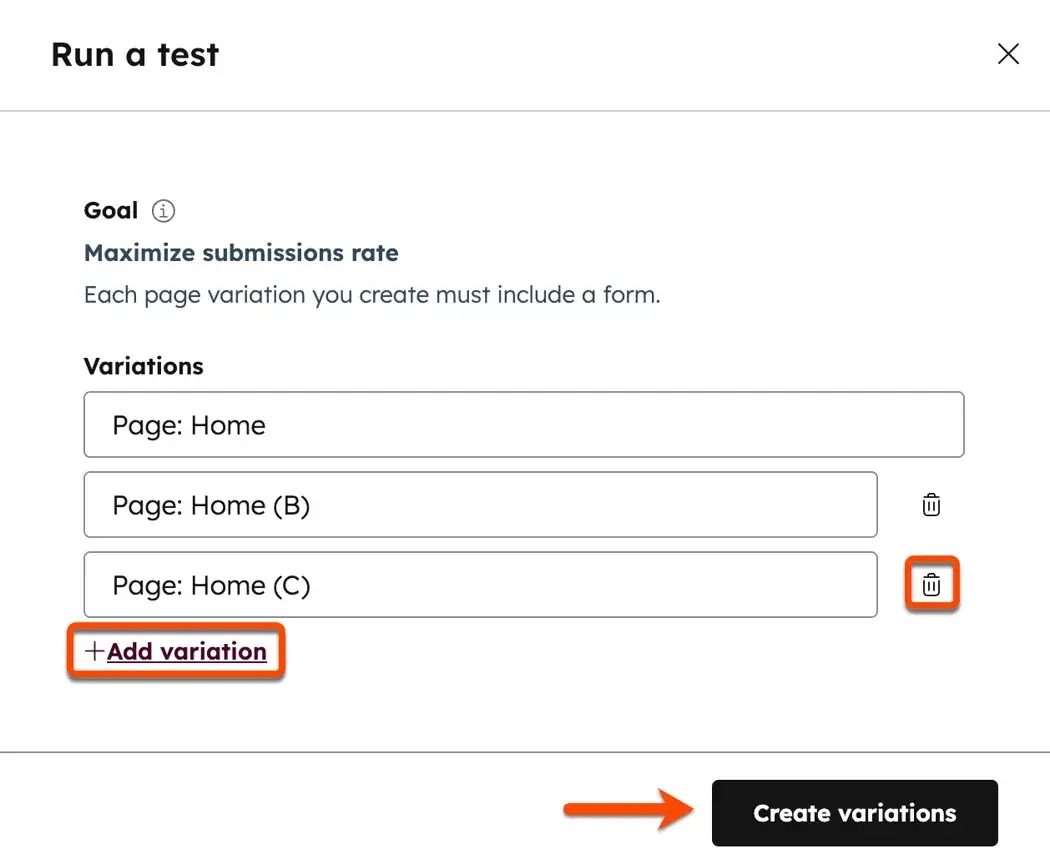
HubSpot Marketing Hub supports a wide spectrum of experimental designs. Marketers can segment campaigns based on audience profiles, enabling them to test hypotheses related to different Ideal Customer Profiles (ICPs). Furthermore, the platform facilitates adaptive testing across campaigns and landing pages.
[Image: Screenshot of HubSpot Marketing Hub interface demonstrating adaptive A/B testing for growth experimentation.]
- Align Experiments Across Teams
Growth experimentation falters when individual marketing functions operate in silos. Effective collaboration is essential, requiring growth marketing, lifecycle marketing, product marketing, and demand generation teams to consult with each other prior to launching experiments.
Each of these teams influences distinct facets of the customer journey. For instance, lifecycle marketing teams are instrumental in driving activation and retention behaviors. If these teams conduct experiments independently, conflicting results can emerge. Demand generation might successfully increase website traffic, only for the lifecycle team’s efforts to fail in activating these new users.
Ideally, teams should collaborate to run experiments across functional areas or conduct them in tandem, all while focusing on shared growth objectives. Typically, experiments will target stages of the customer journey where the greatest drop-offs or lowest engagement are observed.
Pro tip: To operationalize testing effectively, marketing leaders can leverage HubSpot CRM to track behavioral events tied to specific user actions and segment users based on their lifecycle milestones.
[Image: Screenshot of HubSpot AI CRM interface demonstrating tracking of behavioral user activation for growth experimentation.]
- Prioritize Experiments Using Impact and Learning Value
Growth teams prioritize experiments based on their anticipated learning value and their potential business impact. High-learning experiments are designed to answer foundational questions, such as "Which ICP converts fastest?", "Which value proposition activates users?", or "Which onboarding step drives retention?".
Conversely, high-impact tests aim to influence multiple channels simultaneously. Low-learning experiments, on the other hand, tend to focus on optimizing superficial elements. Tests involving button color variations, minor layout adjustments, or subtle copy tweaks rarely alter the overall growth trajectory. While they might improve local conversion rates, they typically do not yield reusable insights that can be applied broadly.

To ensure effective prioritization, growth teams evaluate experiments based on:
- Learning Value: How much will this experiment teach us about our customers and market?
- Potential Impact: How significantly could this experiment affect key business metrics?
- Feasibility: How resource-intensive is this experiment to design and execute?
- Strategic Alignment: Does this experiment directly support our overarching business goals?
For example, testing a new ICP has high learning value because the findings will inform strategies across paid media, outbound sales, product positioning, and lifecycle marketing. In contrast, testing a CTA color has low learning value, as its impact is typically confined to a single page and is more aligned with CRO objectives.
Pro tip: For a more in-depth understanding of experiment design, refer to HubSpot’s guides on designing website experiments and conducting effective marketing experiments.
- Design Experiments That Span Multiple Touchpoints
Growth experimentation extends beyond single assets to evaluate the entire customer experience. When multiple elements are modified concurrently, the results reveal whether the hypothesis truly impacts overall growth and generates insights that can be reapplied.
For instance, if a team wishes to test messaging for a CFO persona, the learnings will be limited if advertisements continue to target generic audiences and the onboarding process remains geared towards general product users. Growth teams should instead test the entire experience holistically, encompassing:
- Targeted Ad Campaigns: Ensuring ads speak directly to the CFO persona’s pain points and priorities.
- Website Messaging & Landing Pages: Crafting content that resonates with the financial executive’s concerns.
- Sales Enablement Materials: Equipping the sales team with talking points tailored to CFOs.
- Onboarding Flows: Designing an onboarding experience that addresses the specific needs and workflows of financial leaders.
- Email Nurture Sequences: Developing communication streams that acknowledge and address the CFO’s role and responsibilities.
To facilitate this integrated approach, marketers often opt for platforms like Marketing Hub, which enables full-experience testing by combining segmentation, AI-powered A/B testing, and personalization capabilities. Such integrated systems are crucial for driving comprehensive growth.
- Define Success Metrics Tied to Business Outcomes
While metrics like click-through rates, open rates, impressions, and page views provide valuable insights into content engagement, they can sometimes improve independently of pipeline growth. Growth experimentation demands metrics that are directly linked to core business outcomes. Examples of robust primary metrics include:- Customer Acquisition Cost (CAC)
- Customer Lifetime Value (CLTV)
- Monthly Recurring Revenue (MRR) / Annual Recurring Revenue (ARR)
- Pipeline Velocity
- Lead-to-Customer Conversion Rate
- Churn Rate
Furthermore, it is essential to track downstream impact. If activation rates improve, does retention also increase? If sign-ups grow, does the quality of the pipeline change? This comprehensive measurement ensures that experiments contribute to genuine business growth, rather than merely optimizing isolated metrics.
Marketing Hub’s reporting functionalities allow teams to track experiments across various lifecycle stages, directly correlating campaign performance with pipeline and revenue outcomes. This enables marketers to evaluate experiments based on their actual business impact, moving beyond superficial engagement metrics.
- Turn Experiment Results into Repeatable Growth Plays
The true efficacy of growth experimentation lies in its ability to scale validated learnings beyond the initial test environment. If the insights remain confined to a single campaign, page, or channel, the experiment’s impact on overall growth will be negligible. Once a finding is validated across a statistically significant sample size or segment, it should be codified into a repeatable growth play. The winning variable – whether it’s the audience, message, offer, or activation trigger – should then be applied across the entire customer journey.
For example, if a specific value proposition demonstrably improves customer activation, this insight becomes a repeatable play. Marketers can then update website language, paid advertising campaigns, lifecycle emails, and onboarding prompts to consistently reflect the messaging that proved successful in the experiment. This transforms a single successful test into a reusable growth lever for the organization.
How to Build a Culture of Experimentation Across Teams
Cultivating a culture of experimentation transcends simply encouraging teams to test ideas. Growth leaders emphasize that success hinges on shared business objectives, streamlined processes, and efficient feedback loops that integrate experimentation into daily workflows.
Use Structured Workshops to Foster a Shared Team Practice
Building an experimental culture necessitates more than just generating ideas. Teams require a structured framework for formulating hypotheses, assigning ownership, and critically evaluating concepts across different functional areas. To address this, former Semrush VP of Brand and current Foxtery CMO, Olga Andrienko, developed idea workshops.
Andrienko described a session where participants brainstormed ideas, with everyone contributing. Groups then presented their concepts, and volunteers stepped forward to champion the ideas they felt most strongly about. This format ensured that every idea had a dedicated owner and maintained momentum.
Protect Experimentation from Heavy Project Management
A swift way to impede experimentation is to treat it as a traditional project management initiative. As documentation proliferates and approval layers multiply, the speed and agility that are critical to experimentation are lost.
Ryan Carruthers, a growth marketer at Supademo, observed that the more documentation, review cycles, and approval processes are introduced, the less an initiative functions as an experiment and the more it resembles a lengthy project. Growth experiments, he argues, are not "quarterly projects" and fail to generate the rapid feedback loops that define valuable experimentation.
Upon joining Supademo, Carruthers initially gravitated towards creating detailed planning documents. This approach resulted in slower experiments and a loss of momentum. Following feedback from the CEO, Carruthers adopted a simpler documentation system, enabling him to dedicate more time to running tests. He now utilizes a lightweight Notion database with essential fields: the test objective, success criteria, required resources, and the assessment timeline. Stakeholders provide a simple yes or no response.
Ensure Universal Understanding of Experimentation’s Business Importance
Anna Dolynska, Head of Growth at Lemon.io, emphasizes that experiments must directly align with company-wide objectives. When there is a shared goal, teams are more inclined to initiate tests and embrace an experimental mindset. Abstract directives like "Let’s test more" often fail to motivate cross-functional teams; concrete, undeniable problems do.
Dolynska shared an example from Lemon.io, a company that assists startups in hiring web developers. The team identified that users searching for "React developers" represented a high-intent audience. However, the company’s homepage was too broad to effectively address this specific pain point. This realization led to the understanding that the gap was significant, prompting the development of over 600 pages targeting specific roles, technologies, regions, and industries. This cross-functional initiative, involving engineering, sales, product, and marketing, was successful because everyone deeply understood the strategic importance of the experiment.
Build Faster Feedback Loops into Team Workflows
Experimentation becomes more scalable across teams when it is integrated into the operational model. Instead of adhering to linear campaign structures, growth and marketing teams must adopt greater flexibility. This involves running smaller-scale, rapid experiments to validate new ideas swiftly.
Kaitlin Milliken, Senior Program Manager at HubSpot, notes that the marketing landscape is continually evolving, particularly with the advent of AI. To remain competitive, continuous experimentation is essential. HubSpot’s Loop Marketing approach, Milliken explains, is designed to incorporate experimentation as a core component.
At HubSpot, campaigns are adapted based on early user feedback. Milliken contrasts this with past practices where initiatives were executed linearly: decisions were made, budgets allocated, execution followed, and results were only assessed afterward. By iterating based on early signals, experimentation and innovation become ingrained in how teams operate.
Growth Experimentation Pitfalls and Fixes
To achieve impactful growth results, experiments must be meticulously designed. It is crucial to avoid unnecessary complexity and ensure that all essential metrics are measurable. Once a hypothesis is validated, teams must also establish a clear plan for acting upon the acquired learnings.
The following are common pitfalls identified by experienced growth marketers, offering lessons learned to help avoid repeating similar mistakes.
Don’t Scale Insights – Scale Artifacts
Teams may successfully run an experiment and validate a hypothesis. However, if the work ceases at that point, the initiative can still fail to achieve its full potential. Marketers must translate the learnings from experiments into actionable, real-world strategies.
Anna Dolynska of Lemon.io highlights a frequent failure: successful experiments are not effectively scaled. A hypothesis may be validated, metrics may appear strong, but progress stalls. Dolynska recounted the experience of creating over 600 pages with tailored messaging for different audiences. While these pages achieved impressive visitor-to-SQL conversion rates (around 20%) within months of launch, sustaining and scaling that result proved more challenging than achieving it initially. Teams must proactively plan for scaling their findings and delegate clear ownership for subsequent actions.
Log Experiments to Prevent Testing Repeat Hypotheses
In an environment that fosters experimentation, multiple teams often conduct tests concurrently. To avoid redundant efforts and repeated testing of the same hypothesis, it is imperative to maintain a log of all experiments.
Marketers should meticulously document their work and share findings across teams, including both successful tests and those that did not yield the expected results. Dolynska’s team implements a concise post-mortem for every experiment, typically covering four key areas:
- Hypothesis and Rationale
- Experiment Design and Execution
- Results and Learnings
- Next Steps and Recommendations
Without a documented rationale for failures, teams risk revisiting the same hypotheses months or even years later, often after shifts in team priorities or personnel, leading to significant time spent re-learning previously acquired knowledge.
Fix Measurement Gaps to Make Experimentation Actionable
Prior to initiating an experiment, it is essential to determine both what to measure and how to collect that data. If measurement gaps exist, teams may need to identify and implement new tools to capture critical data points.
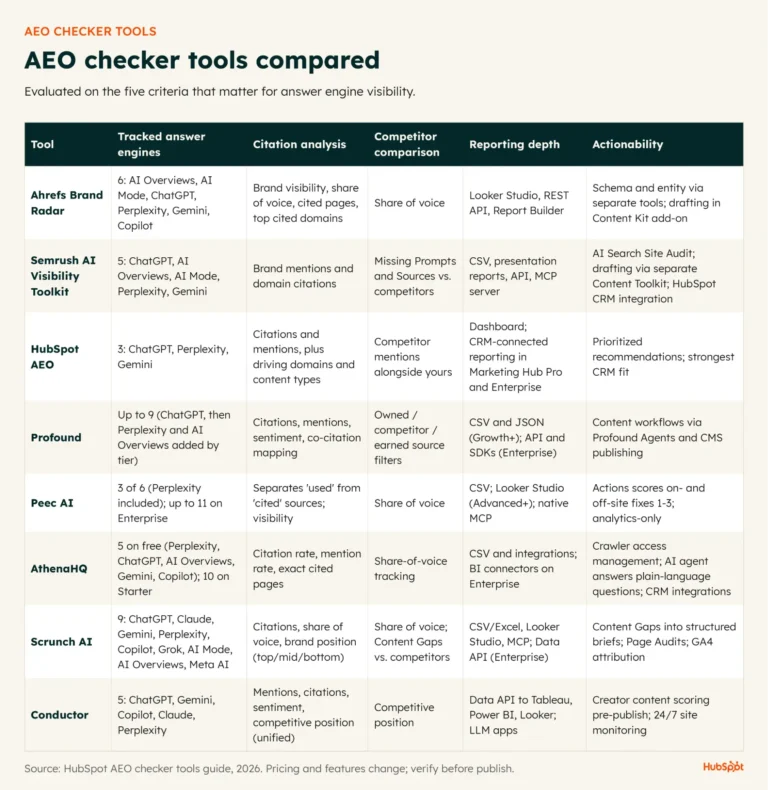
Addressing measurement gaps can be particularly challenging in nascent disciplines, such as AI-driven optimization. Kaitlin Milliken from HubSpot shared that during the company’s pivot to AI-driven optimization (AEO), initial experiments focused on product mentions and keyword saturation to improve performance. However, the team lacked the necessary tools to accurately measure these impacts. While they recognized the need for the pivot, the absence of appropriate measurement tools hindered progress.
Milliken noted that once AEO measurement tools for AI share of voice were developed, evaluating and iterating on experiments became significantly easier. HubSpot AEO reportedly contributed to a 1,850% increase in qualified leads from AI, validating the hypothesis and confirming the team was on the right track.
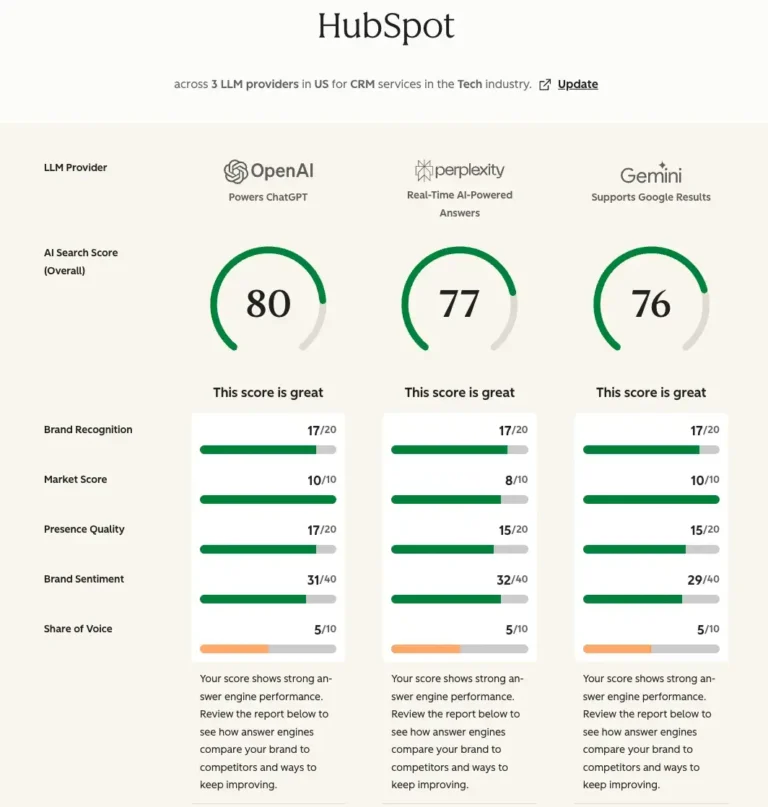
HubSpot AEO tracks brand visibility in Large Language Models (LLMs), sentiment analysis, prompt performance, competitor presence, and the most cited content types. It also analyzes website performance and provides concrete recommendations for improving AI share of voice.
[Image: HubSpot AEO dashboard screenshot illustrating growth experimentation metrics and insights.]
Start with the Smallest Viable Version of the Experiment
Experiments often stall when teams aim for full-scale design from the outset, rather than testing the smallest viable version. What begins as a straightforward validation can quickly escalate into a complex, cross-functional initiative that becomes too difficult to implement, leading to the idea being abandoned before it can be tested.
Ryan Carruthers described a scenario where his team aimed to test an ungated product experience allowing nonprofit grant seekers to input funding needs and directly access the product. While the idea was simple, it never launched. As the scope was defined, it became apparent that the initiative touched user onboarding, required homepage modifications necessitating high-level executive sign-off, and transformed a two-week experiment into a multi-quarter undertaking. Carruthers posits that the experiment could have been successfully deployed if the team had first asked: "What is the smallest version we could realistically implement?"

Frequently Asked Questions About Growth Experimentation
How many experiments should we run at once?
Run as many experiments as your team can effectively design, measure, and learn from. For most growth teams, this typically means starting with two to five concurrent experiments that are aligned with a single, clear objective. Prioritize fewer experiments that offer meaningful impact across the customer journey. Tests that influence acquisition, activation, or onboarding tend to generate the most reusable learnings.
When should we stop or extend an experiment?
Stop an experiment when it reaches statistical confidence and the outcome is clear, or when early data indicates the hypothesis is invalid and continuing the test will not alter the result. Extend an experiment when the results are directional but inconclusive, the sample size is insufficient, or external factors may have skewed performance.
Do we need a dedicated growth team to start?
No, companies can initiate growth experimentation within existing marketing, product, or lifecycle teams. The critical requirement is shared ownership and a streamlined process for prioritizing hypotheses, executing tests, and documenting outcomes. Without this foundational structure, experiments often remain isolated, and learnings fail to scale. A dedicated growth team becomes beneficial when the volume of experimentation increases and tests begin to span multiple departments. At that stage, a dedicated growth function can effectively coordinate cross-functional rollouts and ensure that successful experiments are scaled appropriately.
What tools do we need to get started?
A complex experimentation stack is not a prerequisite for beginning. Start with product analytics, marketing automation tools, A/B testing capabilities, and a centralized experimentation backlog. Platforms like HubSpot Marketing Hub consolidate these essential tools into a single system, preventing fragmentation and ensuring a cohesive approach.
Turn Experiments into Repeatable Growth
The speed at which teams validate hypotheses, connect insights to other journey stages, and scale successful strategies is fundamental to growth experimentation. However, teams require the right tools to operationalize this process effectively. HubSpot Marketing Hub integrates segmentation, A/B testing, personalization, and advanced custom reporting into a unified platform, ensuring that insights do not remain siloed within individual campaigns.
Once marketers possess the necessary tools and adopt a refreshed perspective on growth experimentation, they can validate hypotheses rapidly, conduct precise tests, and adapt their strategies on the fly, driving sustainable and measurable business growth.
About the Author