CRM projects frequently falter not due to technical shortcomings, but because the human element of adoption is neglected. When end-users fail to embrace a new Customer Relationship Management system, training proves ineffective, and ongoing support is absent, the investment yields diminishing returns. This often results in a CRM that incurs maintenance costs without delivering the promised pipeline visibility or process alignment. Addressing these people and process challenges proactively, throughout the implementation lifecycle—before, during, and after launch—is paramount. A comprehensive CRM change management strategy, including team structure, communication plans, and adoption metrics, is crucial for transforming a mere software deployment into a system that teams genuinely utilize and leverage for business growth.
The fundamental principle of successful CRM implementation hinges on recognizing that technology is only one piece of the puzzle. The human side of change, encompassing user buy-in, effective training, and sustained adoption, is equally, if not more, critical. Prosci’s extensive research, analyzing over 2,600 change practitioners, consistently demonstrates that projects with robust change management practices are nearly twice as likely to meet or exceed their objectives compared to those with weaker change management efforts. This stark contrast underscores the direct correlation between how well the human aspects of a rollout are managed and the ultimate success of the CRM initiative.
A well-executed CRM rollout yields significant compounding benefits. It leads to increased user adoption, fostering consistent data entry and utilization. This, in turn, drives improved data accuracy and completeness, a persistent challenge for many organizations. Validity’s 2025 State of CRM Data Management report, for instance, revealed that a staggering 76% of organizations report less than half of their CRM data as accurate and complete. This data degradation directly impacts management’s ability to gain crucial pipeline visibility, often leading to skepticism about the CRM investment’s worth within six months of deployment.
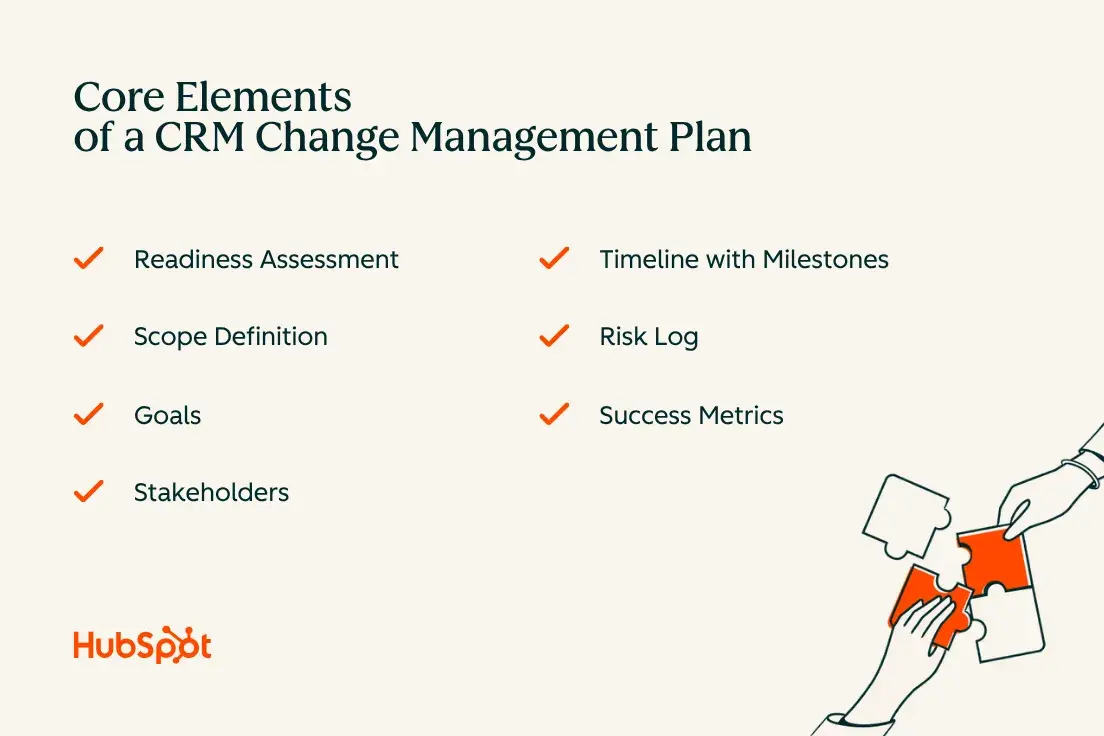
To effectively navigate these complexities, a structured CRM change management plan is essential. This operational document serves as the linchpin for the entire rollout, encompassing seven core elements: readiness assessment, scope definition, goal setting, stakeholder identification, timeline development, risk logging, and success metrics. Without meticulous attention to each of these components, organizations are susceptible to unforeseen challenges that can impede adoption and undermine governance.
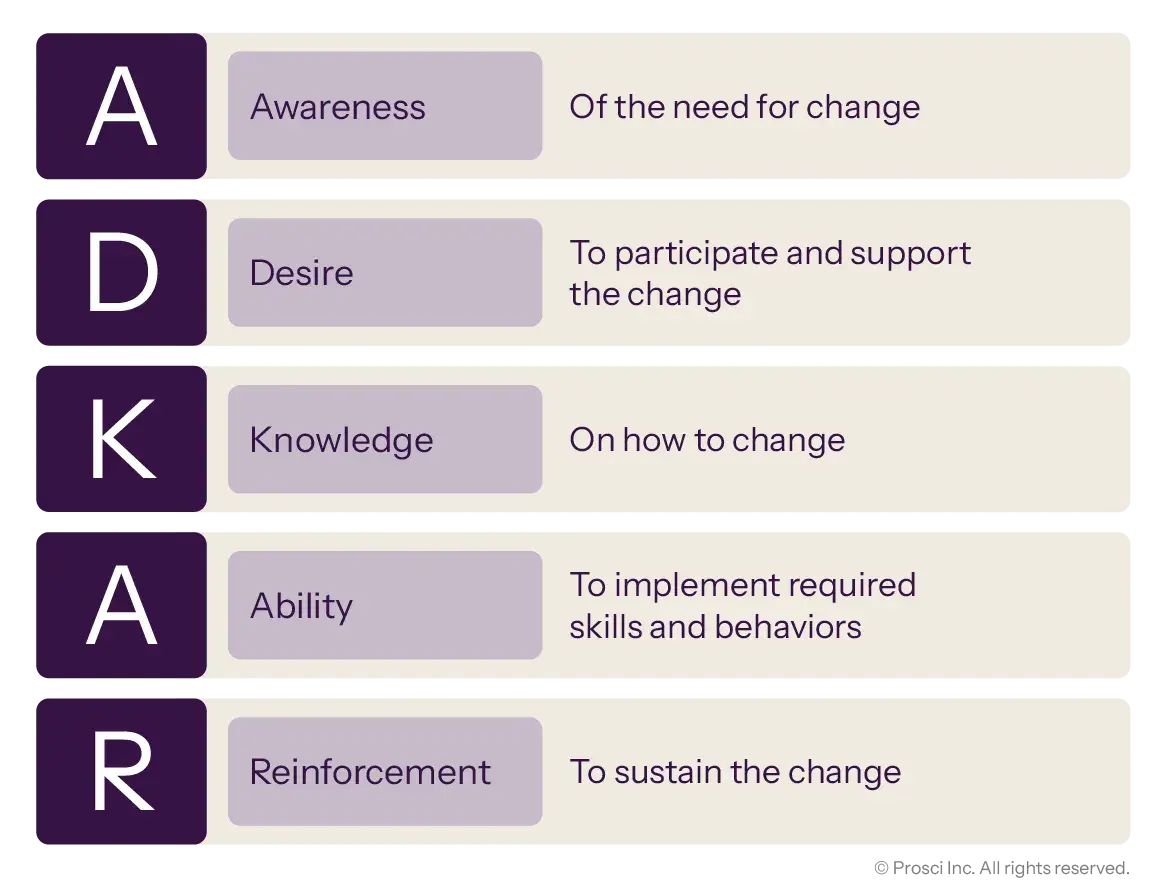
Two influential frameworks provide valuable scaffolding for CRM change management: the Prosci ADKAR model and Kotter’s 8-step process. The ADKAR model, focusing on individual change, breaks down the adoption process into five stages: Awareness, Desire, Knowledge, Ability, and Reinforcement. This framework is invaluable for diagnosing specific points of resistance. For example, understanding if a user lacks awareness of the CRM’s purpose, has no desire to use it, possesses insufficient knowledge, or struggles with the ability to operate it allows for targeted interventions. A proactive ADKAR self-assessment survey with pilot users can identify intervention points before a full rollout, saving considerable time and effort.

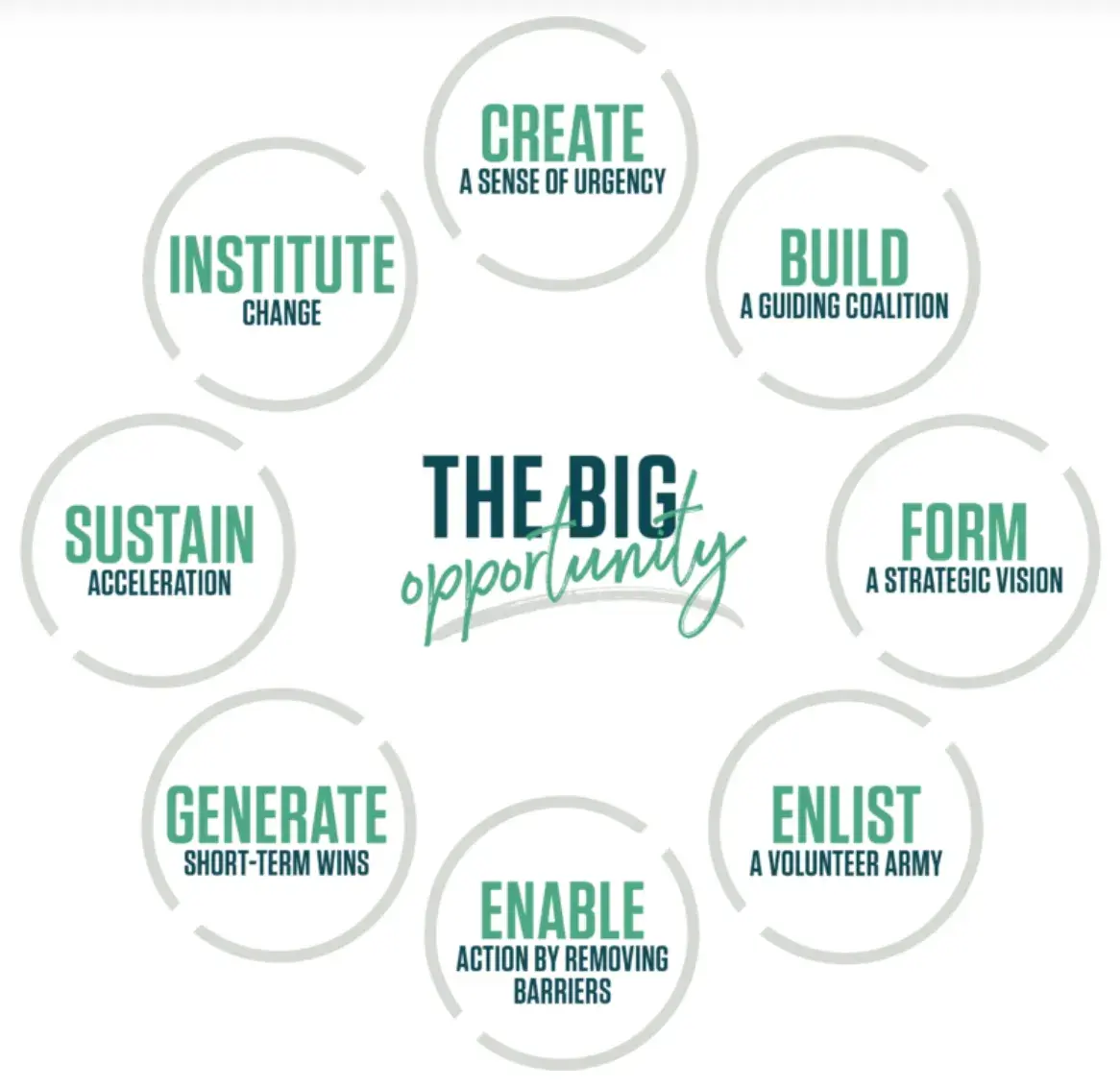
Kotter’s 8-step model, conversely, operates at an organizational level, emphasizing the creation of urgency, the formation of a guiding coalition, developing a strategic vision, communicating it effectively, removing obstacles, generating short-term wins, sustaining acceleration, and anchoring change in culture. For large-scale CRM implementations spanning multiple business units or geographical regions, the emphasis on coalition-building and establishing urgency is particularly vital. Visible executive sponsorship is non-negotiable for signaling the importance and optionality of CRM adoption. A pragmatic approach often involves leveraging ADKAR for individual-level diagnostics and interventions, while employing Kotter’s framework to structure the broader organizational communication and leadership strategy.
The composition of the CRM change management team is another critical determinant of success. Effective user adoption is contingent upon assigning clear accountability for specific outcomes. This team should ideally comprise leaders from marketing, sales, service, operations, IT, enablement, and analytics. Formalizing roles and responsibilities prior to launch is paramount. A typical RACI (Responsible, Accountable, Consulted, Informed) assignment for a mid-size CRM rollout might include an Executive Sponsor to champion the initiative and remove blockers; a CRM Program Lead to manage the plan and coordinate workstreams; Sales and Service Leaders to drive user adoption within their respective departments; a RevOps or CRM Administrator to manage system configuration and data governance; an Enablement Lead to design and deliver role-based training; and IT/Security to manage technical aspects and compliance. Marketing and Service Leads also play crucial roles in ensuring their specific workflows are effectively integrated and adopted. Regular governance cadences, such as weekly adoption stand-ups for the initial 90 days, monthly steering committee reviews for the first year, and quarterly data governance audits, are essential for sustained success.
Driving CRM user adoption necessitates a robust communication and training strategy. Clear communications should articulate what is changing, what remains the same, and the rationale behind these changes, delivered across multiple channels and tailored to diverse audiences. A single launch email is insufficient. Developing an audience message map, where communications are customized for revenue operations leaders, sales representatives, service agents, and marketing managers, ensures relevance and resonance. For instance, a sales rep will prioritize how the CRM simplifies their daily tasks, while a service lead will focus on its impact on customer satisfaction (CSAT) and Service Level Agreement (SLA) tracking. The "What’s Changing / What’s Not Changing" tracker is a low-effort, high-impact tool for reducing anxiety and focusing attention on actual workflow modifications.

Training must be role-based to respect users’ time and enhance relevance. A sales representative does not require in-depth training on service ticketing workflows, and vice versa. Training that directly maps to daily tasks builds confidence and reduces resistance. An effective training architecture typically combines four layers: on-demand learning modules for self-paced study, live training sessions for interactive learning and Q&A, ongoing reinforcement through office hours and Q&A forums, and formal certification programs to solidify knowledge. Platforms like HubSpot Academy offer free certification courses that can be integrated into enablement plans, particularly for onboarding new hires post-rollout. Establishing a training completion dashboard provides managers with visibility into their teams’ progress, fostering accountability and follow-up. Furthermore, feedback loops, through pulse surveys at 30, 60, and 90 days, and anonymous feedback forms, are crucial for early detection of adoption issues and for informing ongoing strategy adjustments.
Several common pitfalls can derail CRM change management efforts. Unclear ownership is a primary culprit, leading to diffused responsibility and a lack of accountability for low adoption rates. Establishing a named CRM program lead with a defined scope of authority before project initiation is a critical preventive measure. Weak or absent executive sponsorship can signal that the CRM is optional, significantly hindering adoption. Prosci’s research highlights the substantial difference in project success rates between projects with strong versus weak executive advocacy. Generic training, failing to acknowledge specific user workflows, wastes time and breeds resistance. Over-customization, while sometimes necessary, can introduce complexity and maintenance burdens, rendering the CRM unusable over time. A rigorous field request process with a mandatory business case is vital for controlling customization. Poor data governance, resulting in inaccurate or incomplete data, erodes trust in the system and undermines adoption. Defining required fields, data entry standards, and duplicate management protocols from the outset is essential. Finally, ignoring frontline feedback can be more damaging to adoption trust than any technical issue. Establishing a documented feedback review cycle and communicating actions taken based on input is vital for rebuilding credibility.
Measuring and sustaining CRM adoption post-go-live is an ongoing process, not a one-time event. Key adoption metrics include login frequency, activity completion rates, data hygiene scores, and pipeline hygiene. Tracking these metrics at defined intervals, beyond the initial launch, distinguishes organizations that achieve sustained adoption from those that plateau. A 30-60-90 day benchmark provides concrete milestones:
- Login Frequency: Aim for over 60% of users logging in weekly by Day 30, increasing to 80% by Day 60, and 90% by Day 90, with logins becoming a default habit.
- Key Activity Completion: Ensure over 50% of deals have a next step logged by Day 30, rising to 75% by Day 60, and 90% compliance with same-day activity logging by Day 90.
- Data Hygiene Score: Target required fields completed on over 70% of new records by Day 30, increasing to 85% by Day 60, and 95% completeness with zero-duplicate audits passed by Day 90.
- Pipeline Hygiene: All open deals should have a close date and stage set by Day 30, with stale deals flagged and reviewed by Day 60, and weekly pipeline reviews with forecast variance under 15% by Day 90.
- Time-to-First-Value: The first deal or ticket moved through the pipeline in the CRM should occur by Day 30, with the team completing its first full cycle by Day 60, and the CRM serving as the source of truth for pipeline reviews by Day 90.
- Case Response Adherence (Service): Tickets should be created in the CRM for over 80% of incoming cases by Day 30, with SLA response tracking for over 90% of tickets by Day 60, and CSAT captured in the CRM with SLA adherence over 95% by Day 90.
Post-launch governance cadences, as outlined in the team structure section, become the ongoing operating model. Combining CRM and project management effectively means treating adoption metric reviews as formal deliverables within the project plan. A go-live is not complete without achieving defined user adoption targets. For complex rollouts, a phased project structure, starting with a high-priority team or workflow, can reduce risk and build organizational confidence. Documenting learnings from each phase before expansion is crucial for continuous improvement.
Artificial intelligence is emerging as a valuable tool to augment CRM change management efforts, not replace human judgment. AI assistants can expedite tasks such as drafting personalized communication templates, generating training materials, and analyzing user feedback to identify patterns and sentiment. For instance, AI can help create tailored onboarding guides based on user roles or identify common themes in support tickets related to CRM usage. AI-powered agents can further automate ongoing operations, such as researching leads, resolving support inquiries, or drafting knowledge base updates, becoming active participants in the post-launch adoption ecosystem. However, AI’s role is to compress work and enhance efficiency, while executive sponsorship, peer relationships, and organizational trust remain human-driven drivers of change.
Platforms like HubSpot are designed to streamline CRM change management. Their integrated customer platform addresses adoption challenges across various stages. A unified CRM provides a single source of truth, reducing complexity and enhancing implementability. Sales Hub offers features like deal pipelines and playbooks that empower sales teams and foster intrinsic motivation for adoption. Service Hub supports service process adoption with tools for help desk management and SLA tracking. Marketing Hub can be utilized for internal change communications, leveraging its email and automation capabilities. Complementing these features, HubSpot Academy provides free certification courses, serving as a structured enablement resource. Organizations that successfully integrate phased communication plans, role-based training, and regular adoption reviews consistently achieve the most significant gains in the critical 30-90 day post-launch window.
In conclusion, the success of CRM implementations hinges on a deliberate and comprehensive approach to change management. By prioritizing the human element—ensuring user buy-in, providing relevant training, and establishing clear ownership and governance—organizations can transform CRM technology from a costly expense into a powerful engine for growth and operational efficiency. A proactive, data-driven strategy, informed by proven frameworks and supported by modern technological advancements, is the bedrock of sustainable CRM adoption and the realization of its full business potential.
About the Author