The marketing landscape is undergoing a seismic shift, driven by the ascendant capabilities of artificial intelligence. As consumers increasingly turn to AI-powered tools for product discovery and decision-making, marketers face a critical challenge: understanding and optimizing their brand’s presence within these new digital frontiers. Traditional search engine optimization (SEO) metrics, such as keyword rankings and organic traffic, are no longer sufficient. This evolving environment has spurred the development of AI visibility platforms, tools designed to go beyond simple monitoring and provide actionable insights that connect AI search performance to tangible business outcomes.
At the forefront of this innovation are AI visibility platforms that empower marketing teams to identify and close citation gaps, seamlessly integrate AI search data with CRM attribution models, and manage sophisticated campaigns across diverse regions and content workflows. While Peec AI has established itself as a player in this nascent field, the market is rapidly maturing, with several alternatives emerging as strong contenders for 2026. These platforms offer distinct advantages, catering to a range of needs from native CRM integration to end-to-end optimization and enterprise-level analytics.
The Shifting Search Paradigm: From Keywords to Conversational AI
The fundamental change lies in how consumers now interact with search engines. Instead of typing discrete keywords into traditional search bars, users are engaging in more natural, conversational queries with AI assistants. For instance, a B2B buyer might ask ChatGPT for recommendations on CRM solutions, prompt Perplexity for the best tools in a specific category, or solicit synthesized advice from Gemini before even visiting a vendor’s website. This paradigm shift means that a brand’s visibility is no longer solely determined by its ranking on a Google search results page (SERP) but by its presence and prominence within AI-generated answers and summaries.
Peec AI, among other specialized tools, addresses this by tracking brand mentions and sentiment within AI-generated responses across multiple AI models. This "AI visibility monitoring" or "AI brand monitoring" tracks how often a brand appears, its position within an AI-generated answer, and whether that mention is favorable, neutral, or negative. However, the inherent limitation of monitoring-only platforms is that they highlight problems without providing direct solutions or a clear path to measuring the impact on revenue.
Key Criteria for Evaluating AI Visibility Platforms
The effectiveness of an AI visibility platform extends far beyond its ability to simply report data. Marketers must consider a comprehensive set of criteria that directly impact their ability to translate AI presence into business growth. These criteria include:
- Remediation Capabilities: Does the platform offer tools or workflows to help teams actively fix identified visibility gaps? This can range from generating content briefs to drafting copy or automating publishing.
- CRM Attribution Integration: Can AI visibility data be seamlessly connected to CRM systems, allowing for the tracking of leads, deals, and revenue influenced by AI search interactions? Native integration is a significant advantage.
- Scalability and Multi-Region Support: For global organizations or agencies managing multiple clients, the platform must support campaigns and reporting across different regions and languages.
- Historical Data and Backfilling: The ability to access historical data is crucial for establishing benchmarks and understanding long-term trends. Platforms that only start tracking from the sign-up date can limit retrospective analysis.
- Platform Coverage and Prompt Methodology: The breadth of AI models supported is important, as is the accuracy of the platform’s prompt methodology. Tools that use real user prompts or structured queries mimicking buyer intent offer greater reliability than those relying on purely synthetic prompts.
- Actionable Insights and Recommendations: Beyond raw data, platforms that offer prioritized recommendations and insights can significantly accelerate the optimization process.
- Security and Compliance: For enterprise-level adoption, features like single sign-on (SSO), role-based access, and data residency are critical.
A Comparative Analysis of Leading Peec AI Alternatives for 2026
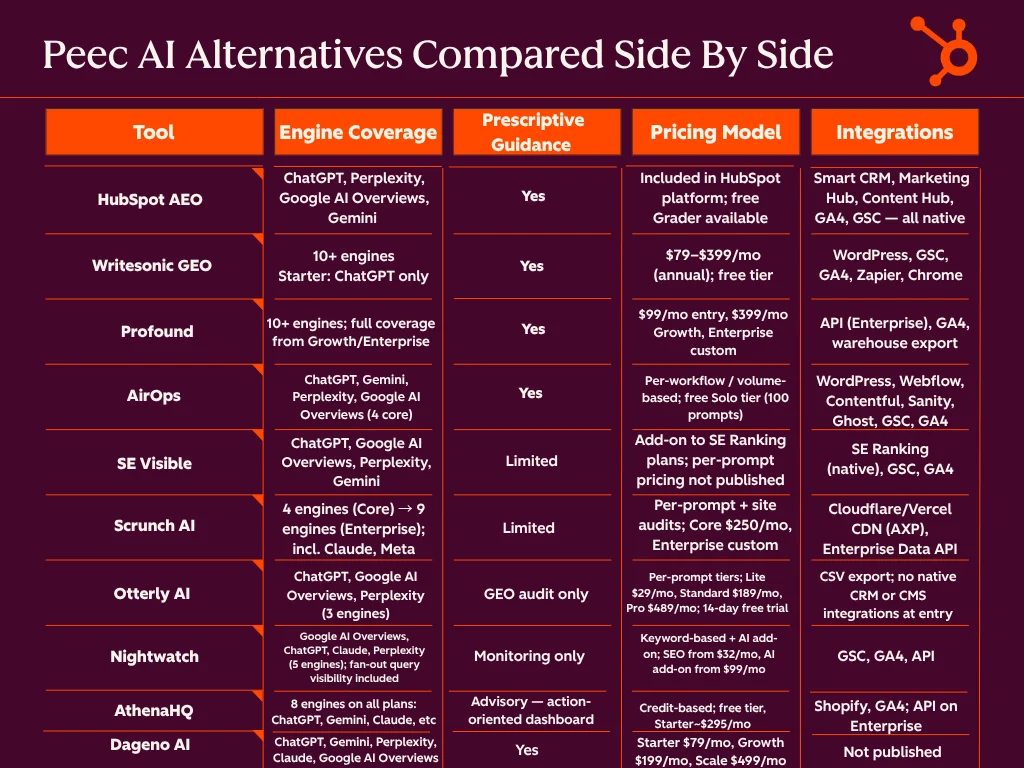
The evolving market has seen several platforms emerge that address the limitations of early-stage AI visibility tools. These alternatives offer a spectrum of functionalities, from deep CRM integration to comprehensive content creation workflows.
-1.png)
1. HubSpot AEO: Bridging AI Visibility and CRM Attribution
- Best For: B2B marketing and RevOps teams seeking native CRM attribution alongside AI visibility monitoring.
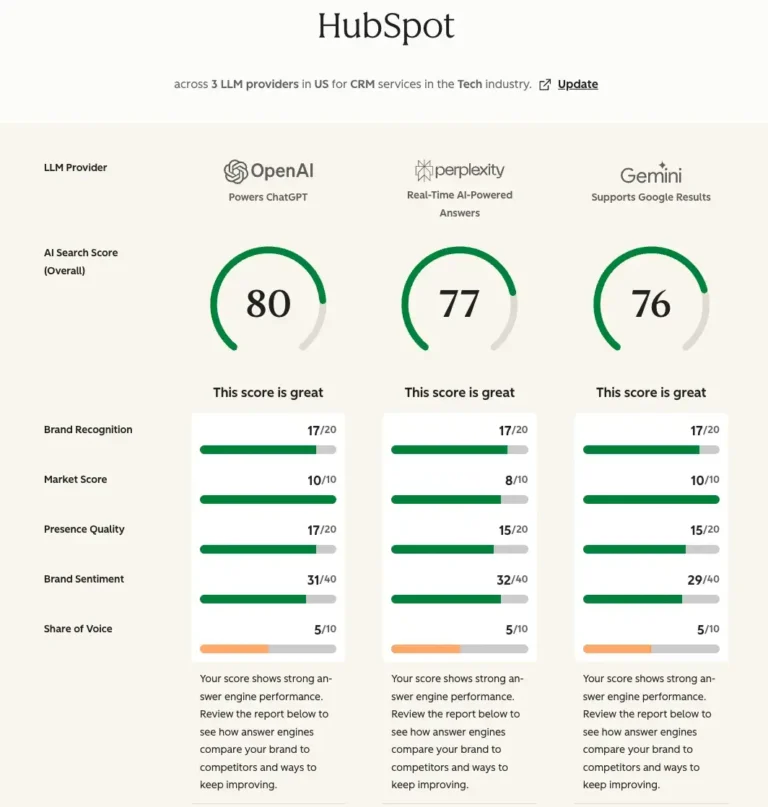
- Overview: HubSpot AEO stands out as the only platform built directly within a CRM. It tracks brand mentions, citation rates, prompt share of voice, and competitive benchmarks across major AI answer engines, surfacing this data directly alongside contact records, deal stages, and campaign performance in HubSpot’s Smart CRM.
- Key Differentiator: For teams struggling to quantify the revenue impact of AI visibility efforts, HubSpot AEO closes this loop without requiring custom integration. Sales representatives can immediately see if a prospect originated from a ChatGPT citation, providing invaluable context at the first touchpoint. This seamless connection eliminates manual data export and parallel dashboard maintenance.
- Limitations: While strong in CRM integration and attribution, it may be less specialized for deep prompt dataset analytics or AI crawler diagnostics compared to some niche tools.
- Pricing: Standalone at $50/month (or $45/month annually), and included in HubSpot Marketing Hub Professional and Enterprise tiers. A free AI Search Grader is also available.
2. Writesonic GEO: End-to-End Optimization for Content Workflows
- Best For: Teams whose primary bottleneck is executing content optimization based on AI visibility insights.
- Overview: Writesonic GEO offers a comprehensive solution that combines AI visibility monitoring with content creation capabilities. It identifies citation gaps and provides the tools for teams to immediately address them without switching to separate platforms.
- Key Differentiator: The seamless integration between visibility data and content generation is a significant advantage. When a citation gap is identified, teams can leverage Writesonic’s AI to write or brief the necessary content, creating a compounding advantage over time.
- Limitations: The monitoring layer, while improving, is newer than that of dedicated trackers. Engine coverage may be narrower on entry-level plans.
- Pricing: Starts at $79/month, offering a competitive price for combined writing and monitoring functionalities.
3. Profound: Enterprise Analytics and Scaled Content Creation
- Best For: Enterprise marketing teams, large agencies, and organizations where AI recommendations directly influence revenue and require robust analytics.
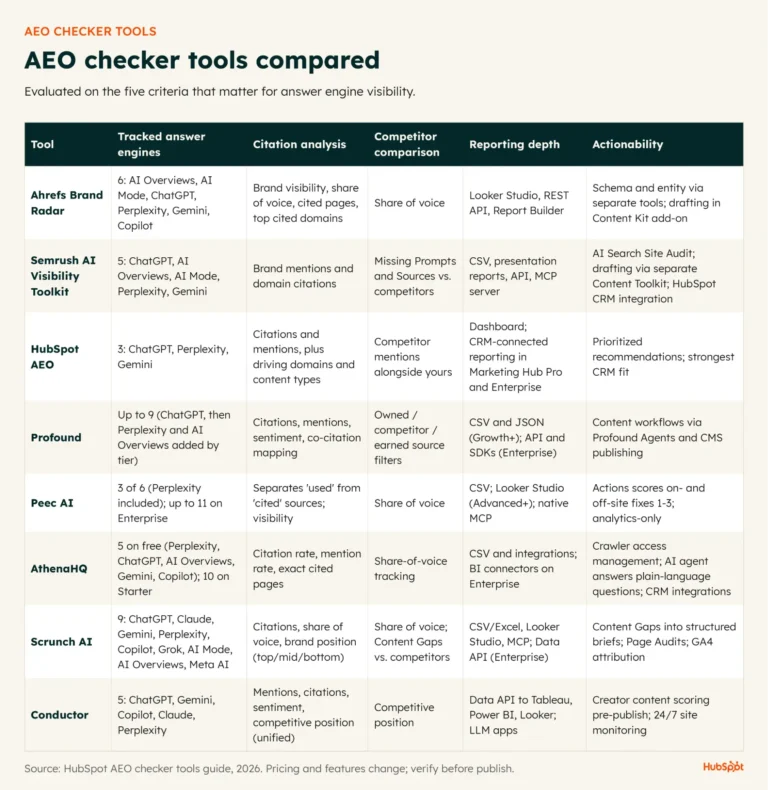
- Overview: Profound offers a feature-rich platform that tracks brand mentions, citations, sentiment, and prompt volume across more than 10 AI platforms. Its "Agents" feature enables scalable, AI-optimized content creation with human oversight.
- Key Differentiator: Profound boasts extensive prompt dataset figures and provides access to real user prompts, offering unparalleled credibility. The combination of measurement accuracy and content execution capacity makes it a powerful tool for enterprise needs.
- Limitations: The platform’s Growth plan, priced at $399/month, represents a significant investment and may be overkill for smaller teams or nascent AEO programs.
- Pricing: Growth plan at $399/month, with custom enterprise options.
4. AirOps: Streamlined Agency and Multi-Site Workflows
- Best For: Content operations teams and agencies managing multiple brands or extensive website portfolios.
- Overview: AirOps is a content operations platform that integrates AEO research and visibility analysis. Its features include tracking citation and mention rates, sentiment analysis, and direct publishing to various CMS platforms.
- Key Differentiator: The CMS publishing layer is a significant advantage for agencies and multi-site teams, allowing insights to be directly translated into published content within a single workflow. Templated "Playbooks" enhance operational leverage across multiple clients.
- Limitations: The AI visibility monitoring depth may not be as extensive as dedicated tracking tools. Teams focused purely on measurement might find they are paying for unused production capabilities.
- Pricing: Offers a free entry tier, with paid plans scaling based on volume and workflow complexity.
5. SE Visible (by SE Ranking): Unified SEO and AEO Coverage
- Best For: Teams already utilizing SE Ranking for SEO who want to integrate AI visibility tracking without additional subscriptions.
- Overview: SE Visible brings AI overview tracking into the SE Ranking ecosystem, combining it with over 13 years of SEO data. It offers unlimited seats across all plans, making it accessible to entire marketing teams.
- Key Differentiator: The unified view of traditional SEO and AI visibility provides significant efficiency. For teams seeking to add AEO capabilities without increasing their tool stack, SE Visible offers a cost-effective path, leveraging historical SEO context for comparative benchmarking.
- Limitations: AI visibility data is a more recent addition compared to SE Ranking’s core SEO functionalities. Teams solely focused on AEO might find the SEO features extraneous.
- Pricing: Available as part of SE Ranking plans, with unlimited seats.
6. Scrunch AI: Enterprise-Grade Crawler Analytics
- Best For: Enterprise brands and agencies requiring advanced AI crawler analytics alongside standard visibility tracking.
- Overview: Scrunch AI targets the enterprise segment, offering standard brand visibility tracking complemented by AI crawler analytics. This feature reveals how AI bots interact with a site before generating answers.
- Key Differentiator: The AI crawler analytics layer provides a unique diagnostic capability, showing the inputs AI systems use to construct answers, which is invaluable for technical SEO teams. Its Agent Experience Platform (AXP) automatically serves AI-optimized content to AI agents.
- Limitations: The Core plan, starting at $250/month, represents a significant entry cost. The content generation layer is less developed than some competitors.
- Pricing: Core plan at $250/month, with custom enterprise pricing. API access is available on enterprise plans for custom CRM integrations.
7. Otterly AI: Accessible Entry-Level Solution
- Best For: Startups, SMBs, and teams testing AEO before committing to higher-tier pricing.
- Overview: Otterly AI provides brand mention and citation tracking across multiple answer engines at an accessible price point. It holds a strong G2 rating and includes a GEO audit feature with fix-it checklists.
- Key Differentiator: The price-to-functionality ratio at its entry tier ($29/month) makes it a credible option for smaller teams to establish a measurement baseline.
- Limitations: Engine coverage is narrower than top-tier tools. CRM integrations are not available at entry-level price points, and the jump to the Premium tier is substantial.
- Pricing: Lite at $29/month, Standard at $189/month, Premium at $489/month. A free trial is available.
8. Nightwatch: Understanding AI Reasoning Processes
- Best For: Teams focused on understanding the AI reasoning process behind answers and those for whom traditional rank tracking remains a primary objective.
- Overview: Nightwatch offers affordable AI tracking as an add-on to its SEO monitoring. It provides fan-out query visibility, showing the real-time web searches AI systems conduct before composing answers.
- Key Differentiator: The fan-out query visibility is a key advantage, offering direct insight into which content gaps to prioritize by revealing why an AI might not be citing a brand.
- Limitations: Engine coverage is narrower than some enterprise alternatives, and the AI tracking add-on layered onto SEO monitoring can feel fragmented.
- Pricing: Base SEO monitoring from $32/month; AI tracking add-on from $99/month.
9. AthenaHQ: Budget-Conscious Entry Point
- Best For: Early-stage programs, teams evaluating AEO for the first time, and organizations needing a proof of concept before budget approval.
- Overview: AthenaHQ offers a free entry point, positioning itself as a brand intelligence tool with AI visibility capabilities. It covers mentions, citations, and competitive share of voice.
- Key Differentiator: The low-friction entry allows teams to build a business case with real data before committing to paid platforms.
- Limitations: Lacks auditing and optimization capabilities, and enterprise-grade security features are limited, making it more of a starting point than a long-term solution.
- Pricing: Credit-based, with a free tier, Starter plan around $295/month, and custom pricing.
10. Dageno AI: Comprehensive Workflow Execution

- Best For: Teams aiming to transition from monitoring to execution within a single platform without incurring enterprise-level costs.
- Overview: Dageno AI is a newer entrant with an ambitious scope, aiming to cover the entire workflow from data monitoring and strategy to content generation and result attribution.
- Key Differentiator: The integrated attribution layer is a significant aspect, connecting content actions to visibility outcomes and providing a necessary bridge for ROI reporting.
- Limitations: As an early-stage tool, the depth of each capability is still developing. Thorough evaluation during a trial is recommended.
- Pricing: Starter $79/mo, Growth $199/mo, Scale $499/mo, with custom enterprise options.
Navigating the Selection Process: A Strategic Approach
Choosing the right AI visibility platform hinges on identifying the most significant bottleneck in a team’s current program.
- For CRM-native attribution, HubSpot AEO is the unparalleled choice, offering seamless integration.
- For content production challenges, Writesonic GEO and AirOps provide integrated monitoring and creation capabilities.
- For enterprise security and compliance, Profound stands out with its robust features.
- For teams already invested in SE Ranking, SE Visible offers an efficient, unified solution.
- For agency workflows and multi-site management, AirOps (for content operations) and Scrunch AI (for technical AEO) are strong contenders.
- For budget-constrained teams, Otterly AI and AthenaHQ offer credible starting points for measurement.
- For deep diagnostic insights into why AI isn’t citing a brand, Nightwatch‘s fan-out query visibility is invaluable.
Before committing to any paid solution, a crucial first step is to utilize HubSpot’s free AI Search Grader. This tool provides an essential baseline score of current AI visibility across answer engines, enabling a more informed evaluation of subsequent platform performance.
Connecting AI Visibility to Revenue: The Attribution Imperative
The ultimate success of an AI visibility program lies not just in tracking performance but in demonstrably linking it to revenue. This requires a strategic approach to attribution:
- Tagging AI-Sourced Traffic: Given that AI answer engines often obscure referral data, leading to "dark traffic" often classified as "direct" in analytics, meticulous tagging is essential. This involves using dedicated UTM parameters for AI-sourced campaigns, configuring channel groupings in analytics platforms to capture known AI referrers (e.g., perplexity.ai, chatgpt.com), and ensuring CRM systems capture the source at contact creation.
- Standardizing UTM and Tracking: A consistent UTM taxonomy across all AI visibility initiatives is paramount. Each piece of content developed as part of an AEO workflow should include campaign parameters that map back to the specific AI visibility gap it aims to address. This creates a clear line from identifying a citation gap to measuring the pipeline-influenced contacts generated by the resulting content. CRM custom properties, such as "AI Visibility Initiative," can be populated via workflow automation, allowing every deal to carry a signal of AI visibility contribution.
- Building CRM Dashboards: Creating specialized CRM dashboards that highlight AI-sourced contacts by lifecycle stage, deal stage, and revenue generated provides leadership with a clear view of the program’s financial impact. This data-driven approach strengthens the case for continued investment in AEO tools and strategies.
From Monitoring to Action: Content and AI Workflows in Harmony
Monitoring alone is insufficient; actionable strategies are needed to capitalize on AI visibility insights. An effective AEO playbook typically involves a six-step cycle:
- Prompt Analysis: Identify high-intent queries where citation gaps exist.
- Content Gap Identification: Analyze competitor citations for these prompts.
- Content Briefing: Develop clear briefs outlining the content needed to address the gap.
- Content Creation: Utilize AI tools and human expertise to produce optimized content.
- Content Publishing: Deploy the content across relevant platforms.
- Citation Monitoring: Track the impact of the new content on AI visibility and citations.
For scaled workflows, platforms like HubSpot Content Hub can manage content briefs, approval processes, and asset libraries, while HubSpot’s native AI tools can assist with prompt generation and initial drafts, creating a closed loop from detection to measurement.
Post-Selection Activation: A 90-Day Roadmap to Value
Successful adoption of an AI visibility platform requires a structured activation plan:
.png?width=650&height=488&name=White%20Simple%20Comparison%20Graph%20(2).png)
- Days 1-30: Establish Tracking and Baselines: Configure the chosen platform, define core KPIs, and capture initial AI visibility data to establish a benchmark.
- Days 31-60: Prioritize Gaps and Produce Content: Focus on the most critical citation gaps and initiate content creation based on the AEO playbook.
- Days 61-90: Measure, Iterate, and Expand: Analyze the impact of initial content efforts on citation rates and AI-referred traffic. Refine strategies and begin expanding the scope of the program.
Demonstrating early wins, even at the 30-day mark, can build internal momentum and secure ongoing program support.
Pricing Models and Value Considerations
The pricing landscape for AI visibility platforms is diverse, often based on factors such as prompt volume, number of AI engines covered, and user seats. Understanding these models is key to effective budgeting and negotiation. Annual billing typically offers discounts, and unlimited seats can provide significant value for growing teams. When negotiating, focus on prompt volume, engine coverage, and seat policy to ensure the best return on investment.
Best Practices for Maximizing Tool ROI
To achieve the highest return on investment from AI visibility tools, adherence to core best practices is essential:
- Audience-First Prompt Design: Segment prompts by buyer persona to ensure visibility among critical audience segments.
- Competitive Citation Auditing: Analyze competitor citation strategies for high-intent queries before creating new content.
- Entity and Schema Hygiene: Ensure clear definition of brand, products, and personnel across the web with proper structured data.
- Brand Descriptor Consistency: Use specific, unambiguous language to describe the brand and its offerings.
- Answer-First Content Standards: Prioritize delivering value and answers within the initial content of pages.
- Cross-Channel Validation: Continuously cross-reference AI visibility data with traditional analytics and CRM data.
- Citation Retention: Implement a proactive maintenance cadence for high-priority cited pages to prevent loss of visibility.
Regular use of tools like the AI Search Grader can help benchmark progress and defend program value.
Frequently Asked Questions About Peec AI Alternatives
- Is there a low-cost alternative? Yes, Otterly AI ($29/month), AthenaHQ (free tier), and Nightwatch (AI add-on from $99/month) offer accessible entry points. HubSpot AEO offers a consolidated solution for those needing CRM integration.
- Which tools offer optimization recommendations? Writesonic GEO, AirOps, and Profound provide direct optimization workflows. Otterly AI offers a GEO audit.
- How to validate AI visibility data accuracy? Cross-reference with GA4, Search Console, and direct manual prompt checks. Evaluate platforms based on their prompt methodology (real user prompts vs. synthetic).
- Do these tools integrate with CRM for attribution? HubSpot AEO offers native integration. AirOps connects to Google Search Console and GA4. Profound and Scrunch AI offer API access for custom enterprise integrations. Most others rely on CSV exports or webhooks.
- What’s the best alternative for multi-language brands? Peec AI is strong in this area. Among alternatives, Profound and Scrunch AI support multi-region tracking on enterprise tiers. SE Visible inherits multi-language SEO capabilities.
The landscape of AI visibility platforms is dynamic and rapidly evolving. By understanding the core challenges, evaluating tools against key criteria, and implementing strategic activation and attribution plans, marketing teams can effectively harness the power of AI search to drive measurable business growth.
About the Author