The digital marketing landscape is undergoing a seismic shift, with the rapid rise of AI-powered search engines, often termed "answer engines," creating an urgent need for marketers to acquire new optimization skills. This burgeoning field, known as Answer Engine Optimization (AEO), is no longer a niche pursuit but a critical component of any successful online strategy. Data from Wix Studio highlights the dramatic surge in user adoption, revealing a substantial 40% increase in monthly unique visitors to major answer engines, climbing from 634 million in Q1 2025 to 904 million in Q1 2026. This exponential growth underscores the imperative for businesses to adapt their online presence to be discoverable in these evolving search environments.
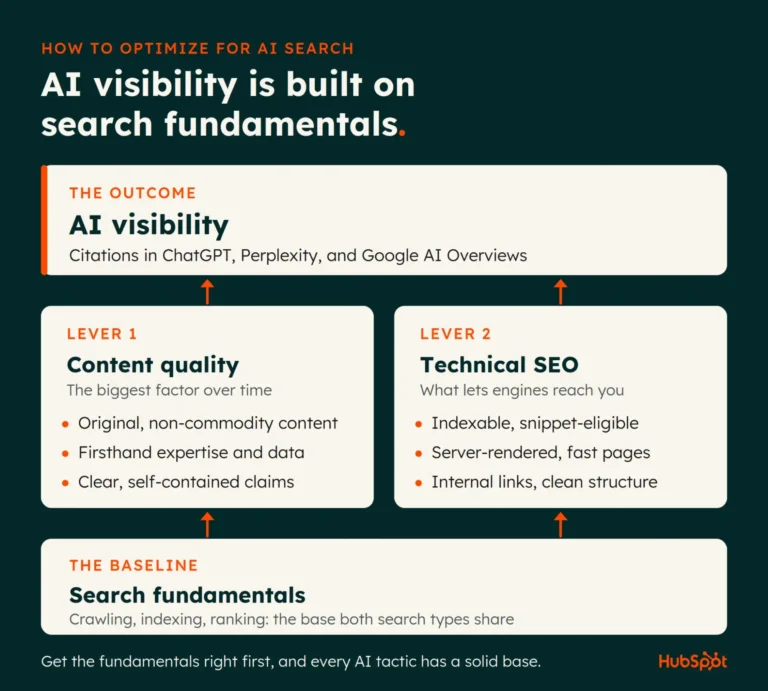
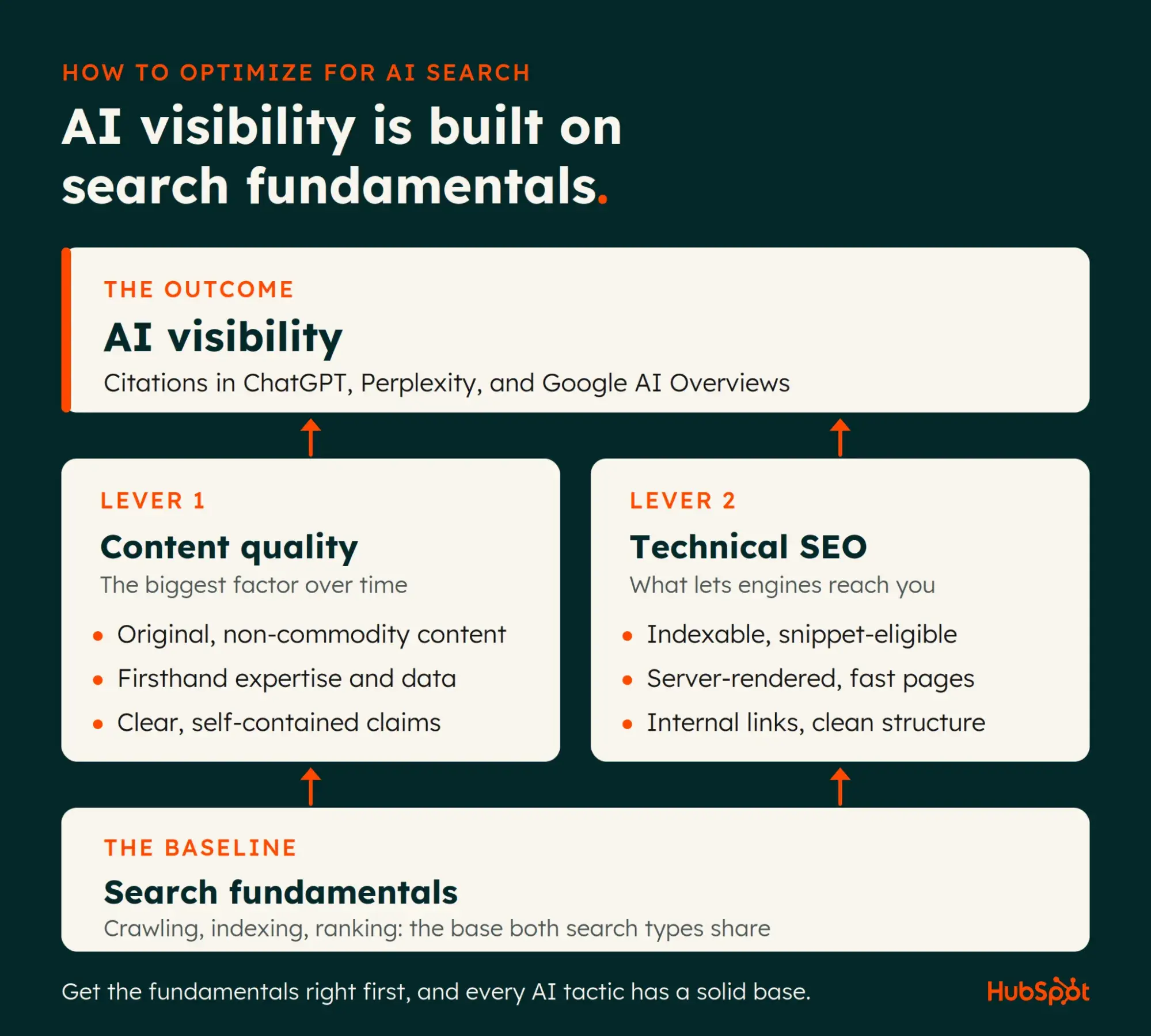
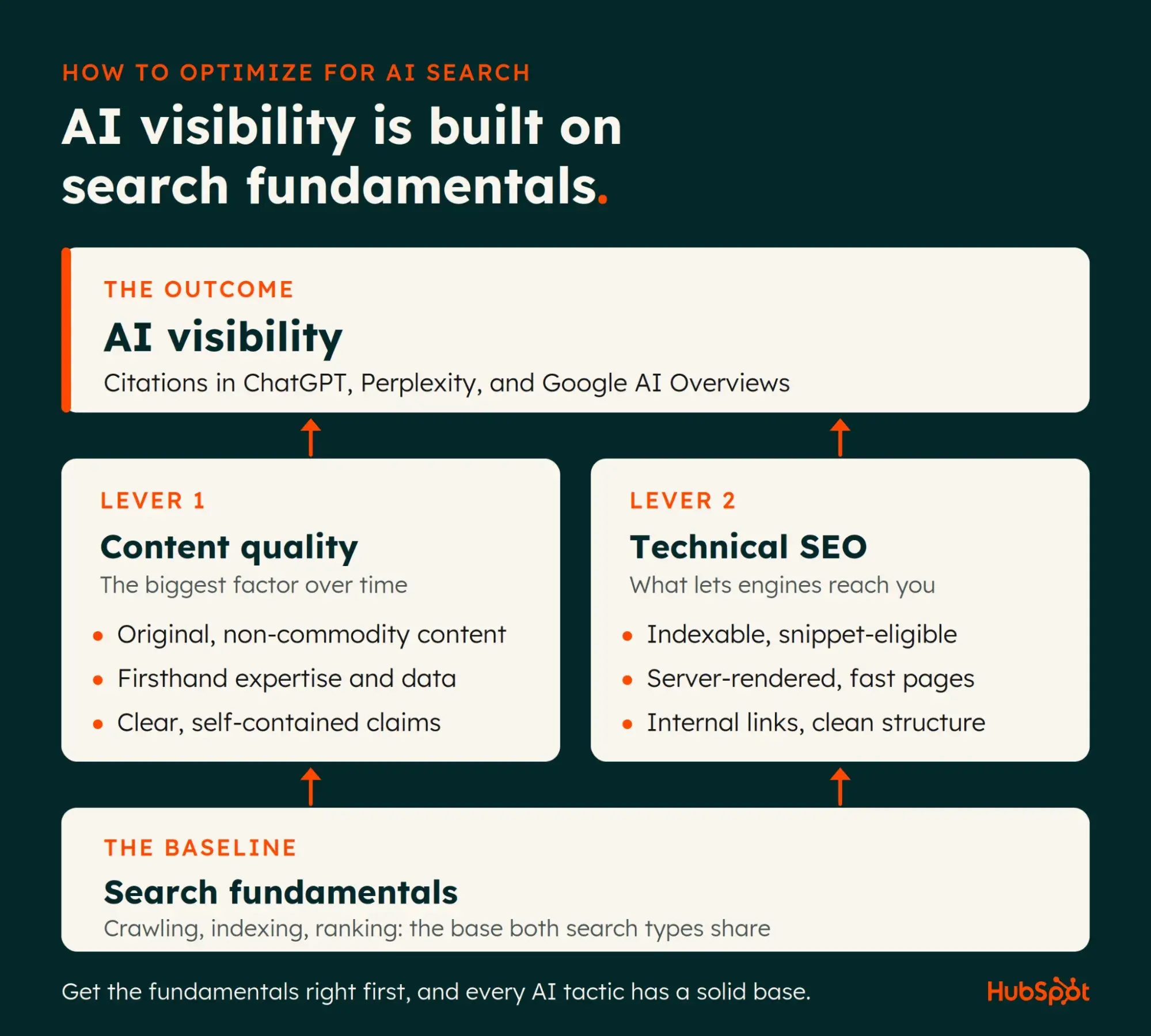
While the emergence of AI search might suggest a departure from traditional Search Engine Optimization (SEO), the reality is far more interconnected. AEO does not replace SEO; rather, it builds upon its fundamental principles. The very elements that contribute to strong traditional search rankings—technical accessibility, content quality, and user experience—are also the bedrock for AI-driven citations. As consumers increasingly leverage both classic search engines and AI-powered answer engines to conduct their research and make purchasing decisions, a dual-channel visibility strategy is no longer optional but essential for businesses aiming to capture audience attention and drive traffic.
This comprehensive guide delves into the core strategies for optimizing websites for AI search, offering a repeatable framework designed to remain effective even as large language models (LLMs) continue to evolve. It will explore the technical prerequisites, the nuances of creating quotable content, the distinctions between various AI search platforms, and methods for evaluating the success of an AEO strategy.
The Enduring Relevance of SEO in the Age of AI Search
The underlying infrastructure powering AI search often mirrors that of traditional search engines. Understanding how established search algorithms, such as Google’s, function provides invaluable context for navigating both channels. Answer engines, at their core, still need to crawl, index, and evaluate web pages before they can confidently cite them in their responses. Google has openly stated that its AI Overviews are powered by a customized version of its Gemini model, which integrates seamlessly with its existing search systems. Similarly, ChatGPT’s web search capabilities frequently leverage Bing, meaning that the discoverability signals that have long been crucial for traditional search also feed the AI-driven answer engines.
This shared foundation is precisely why AI search optimization is an augmentation of SEO, not a replacement. A website that is technically unsound—difficult for search engines to crawl, render, or index—will inherently have fewer pathways to be featured in an AI-generated answer. The quality of content remains paramount. AI engines are programmed to cite sources that are not only parsable but also trustworthy. The same rigorous standards that earn high rankings in traditional search can directly translate into increased citation potential within AI responses. Therefore, before embarking on any AI-specific optimization efforts, ensuring a robust SEO baseline is non-negotiable. Every subsequent step in AEO relies on this fundamental accessibility and credibility.
Crafting People-First Content for AI Search Supremacy
Content quality stands as the most significant determinant of long-term AI search visibility. Google itself emphasizes the importance of "unique, compelling, and useful" content, suggesting it plays a more pivotal role in generative AI search than any other optimization factor. The company differentiates between "commodity content," which merely rehashes existing information, and "non-commodity content," which is built upon genuine expertise and firsthand experience.
AI answer engines have a diminished incentive to cite content that they could readily generate themselves from their vast training data. Conversely, people-first, non-commodity content significantly enhances citation potential by offering what an AI model inherently cannot: original data, profound subject-matter expertise, and a distinct human perspective. Empirical data supports this assertion. An analysis by SE Ranking, examining over 216,000 web pages, found that content quoting experts received an average of 4.1 ChatGPT citations, compared to just 2.4 for content lacking expert attribution. Similarly, pages featuring 19 or more data points averaged 5.4 citations, substantially outperforming data-light pages, which garnered an average of 2.8.
To maximize citation potential, insights should be presented clearly and concisely, allowing AI engines to extract them as self-contained, quotable claims. This directness ensures that original thinking is readily identifiable and valued by these advanced systems.
Fortifying AI Search Visibility with Robust Technical Foundations
The ability of answer engines to cite a webpage is fundamentally dependent on their capacity to access and index it. Google has been explicit, stating that a page must be indexed and eligible to appear in Google Search with a snippet to be included in AI Overviews or AI Mode, with no additional technical requirements beyond this. Therefore, confirming a page’s crawlability and snippet eligibility is a critical prerequisite. Website speed further reinforces this accessibility; SE Ranking’s research indicated that pages with a First Contentful Paint under 0.4 seconds averaged 6.7 ChatGPT citations, nearly triple the 2.1 citations received by pages slower than 1.13 seconds.
Internal linking strategies are instrumental in helping AI engines discover related content, making a well-structured linking hierarchy essential for findability. A seamless page experience across all devices is also paramount. This includes ensuring that primary content is readily available as text and easily distinguishable from other page elements, rather than relying on scripts that crawlers might bypass.
JavaScript can often present a significant obstacle. While Googlebot can render JavaScript when not explicitly blocked, many other AI crawlers process only raw HTML and do not execute scripts. This means that content dynamically loaded via JavaScript might appear as a blank page to platforms like ChatGPT or Perplexity. To mitigate this, primary content should be served via server-rendered HTML, adhering to established JavaScript SEO best practices. Furthermore, Google advocates for a clear page structure, utilizing descriptive headings and logical sections to facilitate navigation and comprehension for both human readers and AI models.
Leveraging Structured Data and Snippet Controls for Enhanced AI Search Reach
Structured data acts as a machine-readable map for answer engines, significantly reducing the guesswork involved in interpreting content and determining its suitability for citation. However, the effectiveness of this map hinges on its accuracy. Google’s guidelines stipulate that structured data markup must accurately reflect the visible content on the page, preventing the practice of serving different information to crawlers than to human visitors. Schema markup amplifies existing clear and credible content; it cannot compensate for a page with insufficient or misleading information.
Snippet controls play a crucial role in dictating how much of a webpage an AI engine can extract, effectively acting as gatekeepers for AI visibility. Google’s AI Overviews and AI Mode will only feature a page if it is indexed and eligible to be displayed with a snippet. Consequently, directives that limit snippets also inherently limit AI answer inclusion.
Three primary preview controls govern this process. Two are page-level directives managed within the robots meta tag or the equivalent X-Robots-Tag HTTP header:
noindex: Prevents a page from being indexed and appearing in search results altogether.max-snippet:[seconds]: Sets a maximum character limit for snippets, impacting the amount of content an AI can quote. A value of0effectively negates snippet eligibility.
The third control, data-nosnippet, operates differently. This is an inline HTML attribute applied to a specific element within the page body, rather than a page-level directive. It selectively withholds only the designated passage, allowing sensitive content to remain out of contextually fragmented quotes while keeping the rest of the page eligible for AI citation.
It is critical to understand that these controls influence both classic search results and AI answers. If a well-performing page is not appearing in AI responses, examining its robots meta tag is a primary troubleshooting step. A misplaced nosnippet directive or an overly restrictive max-snippet:0 setting can completely exclude a page. Similarly, a low character cap can deprive an AI model of the necessary context for a meaningful citation. Adjustments to these settings can typically be made by editing the robots meta tag in the HTML head of a page or by serving it via the X-Robots-Tag HTTP header. Most Content Management Systems (CMS) and SEO plugins provide user-friendly interfaces for managing these directives without requiring direct code manipulation.
Optimizing for AI Search with Multimedia, Local, and Product Data
Generative AI results are increasingly incorporating images and videos alongside text links, creating additional avenues for website visibility. This integration does not necessitate the creation of entirely separate assets; rather, pairing compelling, relevant images and videos with existing content, following standard SEO best practices, automatically optimizes them for AI features. Video content, in particular, is proving to be a significant driver of visibility. Fan Out’s off-site study identified YouTube as the second most frequently cited platform, with an impressive 1,531 citations.
However, AI systems do not perceive video content in the same way humans do. AI search engines often rely on the surrounding textual context to determine relevance. To enhance video discoverability, it is crucial to provide transcripts, write descriptive summaries that encapsulate the video’s content, and include timestamps. Fan Out’s research found that 13.7% of YouTube citations specifically pointed to a timestamped moment within a video.
Local and merchant data becomes particularly important for queries that indicate an intent to purchase or visit a specific business. Google has confirmed that its generative AI responses can, when appropriate, incorporate product listings, detailed product information, and specifics about local businesses. To ensure eligibility for these responses, maintaining up-to-date Merchant Center feeds and Google Business Profiles is essential. Google highlights both of these as key tools for improving visibility in AI responses and other search results. Depending on the business sector, Google also offers newer functionalities like Business Agent, a conversational interface on Search that enables customers to interact directly with a brand.
Harnessing Q&A Formatting for AI Search Effectiveness
Answer engines favor content that directly addresses user queries upfront. CXL’s analysis of AI Overview citations revealed that the majority of cited passages originated from the top third of a webpage, with only about a fifth coming from the bottom 40%. This data strongly advocates for leading with the answer. HubSpot’s AEO guide further advises placing the primary answer within the initial 40 to 60 words of a section, followed by supplementary details.
The strategic use of question-led subheadings reinforces this answer-first approach. Kevin Indig’s study on ChatGPT citations found that cited text was twice as likely to contain a question mark, and headings accounted for a significant 78.4% of citations linked to specific questions. Phrasing an H2 or H3 heading as the precise question a user might ask can provide the AI engine with a clear prompt to match and a concise paragraph to extract as its response.

The inclusion of supporting bullet points and brief summaries further facilitates the extraction of accurate replies. Research on structural formatting indicates that lists and tables achieve 43% higher extraction accuracy compared to the same information presented in prose. By adopting an answer-first formatting strategy, a webpage effectively transforms into a collection of self-contained, quotable units that AI answer engines can efficiently cite.
Navigating AI Search Across Perplexity and ChatGPT
The way a webpage is perceived and utilized can vary significantly between different AI search engines. Perplexity stands out as a more prolific citer, accounting for 59% of off-site citations and drawing on approximately 10.8 sources per answer. In contrast, ChatGPT tends to be more selective, citing around 3.3 sources per query, according to data from Fan Out. Their citation preferences also diverge. Perplexity shows a preference for discussion platforms such as LinkedIn, G2, and Reddit, which constitute 17.35% of its citations. ChatGPT, on the other hand, leans more towards traditional long-form articles, as identified by Wix Studio. Notably, in Fan Out’s dataset of B2B SaaS queries, an overwhelming 96% of LinkedIn citations were attributed to Perplexity alone.
Temporal factors also differentiate these platforms. In a controlled experiment conducted by SE Ranking and Search Engine Land, Perplexity surfaced newly published pages to the top spot within one to three days. However, its citations often directed to supporting test domains rather than the primary brand site. ChatGPT exhibited a slower reaction time but demonstrated a strengthening of its citations for the target brand as the month progressed.
The citation habits of these engines rarely overlap. Fan Out’s findings indicate that only 7.7% of cited URLs appear across more than one engine, meaning that achieving citations from one platform does not guarantee similar success on another. Therefore, it is advisable to treat each AI engine as a distinct channel rather than assuming a single optimization strategy will satisfy all.
Implementing AI Content Optimization Workflows for Sustained Visibility
The most effective approach to AI search optimization involves establishing repeatable workflows rather than treating it as a one-time task. The following workflow guides a page from initial research through ongoing content refinement:
-
Research and Map Entities: Begin by grouping the questions your target audience asks into thematic clusters. Subsequently, develop an entity map that clearly delineates the relationships between your brand, products, and core topics, enabling AI engines to comprehend their interconnectedness.
-
Draft Answer-First: Structure each section of your content to address its core question in the opening lines, employing question-led subheadings and the answer-first formatting previously discussed. Present the primary claim upfront, then substantiate it with original data and expert insights.
-
Incorporate Structured Data: Apply schema markup that accurately reflects the content visible on the page. Adhere to structured data guidelines to ensure that the markup enhances comprehension rather than misrepresenting the content.
-
Quality Assurance Before Publishing: Prior to publication, verify that the page is crawlable, renders its main content in server-side HTML, and passes validation in a schema testing tool. A page that AI engines cannot parse effectively cannot be cited.
-
Publish and Establish a Baseline: Record the page’s performance in answer engines at the time of launch to establish a benchmark for future measurement and improvement.
-
Schedule Refresh Cadence: Implement a fixed schedule for reviewing and updating content, including statistics, examples, and claims. This proactive approach prevents content from becoming outdated between formal audits. The subsequent measurement section will provide guidance on prioritizing pages for refreshing.
Debunking Common Myths in AI Search Optimization
Not all advice circulating regarding AEO is grounded in data or official guidance. Several widely propagated tactics lack empirical support or contradict established search principles, making them prime candidates for dismissal:
- Keyword Stuffing: AI engines prioritize natural language and topical relevance over the excessive repetition of keywords.
- Creating Content Solely for AI: The primary focus should remain on providing value to human users. AI optimization should enhance, not replace, user-centric content creation.
- Ignoring Technical SEO: As highlighted, foundational technical SEO remains critical for AI discoverability.
- Over-reliance on Link Building: While backlinks are important, the quality and context of citations within AI responses are becoming increasingly significant.
Measuring Success and Iterating for AI Search Optimization
To gauge the effectiveness of an AEO strategy, it is imperative to track both visibility signals and conversion data. Visibility metrics indicate whether answer engines are mentioning or citing your content, while conversion data reveals whether this increased visibility is translating into tangible business outcomes. Key metrics to monitor include:
- AI Answer Mentions/Citations: Track how often your brand or specific pages are referenced in AI-generated responses across various platforms.
- Referral Traffic from Answer Engines: Monitor website traffic originating directly from AI search interfaces.
- Conversion Rates: Analyze the conversion rates of users who arrive via AI search compared to other traffic sources.
- Engagement Metrics: Observe bounce rates, time on page, and other engagement signals for AI-driven traffic.
An AI Search Optimization Checklist for Pre-Publication Review
This checklist serves as a final pre-publication review for any page intended for surfacing and citation by AI answer engines:
Foundations
- [ ] Page is crawlable and indexable by search engines.
- [ ] Core content is rendered in server-side HTML.
- [ ] Website speed meets optimal performance benchmarks.
- [ ] Robots meta tag and X-Robots-Tag are correctly configured.
Content
- [ ] Content is unique, compelling, and demonstrates expertise.
- [ ] Information is presented clearly and concisely.
- [ ] Original data, firsthand experience, or expert quotes are included.
- [ ] Content directly answers potential user queries.
Technical and Structured Data
- [ ] Structured data markup accurately reflects on-page content.
- [ ] Schema markup is validated using a testing tool.
- [ ]
data-nosnippetattribute is used judiciously for sensitive content.
Multimodal, Local, and Product
- [ ] Relevant images and videos are optimized with descriptive alt text and captions.
- [ ] Video transcripts and summaries are provided.
- [ ] Local business information (Google Business Profile) is current.
- [ ] Product feeds and information are up-to-date.
Formatting
- [ ] Content begins with the main answer or claim.
- [ ] Question-led subheadings are utilized where appropriate.
- [ ] Bullet points and short summaries enhance readability and extraction.
Per Engine and Measurement
- [ ] Baseline visibility metrics are recorded.
- [ ] Content is tailored to address potential differences between engines (e.g., Perplexity vs. ChatGPT).
Skip These
- [ ] Keyword stuffing.
- [ ] Generic, unoriginal content.
- [ ] Unnecessary or misleading structured data.
Building an AI SEO Strategy That Evolves With Users
An effective AI search optimization strategy requires ongoing maintenance and adaptation, mirroring the dynamic nature of traditional SEO. The initial 90 days should focus on establishing the core AEO strategy, after which it should operate on a defined cadence of review and refinement.
- First 30 days: Implement foundational technical SEO, create and optimize initial content, and set up baseline measurement tools.
- Next 60 days: Analyze initial data, refine content based on performance, and begin experimenting with structured data and snippet controls.
- Ongoing: Establish a recurring content refresh schedule, monitor AI engine updates, and adapt the strategy accordingly.
By adopting this structured approach, an AI SEO strategy can achieve self-improvement. The established processes, cadences, and oversight mechanisms remain consistent, providing a stable framework even as AI search engines undergo continuous evolution.
Frequently Asked Questions About AI Search Optimization
Do I need special markup to appear in AI Overviews?
No. Google has indicated that AI features do not require dedicated schema markup. A page simply needs to be indexed and eligible for a snippet in standard Google Search. While adding schema is beneficial for overall SEO, it is not a standalone requirement for AI citation.
Should I add an llms.txt file?
There is no conclusive evidence to support the efficacy of an llms.txt file. SE Ranking’s analysis of nearly 300,000 domains found no correlation between this file and AI citations, and their predictive models improved after its removal.
How often should I update content for AI search?
Instead of adhering to a rigid universal number, establish a fixed refresh cadence. Prioritize pages where statistics, examples, or claims are most likely to become outdated rapidly.
How do I increase my chances of getting cited in Perplexity?
Perplexity favors current, well-structured content with clear source attribution. It cites generously, averaging approximately 10.8 sources per answer. Perplexity also leans more heavily on discussion content, with 17.35% of its citations originating from platforms like LinkedIn, which is more than double the average across other models.
Does AI search replace classic SEO?
No. Answer engines continue to crawl, index, and rank pages before citing them, meaning that classic SEO principles remain highly relevant and complementary to AI search. Google’s AI Overviews, for instance, operate on its existing search systems, indicating that the same fundamentals driving traditional rankings also pave the way for AI citations.
About the Author