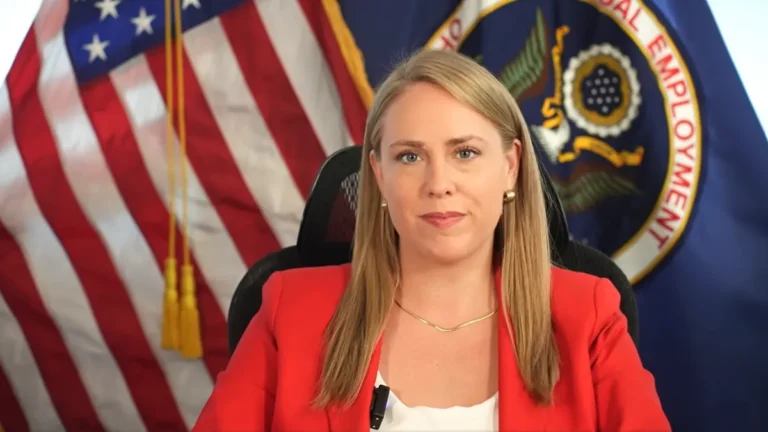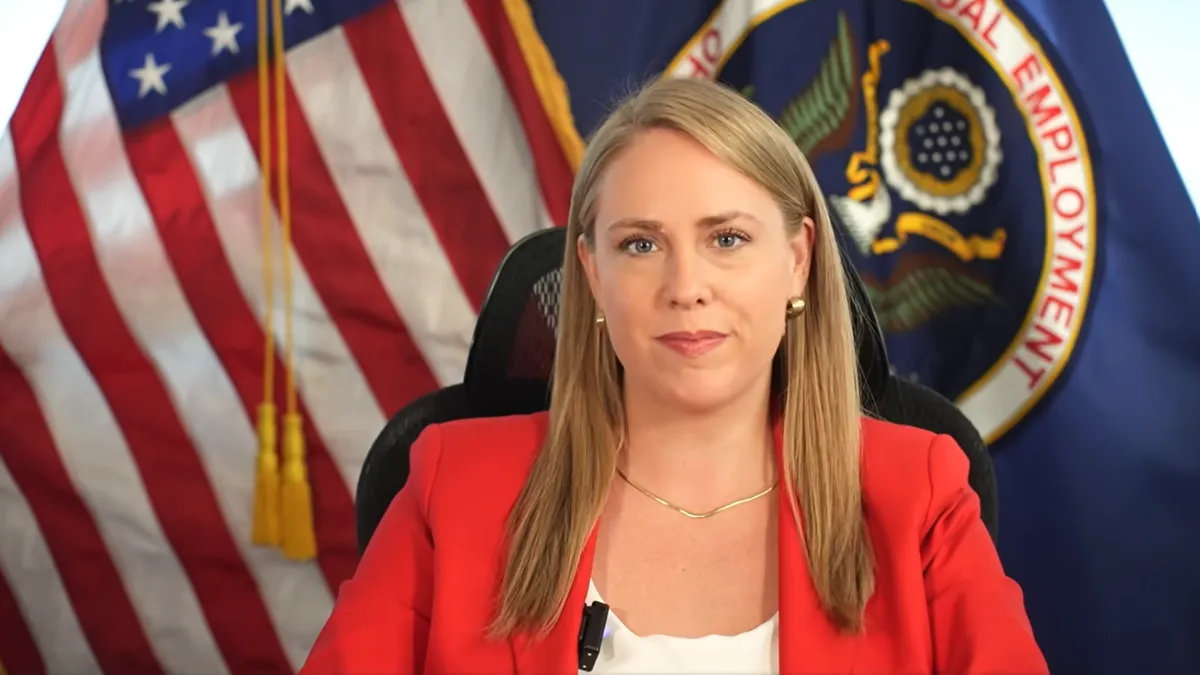
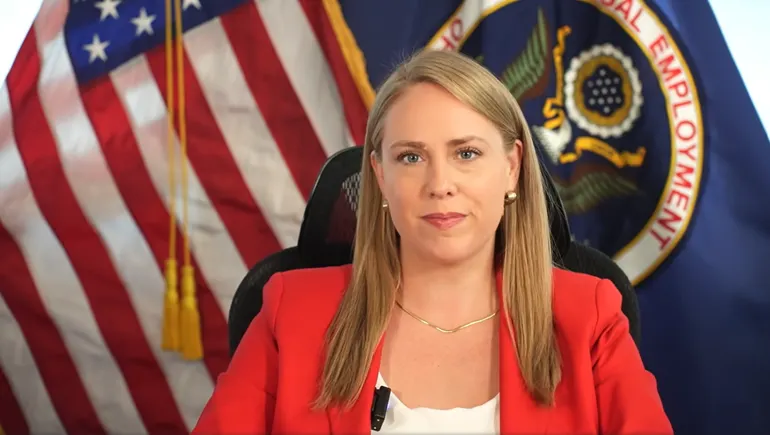
The chair of the U.S. Equal Employment Opportunity Commission (EEOC) launched a public appeal on September 14, 2026, via social media platforms, actively soliciting reports of alleged anti-American discrimination in the workplace. This initiative aligns with the stated priorities of the Trump administration, emphasizing a focus on protecting American workers from perceived unfair employment practices. Andrea Lucas, the EEOC Chair, released a video message on LinkedIn and X (formerly Twitter) directly addressing American workers and encouraging them to come forward with any instances of bias they have experienced.
Direct Appeal for Allegations of Anti-American Bias
In her video address, Chair Lucas posed a series of pointed questions designed to elicit reports from individuals who believe they have been disadvantaged due to their American nationality. “Have you ever felt that you were treated differently because you’re an American?” she asked. Lucas elaborated on potential scenarios, including situations where American workers were allegedly laid off and subsequently tasked with training foreign visa holders, such as H-1B recipients, who then replaced them. She also highlighted concerns about managers or colleagues excluding American employees from work-related conversations by speaking in other languages or utilizing foreign messaging applications.
The EEOC Chair further probed, “Have you been harassed at work for speaking English or for being too American, or has your employer preferred workers of one foreign national origin to serve customers with that same background?” Lucas also raised questions about hiring and promotion practices in foreign-owned or operated businesses within the United States, inquiring if these entities predominantly hire or advance non-American workers. She also questioned the sudden shift in hiring practices at local factories and plants, where a decline in hiring local individuals in favor of foreign workers has reportedly been observed.
Concluding her appeal, Chair Lucas stated that the EEOC is committed to protecting Americans of all racial backgrounds—White, Black, Asian, Hispanic, and Native American—from employers who unlawfully demonstrate a preference for non-Americans. This explicit mention of racial diversity within the American workforce underscores the commission’s intent to address discrimination broadly under the umbrella of national origin bias.
Context and Precedent for the Initiative
This outreach by Chair Lucas is not an isolated event but rather a continuation of a strategic direction set by the EEOC under her leadership. The video released on September 14, 2026, echoes a similar initiative from late 2025, when Lucas also used social media to encourage reports of workplace discrimination, specifically calling on White men to report instances of bias. These actions align with broader pronouncements made by Lucas throughout 2025, where she pledged to intensify efforts against what she termed "anti-American bias," as well as race and sex discrimination purportedly motivated by diversity, equity, and inclusion (DEI) initiatives.
The EEOC’s focus on national origin bias and its impact on American workers has been further solidified through tangible policy documents and guidance. In 2025, the commission published a technical assistance document titled “Discrimination Against American Workers Is Against The Law.” This publication was presented as being in lockstep with White House directives aimed at prioritizing American workers through robust anti-discrimination enforcement and concurrent efforts to reform immigration policies. These policy shifts reflect a broader national conversation and legislative agenda concerning labor markets, immigration, and the economic well-being of domestic workers.
Broader Implications and Potential Impacts
The EEOC’s proactive solicitation of complaints alleging anti-American discrimination carries significant implications for the American labor landscape. By actively encouraging reporting, the commission aims to uncover a potentially wider spectrum of workplace grievances that may have previously gone unreported due to a lack of awareness or fear of reprisal. This strategy could lead to an increase in formal discrimination charges filed with the EEOC, potentially necessitating an expansion of the agency’s investigative and enforcement resources.
The emphasis on national origin discrimination, framed through the lens of protecting American workers, could reshape the interpretation and application of Title VII of the Civil Rights Act of 1964, which prohibits employment discrimination based on race, color, religion, sex, and national origin. While Title VII explicitly protects individuals from discrimination based on their national origin, including that of foreign countries, the EEOC’s current focus appears to be on instances where being American itself is perceived as a basis for adverse employment actions. This could lead to novel legal arguments and case law regarding the scope of national origin discrimination protections.
Furthermore, this initiative may influence the hiring and management practices of businesses operating in the United States, particularly those with significant foreign investment or a diverse workforce. Companies may face increased scrutiny regarding their recruitment, promotion, and compensation policies to ensure they are not inadvertently or intentionally creating an environment that disadvantages American citizens or residents. The mention of H-1B visa holders in Lucas’s video also suggests a potential intersection with immigration policy enforcement, hinting at a coordinated approach between employment law and immigration regulations.

Analysis of Trends and Policy Shifts
The EEOC’s heightened focus on protecting American workers from perceived foreign preference in employment is indicative of a broader policy trend that prioritizes domestic labor interests. This approach can be viewed within the context of economic nationalism and a desire to ensure that national policies are seen to benefit the country’s own citizens first. Such a stance often emerges during periods of economic uncertainty or when there is a perception that international trade and immigration policies may be negatively impacting domestic employment opportunities.
The timing of this initiative, with its direct appeal to workers and its alignment with the administration’s stated priorities, suggests a deliberate effort to address public concerns about job security and fair competition in the labor market. The EEOC’s role as a federal agency tasked with enforcing anti-discrimination laws positions it as a key player in translating these policy objectives into actionable enforcement strategies.
However, such initiatives can also spark debate. Critics might argue that an overemphasis on "anti-American" bias could inadvertently lead to xenophobia or protectionist policies that hinder global talent acquisition and economic competitiveness. Ensuring that the EEOC’s enforcement remains focused on unlawful discrimination based on protected characteristics, rather than broad nationalistic sentiments, will be crucial. The agency’s guidance documents and legal interpretations will be closely watched to understand the precise boundaries of this new enforcement priority.
Reactions and Stakeholder Perspectives (Inferred)
While specific official reactions from other government agencies or industry groups were not immediately available following the release of the video, it is reasonable to infer a range of responses. Labor unions, often vocal advocates for American workers, might express support for the EEOC’s initiative, viewing it as a necessary step to ensure fair treatment and job security for domestic employees. Business organizations, on the other hand, may voice concerns about potential increased regulatory burden and the complexities of navigating nuanced national origin discrimination claims. They might emphasize the importance of a diverse workforce and the economic benefits derived from international talent.
Immigration advocacy groups could also weigh in, potentially expressing apprehension that the EEOC’s focus might be misconstrued or lead to unintended consequences for immigrant workers or employers who rely on foreign talent. Legal experts specializing in employment law will likely analyze the implications for future litigation and the evolution of anti-discrimination jurisprudence. The potential for increased filings of discrimination claims could also place a strain on the EEOC’s resources, necessitating careful prioritization and efficient case management.

Looking Ahead: Enforcement and Future Guidance
The EEOC’s active solicitation of complaints marks a significant development in its enforcement strategy. The commission is expected to follow up on these appeals by investigating any credible allegations of anti-American discrimination. This may involve issuing new guidance, conducting targeted investigations, and potentially pursuing litigation against employers found to be in violation of federal anti-discrimination laws. The success of this initiative will hinge on the EEOC’s ability to effectively investigate claims, provide clear guidance to employers and employees, and ensure that enforcement actions are consistent with the principles of equal opportunity and non-discrimination.
As this trend continues, the legal and HR communities will be closely observing how the EEOC defines and addresses "anti-American bias" within the framework of existing civil rights legislation. The commission’s future actions, including any further policy statements or enforcement actions, will provide greater clarity on the practical implications of this intensified focus on protecting American workers. The ultimate impact will be measured by its effectiveness in fostering a fair and equitable workplace for all, while upholding the nation’s commitment to diversity and inclusion.
About the Author