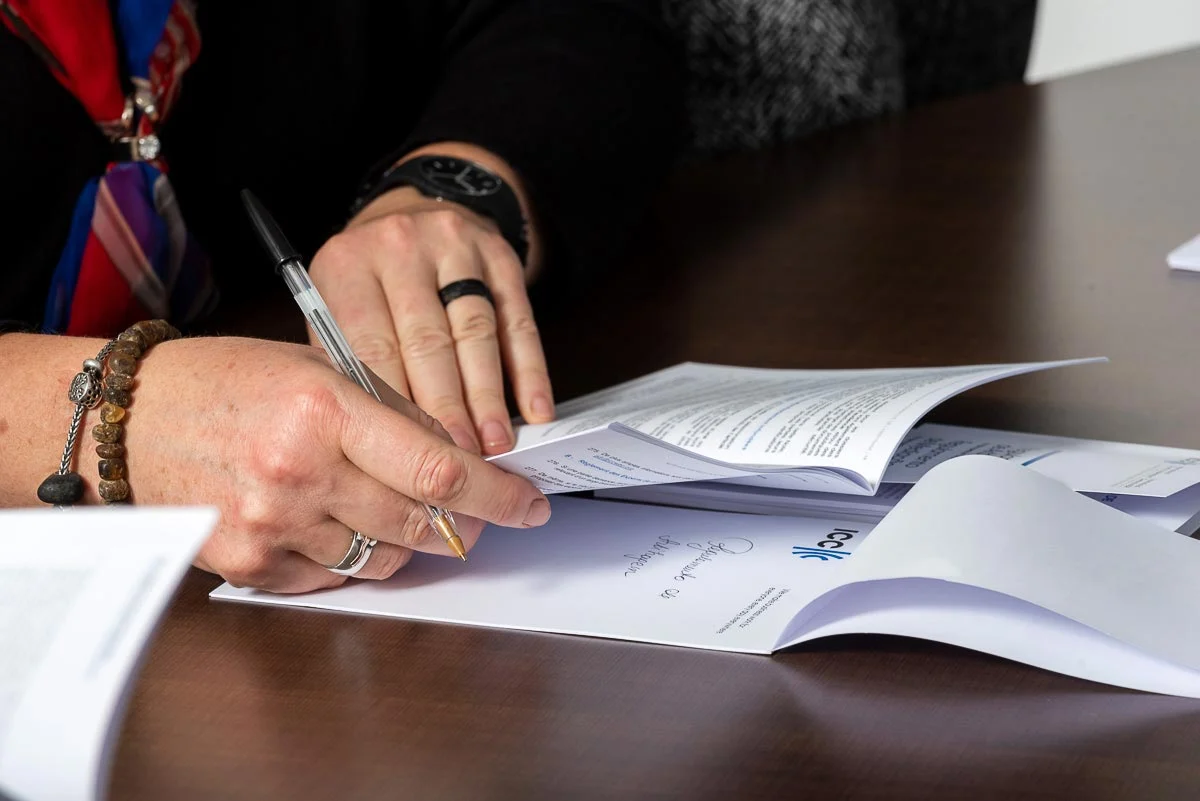
The Irish Office of Government Procurement (OGP) has formally announced a transformative shift in the administration of public infrastructure projects, mandating that all public works contracts with a value exceeding €1 million will now default to the International Chamber of Commerce (ICC) Arbitration rules. This policy change, which took effect following a mid-June directive, represents a significant departure from traditional domestic dispute resolution practices in Ireland. Under the new framework, the ICC’s internationally recognized arbitration procedures will serve as the standard mechanism for resolving complex construction disputes, unless the contracting parties explicitly agree to utilize an expedited domestic procedure. This development underscores a strategic move by the Irish government to align its public procurement processes with global best practices, ensuring that large-scale infrastructure projects are supported by a robust, transparent, and internationally respected legal framework.
Chronology of Procurement Reform in Ireland
The transition to ICC Arbitration as a default mechanism is the culmination of several years of review and reform within the Irish public works sector. Historically, Irish public works contracts—governed largely by the suite of contracts introduced in 2007—relied heavily on domestic conciliation and High Court litigation. However, as the complexity and scale of national infrastructure projects increased under the auspices of "Project Ireland 2040," the limitations of purely domestic frameworks became more apparent.
In early 2023, the OGP initiated a series of consultations with stakeholders in the construction, legal, and financial sectors to evaluate the efficiency of the Capital Works Management Framework (CWMF). A primary concern identified during these sessions was the escalating cost and duration of disputes in major civil engineering and building projects. By late 2023, the Department of Public Expenditure, NDP Delivery and Reform signaled its intent to modernize the dispute resolution clauses within the CWMF to better manage risks associated with the National Development Plan.
The formal announcement on June 16, 2024, serves as the definitive implementation of these reforms. By selecting the ICC International Court of Arbitration—a body that handled 870 new cases in 2023 alone—Ireland is positioning its domestic construction market as a sophisticated environment capable of attracting high-tier international contractors while providing local firms with a predictable legal landscape.
The €1 Million Threshold and Procedural Specifics
The decision to set the threshold at €1 million is a calculated move to separate routine maintenance and small-scale builds from significant capital projects. For contracts below this value, domestic mechanisms remain the primary route, acknowledging that the administrative costs of international institutional arbitration might outweigh the benefits for smaller disputes. However, for projects exceeding this mark—which include most school builds, healthcare facilities, and transport infrastructure—the ICC framework becomes the baseline.
The "default" nature of this provision means that if a contract is silent on the specific mode of arbitration or if parties cannot reach a secondary agreement, the ICC Rules of Arbitration will automatically apply. One of the critical features of this shift is the option for an "expedited domestic procedure." This serves as a safety valve, allowing parties to opt for a faster, lower-cost alternative if the dispute is relatively straightforward, even if the contract value is high. This dual-track approach provides flexibility while ensuring that the "gold standard" of the ICC remains the fallback for high-stakes disagreements.
Supporting Data: The Cost of Construction Disputes
The necessity for this reform is highlighted by industry data regarding construction litigation. According to global consultancy reports, the average value of construction disputes in the United Kingdom and Continental Europe has fluctuated between €30 million and €50 million over the last five years, with the average duration of a dispute lasting approximately 15 to 18 months. In Ireland, the complexity of the "Public Works Contract" (PWC) has often led to protracted "battle of the forms" scenarios or lengthy stays in the Commercial Court.
By adopting the ICC rules, Ireland taps into a system that offers:
- Expertise: Access to a global panel of arbitrators with specific technical and engineering expertise.
- Scrutiny: The ICC Court’s unique "scrutiny of awards" process, which ensures that legal decisions are enforceable and of the highest quality.
- Efficiency: Established timelines for the constitution of tribunals and the delivery of final awards.
For the Irish taxpayer, the move is expected to reduce the "contingency pricing" often added by contractors to public bids. When contractors have confidence in a fair and efficient dispute resolution process, they are less likely to inflate bid prices to cover the potential costs of legal uncertainty.
Official Responses and Stakeholder Perspectives
The adoption of the ICC framework has been met with significant approval from international legal bodies and domestic procurement experts. Claudia Salomon, President of the ICC International Court of Arbitration, emphasized the trust-building aspect of this policy. She noted that the adoption of ICC Arbitration as a default for higher-value contracts gives parties—both the state and private contractors—the confidence that disputes will be resolved fairly and effectively.
"We are grateful for the trust that the Irish Office of Government Procurement has in ICC Arbitration," Salomon stated. She further remarked that this move demonstrates how institutional arbitration can operate successfully beyond traditional cross-border disputes, supporting consistent governance within a single jurisdiction.
Domestically, the reaction from the Construction Industry Federation (CIF) and legal practitioners has been one of cautious optimism. Legal analysts suggest that while there will be a learning curve for some domestic firms, the alignment with ICC rules makes Ireland a more attractive destination for foreign direct investment in infrastructure. It removes a perceived barrier for international firms who may have been hesitant to engage with unique Irish domestic legal procedures.
Analysis of Implications for the Irish Legal Landscape
The implications of this shift extend beyond the immediate resolution of disputes. Firstly, it elevates the role of ICC Ireland, the national committee of the International Chamber of Commerce. ICC Ireland will now play a pivotal role in training domestic legal professionals and arbitrators in the nuances of the ICC 2021 Arbitration Rules. This will likely lead to a "professionalization" of the arbitration sector in Ireland, as practitioners seek accreditation and experience within the ICC system.
Secondly, the move reinforces Ireland’s status as a post-Brexit legal hub. With the United Kingdom no longer part of the EU legal framework for certain civil matters, Ireland has actively promoted itself as a common-law jurisdiction that is fully integrated into the European Union. By adopting the ICC rules—the most widely used international arbitration rules globally—Ireland is harmonizing its public sector legal standards with those used in major global hubs like Paris, Singapore, and New York.
Furthermore, there is a technical implication for the Irish Arbitration Act 2010. The 2010 Act already provides a supportive environment for arbitration, but the institutional oversight provided by the ICC adds a layer of administrative support that "ad hoc" arbitration lacks. This includes the collection of fees, the appointment of arbitrators when parties disagree, and the formal notification of awards.
Future Implementation and Collaborative Support
To ensure a smooth transition, the ICC has announced a collaborative initiative with ICC Ireland to support the implementation of the new OGP directive. This support will take several forms:
- Educational Workshops: Targeted sessions for government procurement officers to understand how to draft and manage ICC-aligned contracts.
- Practitioner Training: Programs designed for Irish lawyers and engineers to qualify as ICC-ready arbitrators and experts.
- Resource Allocation: Providing translated materials and procedural guides tailored to the Irish Public Works Contract context.
This initiative aligns with the ICC’s broader global mission to facilitate access to high-quality dispute resolution. For Ireland, the partnership ensures that the transition from domestic-led to institution-led arbitration is not merely a change on paper, but a functional upgrade to the country’s infrastructure delivery pipeline.
Conclusion: A Strategic Leap for Public Infrastructure
The Irish Office of Government Procurement’s decision to default to ICC Arbitration for contracts over €1 million marks a strategic leap in how the state manages its most significant financial commitments. By moving away from the potential bottlenecks of domestic litigation and toward a structured, transparent, and globally recognized institutional framework, Ireland is mitigating risk for both the public purse and the private sector.
As the National Development Plan continues to roll out multi-billion euro projects in housing, transport, and green energy, the stability provided by the ICC International Court of Arbitration will be a cornerstone of project governance. This policy not only ensures that disputes are handled by world-class experts but also signals to the global construction market that Ireland is a transparent, predictable, and professional environment for large-scale public investment. The coming years will likely see a significant shift in the Irish legal and construction landscape as the first wave of contracts under this new regime reaches the execution phase, setting a new benchmark for public procurement in the European Union.
About the Author