San Francisco, CA – The once-fanciful notion of resurrecting extinct species, long confined to the realm of science fiction, has dramatically transformed into a multi-million-dollar mission spearheaded by audacious startups. Propelled by unprecedented advancements in artificial intelligence (AI), genetic engineering, and computational biology, the boundaries of conservation research are being redefined, sparking profound questions that resonate far beyond the confines of the laboratory. At the heart of this burgeoning scientific frontier lies a fundamental dilemma: if technology grants us the power to revive lost species, is it our ethical imperative to do so? And what role should AI assume in shaping the trajectory of Earth’s biodiversity?
These critical inquiries form the central axis of "Can We Engineer Nature’s Comeback?", a highly anticipated fireside chat scheduled for the Real World AI Stage at TechCrunch Disrupt 2026. The prestigious technology conference, a cornerstone event for innovators and investors, will convene from October 13th to 15th at Moscone West in San Francisco, bringing together over 10,000 founders, investors, and operators for more than 250 sessions exploring the market forces and technologies poised to define the future.
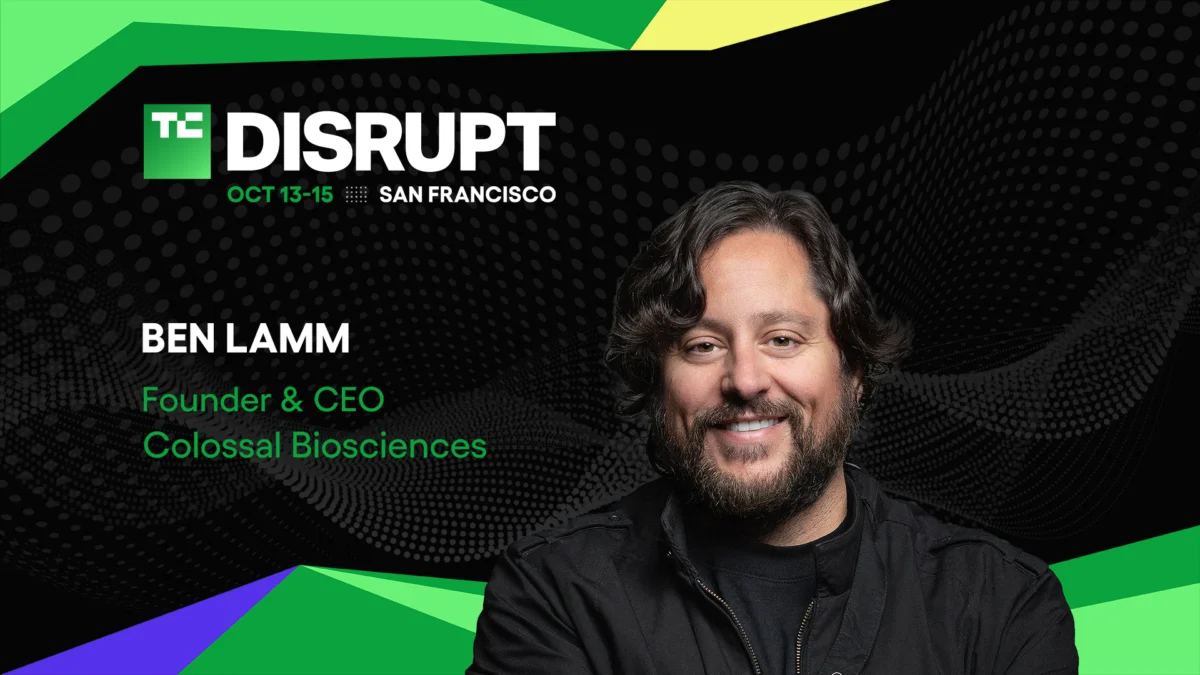
Leading this provocative discussion will be Ben Lamm, co-founder and CEO of Colossal Biosciences. Lamm’s company stands at the vanguard of de-extinction efforts, leveraging cutting-edge synthetic biology and AI to pursue the ambitious goal of reintroducing species like the woolly mammoth, Tasmanian tiger, and dodo back into the wild. The session promises to delve beyond the pure scientific mechanics, exploring the intricate technological underpinnings of de-extinction, the increasingly pervasive role of AI in modern biological research, and the escalating global debate over whether engineering nature represents a revolutionary breakthrough in conservation or a perilous diversion from the urgent imperative to protect existing ecosystems.
The Dawn of De-Extinction: From Sci-Fi to Scientific Reality
For decades, the concept of de-extinction captivated imaginations, fueled by narratives like Michael Crichton’s Jurassic Park. However, what was once speculative fiction has rapidly transitioned into a tangible scientific pursuit, driven by a confluence of technological breakthroughs in the early 21st century. The Human Genome Project, completed in 2003, laid the groundwork for advanced genomic understanding. Subsequent developments in gene editing technologies, particularly CRISPR-Cas9 in the 2010s, provided scientists with unprecedented precision in manipulating DNA. Simultaneously, the exponential growth in computational power and the emergence of sophisticated AI algorithms offered the tools necessary to analyze vast genetic datasets, reconstruct ancient genomes, and design complex biological interventions.
Colossal Biosciences, founded in 2021, embodies this new era. The company has garnered significant attention and substantial investment, demonstrating the venture capital community’s growing belief in the viability of de-extinction. Their strategy centers on using CRISPR technology to edit the genomes of living relatives of extinct species – for example, Asian elephants for woolly mammoths – to introduce traits characteristic of their extinct ancestors. This process involves complex genomic sequencing of ancient DNA, identifying key genes, and then meticulously editing them into the modern genome. AI plays an indispensable role in every stage of this process, from sifting through fragmented ancient DNA sequences to identifying crucial genetic markers and predicting the phenotypic outcomes of genetic modifications.
AI’s Indispensable Role in Modern Biology
The integration of artificial intelligence into biological research is fundamentally reshaping the landscape of life sciences. Beyond its application in de-extinction, AI is now an integral tool across numerous biological disciplines. Researchers utilize AI for:
- Genomic Analysis: AI algorithms can quickly process and interpret massive datasets of genetic information, identifying patterns, mutations, and evolutionary relationships that would be impossible for humans to discern manually. This accelerates the understanding of disease mechanisms, drug targets, and biodiversity.
- Protein Folding and Drug Discovery: AI models, notably DeepMind’s AlphaFold, have revolutionized protein structure prediction, a long-standing grand challenge in biology. This capability dramatically speeds up the drug discovery process by enabling scientists to design more effective drugs and therapies.
- Modeling Biological Systems: AI can create intricate simulations of biological processes, from cellular interactions to ecosystem dynamics. These models allow scientists to test hypotheses, predict outcomes, and understand complex biological phenomena without extensive and costly wet-lab experiments.
- Ecosystem Monitoring and Conservation: AI-powered sensors and drones are being deployed to monitor wildlife populations, track deforestation, detect illegal poaching, and identify areas of ecological stress, providing real-time data for conservation efforts.
- Synthetic Biology and Bioengineering: AI assists in designing novel biological systems and organisms, optimizing metabolic pathways, and engineering cells for specific functions, from producing biofuels to manufacturing pharmaceuticals.
For companies like Colossal Biosciences, AI is not merely a supplementary tool but a core pillar of their scientific methodology. It enables them to tackle challenges of a scale and complexity previously deemed insurmountable, pushing the boundaries of what is biologically achievable. The TechCrunch Disrupt session will offer a unique vantage point into how these technologies intersect, exploring the profound implications when AI transcends digital systems and directly intervenes in the natural world. This offers a crucial opportunity for founders at the intersection of deep tech, life sciences, and AI to understand the operational challenges and strategic approaches of one of the industry’s most ambitious undertakings.

The Entrepreneur at the Edge of Possibility: Ben Lamm’s Vision
Ben Lamm is an archetypal figure of the modern tech landscape: a serial entrepreneur with a career spanning over two decades at the confluence of AI and emerging technologies. His entrepreneurial journey has been characterized by a consistent drive to build businesses focused on solving complex challenges, from enterprise AI solutions and critical infrastructure development to advanced conversational intelligence platforms. Prior to co-founding Colossal Biosciences, Lamm successfully launched and scaled several pioneering technology companies, including Hypergiant, Conversable, and Chaotic Moon, which were subsequently acquired by Trive Capital, LivePerson, and Accenture, respectively.
Today, Lamm has channeled this extensive entrepreneurial acumen into an entirely different, yet equally complex, challenge: harnessing the power of AI and synthetic biology to explore de-extinction as a pragmatic conservation tool. This audacious endeavor has positioned Colossal Biosciences as one of the most closely observed – and fervently debated – companies in both the scientific and technological arenas. As CEO, Lamm finds himself at the epicenter of multifaceted conversations spanning biodiversity preservation, climate resilience strategies, the ethical deployment of emerging technologies, and the profound responsibilities inherent in engineering living systems. His insights at Disrupt 2026 will provide founders and attendees with a rare glimpse into the operational realities and philosophical considerations when breakthrough technology not only disrupts an industry but fundamentally challenges our understanding of what is possible in the natural world.
The Broader Conversation: Beyond De-Extinction
While the prospect of reviving extinct species undeniably captures headlines and sparks widespread fascination, the broader questions raised by Colossal’s work and similar initiatives are arguably far more significant. As AI continues its inexorable integration into the fabric of scientific discovery, discussions surrounding technology are increasingly expanding beyond software applications into critical fields such as medicine, biology, environmental conservation, and climate science. These advancements herald a new era of possibilities, promising solutions to some of humanity’s most pressing challenges. However, they simultaneously introduce a complex array of difficult questions concerning the appropriate scope, methods, and ethical boundaries for deploying these powerful tools.
The debate surrounding de-extinction transcends the fate of any single species. It forces a global reckoning with humanity’s role as stewards of the planet, probing the extent to which we should intervene in natural processes, especially those historically considered irreversible. Proponents argue that de-extinction could restore lost ecological functions, rebalance ecosystems, and introduce genetic diversity to fragile populations, thereby bolstering climate resilience. They point to the potential of resurrected species, such as the woolly mammoth, to restore Arctic grasslands, which could help sequester carbon and mitigate permafrost thaw.
Conversely, critics raise substantial concerns. A primary contention revolves around resource allocation: should immense financial and scientific capital be directed towards de-extinction when countless existing species face imminent extinction dueath to habitat loss, climate change, and poaching? Many conservationists argue that efforts should prioritize protecting extant biodiversity and preserving intact ecosystems, which offer proven benefits. There are also profound ecological uncertainties: how would a resurrected species interact with modern ecosystems? Could it introduce unforeseen pathogens, outcompete existing species, or disrupt delicate ecological balances? The long-term viability and welfare of these engineered animals also present ethical quandaries.
The conversation at TechCrunch Disrupt 2026 will therefore serve as a crucial forum for examining these multifaceted implications. It asks fundamental questions about the ultimate role of emerging technologies in addressing some of the world’s most intractable problems and, perhaps most importantly, who holds the authority to make these far-reaching decisions. This discussion is not just for biologists or ethicists; it is for technologists, investors, policymakers, and indeed, all global citizens grappling with the implications of a future where humanity wields unprecedented power over life itself.
TechCrunch Disrupt 2026 offers attendees an unparalleled opportunity to engage with these cutting-edge discussions, providing insights into the intersection of AI, biology, and innovation. Secure your pass today to participate in one of the year’s most impactful and thought-provoking conversations, shaping the narrative around our collective future with nature.
About the Author