The rapid integration of artificial intelligence into search engines has ushered in a new era of digital visibility, commonly referred to as Answer Engine Optimization (AEO). As brands grapple with appearing in AI-generated answers, a critical distinction has emerged between two leading platforms: HubSpot’s AEO tool and Profound. While both aim to enhance a brand’s presence in AI-driven search results, they employ fundamentally different strategies, catering to distinct operational needs within marketing and RevOps teams. This comparative analysis delves into their core functionalities, strategic advantages, and the decision-making framework for businesses seeking to master AI search visibility.
At its heart, the choice between HubSpot AEO and Profound hinges on a pivotal operational question: Does a team prioritize rapid insight-to-execution workflows, or does it require a more in-depth analysis of its brand’s perception and positioning across various AI platforms? HubSpot AEO is engineered to streamline the process of identifying AI visibility opportunities and directly integrating those insights into content creation and campaign execution within the HubSpot ecosystem. Conversely, Profound offers a more granular and analytical approach, focusing on comprehensive AI visibility monitoring, citation tracking, and competitive positioning across a wider array of AI platforms.
The Execution vs. Analysis Dichotomy in AEO
For marketing leaders, SEO strategists, content teams, and RevOps professionals, the core challenge lies in optimizing for AI-generated answers. This breaks down into two primary needs: either a faster pathway from identifying an AI visibility insight to implementing actionable content and campaigns, or a deeper understanding of how a brand is portrayed, cited, and positioned within these AI systems. This distinction forms the bedrock of the difference between HubSpot AEO and Profound.
HubSpot AEO is designed as an operational layer, translating AI visibility data into tangible actions within its integrated platform. Profound, on the other hand, excels in providing a sophisticated analytical foundation, offering deep dives into brand perception and citation networks. While both address legitimate market needs, their divergence lies in the completeness of their workflow.
For organizations hesitant to commit to paid solutions, HubSpot offers a free AEO Grader. This tool provides a baseline assessment of AI search visibility without requiring a subscription, making it an accessible entry point for understanding current performance. The Grader typically takes only a few minutes to run and offers a snapshot score across popular answer engines, serving as a crucial diagnostic before investing in ongoing optimization.
Unpacking the Features: HubSpot AEO and Profound
Both platforms are capable of tracking a brand’s appearance in AI-generated answers. However, their differentiating features significantly impact how teams operate, particularly concerning the speed of action and the depth of analysis required.
HubSpot AEO: Seamless Integration for Actionable Insights
HubSpot’s Answer Engine Optimization (AEO) product is built to monitor a brand’s presence in AI-generated responses across key platforms like ChatGPT, Gemini, and Perplexity. It identifies opportunities to improve visibility and provides prioritized recommendations. What sets HubSpot AEO apart is its seamless integration within the broader HubSpot platform.
This integration means that AI visibility data is directly linked to CRM records, customer segments, and existing marketing workflows. For instance, if a team identifies a competitor outperforming their brand for a specific prompt, they can instantly see which customer segments are most relevant to that prompt and proceed to content creation or campaign optimization without switching tools. The synergistic use of Marketing Hub for content publishing, Content Hubs for asset creation, and the Smart CRM for audience context ensures that recommendations are not generic but are informed by specific audience data.
The free AEO Grader serves as a one-time diagnostic, distinct from the ongoing monitoring capabilities of the paid HubSpot AEO platform. For organizations developing a comprehensive AEO strategy, HubSpot AEO acts as the operational engine, translating visibility data into concrete marketing actions.
Profound: Deep-Dive Analysis for Strategic Understanding
Profound positions itself as an enterprise-focused AEO platform. It not only tracks brand appearance in AI answers but also monitors visibility, share of voice, sentiment, and citations, surfacing optimization opportunities. Profound’s key differentiator is the depth and breadth of its analysis.
At its base offering, Profound monitors a wider array of AI platforms than HubSpot AEO, including Google AI Overviews and Claude, in addition to the major search engines. It supports flexible custom prompt tracking across diverse topics and queries, offering advanced source and influence mapping to reveal which domains are shaping AI responses. Furthermore, its brand perception analysis extends beyond mere presence metrics to evaluate how AI systems actually describe a brand.
For teams that need to understand the "why" behind their AI search performance—why they appear or don’t appear—Profound provides a wealth of data. The trade-off is that Profound delivers sophisticated analysis but lacks an integrated execution layer. Implementing improvements necessitates exporting insights to separate content management systems or marketing workflows.
Pricing and Accessibility:
- HubSpot AEO: Offers a free AEO Grader for initial assessment. The standalone paid plan begins at $50 per month ($45 per month billed annually) and includes 25 tracked prompts, with a 28-day free trial. To leverage the full integration for content creation and campaign execution, Marketing Hub Professional is required, starting at approximately $800 per month. This tier unlocks CRM-informed recommendations, content workflows, and campaign triggers, significantly enhancing the standalone product’s utility.
- Profound: Provides a free one-time AEO report as an introductory offer. Paid plans start at $99 per month ($82.50 per month billed annually) for the Starter edition, and $399 per month ($332.50 per month billed annually) for the Growth/Standard tier. Enterprise pricing is custom. Agency plans are available from $99 per month.
For small to medium-sized businesses (SMBs) and mid-market teams operating on a budget, HubSpot AEO’s lower entry price point and integrated ecosystem can reduce the need for multiple tools. Conversely, enterprise teams with established content operations stacks that require Profound’s analytical depth may find its higher price justified by its advanced data capabilities, though they must factor in the additional tooling needed to act on its recommendations.
Ease of Use and Adoption: Bridging the Technical Divide
The usability and adoption potential of AEO tools are critical for widespread team engagement.
HubSpot AEO: User-Friendly Design for Broad Adoption
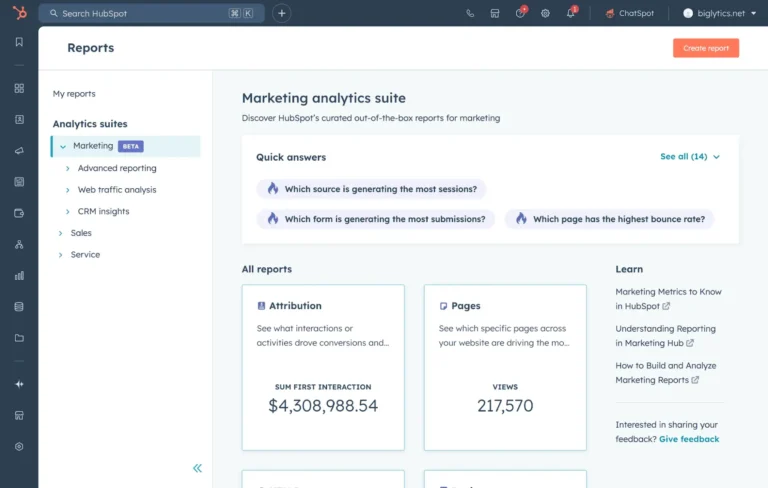
HubSpot AEO is specifically designed for marketing teams that may not possess deep technical expertise in AEO. Setup is reportedly swift, often taking mere minutes to configure by entering the brand name and selecting prompts. The dashboard presents visibility scores, competitor benchmarks, and prioritized recommendations in clear, understandable language. Guided workflows are intended to transition users from insight discovery to action seamlessly, without requiring an intricate understanding of AI answer generation mechanics.
This low learning curve is particularly beneficial for cross-functional adoption. When content strategists, SEO leads, and RevOps managers need to interpret the same data, a straightforward interface minimizes friction across different roles. HubSpot’s existing reporting infrastructure also simplifies stakeholder communication, allowing for easy dashboard sharing within the platform.
Profound: Empowering Data Specialists
Profound features a clean, modern interface, but it is geared towards users who are comfortable with detailed visibility data. The platform rewards users who can leverage in-depth analytics, including citation analysis, granular prompt tracking, and competitive share-of-voice metrics.
This depth can be an advantage for teams with dedicated SEO or data analysis functions. However, for teams lacking such specialization, the learning curve can extend onboarding times and potentially slow adoption. While Profound supports CSV exports and API-based reporting, stakeholders may need to configure additional steps to align with their standard reporting workflows.
Actionability and Workflows: The Critical Path from Insight to Impact
The divergence in actionability and workflow is a key determinant for most teams evaluating these platforms.
HubSpot AEO: Integrated Execution for Rapid Iteration
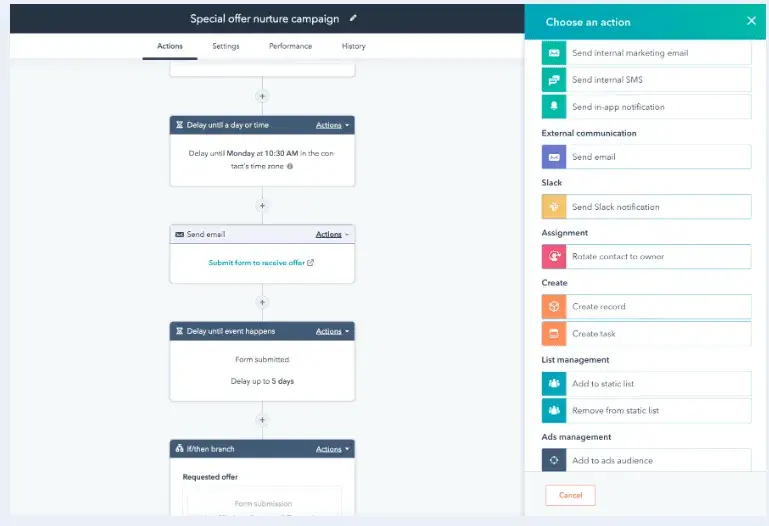
HubSpot AEO excels in directly connecting AI visibility data to content and campaign execution within a unified platform. When the tool identifies a prompt where a brand is underrepresented in AI answers, it provides a prioritized recommendation and a direct pathway to create or update relevant content.
The integration with Marketing Hub and Content Hub facilitates seamless execution, while the Smart CRM offers audience context, ensuring recommendations align with key business segments and lifecycle stages. This results in a significantly shorter cycle time between identifying an AI visibility gap and publishing content to address it.
Profound: Analytical Foundation, External Execution
Profound offers improvement recommendations and an "Improve" module that includes features like FAQ generation based on tracked prompts. However, it lacks a built-in content execution layer. Acting on Profound’s insights requires exporting them to a separate CMS, briefing content teams, and managing the production workflow externally.
While manageable for teams with dedicated content operations, this process adds friction for teams where analysts and content creators are the same individuals, or where speed to execution is paramount. The transition from insight to execution is often cited as a major operational hurdle in AI SEO. While tracking visibility is relatively straightforward, consistently translating that data into published content is the more complex operational challenge, and it is precisely this challenge that HubSpot AEO is structurally designed to address.
-2.png)
A notable advantage of HubSpot AEO is its CRM-informed recommendations. This allows the platform to prioritize visibility gaps based on actual audience data, rather than generic prompt volume. Teams can ascertain which prompts are most relevant to their buyer segments before allocating optimization efforts.
Data Depth and Intelligence: Balancing Breadth with Usability
When it comes to the sheer volume and granularity of data, Profound generally holds an advantage.
Profound: Unrivaled Data Granularity
Profound tracks a broader spectrum of AI platforms in its base edition, including Google AI Overviews and Claude. It offers more flexible custom prompt configuration and provides deeper insights into brand perception. This includes detailed analysis of how AI systems describe a brand, which sources exert the most influence, and how brand positioning evolves across different prompts and competitors over time.
For enterprise brand, PR, and data teams tasked with auditing AI-generated narratives or understanding why competitors are more frequently cited, Profound delivers more comprehensive data on sources, sentiment, and brand perception.
HubSpot AEO: Clarity and Prioritization
HubSpot AEO reliably tracks AI visibility across ChatGPT, Gemini, and Perplexity, offering daily updates, historical trend dashboards, and citation analysis. The data is structured for clarity and ease of use, prioritizing actionable insights over overwhelming complexity. This makes it ideal for teams focused on rapid prioritization and execution. The platform’s citation tracking identifies the sources and content types that drive AI answers, providing sufficient information for most content optimization decisions.
The fundamental trade-off is clear: Profound offers more data, while HubSpot AEO makes that data more immediately actionable. For most marketing and RevOps teams, the advantage in actionability may outweigh the depth of analytical detail. However, for enterprise teams with the resources to support deep analysis, Profound’s data layer can offer significant strategic value.
Integrations and Ecosystem: The Foundation for Workflow Synergy
The integration capabilities of these platforms are a critical factor in their long-term utility.
HubSpot AEO: Native Ecosystem Integration
HubSpot AEO’s primary integration advantage is its structural embedment within the HubSpot platform. AI visibility data natively connects to CRM records, campaign workflows, contact segments, and content tools. This eliminates the need for API setup, middleware, or complex configuration to channel insights into execution. For teams already operating within HubSpot, this offers a compounding advantage, as AEO becomes another integrated data source rather than a disparate tool requiring its own workflow.
Profound: Flexible, Customizable Connectivity
Profound offers API access for custom integrations and can connect with external CMS and marketing platforms, making it a flexible option for enterprise teams with established data infrastructure. However, this flexibility often requires technical setup and ongoing maintenance, introducing operational complexity that HubSpot AEO largely avoids. Profound integrates well into custom technology stacks but does not inherently provide pre-built execution workflows.
When evaluating these tools through a competitive intelligence lens, integration often becomes a decisive factor. Teams are advised to consider their existing operational environment and select the tool that most effectively reduces the distance between insight and implementation.
Use Cases and Decision Framework: Charting the Path Forward
The selection between HubSpot AEO and Profound depends heavily on a team’s primary operational bottlenecks and strategic priorities.
Choose HubSpot AEO if:
- Your organization heavily relies on the HubSpot ecosystem for marketing and sales operations.
- You prioritize rapid execution and need to directly link AI visibility insights to content creation and campaign deployment.
- Your team benefits from CRM-informed recommendations that align with specific audience segments.
- Ease of use and a low learning curve for cross-functional teams are paramount.
- Your primary challenge is translating AI visibility data into actionable marketing initiatives.
Choose Profound if:
- Your organization requires deep, granular analysis of brand perception, AI citation networks, and competitive positioning across a wide array of AI platforms.
- You have a dedicated SEO or data analysis team capable of leveraging complex datasets.
- Understanding the "why" behind AI search performance is a strategic priority, independent of immediate execution capabilities.
- Your existing technology stack is highly customized, and you require flexible integration options.
- Your primary bottleneck is the depth of analysis rather than the speed of execution.
Best for execution-focused teams: HubSpot AEO
Best for analysis-focused enterprises: Profound
The Synergy of Combined Use
It is indeed possible for enterprise teams to leverage both HubSpot AEO and Profound concurrently. Profound can serve as the strategic intelligence layer, providing in-depth analysis of how AI systems describe a brand, identifying influential sources, and pinpointing competitive weaknesses. This strategic insight can then inform the execution layer managed by HubSpot AEO, translating those findings into content updates, campaign triggers, and CRM-aligned optimization priorities.
In practice, however, most teams find that one platform sufficiently addresses their primary needs. If the core challenge lies in acting upon AI visibility data rather than merely analyzing it, HubSpot AEO typically covers the full workflow. Conversely, if deep brand perception analysis is a standalone strategic imperative, particularly for large organizations managing complex AI narratives across multiple platforms, Profound offers a level of detail that HubSpot AEO does not replicate.
Free Options and Rapid Deployment
For organizations seeking to establish an initial understanding of their AI search visibility without immediate financial commitment, the HubSpot AEO Grader offers a compelling solution. This free tool provides a composite score (0-100) across sentiment, presence quality, recognition, share of voice, and market position for ChatGPT, Perplexity, and Gemini. As a one-time diagnostic, it does not offer continuous monitoring or custom prompt tracking but serves as an essential first step for any team that has not yet quantified its AI visibility.
Once a baseline score is established, the decision regarding ongoing monitoring becomes more informed. If significant visibility gaps are identified and the team possesses the capacity to act upon them, transitioning to HubSpot AEO’s paid monitoring and execution edition can create a repeatable improvement cycle.
Similarly, if the primary need is for deeper analytical insights before committing to an optimization strategy, Profound’s free report also serves as a valuable starting point. Many organizations opt to bypass the baseline step and proceed directly to paid platforms based on their perceived needs.
The recommended approach is to first utilize the AEO Grader to establish a benchmark. This helps define the necessary workflow and informs the selection of the platform that best aligns with the team’s operating model. A useful pro-tip involves using the AEO Grader to benchmark a competitor before initiating a paid trial. This comparative context can sharpen the focus on which prompts are most critical to track in any ongoing platform.
Frequently Asked Questions
Do I need a HubSpot subscription to use AEO?
No, HubSpot AEO is available as a standalone product priced at $45 per month (billed annually) and does not necessitate an existing HubSpot subscription. The free AEO Grader also requires no subscription. Teams aiming to integrate AEO recommendations with content workflows and CRM data will benefit from Marketing Hub, but it is not a prerequisite for accessing the core AEO product.
Can I run a one-time analysis before committing?
Yes, both platforms offer free entry points. The HubSpot AEO Grader provides a one-time brand visibility score across major answer engines at no cost. Profound also offers a free one-time AEO report. Neither requires a credit card. These diagnostics are ideal for establishing a baseline and evaluating which platform’s output best suits a team’s workflow before committing to a paid plan.
When should I use both HubSpot AEO and Profound together?
The combined use of both platforms is most advantageous for enterprise teams where distinct departments handle brand perception analysis and content execution. Profound can function as the strategic intelligence layer for SEO or brand teams requiring in-depth citation and sentiment analysis. HubSpot AEO can then serve as the execution layer for marketing and content teams acting on these insights. For the majority of teams, a single platform is sufficient, depending on whether execution or analysis represents the primary bottleneck.
How do I measure impact across channels?
AI visibility metrics are indicators, not direct pipeline measures. They should be leveraged as a research and prioritization layer in conjunction with conversion data, Google Search Console analytics, and sales feedback. Within HubSpot AEO, historical trend dashboards enable tracking of visibility changes over time and their correlation with content updates. Meaningful measurement requires diligent record-keeping of when changes are implemented, comparative analysis of different periods, and linking visibility shifts to downstream signals such as organic traffic, lead quality, or assisted conversions, rather than treating score improvements as standalone success metrics.
About the Author