The creator economy, a dynamic landscape known for its rapid evolution, has witnessed an unprecedented acceleration in the adoption of artificial intelligence. What was once met with a mixture of apprehension and suspicion has swiftly transformed into a widely recognized, even indispensable, strategic imperative for creators navigating the digital frontier. This paradigm shift, observed over the past year, marks a significant departure from initial anxieties, signaling a transition towards AI as a powerful tool for augmentation rather than a threat of displacement.
Kameron Buckner, founder of Social Docket, a firm specializing in guiding creators through the legal complexities of their work, highlights this dramatic change in sentiment. "Last year," Buckner stated, "the conversation around AI within the creator space was largely defined by dread. This year, the tone has decisively shifted from fear to leverage. The dominant question has moved from ‘Is this going to take over?’ to ‘How can we effectively integrate it?’"
This observation is corroborated by extensive discussions with a range of stakeholders deeply embedded in this evolving ecosystem. Conversations with leading creators, industry consultants, burgeoning startup founders, and seasoned social media strategists consistently pointed to AI as a central theme at prominent industry gatherings. Notably, attendees returning from the recent Cannes Lions International Festival of Creativity reported that artificial intelligence was a dominant, if not the primary, subject of discussion across panels, workshops, and informal networking sessions.
Across these diverse perspectives, a palpable absence of outright fear was noted. Instead, a pervasive sentiment of active engagement with AI tools was evident. While the extent of adoption and the specific methodologies varied, ranging from judicious integration to enthusiastic experimentation, the consensus is clear: AI is no longer an outsider but an integral part of the creator’s toolkit. This widespread adoption introduces a fresh set of challenges and opportunities for an industry fundamentally built on enhancing productivity, monetizing creative output, and safeguarding intellectual property. The critical determinant for future success now hinges on the ability to wield these powerful technologies with discernment and strategic foresight, distinguishing those who stay ahead of the curve from those who risk being overwhelmed by its relentless pace.
The Accelerator vs. The Author: Redefining Creative Contribution
The discourse surrounding AI’s role in creativity often centers on whether it serves as an ‘accelerator’ of human talent or a potential ‘author’ in its own right. Experts like DonYé Taylor, a strategist renowned for her work with brands such as Nike and Amazon, and now the proprietor of her own functional-philosophy-meets-interior-design brand, Nuclei, and its accompanying newsletter, "Mentally I’m Here," posit that AI’s capabilities are fundamentally limited by human ingenuity. Taylor likens AI to a sophisticated calculator, emphasizing that "just because I have a TI-89 doesn’t mean I’m going to get the right answer. I still need to put the right inputs into the calculator." This analogy underscores the indispensable role of human critical thinking and direction in harnessing AI’s potential.
Alicia Richardson, Head of Community and Brand Partnerships at FiveTwoNine and founder of Black Create Connect, echoes this sentiment. She asserts that AI can "enhance creativity; it doesn’t create your creativity." Richardson’s perspective is particularly pertinent when considering creator-led work, where audiences often forge connections with the individual behind the content, not merely the output itself. She believes that the inherent human element in creator-driven narratives makes it unlikely for AI to ever fully supplant the creator.
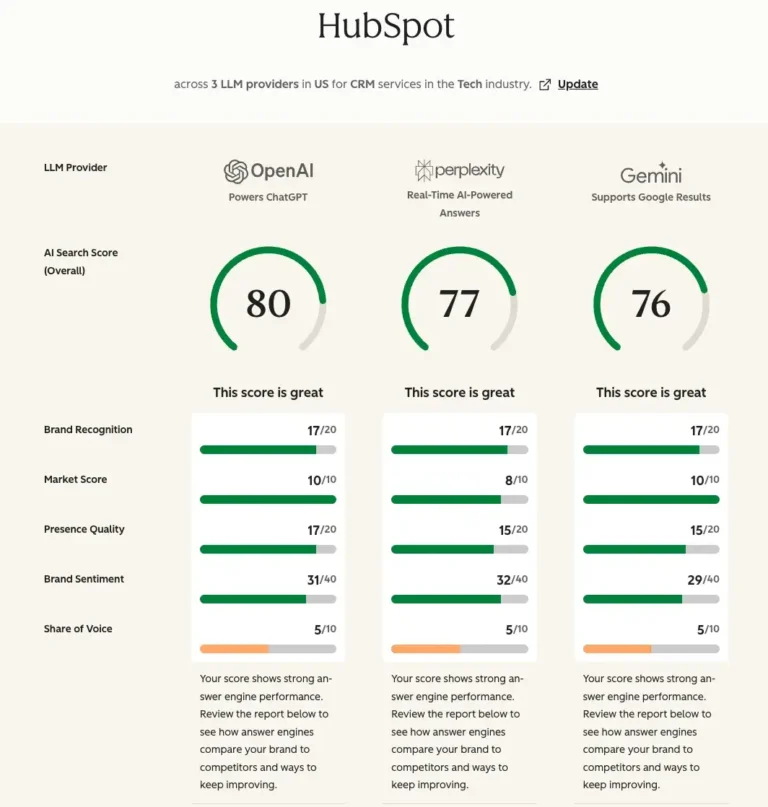
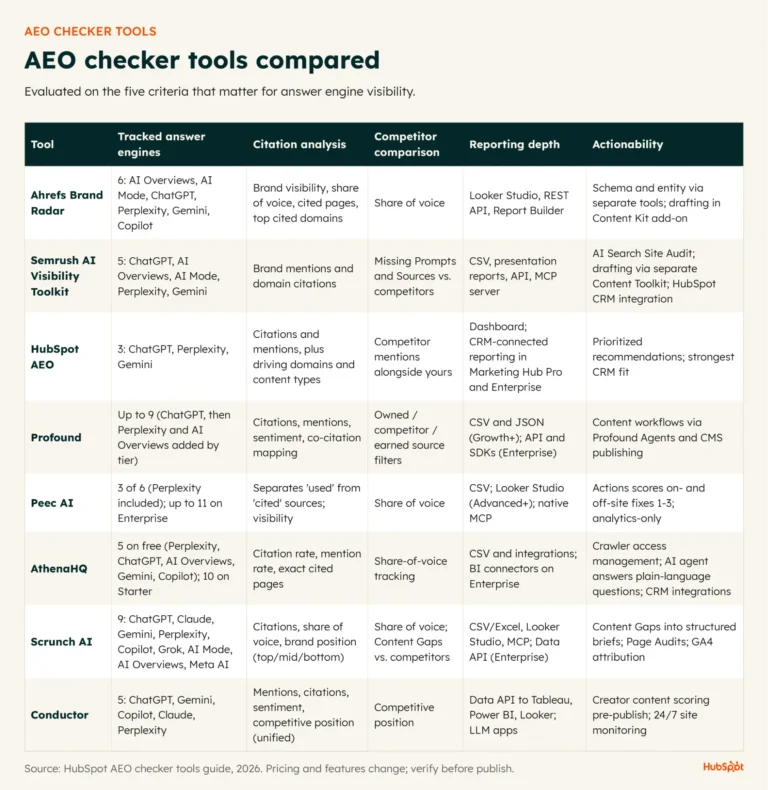
Kameron Buckner advises her clients to view AI not as a final product, but as a significant head start. "Why start from a blank sheet of paper when you can start from an outline?" she questions. In her own professional practice, Buckner has found that mastering AI prompting has sharpened her ability to manage human teams more effectively. The process demands a level of precision in articulating desired outcomes that translates directly to clearer communication with colleagues. She also leverages AI for her own business development, utilizing tools like HubSpot’s AEO (All-in-One) to monitor her company’s visibility in search results for creator contract solutions, a testament to AI’s utility in strategic self-promotion.
Gigi Robinson, a prominent content creator and founder of the social media consulting firm Hosts of Influence, employs AI tools to streamline her video production. Her team feeds raw footage into AI video editors to generate rough cuts, significantly reducing the time human editors need to spend on initial assembly. These AI tools are adept at identifying compelling moments, but the final editorial decisions remain firmly in human hands. This integration has yielded tangible results, with Robinson estimating that AI saves her over 10 hours per week and has contributed to a more than 20% increase in her income.
Similarly, Lindsey Gamble, Vice President of Creator Strategy & Innovation at IZEA, points to a notable productivity surge among creators. Many are now developing their own searchable content repositories by feeding years of newsletters and past captions into AI tools. This allows them to quickly surface recurring themes and ideas they might have otherwise forgotten, effectively mining their own creative archives for new inspiration and content angles.
Despite these efficiency gains, Buckner emphasizes that the core value proposition of a creator—their depth of knowledge and specialized expertise—remains paramount. "I don’t think any of these tools are going to substantially replace depth of knowledge and expertise," she asserts, reinforcing the idea that AI is a powerful assistant, not a substitute for genuine human mastery.
The Legal Labyrinth: AI’s Lagging Regulatory Framework
While the creator economy has rapidly embraced AI, the legal and regulatory frameworks governing its use are struggling to keep pace. "Law is so far behind, it’s never going to be able to catch up to the speed of technology," Buckner observes. "We’re still citing cases from like 1963." This significant lag creates a vacuum where established legal precedents offer little guidance on novel AI-related issues, leaving creators and brands navigating uncharted territory.
In this evolving landscape, brands are beginning to test the boundaries of what they can demand from creators. Buckner reports seeing a new trend emerge in contracts: brands requesting access to creators’ AI prompts and processes as a condition of engagement. Her firm’s stance is unequivocal: "Immediately, no. That’s unnecessary access." Buckner argues that the prompting process itself represents a significant portion of a creator’s intellectual effort and strategic thinking. Granting access to these prompts provides brands with an insight into a creator’s mind that extends beyond the agreed-upon deliverable. She advocates for creators to proactively establish their own boundaries, even in the absence of explicit legal recognition.
Lindsey Gamble has observed the inverse scenario, with brands attempting to outright ban AI use in creator contracts. He recently encountered a clause stipulating that a creator could not use any AI software, tools, or technologies without the brand’s prior written consent. Gamble anticipates a future where creators, in turn, will begin drafting their own AI-use clauses into agreements, specifically protecting how their content and unique voice might be repurposed by brands leveraging AI.
Annie-Mai Hodge, founder of Girl Power Marketing and a HubSpot partner, highlights a paradoxical situation playing out on social media platforms. While these platforms are increasingly integrating AI tools directly into creators’ dashboards, they are simultaneously penalizing content generated by these same tools. "We are stuck in this incredibly frustrating paradox where platforms demand AI adoption but punish the output," Hodge states. This creates a climate of hesitation, where creators are either too apprehensive to experiment with the tools being offered or too fearful to admit they are already using them.
Robinson has witnessed the repercussions of creators relying on AI without fully comprehending the contractual fine print. She recounts a situation where a creator, after partnering with one brand, posted content for a direct competitor just two weeks later. This action fell within the exclusivity window typically stipulated in brand deals. Robinson speculates, "Was that an AI problem where she didn’t actually read and comprehend [the contract], because she just sent it to AI and said, ‘negotiate for me’?"
Furthermore, Robinson points out that feeding confidential contracts into public AI tools like ChatGPT can itself constitute a breach of contract, depending on the strictness of the brand’s legal team. This underscores Buckner’s commitment to providing creators with robust legal support. While AI can define terms like "perpetuity," Buckner argues it cannot elucidate how such terms will manifest in specific, real-world scenarios. Connecting abstract legal definitions to concrete consequences, she believes, remains an inherently human task.
Bridging the Gap or Widening the Divide? AI’s Impact on the Playing Field
The integration of AI in the creator economy presents a dual-edged sword: it has the potential to level the playing field while also risking the widening of existing disparities. Lindsey Gamble observes that AI has become a significant equalizer, democratizing access to tools that were once the exclusive domain of creators with substantial budgets and dedicated teams. "It gives them the tools that bigger creators have with teams and dedicated staff and more funds," he notes regarding emerging creators. The ability to generate scripts, captions, rough video cuts, and carousel designs, tasks that previously required costly outsourcing, can now be accomplished in a matter of minutes.
However, the very tools that lower the barrier to entry can also lead to a homogenization of content. "If everyone’s using the same thing and doing the same thing, a lot of the content feels the same," Gamble laments. This uniformity is an inevitable byproduct when thousands of creators employ the same AI tools with similar prompting strategies.
Data from Lean In, cited by Annie-Mai Hodge, reveals a concerning disparity: women are 22% less likely than men to be regular AI users in the workplace and 32% more likely to express concerns about being perceived as "cheating" if they adopt these technologies. Hodge reflects, "While it’s my choice to keep AI out of my core workflow, we need to look at why women are conditioned to feel guilty for plugging it into their daily operations."
Conversely, Hodge identifies a more positive application of AI in negotiations, where it is actively helping to close pay gaps. Rate transparency, historically a significant taboo in the creator economy, is being addressed as AI chatbots provide creators with easier access to industry benchmarks. While this may not directly increase brand payouts, Hodge notes, "it gives the creator more power and confidence to negotiate." This enhanced agency empowers creators to advocate more effectively for their worth.
The Irreplaceable Human Element: A Universal Consensus
Across the spectrum of creators, strategists, and legal experts, a singular, resounding consensus has emerged: humans remain irreplaceable in the creative process. Gigi Robinson reported that at the recent Cannes Lions Festival, the word "human" was uttered more frequently than "AI" or "creators" themselves. This emphasis, even at a premier marketing event, signals a deep-seated desire for assurance that human ingenuity and oversight are driving the work.
DonYé Taylor articulates this sentiment succinctly: "AI does not have feelings, it does not have emotion. You can’t replace human connection." This intrinsic human quality—the capacity for empathy, nuance, and emotional resonance—is something AI cannot replicate.
Lindsey Gamble observes the tangible consequences of bypassing this human element, particularly on platforms like LinkedIn, where "everyone’s writing sounds the same. No one really has a voice, because everyone’s using the same thing." He draws a parallel between creativity and a muscle, arguing that neglecting its use leads to atrophy, much like a body that ceases to train. Gamble’s advice to creators is to safeguard this creative "muscle" by periodically engaging in writing, filming, or ideation without the aid of AI tools, harkening back to their pre-AI workflows. He also stresses the importance of disclosure, noting that undisclosed AI-generated content often elicits an immediate negative reaction from audiences.
Alicia Richardson concurs, noting that while AI-generated animation has its place, creator-led content hinges on human connection. "People connect with human beings, and that won’t ever change," she maintains.
Annie-Mai Hodge exemplifies this commitment to human engagement by personally reviewing and summarizing social media updates each week, rather than automating the process. "Some people might think I’m mad for doing it that way," she admits, "but respectfully, ChatGPT and Claude can’t do it like I can." Her counsel to fellow creators is not to eschew AI tools entirely, but to exercise precision in their application. "If you are going to use it," she advises, "make it work harder for you." Ultimately, the core message is that AI can augment, but it can never truly be the creator.
About the Author