Vector embeddings, the sophisticated numerical representations of text generated by artificial intelligence models, are fundamentally transforming how search engines and AI systems understand and retrieve information. This technological leap, moving beyond simple keyword matching to grasp the nuanced meaning of language, is at the core of a new era in digital content discoverability, often referred to as Answer Engine Optimization (AEO). As businesses increasingly rely on AI-powered search to connect with audiences, a deep understanding of vector embeddings and their application in AEO is becoming not just beneficial, but essential for digital strategy.
The concept of vector embeddings, while seemingly technical, is remarkably straightforward in its practical application. At its heart, an embedding model takes a piece of text – be it a word, a sentence, or an entire passage – and transforms it into a list of numbers, a "vector." These numerical lists possess a unique property: vectors representing text with similar meanings will be mathematically closer to each other in a multi-dimensional space. This allows retrieval systems, the engines that power AI-driven search, to identify content that shares conceptual similarities, even if the exact words used are different. This is a significant departure from traditional keyword-based search, which relies on exact word matches or predefined synonyms.
Franklin Rios, CEO of Next Net, eloquently described this process on the "Found in AI" podcast, likening vectorization to embedding information into a data format that serves as the "natural language of LLMs." He emphasized that Large Language Models (LLMs) "consume mathematics, they consume data." This perspective highlights that the underlying mechanism of AI understanding is inherently numerical and data-driven, making vector embeddings the crucial bridge between human language and machine comprehension.
This evolving landscape is not about marketers needing to become AI engineers and build their own embedding models. Instead, it necessitates a strategic shift in how content is created and optimized for search. The insights gleaned from understanding vector embeddings directly inform practices like Generative Engine Optimization (GEO), a term gaining traction as it encompasses the optimization of content for AI-driven generative search experiences. As revealed by HubSpot’s "State of AEO in 2026" report, a significant 58% of marketers are already actively optimizing their content for answer engines, underscoring the urgency and relevance of this topic.
The Core Mechanism: Vector Embeddings and Their Significance in AEO
At its most fundamental level, a vector embedding is a numerical fingerprint of meaning. An embedding model, trained on vast datasets, learns to associate patterns of words and phrases with specific numerical representations. When a user inputs a query, the answer engine converts that query into a vector. It then compares this query vector against a vast index of content vectors. The content whose vectors are closest to the query vector is deemed most semantically relevant and is thus prioritized for retrieval.
David Kirkdorffer, a fractional marketer, offered a vivid analogy on the "Found in AI" podcast, explaining that LLMs perform "word math." He illustrated this with the familiar experience of using a thesaurus. When you seek a synonym for a word, you’re essentially navigating a chain of related meanings. Some synonyms are so close in meaning that they fit seamlessly into a sentence, while others, though technically synonyms, can drastically alter the intended message. This intuitive process of selecting the "right" word, Kirkdorffer noted, mirrors how AI systems evaluate semantic similarity. "We can say the same thing with different words and still have the same meaning. But if we change the words enough, we jump out of one kind of meaning into another kind of meaning."
This ability to maintain meaning across linguistic variations is critical for AEO. Consider a buyer searching for "the cheapest project management tool for a five-person agency." A traditional search might struggle if the content only mentions "budget-conscious project tracking for small teams under 10 people." However, a semantic retrieval system, powered by vector embeddings, can recognize the strong conceptual overlap between these phrases. It understands that "cheapest" relates to "budget-conscious" and "five-person agency" falls within "small teams." This allows for retrieval even without exact keyword matches.
However, this doesn’t render keywords obsolete. Modern retrieval systems are increasingly sophisticated, capable of combining both lexical (keyword) and semantic (meaning-based) matching. The goal for AEO practitioners is therefore to create content that is both lexically rich and semantically coherent, ensuring it resonates with both traditional search algorithms and advanced AI retrieval mechanisms. The subtle art lies in ensuring that edits and refinements to content language, while perhaps clarifying or enhancing a message, don’t inadvertently shift the meaning too far, creating inconsistent signals about a brand’s positioning or relevance.
Harnessing Vector Embeddings for Enhanced Retrieval in AEO
While vector embeddings are a powerful engine for semantic relevance, they are not the sole component of modern retrieval systems. Retrieval-augmented generation (RAG) systems, for instance, integrate information retrieval with generative AI models. A common RAG workflow involves:
- Query Input: A user submits a query.
- Embedding and Search: The query is converted into a vector, and a semantic search is performed against an indexed corpus of content vectors to find the most relevant passages.
- Contextualization: The retrieved passages are fed as context to a generative AI model.
- Answer Generation: The AI model uses this contextual information to generate a comprehensive and relevant answer.
Franklin Rios noted that while the core retrieval process shares commonalities across different AI models (perhaps 80% similarity), there are variations (the remaining 20%) that make platform-specific optimizations challenging. The prevailing advice is to focus on durable content fundamentals rather than ephemeral platform hacks.

A significant implication of vector-based retrieval is its shift towards passage-level relevance over page-level relevance. Instead of evaluating an entire webpage as a single unit, AI systems can now dissect content into smaller chunks or passages and assess their relevance to specific queries. This means different sections of the same page can be retrieved and cited independently. Rios described his company’s system as chunking pages based on "topic, semantic, relevance, validity, and trust score," all within a mathematical model.
This passage-centric approach has direct implications for content editing and structuring:
- Self-Contained Passages: Each chunk of content should ideally be able to stand alone and answer a specific question without requiring extensive context from surrounding paragraphs. This is akin to writing "mini-articles" within a larger piece.
- Clarity and Conciseness: While thoroughness is important, each passage should aim for clarity and directness in addressing its topic.
- Consistent Entity Descriptions: When referring to brands, products, or key concepts, maintaining consistent terminology and descriptions across all passages is crucial. Inconsistent descriptions can lead to conflicting vector representations and confusion for retrieval systems.
A practical exercise for content creators is to extract any 150-word segment from a page and read it in isolation. If it requires the surrounding text to make sense, it likely needs revision to become more self-contained. This practice directly supports the AI’s ability to pinpoint and utilize the most relevant information.
Structuring Citable Passages for AI Consumption
The concept of a "citable passage" is central to effective AEO. A citable passage is one that is so clear, concise, and self-contained that it can be directly referenced by an AI in its answer without needing to append the entire webpage. To achieve this, marketers can adopt specific writing patterns that make their content easily digestible and interpretable by AI systems.
AEO Copy Patterns That Models Can Cite:
- The Entity-First Statement: This pattern involves clearly defining a brand or entity in a subject-verb-object structure. For example, "[Brand] is a [category] for [audience] that [specific differentiator]." Maintaining consistency in this core positioning statement across all digital platforms (website, social media, bios) ensures that AI systems encounter fewer conflicting descriptions, leading to more accurate brand representation.
- The Definition Block: When introducing a new concept or term, starting a section with a clear, explicit definition is paramount. For instance, a post on query fan-out should begin with a precise definition like, "Query fan-out is a technique that breaks one question into multiple related subqueries." This directness ensures the passage is useful even when extracted from its original context.
- Explicit Comparison and Tradeoff Language: Buyers often seek to understand the nuances and trade-offs between different options. Content that explicitly states comparisons, such as "X is better for Y," or "Z is preferable when you need W," directly addresses these decision-making queries.
- Bounded, Labeled Sequences: Using numbered steps with clearly defined outcomes, such as "Step 3: Map the fan-out," provides structured information that is easily parsed. This not only aids human readers but also helps AI systems understand the progression and purpose of different content segments.
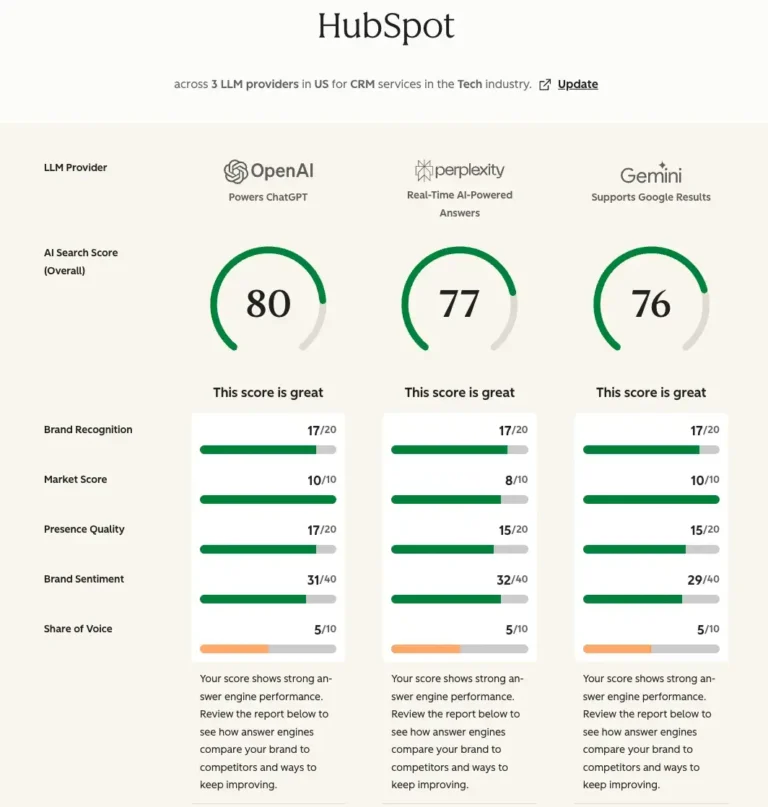
- Explicit Temporal Markers: For information that can become outdated, such as pricing, feature sets, or statistics, including a date provides essential context. For example, "As of September 2026, HubSpot AEO refreshes AI visibility data daily across ChatGPT, Gemini, and Perplexity." This doesn’t guarantee freshness in AI retrieval but adds crucial context.
- Headings Phrased as a Question: When a question accurately encapsulates the content of a section, using it as a heading can be highly effective. This provides both readers and AI systems with a clear label for the information that follows. However, the section must then directly and concisely answer the question.
Beyond writing patterns, structured data and on-page elements play a supporting role. Schema markup provides AI with explicit, machine-readable information about a page and its entities. While its direct impact on retrieval weight is not publicly disclosed by all search engines, accurate structured data often correlates with more precise entity representations by AI systems.
Navigating Query Fan-Out with Vector Embeddings
Some advanced AI search systems employ a strategy known as "query fan-out." This involves expanding a user’s initial query into a series of related subqueries. The AI then searches for answers to these subqueries independently and synthesizes the results to provide a comprehensive response. For marketers, this means addressing not just the primary question a user might ask, but also the subsequent, related questions that are likely to arise during their research journey.
Franklin Rios described how conversations with LLMs naturally narrow in focus, moving from broad topics to more specific inquiries. This observation can be leveraged to build a content map without requiring technical expertise. By identifying the primary question and then brainstorming related subtopics or "adjacent questions" that a user might ask, marketers can ensure their content comprehensively covers a user’s entire research path.
Building a Fan-Out Content Map:
- Identify the Core Question: What is the central problem or need your content addresses?
- Brainstorm Related Subtopics: What are the immediate follow-up questions or related concepts that stem from the core question?
- Consider User Intent: What is the underlying goal or motivation behind these questions? Are they seeking information, comparison, or solutions?
- Map Content: Determine whether existing content can be updated to address these subtopics or if new content needs to be created.
The goal is not necessarily to create a high volume of thin content, but rather to ensure depth and breadth in coverage. One robust piece of content can effectively answer several related questions if those answers naturally belong together. Separate pages are more appropriate when the intent behind the questions differs significantly. As Rios cautioned, focusing on quality and trustworthiness is more effective than simply multiplying content in an attempt to "override it with massive amounts of noise."
Measuring AI Visibility and Iterating Content Strategy
Directly observing every retrieval decision made by an answer engine is impossible. However, marketers can gain valuable insights by tracking the output. This includes monitoring which prompts surface their brand, which pages are cited, how frequently competitors appear, and the accuracy of the AI-generated descriptions of their brand. These signals, while not definitively proving causality for specific content changes, provide crucial direction for strategic adjustments.

Key Metrics for AI Visibility Tracking:
- Brand Appearance: How often does your brand appear in AI-generated answers?
- Page Citations: Which specific pages are being cited by AI systems?
- Competitor Share of Voice: How does your brand’s visibility compare to that of your competitors?
- Prompt Performance: Which types of prompts lead to your brand being surfaced or cited?
- Accuracy of AI-Generated Descriptions: Is the AI accurately representing your brand, products, and services?
Establishing a baseline before implementing any changes is crucial. Consistent monitoring of these metrics over a defined period, using a consistent set of prompts, allows for the identification of trends and the assessment of content strategy effectiveness. It’s important to note that there isn’t a universal waiting period for changes to reflect in AI visibility; consistency in measurement and patience are key.
The Practical Implications for Marketers: Beyond the Technicalities
The technical intricacies of vector embeddings and their underlying mathematical models are complex. However, for most marketing teams, the actionable insights lie in how this technology influences content strategy and creation.
Do you need a vector database to start?
The answer is generally no, at least not for initial AEO efforts. A vector database is primarily an infrastructure component for building custom retrieval systems, such as internal knowledge bases or AI-powered support assistants. For optimizing content to be discoverable by external answer engines, the focus should remain on creating clear, well-structured, and semantically rich content.
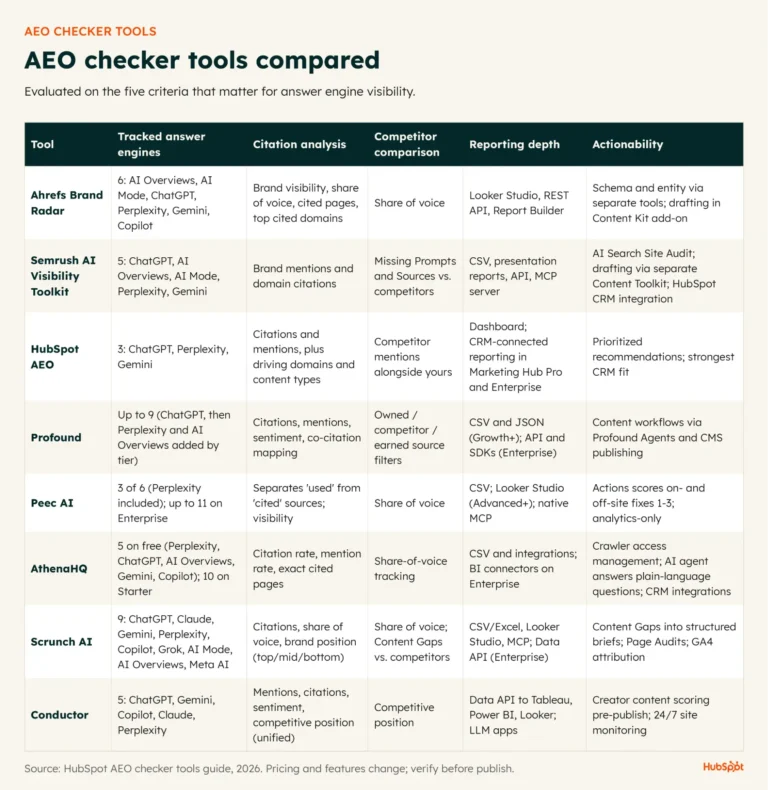
Technical teams might use embeddings to analyze their own content for semantic similarity, which can help identify gaps or areas of overlap. However, this analysis does not replicate the proprietary indexing and retrieval pipelines of major answer engines. Qualitative methods, such as using LLMs to compare content or employing AEO monitoring tools, can provide valuable directional insights without requiring custom infrastructure.
How to Avoid Over-Engineering Early:
Instead of diving into complex infrastructure, marketers should prioritize foundational AEO practices:
- Improve Content Clarity: Ensure each important passage is self-contained and clearly answers a specific question.
- Maintain Brand Consistency: Use consistent language and descriptions for your brand across all platforms.
- Address Related Questions: Expand content to cover the broader range of queries that surround a user’s primary search intent.
- Measure Visibility: Implement tracking to understand how your content is performing in AI-driven search results.
Complex elements like building a custom vector database or developing proprietary embedding models can be explored later, once a strong content foundation is established and the impact of these advanced tools on the business is clearly understood.
In conclusion, vector embeddings represent a fundamental shift in how information is processed and retrieved by AI. For marketers, this translates into a renewed focus on clarity, semantic richness, and comprehensive coverage of user intent. By understanding these principles and applying them to their content strategies, businesses can ensure their message resonates not only with human audiences but also with the increasingly sophisticated AI systems that are shaping the future of online discovery. The era of Answer Engine Optimization is here, and a grasp of vector embeddings is a key to unlocking its full potential.
About the Author