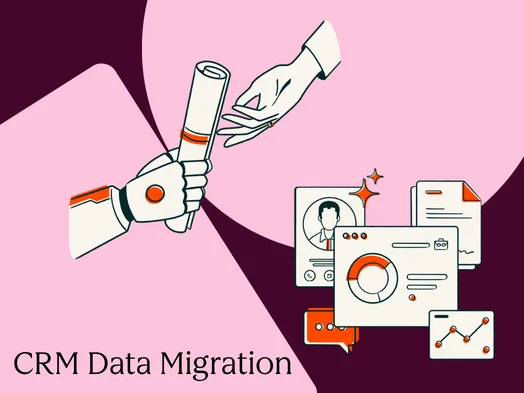
CRM data migration is the intricate process of transferring vital customer data, established workflows, and associated assets from one Customer Relationship Management system to another. Its significance cannot be overstated, as the CRM serves as the central nervous system for a revenue team. When the data residing within this system is compromised or inaccurate, every subsequent operational process built upon it risks failure. This guide delves into the complete CRM data migration lifecycle, from meticulous planning to post-launch hypercare, offering a structured approach to what is often a complex undertaking.
Understanding the Nuances of CRM Data Migration
At its core, CRM data migration involves more than simply moving raw data. It encompasses the transfer of records, the intricate relationships between them, historical interaction data, user permissions, and crucially, connected workflows. A superficial understanding of "moving data" fails to grasp the depth of this process. A true migration requires careful consideration of:
- Data Structure and Relationships: Ensuring that the links between contacts, companies, deals, and activities are preserved is paramount. A contact record, for instance, is not an isolated entity; it’s linked to a company, associated with ongoing deals, embedded within email histories, and potentially tied to automated sequences. Any break in these connections can lead to orphaned records, fragmented sales pipelines, and significant reporting inaccuracies from day one.
- Distinction from Integration: It’s crucial to differentiate migration from integration. While integration focuses on maintaining a continuous, real-time synchronization between two systems, migration is a deliberate, often one-time or phased, movement of structured data with the explicit goal of establishing a new, definitive source of truth. Both may be employed, but they represent distinct operational workstreams with different ownership structures.
- Strategic Business Change: Viewing CRM data migration as a phased business change, akin to the strategic implementation of revenue performance management, is key to its success. This perspective necessitates clear objectives, defined constraints (such as freeze windows and rollback triggers), and measurable success criteria (including record counts, accuracy rates, and user validation metrics). Every decision made throughout the migration process should be guided by these foundational inputs.
The Eight Phases of a Structured CRM Migration
A successful CRM migration typically unfolds across eight distinct phases, each demanding specific attention and deliverables:
- Planning: This foundational phase involves developing a comprehensive migration plan that outlines roles, responsibilities, timelines, decision-making processes, and contingency measures. Investing adequate time in this initial stage, often two to three weeks, can prevent months of remedial work later.
- Data Cleansing: Before any data is moved, it must be meticulously cleaned to remove duplicates, standardize formats, and rectify inaccuracies. This proactive step significantly reduces the risk of importing flawed data into the new system.
- Field Mapping: This critical phase involves meticulously aligning fields from the source CRM with their corresponding fields in the destination CRM, a process often complicated by differing data models.
- Sequencing: Determining the correct order for migrating different object types (e.g., companies before contacts) is essential to prevent orphaned records and maintain data integrity.
- Testing (Sandbox Environment): Conducting initial migration tests in a controlled sandbox environment is crucial for identifying and rectifying mapping errors, transformation issues, and relationship integrity problems without impacting live data.
- Production Migration: The actual transfer of cleaned and mapped data from the source to the destination CRM in the live production environment.
- Validation: A rigorous process of verifying the accuracy, completeness, and integrity of the migrated data through record counts, spot checks, automated comparisons, and user acceptance testing.
- Go-Live and Hypercare: The official launch of the new CRM system, followed by a dedicated period of intensive support and monitoring to address any immediate post-migration issues and ensure smooth user adoption.
The Importance of a Robust Migration Plan
The migration plan serves as the central document guiding the entire project team. It delineates ownership, establishes timelines, defines decision-making protocols, and outlines remedial actions for unforeseen issues. A well-defined plan, developed with input from all stakeholders, ensures clarity and accountability.
Key Roles and Responsibilities (RACI Matrix)
Clear ownership is paramount for a successful CRM migration. A RACI (Responsible, Accountable, Consulted, Informed) matrix should be established for each major phase, assigning specific roles and responsibilities. Critical roles often include:
- Project Manager: Oversees the entire migration process, manages timelines, resources, and communication.
- Data Steward: Responsible for data quality, cleansing, and ensuring data integrity throughout the migration.
- System Administrator (Source & Destination): Manages the technical aspects of data extraction, loading, and system configuration.
- Business Stakeholders (Sales, Marketing, Service Leaders): Provide input on data requirements, validation criteria, and user acceptance.
- IT/Technical Team: Supports infrastructure, security, and any custom development or integration needs.
Ambiguity, particularly around go/no-go decisions, is a frequent failure point. Defining who has the ultimate approval authority before the migration commences is essential.
Leveraging Sandbox Environments for Risk Mitigation
The initial migration efforts should always be conducted within a sandbox environment. This allows for the testing of field mapping, identification of transformation errors, and validation of relationship integrity before any live data is affected. Advanced CRM platforms often provide purpose-built sandbox environments that mirror production setups, enabling iterative testing without risk. A common best practice is to run the sandbox migration at least twice: the first run identifies initial mapping gaps, and the second, after corrections, serves as the baseline for validation.
Managing Risks and Embracing Change Management
A comprehensive risk register should be developed early in the planning phase, documenting potential challenges such as data corruption, extended downtime, integration failures, and user resistance. Change management, often underestimated, is critical for user adoption and achieving sales optimization. A proactive communication plan, detailing upcoming changes, timelines, and the rationale behind them, keeps stakeholders informed and minimizes day-one friction.
Deep Dive into Data Cleansing: The Pre-Migration Imperative
Data cleansing is not a post-migration activity; it is a non-negotiable prerequisite. Migrating dirty or duplicate data into a new CRM system exponentially increases the difficulty of rectifying these issues.
- Data Audit: A thorough audit of each object type (contacts, companies, deals, tickets) is the starting point. This involves documenting record counts, identifying duplicate entries, assessing data completeness (e.g., missing email addresses, phone numbers), and evaluating data accuracy against known sources. This audit establishes a baseline for data quality.
- Deduplication and Normalization: Defining clear matching rules for deduplication is crucial. Exact email matches are often a safe starting point for contacts, with fuzzy matching on names and company associations layered on. Normalization involves enforcing consistent data standards, such as phone number formats, country codes, and picklist values. These standards become governance rules for the new system.
- Golden Records and Survivorship Rules: When duplicate records are merged, survivorship rules dictate which field values are retained. Documenting these rules (e.g., keeping the most recently updated phone number) before deduplication is essential to ensure consistent data quality at scale.
Navigating the Complexities of Field Mapping
Field mapping, the alignment of source CRM fields with destination CRM fields, is frequently a significant bottleneck due to the inherent differences in data models across platforms.
- Field Inventory: A comprehensive inventory of all source system objects and their properties is the first step. This includes documenting field names, types, picklist values, and any associated automation or reporting dependencies. This information is best compiled in a detailed mapping spreadsheet.
- Conflict Resolution: Common mapping conflicts arise from differing data types (e.g., text vs. number), inconsistent picklist values, and the need for data transformations. Careful analysis and planning are required to resolve these discrepancies.
- Relationship Mapping: Preserving the intricate relationships between different data objects is a parallel and equally critical task. Migrating contacts before companies, for example, will break the company association for those contacts.
Strategic Sequencing for Data Integrity
The order in which data objects are migrated is a technically vital decision that prevents orphaned records. The general principle is to migrate parent objects before their dependent child objects. A common recommended sequence is:
- Companies/Accounts
- Contacts
- Deals/Opportunities
- Activities (Calls, Emails, Meetings)
- Tickets/Cases
- Products
- Custom Objects
Deviating from this sequence can lead to records with broken associations, introducing data integrity risks that compound over time. Post-migration audits to identify null association IDs are crucial for remediation.
Historical Data: A Question of Value vs. Effort
Migrating all historical data is often a primary driver of extended timelines and inflated budgets. A strategic approach involves evaluating historical activities and attachments against criteria such as:
- Relevance: Is the data still relevant for current business operations or compliance?
- Accessibility: Can the data be easily accessed and integrated into the new system?
- Volume: Does the sheer volume of historical data justify the migration effort and associated storage costs?
- User Demand: Is there a clear and consistent demand from users for this historical data in the new system?
For most organizations, migrating 12-18 months of activity history is a pragmatic approach. Older data can be archived in a read-only repository, such as a separate cloud storage bucket or a legacy CRM in read-only mode.
-1.png)
Integrations and Security: The Silent Dependencies
Integrations are frequently the unsung heroes or villains of CRM migrations. A thorough inventory of all revenue operations tools connected to the current CRM is essential, documenting their data flows and endpoint requirements. Before cutover, these integrations must be reconfigured, assigned owners, and subjected to smoke tests in the sandbox environment.
Permissions remapping presents an opportunity to rationalize security models rather than merely replicate them. Documenting user access needs for each group and mapping these requirements to the new CRM’s permission sets, followed by rigorous testing with real users, is critical. Security testing should include verifying that users have precisely the access they require and no more.
Validation: The Final Gatekeeper to Go-Live
Validation is the most underinvested phase in CRM migrations, yet it is the final checkpoint before go-live. A robust validation framework includes:
- Record Counts: Verifying that the number of migrated records matches the source.
- Sampled Spot Checks: Manually reviewing a representative sample of records for accuracy and completeness.
- Automated Comparisons: Utilizing tools to programmatically compare data between the source and destination systems.
- User Acceptance Testing (UAT): Engaging end-users to test the system and validate their data and workflows.
Safe Rollback Planning: A Critical Contingency
Rollback planning is a proactive measure that requires predefined backup strategies, clear trigger conditions for rollback, defined time windows, and established communication paths. The source CRM should ideally be kept in read-only mode for a specified period post-go-live to serve as a clean reference point and a potential recovery path.
Choosing the Right CRM Data Migration Tools
The selection of a CRM data migration tool hinges on data volume, technical resources, timeline, and the complexity of field mapping and transformation logic.
- Native Import Tools: For smaller migrations with clean data and standard objects (under 25,000 records), a CRM’s native import tool (e.g., HubSpot’s CSV import) is often the most efficient and cost-effective solution.
- iPaaS/Data Sync Platforms: Tools like HubSpot Data Hub offer robust data synchronization capabilities, ideal for phased migrations and ongoing integration management.
- Dedicated Migration Tools: Services like Trujay, Migrate.io, and Data2CRM cater to more complex scenarios, offering advanced mapping and transformation features.
- Custom API Migration: For highly specialized or extremely large-scale migrations, a custom-built solution using APIs may be necessary, requiring significant development resources.
Regardless of the tool chosen, initial testing in a sandbox environment is paramount to identify and address any tool-specific quirks or limitations.
A Phased Approach: From Assessment to Hypercare
A comprehensive CRM migration checklist, broken down by phase, provides a clear roadmap for tracking progress and ensuring all critical steps are completed:
Phase 1: Assess
- Define migration goals and success criteria.
- Inventory source CRM data, objects, and fields.
- Identify key stakeholders and form the migration team.
- Conduct initial risk assessment.
Phase 2: Cleanse
- Perform data audit and establish data quality baseline.
- Execute deduplication and normalization processes.
- Define and apply survivorship rules.
Phase 3: Map
- Build detailed field mapping documentation.
- Address mapping conflicts and data transformation needs.
- Map relationships between objects.
Phase 4: Test (Sandbox)
- Conduct initial migration in a sandbox environment.
- Test field mapping and data transformations.
- Validate relationship integrity and workflow functionality.
- Perform user acceptance testing in the sandbox.
Phase 5: Production Migration
- Execute final data extraction from the source CRM.
- Perform the actual data migration to the destination CRM.
- Conduct delta migration for data changed during the migration window.
Phase 6: Validate
- Perform record count verification.
- Conduct comprehensive spot checks and automated data comparisons.
- Execute user acceptance testing in the production environment.
Phase 7: Cutover
- Deactivate source CRM access.
- Activate destination CRM for end-users.
- Perform final system checks and integration validation.
Phase 8: Hypercare
- Provide intensive post-go-live support.
- Monitor system performance and address user issues.
- Continuously refine workflows and automations.
Go-Live and the Critical Hypercare Period
Go-live is not the conclusion of a CRM migration but the commencement of a crucial 2-4 week stabilization period known as hypercare. This phase is dedicated to actively monitoring for errors, responding to user inquiries, and ensuring the seamless functioning of revenue operations automation workflows.
Best practices for hypercare include:
- Dedicated Support Team: A core team available to quickly address user issues.
- Issue Tracking System: A structured method for logging, prioritizing, and resolving reported problems.
- Daily Stand-ups: Regular meetings to review progress, identify trends, and coordinate efforts.
- Proactive Monitoring: Utilizing system dashboards and alerts to detect potential issues before they impact users.
Frequently Asked Questions About CRM Data Migration
- Timeline: Small migrations (under 25,000 records) can take 4-6 weeks. Mid-market migrations (50,000-500,000 records) typically range from 2-4 months. Enterprise migrations, with complex custom objects and large datasets, can extend to 4-9 months. Data cleansing is often the most time-consuming phase.
- Cost: Self-managed migrations primarily incur internal labor costs. Dedicated migration tools range from $500-$5,000. Full-service system integrator engagements for enterprise migrations can range from $20,000 to over $150,000. Data cleansing often accounts for 30-40% of the total effort.
- Attachments and Email Histories: While possible, migrating large volumes of attachments and complex email histories can be resource-intensive. A pragmatic approach often involves migrating a subset of recent data and archiving older records.
- Automation and Workflows: Automation and workflows do not migrate automatically; they must be rebuilt in the new CRM and tested thoroughly. Deactivating source workflows precisely when activating destination workflows is crucial to avoid gaps.
- Migration vs. Integration: Migration is a one-time data transfer to establish a new system of record. Integration is an ongoing synchronization between two active systems.
A well-executed CRM data migration provides a solid foundation for growth, while a poorly managed one can lead to persistent data debt. The differentiator is rarely the technology itself, but rather the rigor of planning, sequencing, and disciplined validation. By adopting a structured, phased approach and prioritizing data quality, organizations can ensure a seamless transition, empowering their revenue teams with a clean and reliable CRM system.
About the Author