The success of a Customer Relationship Management (CRM) platform hinges not on its sophisticated features or the size of the budget allocated to it, but on the quality of its administration. This operational discipline dictates whether a CRM system effectively mirrors a company’s current business processes, leading to clean data, efficient workflows, and reliable insights, or if it becomes an underutilized digital repository. Understanding the nuances of CRM administration is paramount for any organization aiming to leverage its CRM as a true revenue-generating engine.
Understanding the Core of CRM Administration
At its heart, CRM administration is an ongoing operational function, distinct from a one-time setup project. It encompasses the governance of data, users, workflows, and reporting mechanisms. Crucially, it is intrinsically linked to business processes and Go-To-Market (GTM) strategies, rather than existing in isolation from the revenue teams that utilize it. A high-performing CRM operating model is characterized by continuous auditing and improvement, a stark contrast to a "set it and forget it" mentality. This operational discipline directly supports the cleanliness of data and consistent user adoption, two foundational elements that directly impact pipeline accuracy and the quality of every customer interaction.
The Direct Link Between CRM Administration and Revenue
When leadership loses confidence in the accuracy and reliability of their CRM data, decision-making processes begin to falter, leading to a collapse in user adoption. Effective CRM administration directly influences revenue generation and user engagement through several key channels:
- Forecast Accuracy: Clean pipeline data, consistent deal stage definitions, and governed lifecycle stages are essential for producing forecasts that leadership can trust. Without proper administration, these forecasts become unreliable, leading to misinformed strategic decisions.
- Marketing Attribution: Standardized lead source taxonomy and robust lifecycle stage governance ensure that attribution reports accurately reflect the true sources of leads and their journey through the funnel. This data is vital for optimizing marketing spend and strategy.
- User Adoption: When a CRM system is fast, logical, and reliable, sales representatives are more inclined to use it consistently. This reduces the prevalence of "shadow systems" and mitigates data gaps that hinder productivity and insight.
- Sales Velocity: Automated handoffs, clean routing rules, and complete contact records, all managed through effective administration, significantly reduce the time between lead creation and initial engagement, accelerating the sales cycle.
- Customer Experience: A unified and clean contact record ensures that customer service representatives have access to all relevant information, preventing customers from having to repeat themselves and fostering a more seamless and positive experience.
The financial implications of poor data quality are substantial. According to Gartner, inaccurate data can cost organizations an average of $12.9 million annually. HubSpot’s own research indicates that teams leveraging their Data Hub for data quality improvements experience enhanced report accuracy within 90 days of implementation, underscoring the tangible benefits of diligent administration.
A Real-World Scenario: The Perils of Unmanaged Lifecycle Stages
A common pitfall observed in CRM implementation is the lack of governance around lifecycle stages. For instance, marketing teams might automatically assign contacts to "Marketing Qualified Lead" (MQL) status upon form submission. Subsequently, sales representatives may manually revert these contacts to "Lead" if they are not yet ready for sales engagement. A lack of consensus on the definition of a "Sales Qualified Lead" (SQL) further exacerbates the issue, leading to broken handoffs between departments.
The outcome of such disarray can be stark: marketing reports generating 500 MQLs per month, while sales claims to receive only 50 qualified leads. Leadership might then attribute the discrepancy to poor marketing quality, while marketing blames sales for selective engagement. The root cause, however, often lies in an undefined, unowned, and unenforced lifecycle stage property.
The solution, while seemingly simple, requires business alignment. Clearly defining each stage, establishing automated workflows for stage transitions based on agreed-upon criteria, implementing processes to govern manual overrides, and publishing definitions in a shared CRM data dictionary are crucial steps. In platforms like HubSpot, these fixes can often be implemented within a single day, contingent on prior business alignment discussions.
Core Capabilities of Effective CRM Administration
A competent CRM administrator is responsible for a broad spectrum of functionalities, including permissions, properties, workflows, pipelines, reports, and documentation. This scope necessitates a blend of technical proficiency and business acumen.
| Admin Domain | What It Covers | Primary Business Outcome |
|---|---|---|
| Data Model | Objects (contacts, companies, deals, tickets), properties, associations, custom objects | Accurate records reflecting real buyer relationships |
| Permissions and Access | User roles, team structure, object visibility, property restrictions | Data security, adoption, and rep focus |
| Workflow Automation | Enrollment triggers, actions, branching logic, error monitoring | Consistent process execution without manual effort |
| Pipeline Management | Stage definitions, required fields per stage, deal rotation rules | Reliable forecasting and sales stage integrity |
| Integrations | Connected apps, field mappings, sync rules, error logs | Unified data across the technology stack |
| Reporting and Dashboards | Report definitions, dashboard governance, attribution logic | Trusted analytics for informed decision-making |
| Documentation | Data dictionary, change log, training materials, runbooks | Institutional knowledge and sustained user adoption |
Distributing Responsibilities: Team Mapping
CRM administration is rarely the sole responsibility of one individual or department. Typically, these responsibilities are distributed across Revenue Operations (RevOps), Marketing Operations, and Sales Operations, with a central CRM administrator or team coordinating efforts.
- CRM Admin / RevOps: Platform configuration, workflow governance, permissions management, data quality oversight, integration management, and reporting infrastructure.
- Marketing Ops: Lead capture forms, lead scoring, lifecycle stage logic, email automation, and attribution setup.
- Sales Ops: Pipeline architecture, deal stage definitions, forecasting tools, sales sequence governance, and territory logic.
- Service Ops: Ticket pipelines, SLA configurations, escalation workflows, and customer satisfaction surveys.
- IT / Security: SSO configuration, data residency, API credentials, security reviews, and scalable user provisioning.
Ensuring Data Governance and Quality
Data governance establishes naming conventions, validation rules, merge policies, and lifecycle standards. Without these, even a meticulously configured CRM can devolve into inconsistency within months. The proliferation of unused contact properties, often created ad hoc, can bloat the system and confuse users. Strong data maintenance practices are the bedrock of a reliable CRM.
Property and Schema Standards: A CRM data dictionary is the foundational document, detailing every active property, its object type, data type, definition, who populates it, and its intended use. Leveraging inline property description fields within the CRM itself can significantly aid user understanding. Key property governance rules include:
- Mandatory description fields for all properties.
- Regular audits of unused properties for archiving.
- Standardized naming conventions for all properties.
- Clear ownership for each property.
- Defined population rules.
Organizing properties into logical groups on record pages (e.g., using Property Groups in HubSpot) enhances usability and improves data completeness without requiring additional training.
Deduplication and Validation Rules: Duplicate records erode report accuracy and user trust. Deduplication is an ongoing data hygiene process. A single contact appearing multiple times can inflate lead counts, fragment engagement history, and hinder personalization efforts. Tools like HubSpot’s Data Hub automate data quality processes, including deduplication and standardization. Recommended workflows include:
- Regular automated duplicate checks.
- Manual review queues for potential duplicates.
- Validation rules to prevent duplicate creation at the point of entry.
It is critical to perform test exports and analyze merge logic on a subset of data before executing any bulk merge or deduplication operations to prevent accidental data loss or corruption.
Permissions, Roles, and Security: The Principle of Least Privilege
Permission models should adhere to the principle of least privilege, granting users access only to what is necessary for their roles. Over-permissioned systems pose significant data security and quality risks, as users may inadvertently alter or delete critical information.
In HubSpot, permissions are managed at three levels:
- User Role: Defines a broad set of permissions based on job function.
- Team: Controls record visibility based on team membership.
- Individual User Permissions: Allows for specific overrides and granular access control.
Establishing a scalable permission model before widespread user onboarding is a high-leverage activity. This involves defining roles first, then assigning users to these roles rather than configuring permissions on an individual basis.
A typical B2B SaaS company permission matrix might look like this:
| Role | Contacts | Companies | Deals | Tickets | Reports | Workflows |
|---|---|---|---|---|---|---|
| CRM Admin | Full | Full | Full | Full | Full | Full |
| RevOps | Full | Full | Full | View | Full | Full |
| Account Exec | Edit (owned) | Edit (owned) | Edit (owned) | View | View (personal) | None |
| SDR / BDR | Create / Edit | View | Create | None | View (personal) | None |
| Marketing Mgr | Edit | View | View | None | Create / Edit | Create / Edit |
| CSM | Edit (owned) | View | View | Edit (owned) | View (personal) | None |
| Service Rep | View | View | None | Edit (owned) | View (personal) | None |
| Executive | View | View | View | View | Full | View |
HubSpot’s team-based record visibility is lauded for its straightforward approach to scoping access, simplifying the management of user permissions compared to more complex role hierarchies found in other systems.
Workflows, Automation, and Lifecycle Stages: Building Reliable Processes
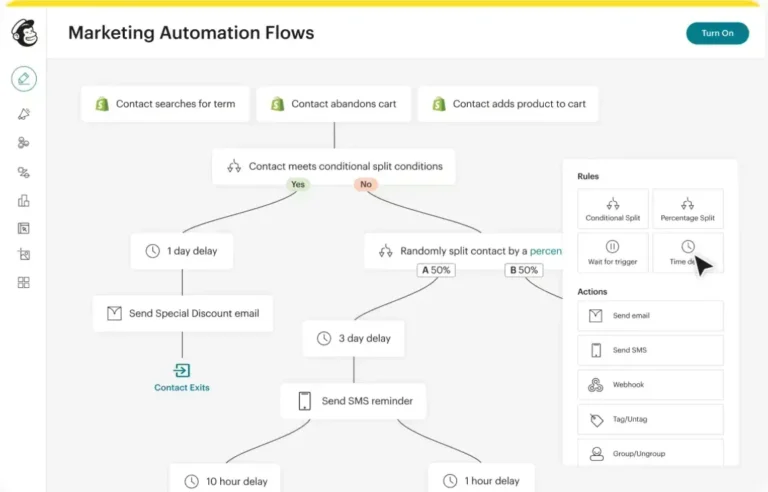
Workflow guardrails are essential to prevent automation conflicts and subtle data errors. Most CRM automation failures stem not from flawed logic, but from a lack of safeguards such as suppress lists, enrollment caps, and inadequate error monitoring. CRM automation administration focuses on designing workflows that are reliable, documented, and observable.
Key elements for building confident workflows include:
-1.png)
- Named Purpose: Clear titles and descriptions explaining the workflow’s function and rationale.
- Suppress Lists: Active lists of contacts or companies excluded from workflow enrollment (e.g., customers, unsubscribes).
- Test Contact: A dedicated non-production contact for validating workflow logic before deployment.
- Error Monitoring: Regular review of workflow error logs to identify and address silent failures.
- Naming Convention: A consistent format for workflow titles to ensure navigability.
A practical tip for testing is to create a dedicated CRM Admin Test contact and use the "Test" tab within workflows to validate logic without enrolling real contacts.
Mapping lifecycle stages to business processes is critical for aligning marketing, sales, and service handoffs. The trigger for a lifecycle stage transition, who can modify it, and the downstream consequences of such a change are paramount governance decisions. A well-defined lifecycle stage model ensures that data accurately reflects the customer journey.
| Lifecycle Stage | Trigger Rule | Who Can Set It | Downstream Action |
|---|---|---|---|
| Subscriber | Form submission (no demo/pricing intent) | Automated only | Enroll in nurture sequence |
| Lead | High-intent form OR lead score threshold met | Automated only | Assign to lead queue; notify SDR |
| MQL | Lead score ≥ threshold AND ICP tier = Tier 1/2 | Automated only | Route to SDR; start SLA timer |
| SQL | Meeting booked after BANT qualification | SDR manual + workflow validation | Create deal; associate with pipeline |
| Opportunity | Deal created and associated | Automated on deal creation | Assign CSM shadow; notify manager |
| Customer | Deal stage = Closed Won | Automated only | Create onboarding ticket; suppress from sales automation |
| Evangelist | CSM manual tag after NPS 9-10 + reference agreement | CSM manual | Add to reference program list |
It is advisable to avoid manual backward movement of lifecycle stages. Instead, a separate "Re-engagement Status" property can track the contact’s current standing without corrupting historical funnel data.
Reporting, Dashboards, and Adoption: The Visibility Engine
Reliable dashboards are built on standard definitions, clean fields, and documented filters. Reporting administration is a highly visible and crucial aspect of CRM management. Miscalculations in pipeline reports due to poorly managed lifecycle stages can erode stakeholder confidence, while well-constructed forecast dashboards can become indispensable tools for executive decision-making.
Four conditions must be met for any CRM report to be trustworthy:
- Data is accurate and complete.
- Definitions are standardized and understood.
- Filters are correctly applied.
- The report directly addresses a business question.
If any of these conditions are compromised, the upstream data or process issues must be addressed, not just the report itself.
A core set of dashboards that most organizations require includes:
- Revenue Performance: Pipeline by stage, weighted forecast, closed-won by source, win rate, average deal size. (Audience: CEO, CRO, VP Sales)
- Marketing Funnel: MQL volume by source, MQL-to-SQL conversion rate, email performance, content attribution. (Audience: CMO, Marketing Director)
- Sales Activity: Calls/emails/meetings per rep, activity-to-pipeline ratio, deal velocity, overdue tasks. (Audience: VP Sales, Sales Manager)
- Customer Success: Ticket volume, resolution times, customer satisfaction scores. (Audience: VP CS, CSM Team)
- CRM Health (Admin): Workflow errors, data completeness, duplicate counts, inactive users. (Audience: CRM Admin, RevOps)
HubSpot’s reporting features, including custom report builders and dashboard creation tools, empower administrators to construct these vital insights.
Change Control, Sandboxes, and Documentation: Managing Evolution
A robust change control process, encompassing intake, testing, approvals, rollout, and monitoring, is vital to prevent unpredictable accumulation of CRM changes that can lead to system instability. While formal change advisory boards may be excessive for some, a lightweight, consistent process is essential.
The CRM change control process typically involves:
- Intake: A standardized form for change requests detailing the "what," "why," and supported business process.
- Review: Assessment of conflicts, workflow dependencies, and alignment with governance standards by the CRM admin.
- Approval: A secondary approver (e.g., RevOps lead) for changes exceeding a defined risk threshold.
- Scheduling: Batching approved changes into defined "change windows" to minimize disruption.
- Testing: Thorough validation in a sandbox environment before production deployment.
- Rollout: Deployment with documented rollback plans for high-risk modifications.
- Post-launch Monitoring: Tracking key metrics for 48-72 hours after deployment.
User Acceptance Testing (UAT) is a critical step, often overlooked, that prevents production incidents. Testing approaches vary by change type:
| Change Type | Testing Approach | Rollback Strategy |
|---|---|---|
| New Workflow | Test contact through all branches in sandbox; confirm property changes/task assignments | Turn off workflow; delete test records |
| Pipeline Stage Change | Move test deal through stages; verify workflow and report updates | Restore original stage name; update workflow conditions |
| New Required Field | Attempt record creation as rep-role user; confirm field blocks progression | Remove required field designation |
| Integration Change | Trigger test sync; verify field mapping in both systems | Revert field mapping; pause sync |
| Permission Change | Log in as impersonated user to confirm access level | Restore previous permission set |
HubSpot’s Sandbox environment is invaluable for testing changes in a safe, isolated copy of the production portal, significantly reducing deployment risk.
Effective CRM documentation is concise, searchable, and up-to-date. Key documents include:
- A comprehensive data dictionary.
- A change log detailing all modifications.
- User guides and training materials.
- Workflow and automation documentation.
- Runbooks for common administrative tasks.
Cross-Team Alignment: The Foundation of a Unified CRM
A RACI (Responsible, Accountable, Consulted, Informed) matrix clarifies decision-making rights across CRM administration, RevOps, marketing, sales, service, and IT. This prevents the CRM admin from becoming a bottleneck and ensures that critical decisions are made efficiently and collaboratively.
A sample CRM Administration RACI:
| CRM Process | CRM Admin | RevOps | Marketing Ops | Sales Ops | Service Ops | IT |
|---|---|---|---|---|---|---|
| New Property Creation | R | A | C | C | C | I |
| Workflow Creation/Edit | R | A | C | C | C | I |
| Pipeline Stage Changes | C | A | I | R | I | I |
| Lifecycle Stage Logic | R | A | C | C | C | I |
| User Provisioning | R | A | I | I | I | C |
| Integration Management | C | A | I | I | I | R |
| Dashboard/Report Creation | R | A | C | C | C | I |
| Deduplication Runs | R | A | I | I | I | I |
| Annual CRM Governance Review | R | A | C | C | C | C |
Service Level Agreements (SLAs) for data entry, lifecycle qualification, and handoffs are also crucial for maintaining operational integrity. Examples include MQL follow-up SLAs, data entry deadlines, and ticket response times.
The Emerging Role of AI in CRM Administration
Artificial intelligence is rapidly transforming CRM administration, with tools like Breeze automating repetitive tasks, auditing setups, and accelerating common administrative processes. While AI does not replace the need for skilled administrators, it significantly reduces the time spent on low-value tasks, allowing for a greater focus on strategic initiatives. However, AI-generated data requires its own governance framework, ensuring accuracy and consistency.
Practical AI use cases include:
- Data Enrichment: Automatically populating firmographic data, reducing completeness gaps.
- Copilot: Natural language interfaces for building workflows, generating reports, and drafting documentation.
- Intelligence: AI-powered scoring and intent signals to refine lead routing and prioritization.
- Agents: Autonomous agents for prospecting and customer service, requiring governance of AI-created records.
When implementing AI-driven data enrichment, it is essential to establish protocols for verifying accuracy and managing potential overwrites of manually verified data. This includes setting clear ownership for AI-generated data and implementing audit workflows.
Skills, Certifications, and Career Path
CRM administration is evolving into a strategic revenue function. Administrators who excel are those who can articulate business outcomes in terms of CRM features. Core skills include data modeling, governance, UX design, automation, change management, QA testing, stakeholder alignment, and reporting.
HubSpot Academy offers valuable free training and certifications in CRM administration. The CRM Admin Certification and Data Hub Certification are foundational. Pursuing a Revenue Operations Certification after gaining practical experience can elevate an administrator’s strategic impact.
Frequently Asked Questions
- Day-to-day responsibilities: Monitoring workflows, reviewing data quality, processing change requests, managing users, building reports, and overseeing integrations.
- CRM Admin vs. Sales Ops/RevOps: Sales Ops focuses on sales process efficiency, while RevOps aligns marketing, sales, and service operations. CRM administration is the platform governance function that supports these broader efforts.
- Sandbox necessity: For organizations with significant automation, active pipelines, or complex integrations, a sandbox is indispensable for safe testing.
- Reducing duplicates: Prevention through validation rules and ongoing cleanup using duplicate management tools are key. Careful merging procedures and backups are critical.
- First certifications: HubSpot’s CRM Certification and Data Hub Certification are recommended starting points, followed by the Revenue Operations Certification.
Conclusion
CRM administration is fundamentally a revenue function. Every qualified lead lost due to a broken workflow, every inaccurate forecast stemming from dirty pipeline data, and every instance of user disengagement due to a slow or unreliable system represents a direct revenue consequence of administrative shortcomings. Organizations that achieve CRM success invest in administration as a core practice, establishing clear ownership, robust governance, a commitment to continuous improvement, and a recognized role in GTM strategy. The principles of effective CRM administration, whether for a solo administrator or a large RevOps team, remain consistent: document what exists, build governance incrementally, and maintain a diligent auditing practice. A well-administered CRM is not merely a technological achievement; it is a significant competitive advantage.
About the Author