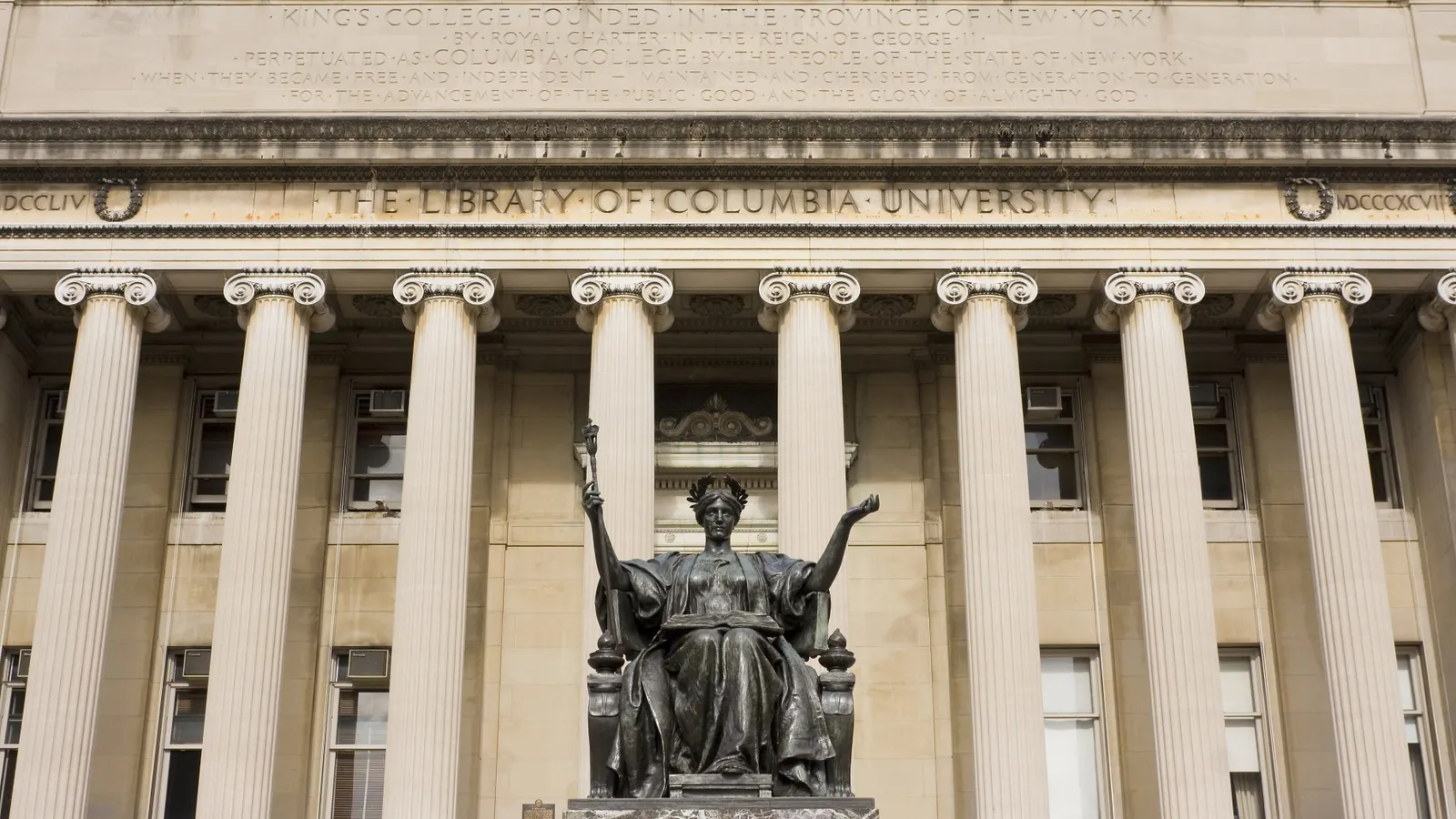
Columbia University is embroiled in a significant civil rights lawsuit filed by a coalition of current and former students and employees who accuse the esteemed Ivy League institution of "deliberate indifference" to the pervasive harassment and targeting of Palestinians on its campus. The complaint, lodged with the New York County Supreme Court, asserts that rather than acting as a neutral arbiter, Columbia allegedly "actively participated in and amplified the racially, ethnically, and politically motivated targeting of Palestinian students, staff, and faculty." The plaintiffs are seeking judicial intervention and substantial damages for the alleged harms endured.
This legal action marks another chapter in a tumultuous period for Columbia, which has repeatedly faced scrutiny and legal challenges regarding its handling of discrimination and harassment allegations. Notably, in February, the university reached a settlement in a lawsuit brought by Jewish students who claimed Columbia was inadequate in addressing antisemitism. Furthermore, in the summer preceding this lawsuit, Columbia agreed to implement extensive policy changes following civil rights investigations by the Trump administration, aimed at resolving concerns over antisemitism and restoring federal research funding. University representatives have declined to comment on the current litigation, citing ongoing legal proceedings.
The Role of the Office of Institutional Equity
A central tenet of the plaintiffs’ allegations revolves around the operations of Columbia’s Office of Institutional Equity (OIE), established in August 2024. According to the lawsuit, many campus members began receiving notifications from the OIE indicating they were under investigation, even for conduct the plaintiffs deem to be protected speech and lawful advocacy, such as opinion pieces advocating for divestment from Israel.
The lawsuit details a stringent policy implemented by the OIE, requiring students and employees accused of discrimination to sign non-disclosure agreements (NDAs) before they could access evidence against them or communicate with investigators. This practice, the plaintiffs argue, "operates to suppress the speech of Palestinian community members who are disproportionately subjected to OIE investigation, and to prevent them from seeking support, legal counsel, or community assistance in connection with those proceedings." Moreover, the plaintiffs contend that the evidence presented in many disciplinary investigations against Palestinian students and employees was notably unsubstantiated.
One specific case highlighted in the complaint involves Layla Saliba, a student in Columbia’s social work program and a plaintiff in the lawsuit. In October 2024, Saliba was informed by the OIE that she was under investigation for alleged discriminatory behavior. The lawsuit states that this investigation was initially based on an opinion piece concerning Palestine that Saliba did not author. Despite this, the OIE reportedly broadened its inquiry to encompass her published writings, social media activity, and communications as a student leader. Although Saliba was ultimately cleared seven months later, the university placed a hold on her transcript, preventing her from submitting it to potential employers or graduate school programs.
Allegations of Unequal Treatment and Viewpoint Discrimination
The lawsuit further alleges that Columbia engaged in viewpoint discrimination and unequal treatment through its differential responses to pro-Palestinian advocacy groups and the alleged harassment faced by Palestinian individuals on campus. The suspension of two prominent pro-Palestinian campus organizations, Students for Justice in Palestine and Jewish Voice for Peace, following campus demonstrations, is cited as evidence of this disparity. The plaintiffs argue that these groups faced "comparable restriction" while other student organizations engaged in advocacy were permitted to operate without similar measures.
The lawsuit also points to the university’s formation of an antisemitism task force, contrasted with what the plaintiffs describe as Columbia’s "deliberate refusal" to establish a parallel body to address the concerns of its Palestinian community members. The plaintiffs assert that the antisemitism task force ultimately contributed to the perpetuation of anti-Palestinian harassment.
Initially, the lawsuit claims, the antisemitism task force "resisted defining the term ‘anti-Semitism’ in any principled or legally coherent manner." The task force eventually recommended the adoption of a formal definition of antisemitism from the International Holocaust Remembrance Alliance (IHRA). The lawsuit contends that university leadership then utilized this definition to conflate criticism of Israel and Zionism with antisemitism.
The IHRA working definition of antisemitism states that criticism of Israel "similar to that leveled against any other country" does not constitute antisemitism. However, it includes examples such as comparing "contemporary Israeli policy" to that of Nazi Germany. While this definition is supported by some Jewish advocacy groups and was promoted by the Trump administration, free speech and civil rights organizations have raised concerns that its broad application could encompass protected speech critical of Israel and its policies. Kenneth Stern, the lead drafter of the IHRA definition and head of Bard College’s Center for the Study of Hate, has frequently voiced opposition to its use in enforcing antidiscrimination laws on campuses, warning that it could be misapplied to stifle classroom instruction and academic discourse.
The lawsuit alleges that the application of the IHRA definition subjected the plaintiffs to "false accusations of antisemitism" and fostered "a pervasive climate of fear and self-censorship with respect to their academic work." Consequently, the plaintiffs claim they suppressed or altered their research, coursework, and collaborations with colleagues "out of a well-founded fear of being subjected to OIE investigation and institutional discipline."
Alleged Doxxing, Harassment, and Unanswered Calls for Help
A significant component of the lawsuit details the university’s alleged failure to adequately support students who faced repeated doxxing campaigns. These campaigns, allegedly orchestrated by individuals employed or affiliated with Columbia, targeted Palestinian students and employees. The plaintiffs report that their requests for assistance and intervention were frequently met with silence from university administrators.
Maryam Alwan, a 2025 graduate and plaintiff, is cited in the lawsuit as having sought university support amidst ongoing doxxing and harassment by Columbia affiliates. Despite numerous emails to university officials, Alwan alleges that her pleas for help went unanswered. However, the lawsuit notes that multiple administrators reportedly reached out with offers of support shortly after Alwan was interviewed by CBS News about her experiences on campus. When she followed up, these requests for aid were allegedly ignored once more.
During this period, Alwan faced multiple disciplinary investigations, five of which were ultimately dismissed or rescinded. The lawsuit states that a final investigation, initiated by the OIE after her graduation, placed her on "conditional disciplinary probation" for emails she sent to administrators detailing the on-campus harassment she had endured.
The plaintiffs further contend that Columbia was too slow to take formal action against doxxing. While the university announced a doxxing task force in November 2023, a formal anti-doxxing policy was not adopted until March 2025. Crucially, the lawsuit points out that this new policy was not retroactive, leaving students targeted in the interim without recourse.
The lawsuit identifies Shai Davidai, a former Columbia business professor, as a key figure allegedly driving the harassment and doxxing of Palestinian students and employees. During his tenure at Columbia, Davidai, an Israeli national and vocal critic of pro-Palestinian demonstrators, frequently named and criticized protesters on social media. Columbia launched an investigation into Davidai’s actions in February 2024. In October of that year, the university temporarily revoked Davidai’s campus access, citing his alleged "repeated harassment and intimidation of University employees." His faculty status and compensation remained unchanged during this period. However, Columbia abruptly closed the case the following summer without disclosing its findings, according to the lawsuit. Davidai ultimately departed the university in July 2025.
In response to the lawsuit, Davidai characterized it as "lie-riddled" and part of an "anti-Jewish, anti-Israeli, and anti-American campaign" orchestrated by the plaintiffs. He stated on social media, "I have never doxxed anyone, and I never would," urging the plaintiffs to understand the actual meaning of the term.
The lawsuit claims that the plaintiffs suffered severe psychological distress, including post-traumatic stress disorder (PTSD), panic attacks, sleep disturbances, nightmares, significant weight loss, and hospitalization, as a direct result of the doxxing and harassment campaigns. Bahia Munem, a former lecturer at Columbia’s Center for the Study of Ethnicity and Race, is cited as having resigned two years before her contract ended due to what the lawsuit describes as "institutional indifference to protracted harassment." The complaint states, "A scholar who had been recognized, promoted, and extended by Columbia was forced to leave the institution she had served for four years because Columbia refused to protect her."
Undue Influence from Political Figures and Federal Lawmakers
Columbia University has been under intense public scrutiny, not only for being a site of pro-Palestinian student encampments in spring 2024 but also for its management of the subsequent backlash. The plaintiffs allege that external political influences, including federal lawmakers and former President Donald Trump, improperly shaped Columbia’s responses to pro-Palestinian protests and the harassment of Palestinian students.
In August 2024, the House Committee on Education and the Workforce, then chaired by Representative Virginia Foxx, requested extensive internal documentation from Columbia concerning antisemitism on campus. The lawsuit asserts that the university voluntarily submitted this information, including student disciplinary records and files on both closed and ongoing investigations, "in violation of Columbia’s own policies and applicable privacy protections." Furthermore, the lawsuit claims that Columbia failed to properly redact these disciplinary files, leading to the "unlawful disclosure of their personally identifying information." This disclosure, the lawsuit argues, contravened the Family Educational Rights and Privacy Act (FERPA), which generally prohibits colleges from sharing student educational records without written consent.
The legal action against Columbia University highlights complex and deeply contentious issues surrounding free speech, academic freedom, and the protection of marginalized communities on university campuses. The allegations of institutional indifference, viewpoint discrimination, and the mishandling of harassment complaints raise critical questions about the university’s commitment to fostering an inclusive and equitable environment for all its members, particularly in times of heightened geopolitical tension. The outcome of this lawsuit is likely to have significant implications for how universities navigate these challenges and balance competing rights and interests in the future.
About the Author