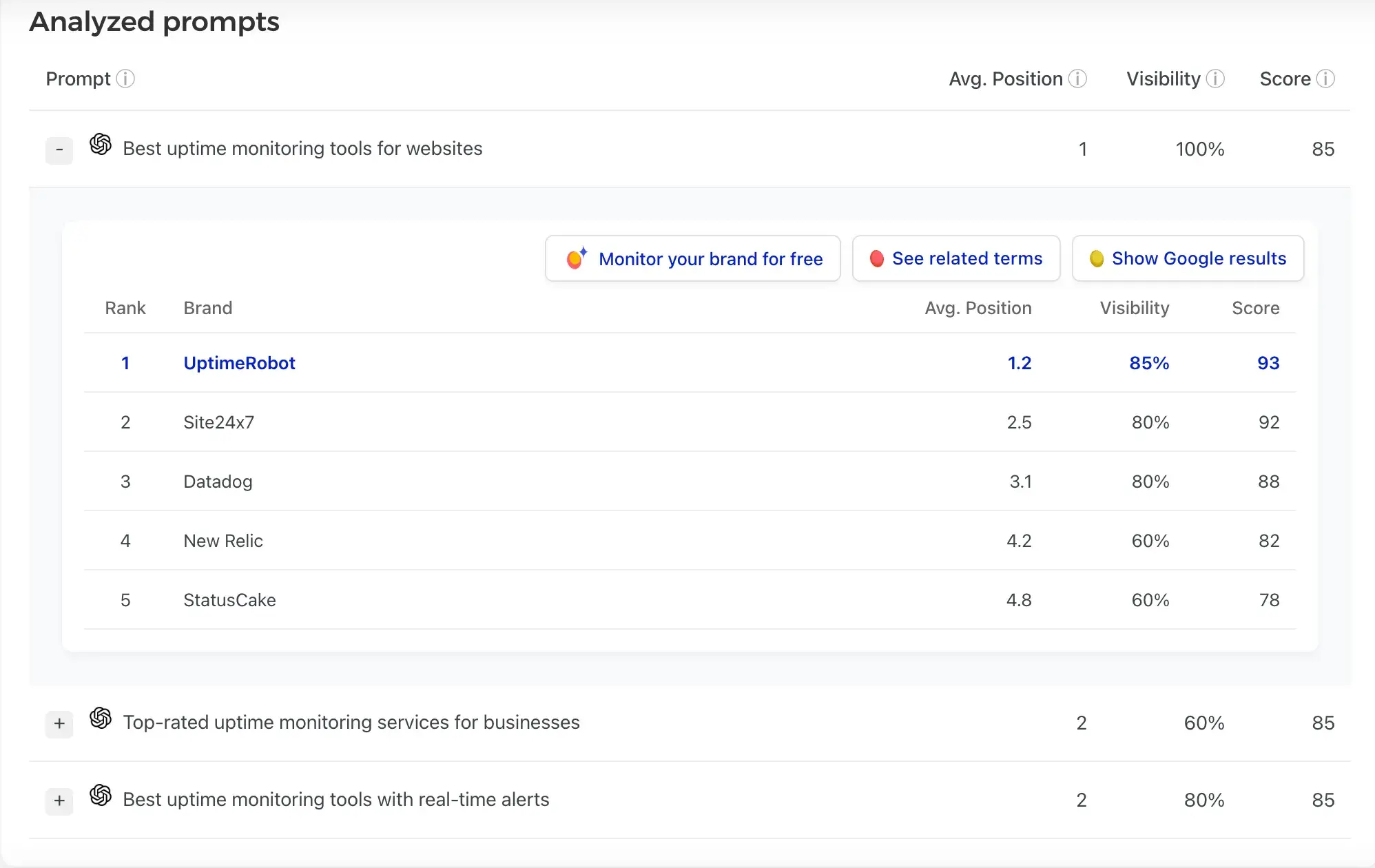
A significant evolution in B2B software purchasing behavior is underway, with a growing number of buyers prioritizing AI chatbots over traditional search engines for their initial research. A comprehensive study, G2’s 2026 Answer Economy research, reveals a pivotal statistic: 51% of B2B software buyers now initiate their product discovery process with an AI chatbot more frequently than with Google. This paradigm shift necessitates a fundamental reevaluation of marketing strategies, compelling teams to extend their performance tracking beyond conventional search engine optimization (SEO) to encompass how AI assistants and answer engines mention, cite, and ultimately recommend brands.
In response to this evolving digital ecosystem, marketing teams are actively seeking robust solutions to monitor their brand’s presence within these nascent AI-driven information channels. While Ahrefs’ Brand Radar offers a solution for tracking brand mentions and citations across major AI answer engines, the dynamic nature of AI and the varied needs of marketing departments have spurred an exploration of alternative tools. This article delves into the reasons why marketers are currently evaluating alternatives to Ahrefs Brand Radar, examines the key features that define effective AI visibility tools, and provides a comparative overview of leading options in the market, including HubSpot AEO, Profound, Peec AI, Xofu, Mangools AI Search Grader, and Morningscore ChatGPT Rank Tracker.
The Imperative for AI Visibility: Why Marketers Are Seeking Ahrefs Brand Radar Alternatives
Ahrefs, a well-established player in the SEO landscape, offers a suite of tools for backlink analysis, keyword research, rank tracking, site audits, and competitive research. Its recent integration of AI visibility tracking through Brand Radar marked a significant step in addressing the growing influence of AI in search. Brand Radar specifically monitors brand mentions and citations across prominent AI answer engines and supports custom prompt monitoring. However, the market’s demand for tailored solutions has led some organizations to seek alternatives that offer a distinct blend of AI model coverage, evidence depth, integration capabilities, pricing structures, and adaptability to their specific workflows.
Several factors are driving this exploration:
1. The Demand for Granular Data and Workflow Flexibility
For large marketplaces and complex businesses, a broad visibility score may not provide the necessary depth of insight. Alexandra Novikava, a marketer at Truck1, shared her team’s experience: “At first, we used Ahrefs Brand Radar to observe what sorts of references were being made to us by AI engines but have now transitioned toward custom API tracking and alternative SEO intelligence tools.” Truck1 required more precise details regarding the specific queries where competitors were gaining traction and sought greater flexibility in their data acquisition processes. While Ahrefs has since enhanced its custom prompt tracking features, this initial experience highlights a common need for deeper analytical capabilities that go beyond surface-level metrics.
2. The Need for Prompt-Specific Tracking in Specialized Markets
In niche B2B sectors, the context of a mention is often more critical than sheer volume. Colleen Barry, head of marketing at Ketch, emphasized this point: “In B2B, one mention in the right context matters more than ten generic mentions.” Ketch initially adopted Ahrefs Brand Radar to establish an AI search visibility baseline. However, the team later sought more control over industry-specific prompt libraries to understand how conversational engines processed nuanced privacy and compliance queries, and to assess the influence of their thought-leadership content on these responses. The evolution of Ahrefs’ custom prompt capabilities means that such experiences are now viewed as historical workflow-fit decisions, underscoring the continuous development and adaptation required in this space.

3. The Pursuit of Cost-Effective Solutions
Pricing is a significant consideration when evaluating AI visibility tools. Ashot Nanayan, founder and CEO of B2BSEO, noted his experience during Brand Radar’s open beta. He estimated that the combined cost of the Ahrefs subscription and necessary AI-monitoring add-ons would have amounted to approximately $800 per month. At the time, he also desired localized prompt customization and broader AI model coverage. Ahrefs has since adjusted its packaging. Standalone Brand Radar now starts at $199 per month for a single platform, with custom prompt packages beginning at $50 per month. Despite these changes, Nanayan ultimately opted for a dedicated AI visibility platform that offered a more comprehensive feature set at a lower overall cost for his specific use case.
4. The Drive to Link Visibility with Tangible Business Outcomes
Matthew Kinneman, founder of Bully Max, found Ahrefs Brand Radar to be a valuable starting point for understanding AI-driven brand mentions. However, his team transitioned to a more holistic measurement approach because visibility alone did not directly correlate with website traffic, user engagement, or conversion rates. “The biggest lesson for me was that AI visibility is only valuable if you can tie it back to actions customers take afterward. Otherwise, it’s easy to end up optimizing for a metric that looks good but doesn’t drive business growth,” Kinneman explained. Bully Max now integrates multiple data sources to assess AI-driven discovery alongside traditional search performance and customer behavior, viewing AI visibility not as an isolated KPI but as an integral part of the customer journey. This perspective underscores the critical need for AI visibility tools that can be integrated with CRM, attribution, pipeline, and revenue reporting systems.
Key Features for Effective AI Visibility Tools
AI visibility tools are designed to track brand mentions, citations, and recommendation patterns across AI assistants and AI search interfaces. Unlike traditional rank trackers, these platforms must also account for generated answers, preserve evidence of these responses, and illustrate how results evolve over time. The most effective Ahrefs Brand Radar alternatives are evaluated based on several critical features:
AI Model Coverage and Data Freshness
The diversity of AI platforms necessitates broad model coverage. A tool that monitors multiple AI systems provides a comprehensive view of a brand’s digital footprint. Conversely, a single-engine tracker might suffice if one platform disproportionately influences a company’s target audience or workflow. Data freshness is equally important, as AI-generated answers are inherently dynamic. The frequency with which a tool reruns tracked prompts, whether this cadence is plan-dependent, and the volume of historical data preserved are crucial considerations for active optimization and trend reporting.
Segmentation by Persona or Journey Stage
Aggregated visibility scores can obscure critical shifts in performance. The ability to segment prompts by buyer persona or stage in the customer journey allows marketing teams to differentiate between broad awareness and high-intent consideration or purchase queries. G2’s 2026 Answer Economy report indicates that 71% of B2B software buyers utilize AI chatbots at some point in their research. Measuring visibility at multiple stages of this journey is therefore essential. Segmenting by persona helps prevent a strong overall score from masking significant gaps within specific audience segments. For instance, high visibility among developers evaluating APIs does not guarantee equal visibility among marketing leaders who control budgetary decisions.
Integrations and Reporting Capabilities
Seamless integrations are vital for ensuring that AI search insights are not siloed in separate dashboards but are incorporated into existing reporting workflows. Effective platforms connect AI visibility data with CRM systems, business intelligence tools, web analytics, marketing automation platforms, and exportable data formats for broader AI marketing analytics. These connections are crucial for comparing AI visibility trends with website traffic, lead generation, sales pipeline, and revenue metrics. The 2026 State of Marketing report by HubSpot identified data sharing difficulties across organizations as a significant challenge for 12.4% of marketers, making the integration of new tools a critical factor. The quality of reporting, including historical trends, exportable evidence, customizable dashboards, and stakeholder-friendly summaries, is equally important for understanding the correlation between AI search engine performance and business outcomes.
Evidence Quality, Pricing, and Team Fit
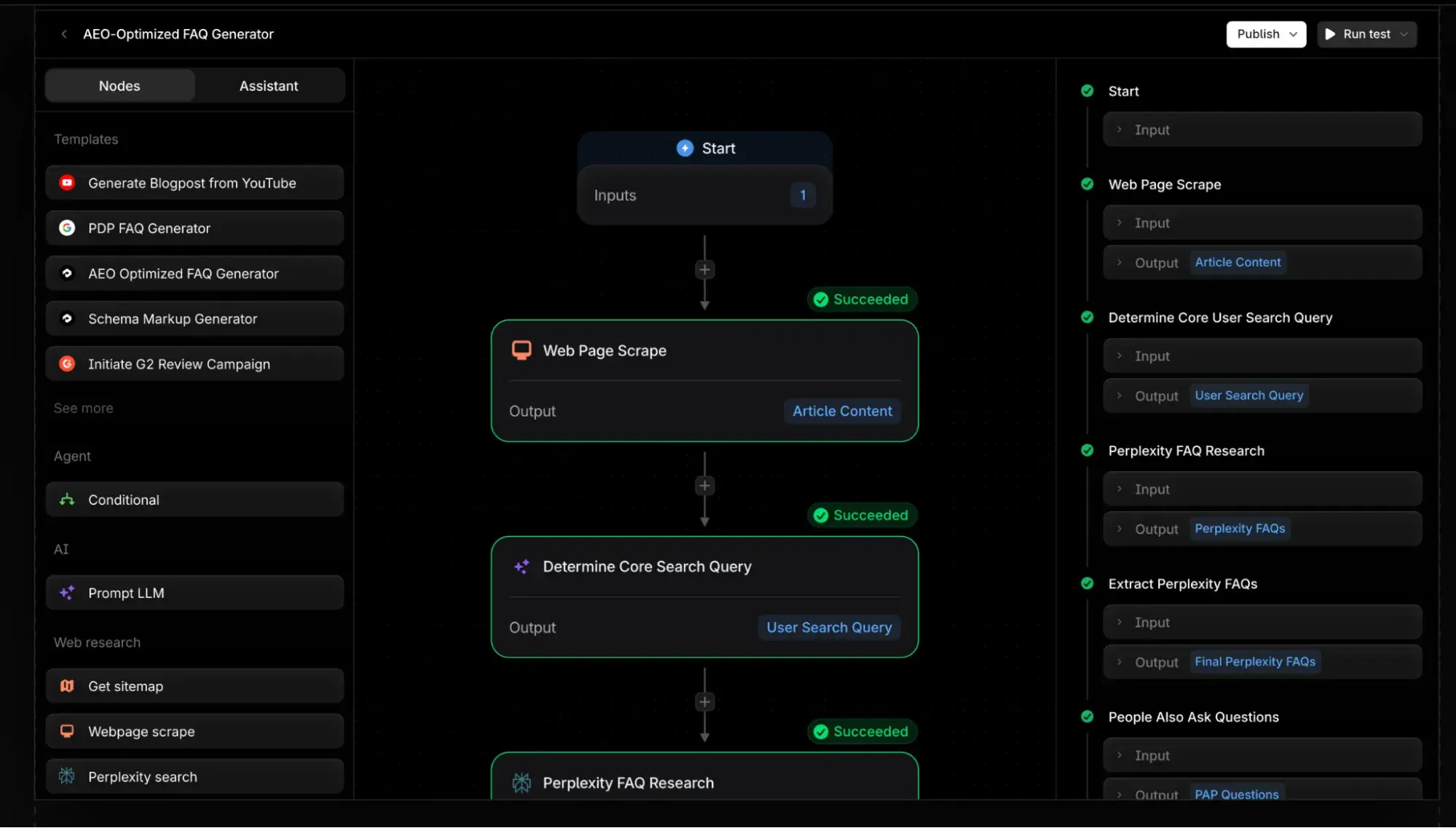
The value of a visibility score is amplified when teams can inspect the underlying evidence. Tools that preserve the AI response, cited sources, timestamps, and model information facilitate auditable results and strengthen competitive intelligence by revealing the sources that contribute to competitor recommendations. When evaluating alternatives, practical considerations such as pricing and team fit are paramount. A lower entry price does not automatically signify a better solution; the total cost of a realistically implementable monitoring program should be compared.
A Comparative Look at Ahrefs Brand Radar Alternatives
The following tools offer diverse approaches to AI visibility tracking, catering to different organizational needs and priorities:
1. HubSpot AEO (AI-powered Answer Engine Optimization)
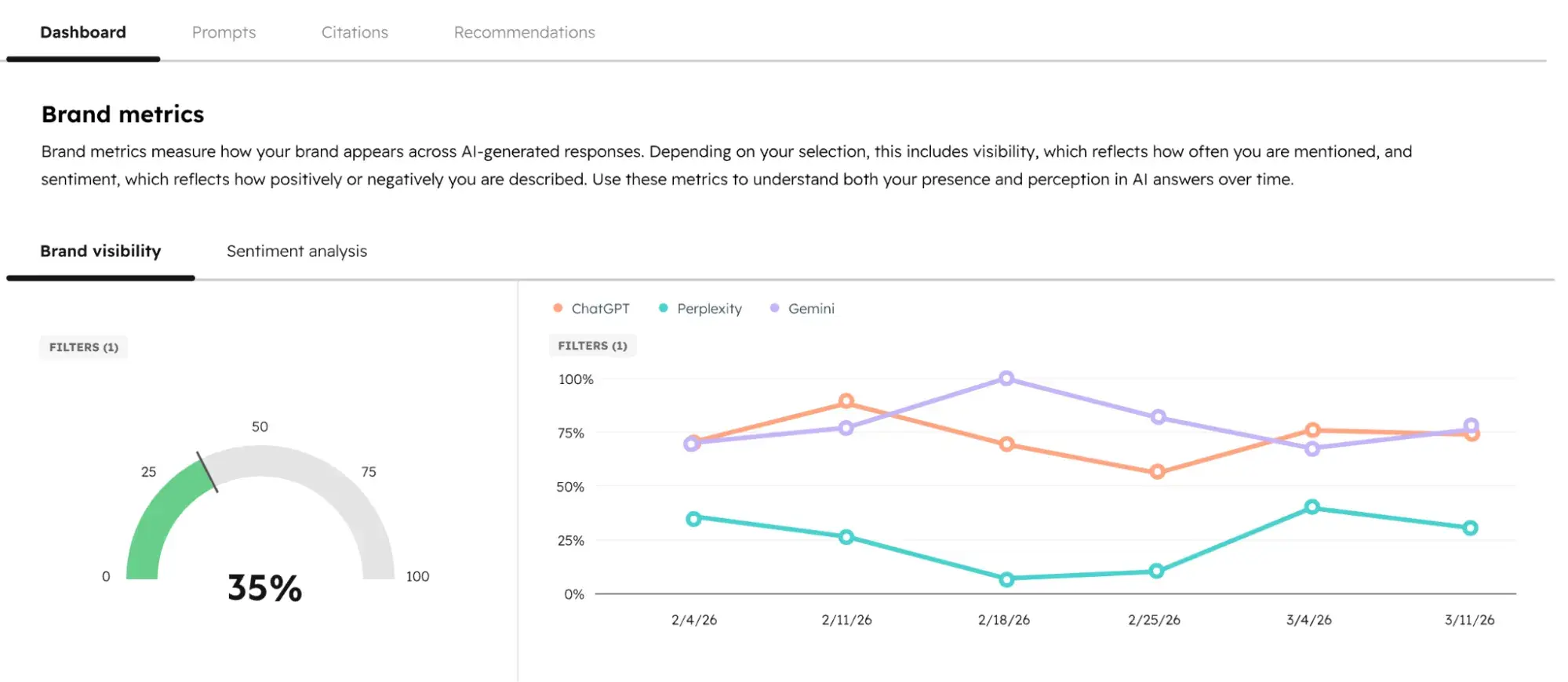
HubSpot AEO is a comprehensive AI visibility tool designed to track brand presence across ChatGPT, Perplexity, and Gemini. It measures visibility and sentiment, analyzes competitor share of voice and citation sources, monitors buyer-relevant prompts, and translates visibility gaps into actionable, prioritized recommendations. A standalone HubSpot AEO subscription is available, and it is also integrated into Marketing Hub Professional and Enterprise, enabling CRM data to inform prompt suggestions and recommendations, thereby connecting AI visibility with pipeline and revenue.
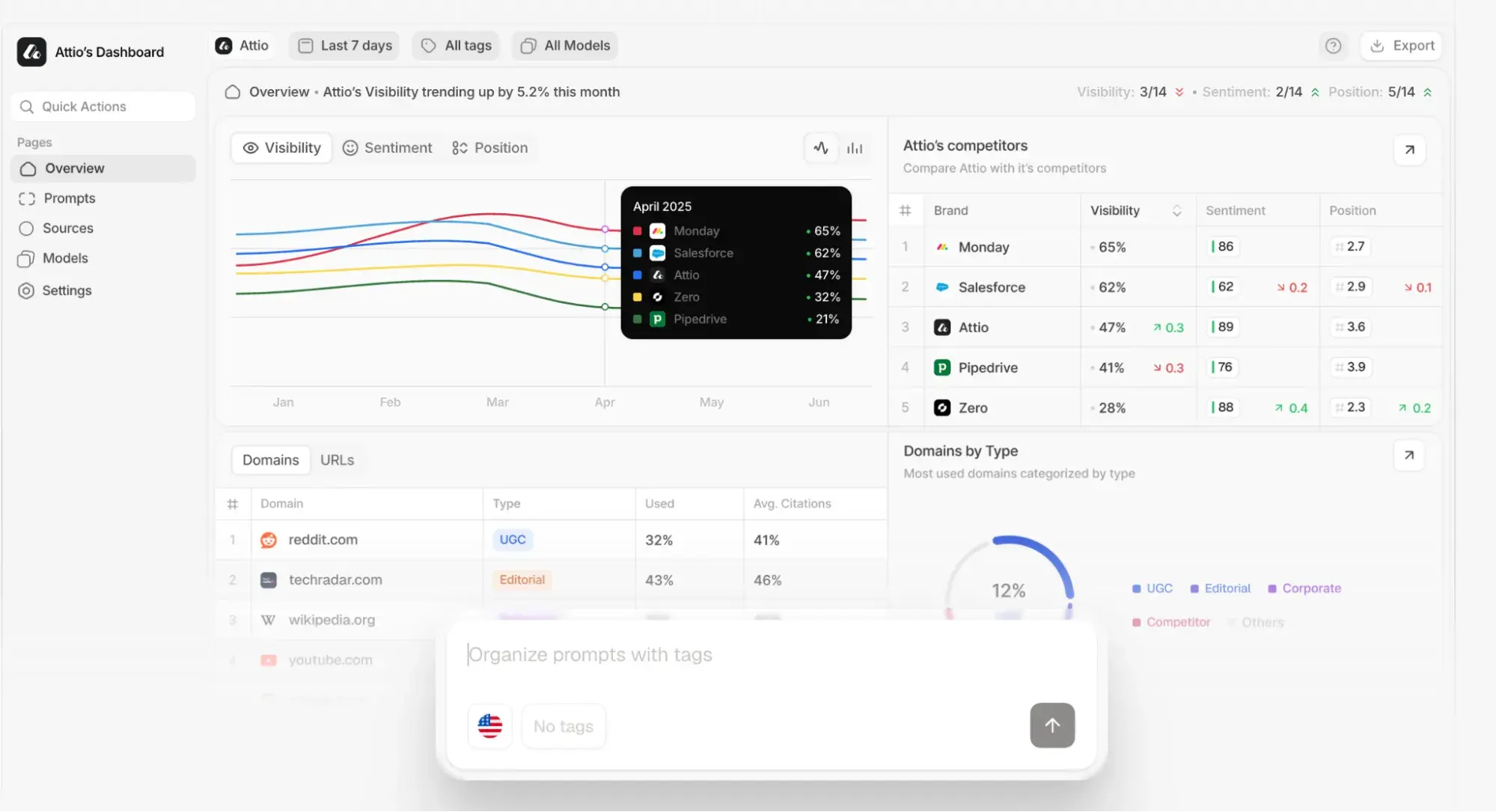
- Key Features: Multi-model tracking (ChatGPT, Perplexity, Gemini), sentiment analysis, competitor share of voice, citation analysis, prioritized recommendations, integration with HubSpot CRM.
- Best for: Marketing teams seeking continuous AI visibility measurement coupled with a clear framework for translating insights into content and campaign actions.
- Pricing: Starts at $50 per month for 25 prompts, with annual billing options and the ability to purchase additional prompts. A free trial is available.
- Customer Feedback: Praised for its potential to structure AI discoverability improvement, surface visibility gaps, and recommend content to address them, particularly when filtered by audience or segment. Citation analysis is highlighted as a significant advantage, providing actionable strategies.
2. Profound
Profound is an Answer Engine Optimization (AEO) platform tailored for teams requiring detailed visibility analysis and workflows for acting on that data. Its Answer Engine Insights product tracks brand and competitor performance across AI platforms. Additional modules, including Agents, Agent Analytics, and Prompt Volumes, extend the platform into content workflows, AI-sourced traffic analysis, and prompt research. Profound is well-suited for organizations viewing AI visibility as a dedicated, ongoing program.
- Key Features: Broad model coverage, detailed reporting, AI-sourced traffic analysis, prompt research capabilities, enterprise-grade controls.
- Best for: Larger organizations and agencies building a dedicated AEO program with requirements for in-depth reporting, extensive model coverage, and enterprise functionalities.
- Pricing: Starts at $99 per month (billed annually) for ChatGPT tracking and 50 prompts. Growth plans are available, with custom pricing for Enterprise solutions offering up to nine answer engines.
3. Peec AI
Peec AI is an AI search analytics platform that tracks brand visibility, citations, competitors, and prompts across multiple AI models. It allows teams to organize prompts by project, compare performance over time, and scrutinize the domains and URLs cited in AI-generated responses. Peec AI complements traditional AI SEO by focusing on the answer engine layer—identifying which brands appear, which sources are cited, and how these patterns evolve across tracked prompts.
- Key Features: Multi-model AI tracking, daily data updates, collaborative access without per-seat pricing, prompt organization by project, competitor comparison.
- Best for: SEO and content teams seeking broad AI model coverage, daily tracking, and collaborative features without additional seat licensing costs.
- Pricing: Starts at $95 per month for the Starter plan (50 prompts, one project), with Pro and Advanced tiers offering increased prompts and projects. Custom Enterprise pricing is also available.
4. Xofu
Xofu specifically targets bottom-of-the-funnel and purchase-intent prompts—the queries buyers use for vendor shortlisting, product comparison, and solution evaluation. It tracks recommendations over time, highlighting competitor appearances, supporting sources, and citation gaps. This focused approach differentiates Xofu from broader brand monitoring tools, concentrating on prompts that directly influence buying decisions.
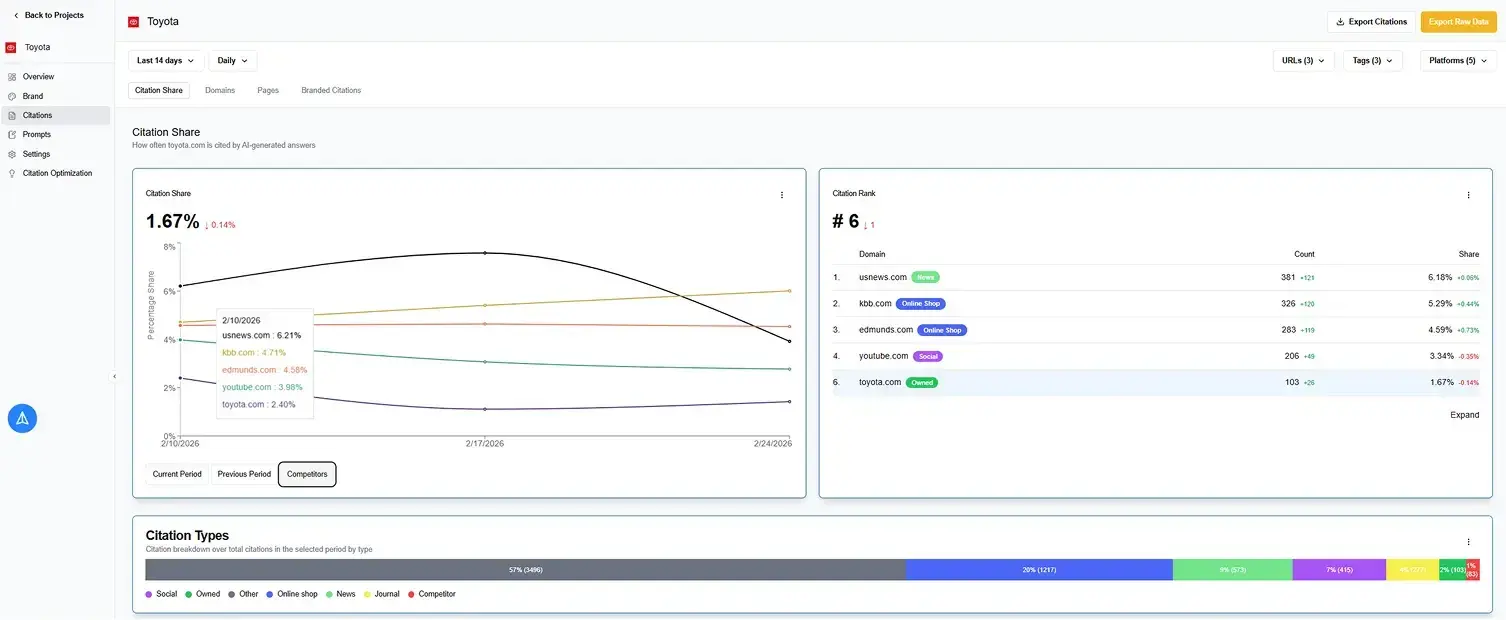
- Key Features: Focus on commercial and purchase-intent prompts, long-term recommendation tracking, citation gap analysis, competitor analysis within decision-making contexts.
- Best for: SaaS companies, consultants, and agencies prioritizing AI visibility in prompts that directly impact vendor selection and purchasing decisions.
- Pricing: Offers a free plan with 50 prompts per model and weekly reporting. Paid tiers include Consultant, Agency (Weekly), and Agency (Daily), with increasing prompt volumes and reporting frequencies.
5. Mangools AI Search Grader
Mangools AI Search Grader is a free diagnostic tool that assesses a brand’s performance across various AI search models. It synthesizes visibility and ranking into an AI Search Score and benchmarks a brand against competitors for automatically generated prompts. Users can access three supported models without an account, while a free Mangools account unlocks all seven models and additional search capabilities.
- Key Features: Free AI search performance assessment, AI Search Score, competitor benchmarking, multi-model support (seven models with account).
- Best for: Marketers and SEO teams seeking a complimentary baseline assessment before committing to continuous AI visibility monitoring.
- Pricing: Free. The companion paid product for continuous monitoring is AI Search Watcher.
6. Morningscore ChatGPT Rank Tracker
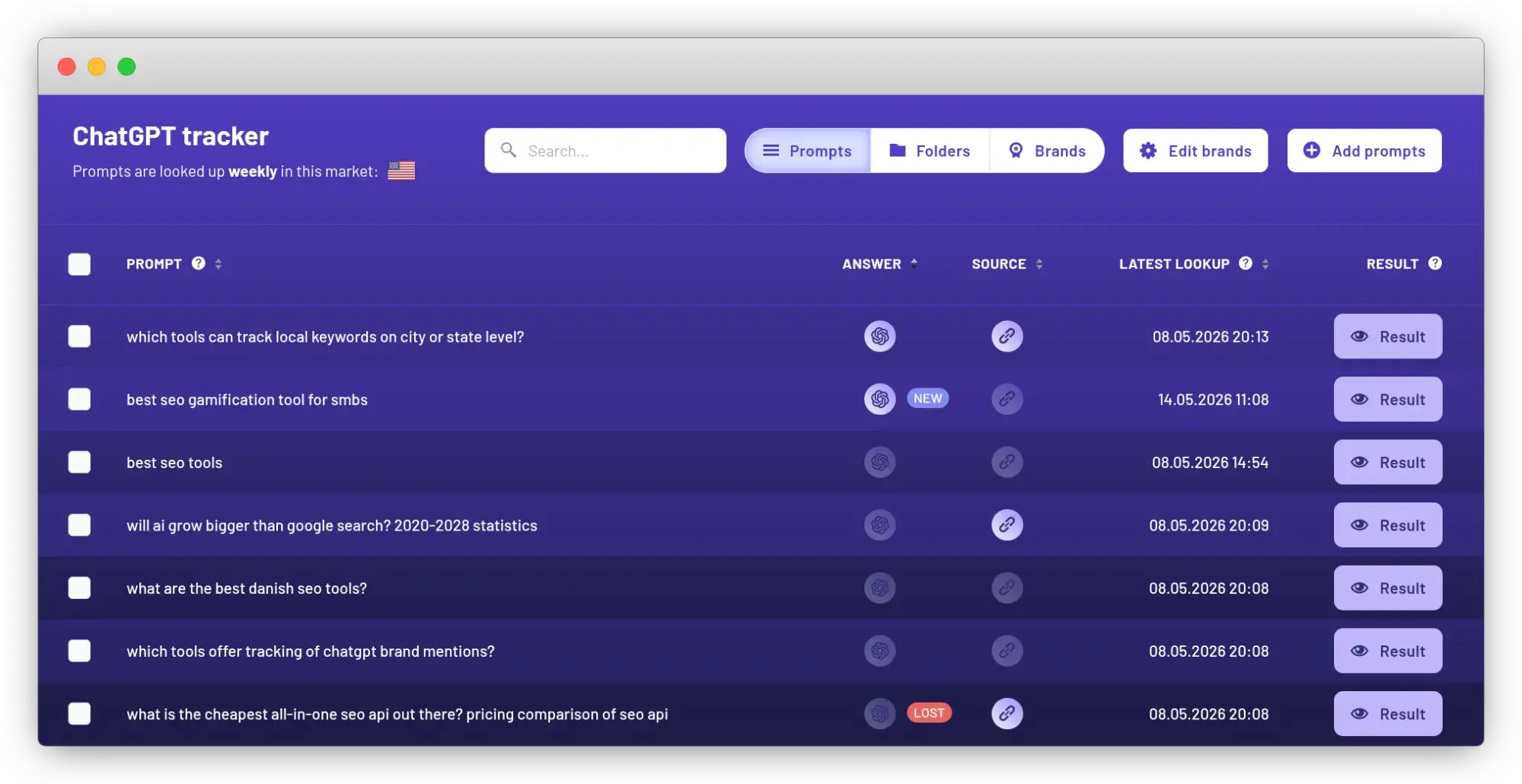
Morningscore’s ChatGPT Rank Tracker monitors ChatGPT mentions or recommendations for selected prompts, providing access to the answer and source evidence. Integrated within Morningscore’s broader SEO platform, it offers a unified view of traditional search metrics and ChatGPT visibility. The tool’s primary distinction is its focused approach on ChatGPT, with weekly prompt lookups.
- Key Features: ChatGPT-specific monitoring, answer and source evidence preservation, integration with broader SEO platform, weekly prompt tracking.
- Best for: Teams primarily concerned with ChatGPT visibility and seeking to manage this within their existing SEO toolkit.
- Pricing: Starts at $69 per month for the Lite plan, with various tiers offering increased features and support. A 14-day free trial is available.
Bonus: HubSpot AI Search Grader
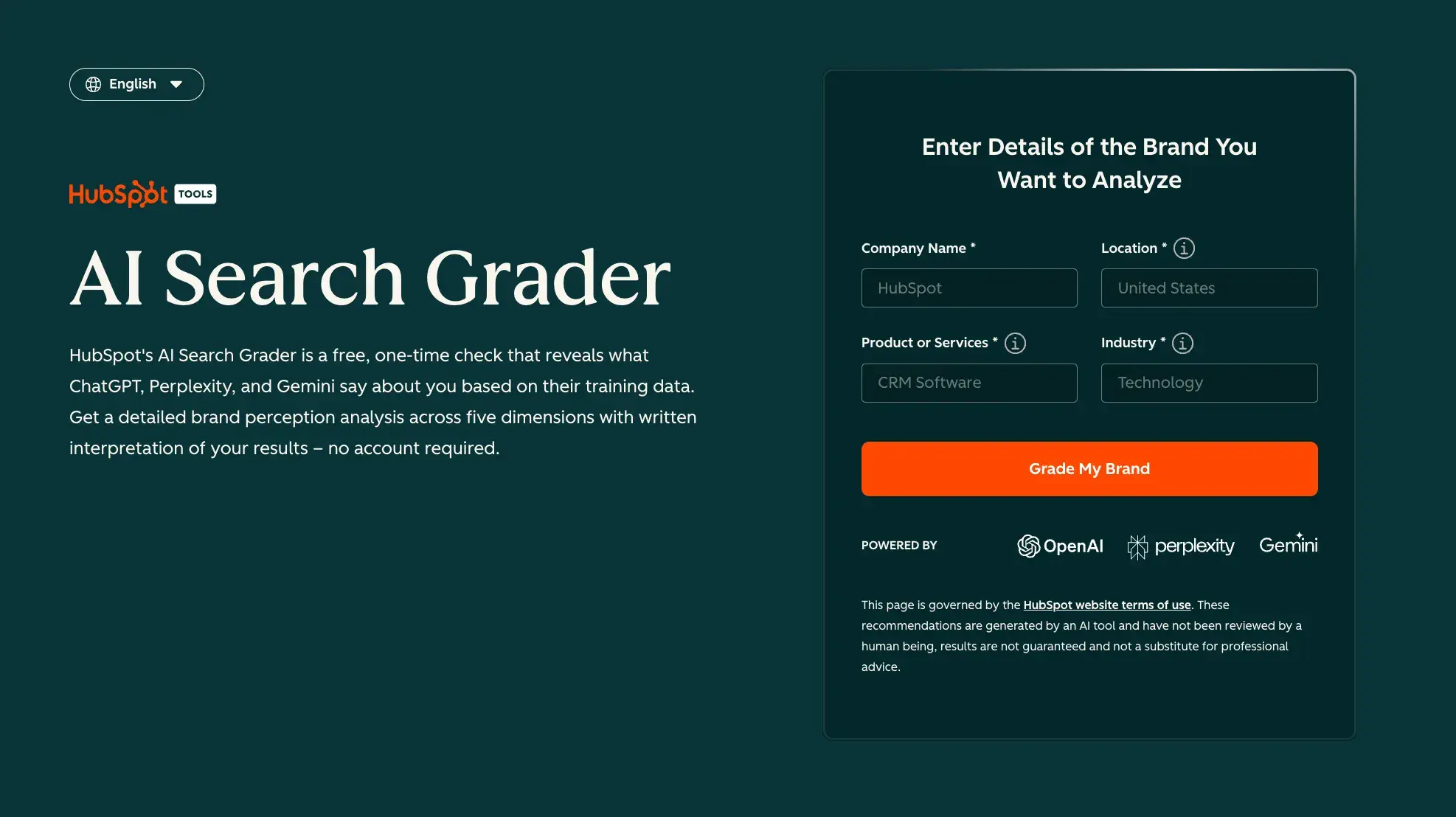
HubSpot’s AI Search Grader offers a free, one-time diagnostic of how ChatGPT, Perplexity, and Gemini represent a brand. It provides a composite score across five dimensions: sentiment, presence quality, brand recognition, share of voice, and market competition, along with a written interpretation. This tool serves as an introductory step, answering the question, "How do answer engines represent my brand right now?"
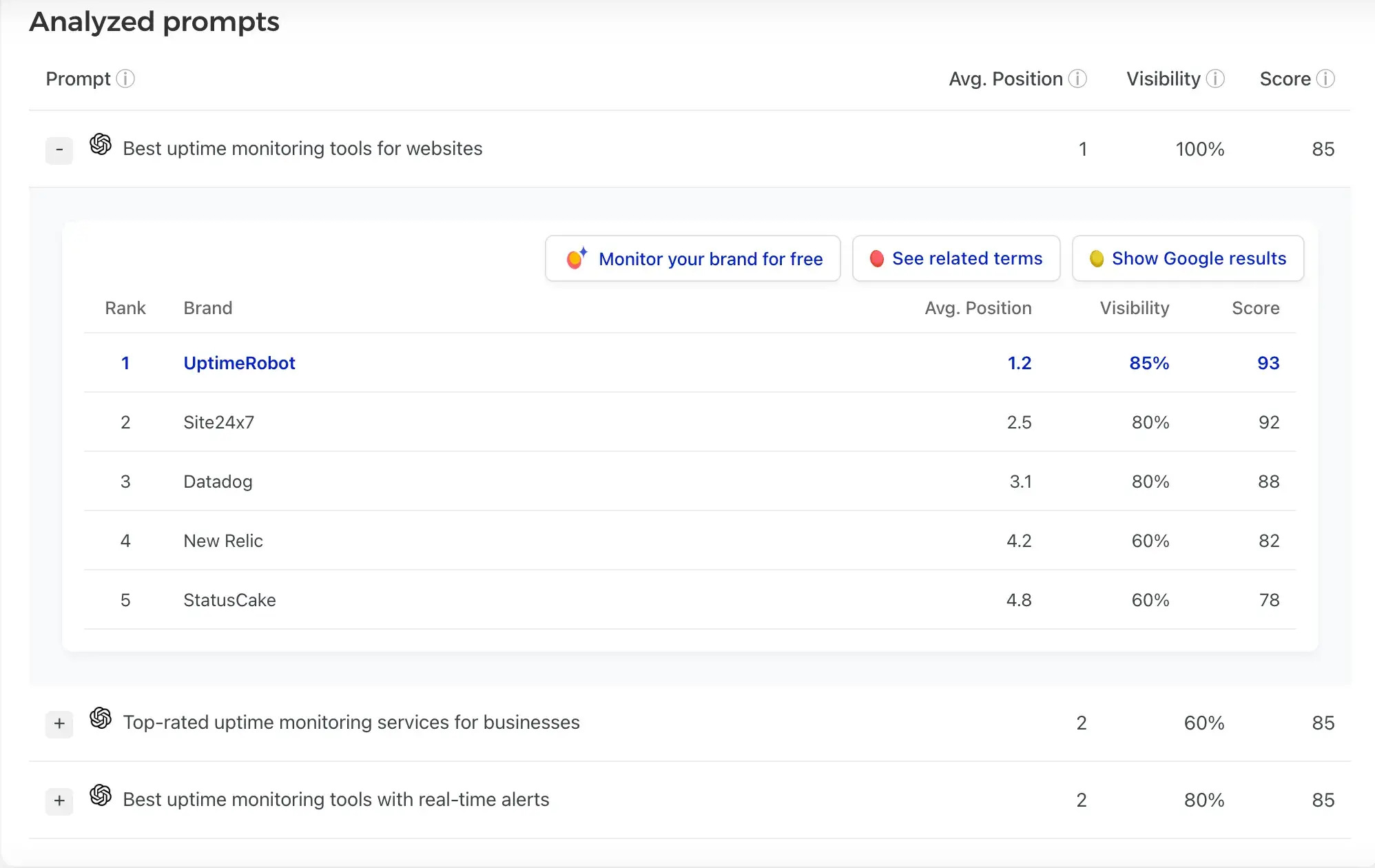
- Key Features: Free, one-time diagnostic, multi-model evaluation, five-dimensional scoring, interpretation of results.
- Best for: Marketing leaders, brand managers, SEO professionals, and content teams seeking an initial baseline understanding before investing in continuous AI visibility tools.
- Pricing: Free.
Connecting AI Visibility to Business Outcomes
The true value of AI visibility lies in its ability to inform broader business objectives. Integrating AI visibility data with metrics such as website traffic, lead generation, sales opportunities, pipeline value, and revenue is paramount. While an AI visibility product may not function as a CRM, its reporting capabilities should facilitate connections with existing marketing and sales systems. This enables teams to analyze how visibility trends correlate with content performance, attribution, and overall business growth.
HubSpot’s integrated AEO experience, particularly within Marketing Hub Professional and Enterprise, leverages CRM data to identify more relevant prompts for actual buyers. This CRM-connected approach aims to bridge the gap between AI visibility and tangible revenue outcomes. For teams operating within the HubSpot ecosystem, several tools contribute to this integrated workflow, including HubSpot’s CRM, Marketing Hub, and Sales Hub. HubSpot AEO further distinguishes itself by providing prioritized recommendations, guiding teams on content updates, new page creation, and citation opportunities based on identified visibility gaps. This transforms AI visibility into actionable competitive intelligence, revealing how answer engines recommend brands, the sources that influence these recommendations, and opportunities for improvement.
Implementing an AI Visibility Strategy
Adopting an Ahrefs Brand Radar alternative or any AI visibility tool should follow a structured, controlled rollout. This involves establishing clear reporting frameworks, standardizing prompt sets, validating results, preserving evidence, and testing workflows before scaling. The objective is to layer AI visibility measurement alongside traditional SEO reporting, not to replace existing SEO practices.
Step 1: Set up Integrations and Reporting Foundations. Determine where AI visibility data will reside and how it will be compared with existing marketing and revenue metrics. This may involve integrating with BI tools or data warehouses.
Step 2: Establish Prompt Governance. Consistent and well-defined prompts are crucial for the interpretability of trend data. Standardizing prompt selection, language, and parameters ensures reliable comparisons over time.
Step 3: Implement Multi-Run Quality Assurance. Given the variability of AI-generated answers, running prompts multiple times and comparing outputs across different models, locations, and tracking frequencies is essential for validation.
Step 4: Build an Evidence Repository. Maintaining sufficient evidence—including the underlying AI response, cited sources, and timestamps—is critical for explaining visibility scores and for competitive intelligence purposes.
Step 5: Pilot, Compare, and Scale. Begin by testing the workflow with a limited set of prompts before expanding it across all products, regions, or audience segments. This iterative approach allows for refinement and optimization.
The Future of AI-Driven Discovery
The shift towards AI chatbots as primary research tools for B2B software buyers is a significant development that demands strategic adaptation from marketing teams. While Ahrefs Brand Radar offers a valuable entry point into AI visibility tracking, the evolving needs for granular data, prompt specificity, cost-effectiveness, and demonstrable business impact are driving the exploration of a diverse range of alternatives. Tools like HubSpot AEO, Profound, Peec AI, Xofu, Mangools AI Search Grader, and Morningscore ChatGPT Rank Tracker each offer unique strengths, catering to different levels of sophistication and specific organizational goals. The ultimate choice of an AI visibility tool will depend on a team’s ability to connect these nascent insights with core business metrics, transforming visibility into tangible growth and competitive advantage in the rapidly advancing Answer Economy.
About the Author