The burgeoning field of Answer Engine Optimization (AEO) presents marketers and content strategists with a critical decision point: how to best leverage artificial intelligence to enhance brand visibility in AI-generated search results. Two prominent tools, HubSpot’s AEO and Profound, offer distinct pathways to achieve this goal, each catering to different operational needs and strategic priorities. While both aim to improve a brand’s presence in AI answers, their fundamental approaches—execution-centric versus analysis-deep—dictate their suitability for various organizations.
At its core, the comparison between HubSpot AEO and Profound hinges on a crucial operational question for marketing leaders, SEO strategists, content teams, and RevOps buyers: does the team prioritize faster insight-to-execution workflows, or does it require deeper, more granular analysis of brand perception and competitive positioning within AI platforms? This distinction is not merely a matter of feature sets but reflects a fundamental difference in how each tool integrates into a broader marketing and content operations ecosystem.
The Divergence: Execution-Focused Workflows vs. Deep Analytical Insights
The challenge of optimizing for AI-generated answers is multifaceted. Marketers grapple with how to translate AI visibility data into tangible content and campaign adjustments. This is where HubSpot AEO and Profound diverge. HubSpot AEO is designed to streamline the process from identifying AI visibility trends to implementing changes directly within the HubSpot platform. It acts as an operational layer, connecting AI insights to content creation, campaign execution, and CRM data.
Conversely, Profound focuses on providing a comprehensive and in-depth analysis of a brand’s presence across a wider array of AI platforms. It delves into brand perception, citation sources, and competitive positioning, offering a more analytical perspective. While Profound excels at uncovering the "why" behind AI visibility, its utility for immediate execution relies on external workflows.
For organizations seeking a rapid iteration cycle between identifying an AI visibility gap and publishing content to address it, HubSpot AEO’s integrated approach offers a significant advantage. The platform’s ability to directly link AI insights to content hubs, marketing campaigns, and CRM records allows for a more cohesive and efficient workflow. This seamless transition from data to action is a key differentiator for teams prioritizing speed and operational efficiency.
HubSpot AEO: Bridging Insights and Action within the Ecosystem
HubSpot’s Answer Engine Optimization (AEO) tool is engineered to track a brand’s appearance in AI-generated answers across popular platforms like ChatGPT, Gemini, and Perplexity. It goes beyond mere tracking by providing prioritized recommendations for improving visibility. The defining characteristic of HubSpot AEO lies in its seamless integration with the broader HubSpot ecosystem.
For instance, if a team identifies a prompt where a competitor is outperforming their brand in AI-generated answers, HubSpot AEO can instantly surface this information alongside relevant customer segments within the CRM. This allows content creators to immediately begin drafting or updating content within Marketing Hub or Content Hub, ensuring that the optimization efforts are directly tied to audience context and campaign objectives. This integrated workflow eliminates the need to switch between multiple tools, thereby reducing friction and accelerating the time-to-market for content updates.
The operational advantage of HubSpot AEO is particularly evident for teams already invested in the HubSpot platform. The AEO data becomes another layer of intelligence within a familiar environment, enhancing the utility of existing marketing automation, content management, and customer relationship management capabilities. This structural integration means that recommendations are not generic but are contextualized by CRM data, enabling teams to prioritize optimization efforts based on audience segments and lifecycle stages that hold the most strategic value.
Profound: Unpacking the Depths of AI Visibility and Brand Perception
Profound operates on a different philosophy, aiming to provide a more profound and analytical understanding of a brand’s AI footprint. The platform monitors AI visibility with a greater depth, examining brand perception, the sources that influence AI responses, and competitive positioning across a broader spectrum of AI platforms, including Google AI Overviews and Claude, in addition to the major engines.
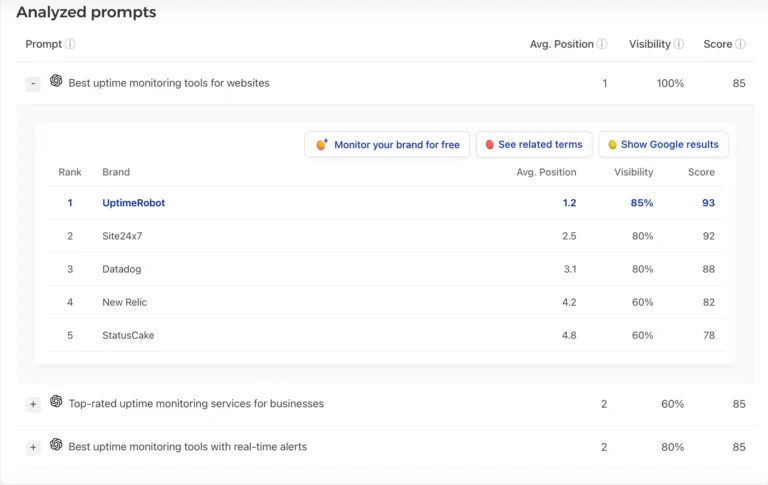
Profound’s strength lies in its ability to answer the "why" behind AI visibility. It offers advanced source and influence mapping, illustrating which domains are most instrumental in shaping AI-generated answers. Furthermore, its brand perception analysis goes beyond simple presence metrics, evaluating how AI systems actually describe a brand, tracking sentiment, and identifying shifts in positioning over time and across different prompts.
This level of granular detail is invaluable for enterprise-level organizations, PR departments, and data science teams seeking to conduct comprehensive audits of AI-generated narratives or investigate the reasons behind a competitor’s higher citation frequency. The platform’s sophisticated analytics provide a robust foundation for strategic decision-making, allowing teams to understand the nuances of their brand’s digital narrative within AI-driven search environments. However, the trade-off for this depth of analysis is the lack of a native execution layer. Insights generated by Profound must be manually transferred to separate content management systems or marketing workflows for implementation.
A Tale of Two Workflows: Execution vs. Analysis
The fundamental difference between HubSpot AEO and Profound can be encapsulated by their respective workflow endpoints. HubSpot AEO aims to close the loop between insight and action within a single platform. When an AI visibility gap is identified, the tool directly facilitates the creation or modification of content. This streamlined process is designed to reduce the operational burden of AI optimization, making it more accessible to a wider range of marketing professionals, not just those with deep technical expertise.
Profound, while offering powerful analytical capabilities, requires a more deliberate process for translating insights into action. The platform provides recommendations and tools like FAQ generation, but the actual implementation of content changes necessitates external workflows. This can be managed by teams with dedicated content operations or SEO specialists, but it introduces additional steps and potential bottlenecks for organizations with more integrated or resource-constrained teams.
The operational challenge in AI SEO is not merely tracking visibility but consistently translating that data into published content. HubSpot AEO is structurally designed to address this challenge, providing a direct pathway from AI visibility insights to content creation and campaign execution.
The Free Entry Point: HubSpot AEO Grader and Profound’s Free Report
Recognizing that not all organizations are ready to commit to paid solutions, both HubSpot and Profound offer free entry points to assess AI search visibility. HubSpot provides the AEO Grader, a complimentary tool that offers a baseline measurement of AI search visibility without requiring a subscription. This diagnostic takes minutes to run and provides a snapshot score across popular answer engines, serving as a low-friction starting point for teams new to AEO.
Profound also offers a free one-time AEO report, which provides a similar initial assessment of a brand’s AI visibility. These free tools are crucial for establishing a benchmark and understanding the potential benefits of AEO before investing in ongoing optimization platforms. The AEO Grader, in particular, is highlighted as a rapid diagnostic, generating a composite score across sentiment, presence quality, recognition, share of voice, and market position for key AI platforms.
The HubSpot AEO Grader, while not offering continuous monitoring or custom prompt tracking, is positioned as the ideal first step for any team that has not yet quantified its AI visibility. Once a baseline score is established, organizations can make more informed decisions about whether to proceed with paid AEO solutions.
-2.png)
Pricing and Accessibility: Bridging the Gap for SMBs and Enterprises
The pricing structures of HubSpot AEO and Profound reflect their target audiences and feature sets. HubSpot AEO offers a standalone paid plan starting at $50 per month (billed annually), which includes 25 tracked prompts and a 28-day free trial. However, to unlock the full integration layer—CRM-informed recommendations, content workflows, and campaign triggers—teams will require Marketing Hub Professional, with pricing beginning around $800 per month. This tiered approach allows smaller businesses to access core AEO functionality at a lower entry point, while larger organizations can leverage the integrated ecosystem for comprehensive campaign management.
Profound’s pricing begins with a free one-time AEO report. Paid plans start at $99 per month (billed annually) for the Starter edition, with the Growth/Standard tier at $399 per month (billed annually). Enterprise pricing is custom, and agency plans are available from $99 per month. Profound’s pricing is generally higher, reflecting its enterprise focus and the depth of its analytical capabilities. For SMBs and mid-market teams operating on a budget, HubSpot AEO’s lower entry point and bundled ecosystem can reduce the overall tool requirement. For enterprise teams with established content operations stacks and a critical need for Profound’s analytical depth, the higher price point is justified by the advanced data capabilities, though the cost of additional tooling for execution must also be factored in.
Ease of Use and Adoption: Democratizing AI Optimization
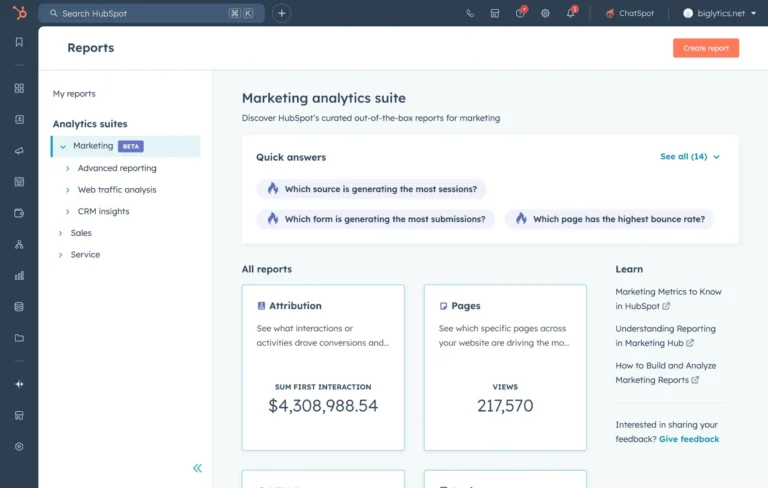
HubSpot AEO is designed with a focus on accessibility, aiming to empower marketing teams without extensive technical expertise in AEO. The setup process is streamlined, requiring users to simply enter their brand information and select prompts. The dashboard presents visibility scores, competitor benchmarks, and prioritized recommendations in clear, accessible language. This user-friendly design facilitates cross-functional adoption, enabling content strategists, SEO leads, and RevOps managers to interpret and act on the same data with minimal friction.
Profound, while featuring a clean and modern interface, is geared towards users who are comfortable working with detailed visibility data. The platform rewards a deeper engagement with metrics such as citation analysis, prompt-level tracking, and competitive share-of-voice. For teams with dedicated SEO or data analysis functions, this depth can be an advantage. However, for teams lacking such specialization, the learning curve may be steeper, potentially slowing down adoption. HubSpot AEO also benefits from its existing reporting infrastructure, allowing for seamless dashboard sharing across teams, whereas Profound requires additional configuration for stakeholder reporting, such as CSV exports or API-based reporting.
Actionability and Workflows: The Crucial Link to Content Creation
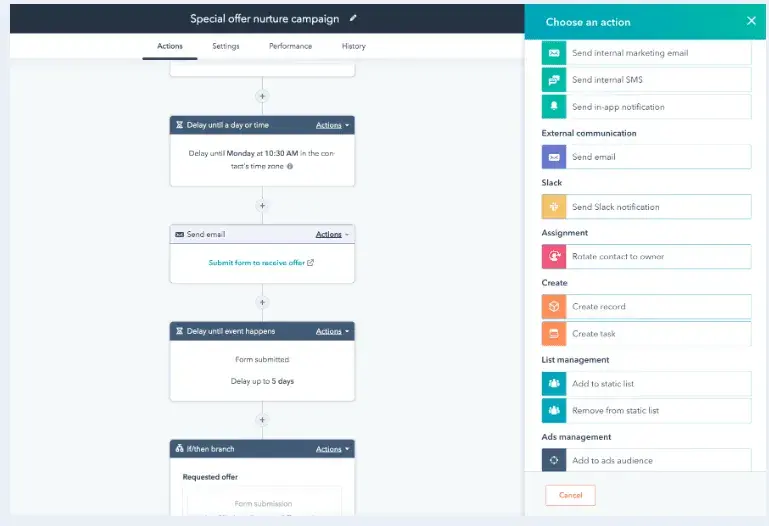
The divergence in actionability and workflow is where HubSpot AEO and Profound most significantly differentiate themselves for a majority of marketing teams. HubSpot AEO’s integration with content and campaign execution tools within the HubSpot platform is its primary strength. When a visibility gap is identified, the tool provides a direct pathway to creating or updating relevant content. Marketing Hub and Content Hub facilitate the execution, while Smart CRM provides the necessary audience context to ensure that recommendations align with business objectives. This creates a compressed cycle from insight generation to content publication.
Profound, while offering an "Improve" module with tools like FAQ generation, lacks a native content execution layer. Acting on Profound’s insights requires exporting the data and managing the content production process externally. This can be a manageable task for teams with robust content operations, but for individuals or smaller teams responsible for both analysis and creation, it adds a layer of complexity and potential delay. The transition from insight to execution is a critical operational challenge in AI SEO, and HubSpot AEO is structurally designed to optimize this process.
Data Depth and Intelligence: A Quantitative vs. Qualitative Approach
In terms of raw data depth, Profound holds a distinct advantage. It tracks a broader range of AI platforms in its base edition, offers more flexible custom prompt configurations, and provides more granular insights into brand perception. For enterprise brands and PR teams, this detailed data on sources, sentiment, and brand perception is crucial for in-depth strategic analysis and competitive intelligence.
HubSpot AEO, while tracking AI visibility reliably across major platforms with daily updates and historical trend dashboards, prioritizes clarity and actionability over exhaustive complexity. Its citation tracking identifies key sources and content types driving AI answers, which is sufficient for most content optimization decisions. The trade-off is clear: Profound offers more data for deep analysis, while HubSpot AEO makes the data more accessible for immediate action. For most marketing and RevOps teams, the actionability advantage of HubSpot AEO often outweighs the analytical depth of Profound, unless deep strategic analysis is a standalone, high-priority requirement.
Integrations and Ecosystem: The Power of Native Connectivity
The integration advantage of HubSpot AEO is deeply rooted in its native connectivity to the HubSpot platform. AI visibility data flows seamlessly into CRM records, campaign workflows, contact segments, and content tools without the need for API setup or middleware. This inherent integration significantly compounds the value for teams already operating within HubSpot, transforming AEO into an extension of their existing data infrastructure rather than a disparate tool requiring its own management.
Profound offers flexibility through API access for custom integrations and connections with external CMS and marketing platforms. This makes it a viable option for enterprise teams with established data infrastructures and a need for tailored integrations. However, this flexibility often comes with increased operational complexity, requiring technical setup and ongoing maintenance. While Profound integrates well into custom stacks, it does not provide pre-built execution workflows in the same way that HubSpot AEO does within its ecosystem. For teams evaluating these tools through a competitive intelligence lens, the existing operational environment and the tool that best minimizes the distance between insight and implementation often become the deciding factors.
Use Cases and Decision Framework: Choosing the Right Tool for the Job
Choose HubSpot AEO if:
- Your organization is already utilizing the HubSpot platform for marketing and sales.
- Your primary bottleneck is the speed and efficiency of content creation and campaign execution in response to AI visibility insights.
- You need a user-friendly interface that democratizes AI optimization across marketing teams, regardless of technical expertise.
- You prioritize CRM-informed recommendations that align AI optimization efforts with specific audience segments and business objectives.
- You are an SMB or mid-market company looking for a cost-effective solution with integrated workflow capabilities.
Choose Profound if:
- Your organization requires deep, granular analysis of brand perception, citation sources, and competitive positioning across a wide array of AI platforms.
- You have dedicated SEO or data analysis teams capable of interpreting complex visibility data and managing external execution workflows.
- Your primary objective is to understand the "why" behind AI visibility trends, particularly for enterprise-level brand narrative management or competitive auditing.
- You operate in an environment with a complex, custom-built technology stack and require flexible API integrations.
- Your budget allows for enterprise-grade analytical tools and you are prepared to manage the associated execution workflows separately.
Best for execution-focused teams: HubSpot AEO
Best for analysis-focused enterprises: Profound
The Synergy of Both: When Integration Amplifies Strategy
It is possible, and indeed beneficial in some enterprise scenarios, to utilize both HubSpot AEO and Profound in tandem. Profound can serve as the strategic intelligence layer, providing deep insights into how AI systems perceive a brand, which sources wield the most influence, and where competitive positioning is weakest. These high-level strategic findings can then inform the execution layer managed by HubSpot AEO.
HubSpot AEO can translate these strategic directives into actionable content updates, campaign triggers, and CRM-aligned optimization priorities. This dual approach leverages Profound’s analytical prowess for strategic framing and HubSpot AEO’s operational efficiency for seamless implementation. However, for most organizations, the primary bottleneck—either execution or deep analysis—will dictate the necessity of a single platform. If the core challenge lies in acting upon AI visibility data, HubSpot AEO covers the full workflow. If deep brand perception analysis is a standalone, critical priority, particularly for large brands managing complex AI narratives, Profound adds significant strategic value.
Measuring Impact: Beyond Scores to Tangible Business Outcomes
It is crucial to understand that AI visibility metrics are indicators, not direct measures of pipeline or revenue. Their true value lies in their role as a research and prioritization layer, to be used in conjunction with conversion data, Google Search Console insights, and sales feedback. In HubSpot AEO, historical trend dashboards allow for tracking visibility changes over time and correlating them with content updates.
To measure impact meaningfully, teams must meticulously record when changes are made, compare performance across distinct periods, and link observed shifts in AI visibility to downstream signals such as organic traffic increases, improved lead quality, or assisted conversions. Simply aiming for score improvements without connecting them to broader business objectives will not yield strategic success. The ultimate goal is to leverage AI visibility data to drive tangible business outcomes.
About the Author