Brand tracking tools have become indispensable for growth marketers seeking to understand consumer perceptions, competitive advantages, and the "why" behind purchasing decisions. These sophisticated platforms, operating at scale, not only gauge public sentiment—both positive and negative—but also reveal crucial insights into why consumers opt for competing brands. Furthermore, in an era increasingly shaped by artificial intelligence, brand monitoring now extends to understanding a brand’s "share of voice" within AI-generated content and identifying areas for improvement to ensure greater citation by Large Language Models (LLMs). However, the world of brand tracking is far from monolithic; tools vary significantly in their metrics, AI capabilities, suitability for different company growth stages, specific use cases, and pricing structures. This comprehensive exploration delves into the nuances of brand tracking and brand monitoring, offers guidance on selecting the optimal tools, including HubSpot’s AEO, and outlines best practices for conducting effective brand tracking surveys.
Understanding the Core of Brand Tracking Tools
At its heart, a brand tracking tool is a digital solution designed to measure brand health across various channels over time. Modern iterations aggregate data from a wide array of sources, including social media platforms, search engine queries, public relations coverage, web analytics, direct customer feedback, emerging answer engines, and dedicated brand tracking surveys. The landscape is rapidly evolving, with AI visibility projected to be a major shift by 2026. For brand management teams, this signifies a departure from traditional, siloed workflows. Brand tracking is no longer confined to periodic perception research; it now integrates survey data, social listening, search demand analysis, AI citations, customer feedback, and CRM reporting into a unified dashboard for informed decision-making.
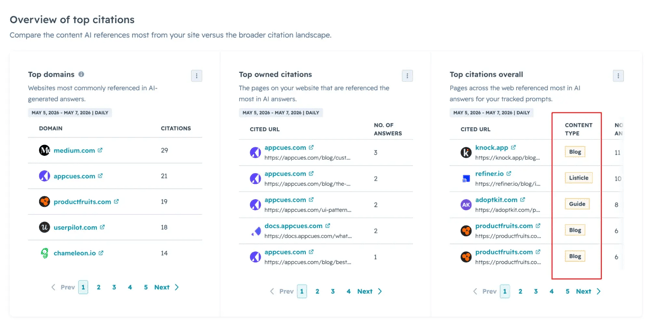
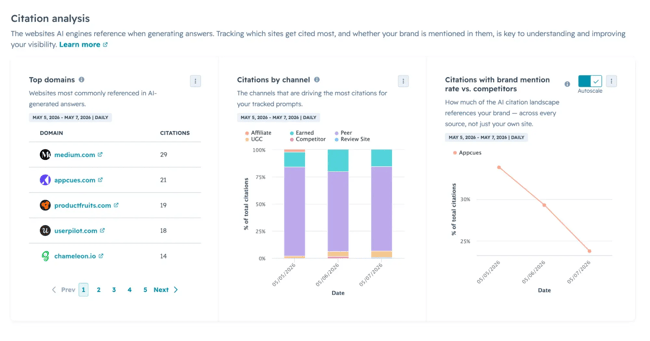
In the realm of AI brand tracking, platforms like HubSpot AEO (AI-powered Engagement Optimizer) are emerging as critical assets. These tools monitor how a brand appears across major AI platforms such as ChatGPT, Perplexity, and Gemini. They provide AI visibility scores, competitive comparisons, prompt tracking, and detailed citation analysis, enabling teams to pinpoint precisely which sources and content formats AI engines are referencing.

Before embarking on measurement, a clear brand foundation is paramount. Resources like HubSpot’s Free Brand Building Guide can assist in documenting positioning, voice, and visual identity, thereby ensuring that market perception is being measured against a well-defined brand strategy.
Distinguishing Brand Tracking from Brand Monitoring
While often used interchangeably, brand tracking and brand monitoring serve distinct, albeit complementary, purposes.
-
Brand Tracking: This methodology focuses on measuring longitudinal changes in key brand metrics. These typically include brand awareness (both aided and unaided), brand perception, consumer consideration, brand preference, and customer loyalty. The aim is to understand shifts in these metrics over extended periods, often through periodic surveys.
-
Brand Monitoring: In contrast, brand monitoring is a real-time detection system. It scans the digital landscape for mentions of a brand across the web, social media channels, news outlets, forums, review sites, and answer engines. Its primary function is to capture ongoing conversations and immediate sentiment shifts.

Each serves a different critical function. Brand monitoring acts as an early warning system, identifying immediate signals like a sudden surge in online mentions or a shift in sentiment. Brand tracking then provides the structured data to determine if these signals translate into tangible changes in market perception over time. For instance, a spike in brand mentions on Reddit (detected by brand monitoring) might be analyzed through a brand tracking survey to see if it correlates with increased brand consideration among the target audience. When these signals are amplified by AI, brand tracking tools can reveal whether answer engines are beginning to echo these narratives when potential customers seek vendor recommendations.
For scaling companies, operating both brand monitoring and brand tracking in parallel is often the most effective strategy. Brand monitoring provides the immediate alerts, while brand tracking validates and quantifies the long-term impact.
Key Metrics in Brand Tracking: What Truly Matters?
The effectiveness of brand tracking hinges on the selection of relevant metrics. The most impactful metrics offer insights into a brand’s visibility, trustworthiness, preference, and ultimately, its commercial utility. The foundational metrics to track include:
-
Brand Awareness: Measuring how many people are aware of the brand, broken down into unaided recall (spontaneously mentioning the brand) and aided recall (recognizing the brand from a list). High unaided awareness suggests strong brand penetration and top-of-mind recall.
-
Brand Perception/Sentiment: Analyzing the qualitative and quantitative sentiment associated with the brand. This involves understanding the emotions, opinions, and associations consumers have with the brand, often through sentiment analysis of text data and direct survey questions.
-
Consideration Set: Determining the likelihood of a brand being included in a consumer’s list of potential choices when making a purchase within a specific category. This is a critical predictor of future sales.
-
Brand Preference: Gauging which brand is favored by consumers within a category, often measured by asking respondents which brand they prefer above all others.
-
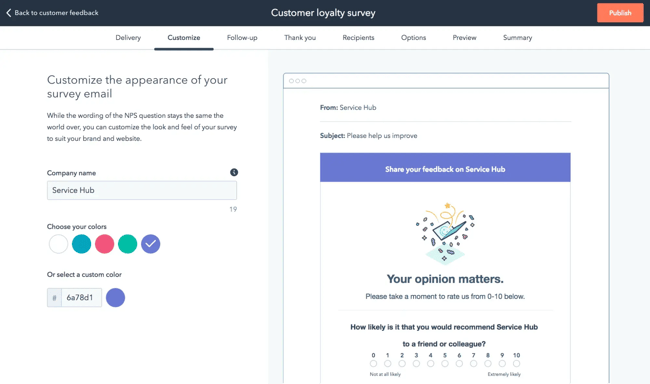
Brand Loyalty: Assessing the degree to which customers are likely to repeatedly purchase from a brand and remain advocates. This can be measured through metrics like Net Promoter Score (NPS), customer retention rates, and repeat purchase intent.
-
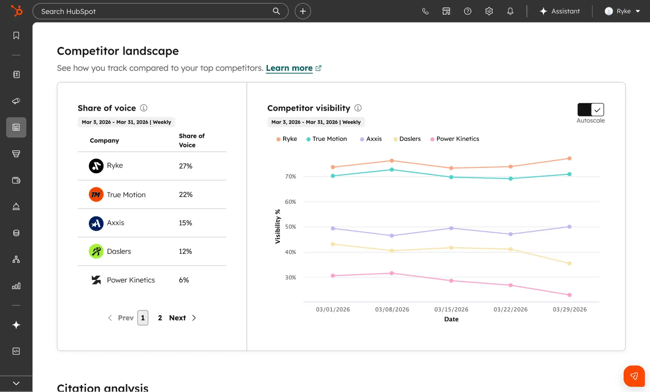
Share of Voice (SOV): Quantifying a brand’s presence in online conversations relative to its competitors. This can be measured across social media, news, forums, and increasingly, in AI-generated content. A rising SOV, particularly when positive, indicates growing market influence.
-
Brand Associations: Understanding the specific attributes, qualities, or values consumers associate with a brand. This helps in refining messaging and product development.
-
Purchase Intent: Measuring the likelihood that consumers will purchase a brand’s products or services in the near future. This is a direct indicator of market demand.
It is crucial to recognize that brand strength is rarely compromised in a single area. Therefore, tracking all these metrics provides a holistic view. For example, an increase in share of voice might be driven by negative coverage, a scenario marketers must be aware of to address potential crises proactively.
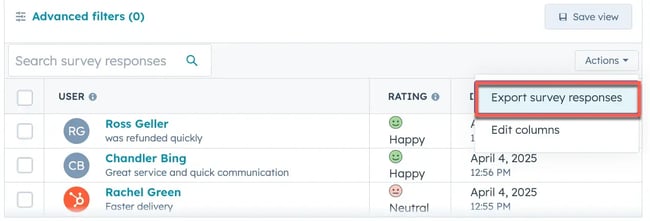
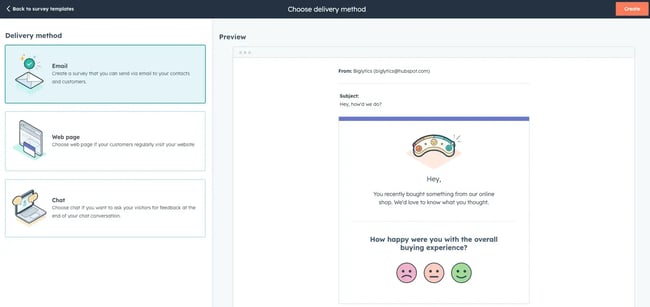
HubSpot’s Customer Feedback Software is a valuable tool for collecting essential customer satisfaction metrics such as NPS, CSAT (Customer Satisfaction Score), and CES (Customer Effort Score). These scores, along with sentiment analysis and response volume, can be viewed in intuitive dashboards. Surveys can be distributed seamlessly via email or embedded directly on web pages, ensuring a smooth customer experience.
The Rise of AI Brand Tracking and Predictive Alerts
The integration of AI into consumer decision-making processes necessitates a new layer of brand tracking. AI brand tracking measures how frequently, accurately, and favorably a brand appears in AI-generated answers. This includes monitoring whether answer engines mention the brand, which competitors are included in the same responses, which specific prompts trigger brand visibility, and crucially, which external sources are shaping those AI-generated answers.
This evolving landscape is significant because AI visibility now often precedes traditional website traffic. A potential customer might query ChatGPT, Gemini, or Perplexity for the "best tools in X category" and receive a curated shortlist before ever visiting a company’s website. Traditional SEO dashboards often fail to capture this critical juncture, as a brand can be featured in an AI response without generating a direct click.
Key use cases for AI brand tracking include:
- Understanding AI Visibility: Quantifying how often a brand is mentioned in AI responses to relevant queries.
- Competitive AI Benchmarking: Comparing a brand’s AI visibility against its competitors for the same prompts.
- Prompt Optimization: Identifying which search queries and prompts lead to brand mentions or omissions in AI answers.
- Source Citation Analysis: Determining which content sources (e.g., company blog posts, third-party reviews, news articles) are most frequently cited by AI engines when discussing a brand or its category.
- Sentiment in AI Responses: Assessing the sentiment of AI-generated text that mentions the brand.
- Predictive Alerts: Setting up notifications for significant shifts in AI visibility, competitor presence, or sentiment, enabling rapid response.
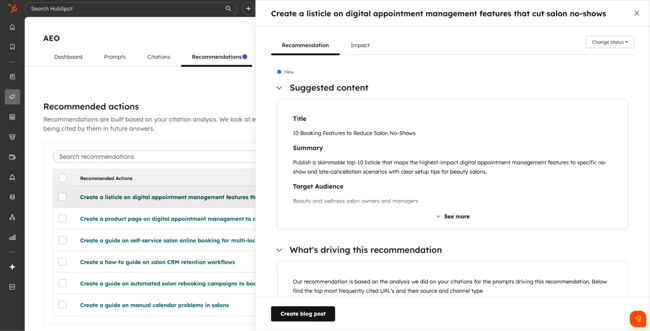
Tools like HubSpot AEO are instrumental here, providing dashboards that automatically populate with a brand’s visibility score, share of voice percentage, and sentiment score across major AI platforms. This data empowers teams to understand which sources and content types AI engines are citing, offering prioritized recommendations for content creation or improvement to enhance their AI share of voice.
Navigating the Selection of Brand Tracking Tools
Choosing the right brand tracking tool requires a strategic approach, aligning the software’s capabilities with the company’s specific decision-making needs.
- Early-stage teams typically require rapid insights and clear dashboards to answer fundamental questions: Do potential customers know our brand? What do they say about it? Is it appearing in AI recommendations?
- Mid-market teams often seek integrations that connect various data sources and demand repeatable reporting processes. They need tools that facilitate team collaboration and keep brand, growth, and leadership aligned.
- Enterprise teams require robust governance, expansive market coverage, deep historical data, and rigorous research methodologies. Their brand tracking often informs high-level market strategy, public relations planning, category positioning, investor narratives, and resource allocation.
Before evaluating tools, teams should clearly define the critical questions their brand tracking software must answer. This clarity will guide the selection of essential features.
Key Features to Consider:
-
Survey-Based Brand Health Measurement:
- Capabilities: Support for unaided and aided awareness, familiarity, consideration, preference, trust, purchase intent, and brand associations. For B2B, the ability to filter responses by key buying committee roles (e.g., job title, seniority, department) is vital.
- Vendor Questions: "What survey methodologies do you support?", "Can we define custom audience segments?", "What are your capabilities for longitudinal tracking?", "How do you ensure data quality and representativeness?"
-
Brand Monitoring Coverage:
- Capabilities: Comprehensive tracking across social media, news outlets, forums, review sites, blogs, podcasts, videos, communities, and AI answer engines. The ability to capture passive listening is crucial, especially as direct customer feedback becomes less common.
- Vendor Questions: "What online sources do you monitor?", "What is your historical data depth?", "Can we track sentiment and key themes across all monitored sources?", "How do you handle data volume and noise?"
-
AI Visibility and AI Share of Voice:
- Capabilities: Tracking brand mentions in AI-generated answers, comparing visibility against competitors for specific prompts, identifying influential sources, and analyzing sentiment within AI responses.
- Vendor Questions: "Which AI platforms do you currently support?", "Can we track specific prompts or queries?", "How do you measure AI share of voice?", "What insights do you provide on AI citation sources?"
-
Customer Feedback and Experience Signals:
- Capabilities: Seamless integration with customer feedback mechanisms like NPS, CSAT, and CES surveys. The ability to link feedback to customer records and analyze it within the broader brand context is essential.
- Vendor Questions: "Do you offer integrated customer feedback tools?", "How do your feedback tools integrate with your brand tracking capabilities?", "Can we link feedback to CRM data?"
-
CRM, Campaign, Search, and Social Integrations:
- Capabilities: The ability to connect brand metrics with CRM data, campaign performance, search trends, social engagement, and web analytics. This integration is key to understanding what impacts brand health and enabling data-driven actions.
- Vendor Questions: "What CRM systems do you integrate with?", "Can we link brand metrics to campaign performance data?", "How do your tools integrate with SEO and social media platforms?"
-
Competitor Benchmarking:
- Capabilities: The ability to track named competitors across the same audience, markets, channels, and metrics. For AI visibility, this means tracking identical prompts and analyzing competitor presence in AI answers.
- Vendor Questions: "How granular is your competitor tracking?", "Can we benchmark our AI visibility against specific competitors?", "What tools do you provide for competitive analysis?"
-
Sentiment and Topic Analysis:
- Capabilities: Identifying key themes and topics discussed in relation to the brand (e.g., pricing, product quality, customer support) and classifying sentiment as positive, neutral, or negative, often with variations by channel.
- Vendor Questions: "What natural language processing (NLP) capabilities do you offer for sentiment and topic analysis?", "How customizable are your topic clusters?", "Can sentiment analysis be applied across different data sources?"
-
Reporting and Governance:
- Capabilities: Support for role-based dashboards, scheduled reports, user permissions, annotations for context, data export options, and clear trend history visualization.
- Vendor Questions: "What are your reporting customization options?", "Do you support user role-based access?", "How do you manage data security and compliance?"
-
Pricing and Total Cost:
- Considerations: Understanding the pricing model (e.g., per user, per data source, per feature set) and factoring in potential implementation costs, training, and ongoing support. It’s crucial to ask vendors to price the actual use case rather than a generic package.
A critical caveat for brand teams is to avoid selecting software solely to "measure the brand." The tool must provide actionable insights, indicating what has changed, where it has changed, why it likely changed, and what steps the team should take next.
Best Brand Tracking Tools by Growth Stage
The selection of brand tracking tools can be categorized based on a company’s growth stage, reflecting differing needs in complexity, integration, and scale.
Early Scale Teams: Brand Tracking Tools Shortlist
These teams prioritize quick, accurate answers to fundamental questions about brand recognition, public perception, and AI presence.
-
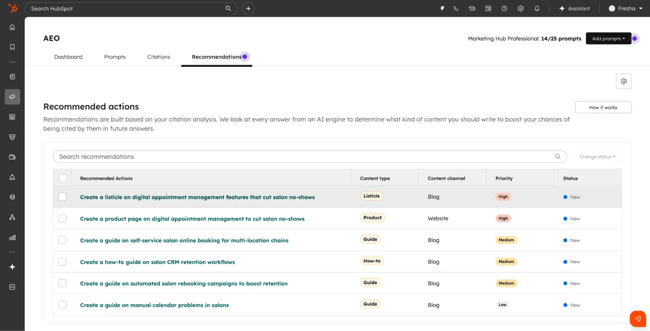
HubSpot AEO (AI-powered Engagement Optimizer): Designed for marketers needing to understand their brand’s visibility in AI-generated recommendations, HubSpot AEO tracks presence across ChatGPT, Gemini, and Perplexity. It offers a brand visibility score, competitive analysis, prompt tracking, and citation analysis. It crucially identifies AI visibility gaps and provides actionable recommendations, such as content updates, comparison page creation, or strengthening social signals. Its integration within the HubSpot ecosystem offers a seamless workflow for lean teams.
- Key Features: AI visibility score, competitor comparison, prompt tracking, citation analysis, actionable recommendations, integration with HubSpot CRM.
- Pricing: Included in HubSpot’s Marketing Hub Professional and Enterprise tiers, or as an add-on.
- Best For: Growth marketers, brand managers, SEO leads, and revenue teams focused on AI share of voice and understanding competitor presence in AI.
-
HubSpot Customer Feedback Software: This tool enables the creation of NPS, CSAT, and CES surveys within HubSpot’s Service Hub. It’s ideal when brand perception needs to be contextualized by customer experience, particularly after key interactions. Its integration with contact, company, and ticket data helps explain the "why" behind feedback, identifying potential pipeline leaks.
- Key Features: Survey creation (NPS, CSAT, CES), integration with HubSpot CRM, automated survey distribution, sentiment analysis.
- Pricing: Included in HubSpot’s Service Hub Professional and Enterprise tiers.
- Best For: Customer marketing, CX, and service teams measuring customer sentiment post-interaction.
-
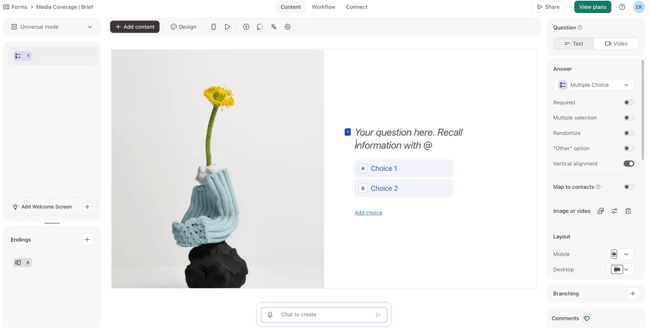
Typeform: A strong choice for lightweight brand tracking surveys, campaign recall studies, message testing, and post-event research. Typeform provides a user-friendly interface for collecting structured feedback without requiring a dedicated research platform.
- Key Features: Visually appealing survey design, conditional logic, integrations with popular tools, easy data export.
- Pricing: Free tier available, with paid plans starting around $25/month.
- Best For: Early-stage teams needing simple survey collection for specific initiatives.
Mid-Market Teams: Brand Tracking Tools Shortlist
Mid-market companies often seek tools that unify social listening, search analytics, AI visibility, survey data, and robust reporting capabilities.
-
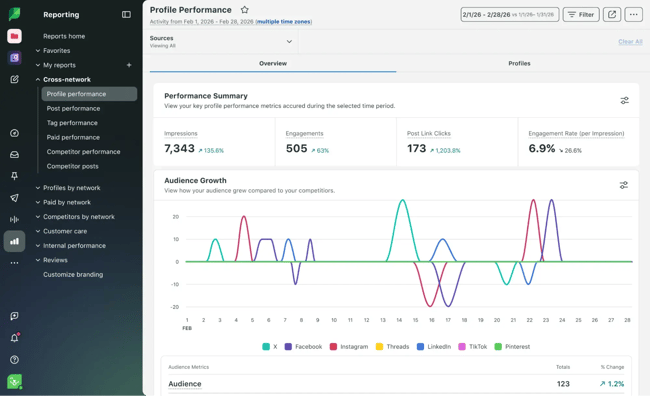
Sprout Social: Combines social media publishing, scheduling, inbox management, review monitoring, keyword tracking, and reporting. It’s well-suited for teams whose brand monitoring is tightly integrated with social media execution.
- Key Features: Social media publishing and scheduling, unified inbox, listening tools, reporting dashboards, team collaboration features.
- Pricing: Plans start around $249/month.
- Best For: Mid-market social and brand teams needing integrated publishing, monitoring, and reporting.
-
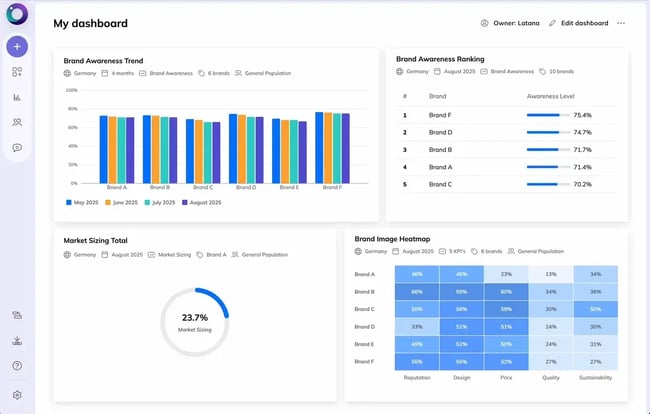
Latana: A dedicated brand tracking platform focused on structured, survey-based measurement of awareness, consideration, perception, and audience segments. It provides a consistent view of brand performance across markets and competitors.
- Key Features: Survey-based tracking, audience segmentation, competitive benchmarking, market insights, customizable dashboards.
- Pricing: Custom pricing based on needs.
- Best For: Scale-ups and mid-market brands requiring consistent awareness, consideration, and preference tracking.
-
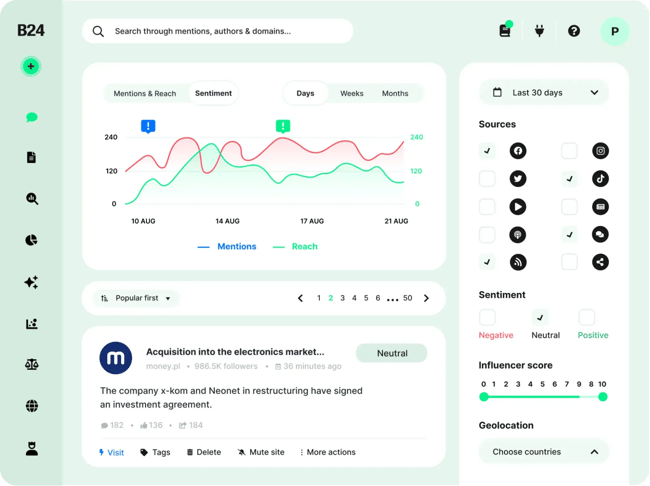
Brand24: A robust brand monitoring and social listening tool that tracks mentions, reach, engagement, sentiment, sources, and influencers across online channels, including social media, news, blogs, and forums.
- Key Features: Real-time mention tracking, sentiment analysis, source categorization, influencer identification, reporting.
- Pricing: Plans start around $49/month.
- Best For: Brand, PR, social, and agency teams tracking mentions and sentiment across online conversations.
Enterprise Teams: Brand Tracking Tools Shortlist
Enterprise teams demand advanced governance, extensive market coverage, deep historical data, and executive-level reporting for strategic decision-making.
-
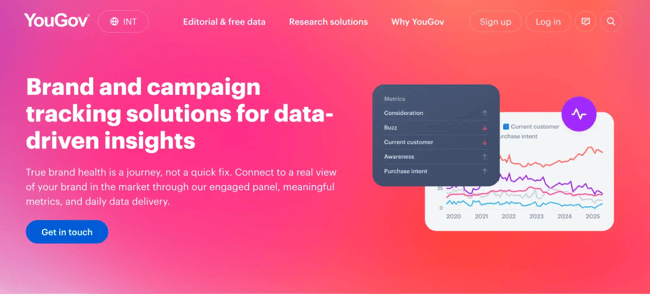
YouGov BrandIndex: Offers daily tracking of 16 brand health metrics across 56 markets, covering millions of panel members and tens of thousands of brands. Its daily tracking is invaluable for understanding the impact of news, campaigns, or competitor actions on brand perception.
- Key Features: Daily tracking, extensive global coverage, 16 core brand health metrics, detailed competitive benchmarking.
- Pricing: Custom pricing.
- Best For: Enterprise brand monitoring, deep market insights, and competitive analysis at scale.
-
Talkwalker: A comprehensive platform combining social listening, media monitoring, AI summaries, forecasting, and LLM insights. It’s built for enterprise-level social listening and consumer intelligence.
- Key Features: Global social and media monitoring, AI-powered insights, trend analysis, influencer identification, LLM tracking.
- Pricing: Custom pricing.
- Best For: Enterprise communications, PR, and consumer intelligence teams requiring broad media and social coverage.
-
Meltwater: Provides media intelligence, social listening, consumer intelligence, and influencer marketing solutions, including real-time alerting and GenAI Lens LLM Tracking. It’s particularly beneficial for PR-heavy teams needing to understand how media coverage influences AI answers.
- Key Features: Media monitoring, social listening, AI-driven insights, influencer marketing tools, real-time alerts.
- Pricing: Custom pricing.
- Best For: Enterprise PR, communications, and reputation management teams focused on media influence on AI.
-
Brandwatch: A leading consumer intelligence and social listening platform for enterprise teams analyzing vast volumes of online conversations. Its Consumer Intelligence product offers advanced tools for analyzing consumer opinion, segmenting audiences, and building custom dashboards with AI.
- Key Features: Advanced social listening, consumer intelligence, AI-driven analytics, audience segmentation, customizable dashboards.
- Pricing: Custom pricing.
- Best For: Enterprise research, insights, and social intelligence teams with high data volumes and complex reporting needs.
How to Run a Brand Tracking Survey
A brand tracking survey is a structured research instrument designed to measure brand health over time, capturing nuances that real-time monitoring might miss. A well-executed survey typically assesses awareness, familiarity, consideration, preference, associations, purchase intent, and competitor comparisons.
-
Start with the Decision: The survey’s objective should be clearly defined by the business decision it aims to support. Is it to evaluate a campaign’s impact, test a new brand positioning, or understand competitive shifts? Each question must align with actionable outcomes. As Daniel Koomson, Senior UX Researcher at News UK, emphasizes, "When you script the survey, give it to people to see and test it. It’s a really important point that cannot be overlooked. We did several iterations on our programming, and with each one, there was an improvement."
-
Define the Audience: The sampling strategy must accurately reflect the market the company intends to influence. For B2B, this means targeting the buying committee, considering job titles, seniority, department, company size, industry, and geography. For B2C, factors like age, region, income, category usage, and lifestyle are critical. Prioritizing the most relevant segment is more effective than spreading resources too thinly across a broad, less relevant audience.
-
Maintain Core Question Stability: Consistent questions across survey waves are essential for reliable trend analysis. While new questions can be added to address specific campaigns or product launches, the core set of metrics should remain stable to ensure comparability over time.
-
Separate Unaided and Aided Awareness: Unaided awareness questions (asking respondents to name brands in a category without prompts) should precede aided awareness questions (presenting a list of brands for recognition). This prevents later answers from artificially inflating recall and ensures a more accurate reflection of spontaneous brand recall.
-
Set the Frequency: Quarterly surveys are generally suitable for scaling B2B companies. Monthly tracking may be necessary for brands with significant paid media investment, new market entries, positioning changes, or intense competitive activity. Daily or weekly tracking is typically reserved for enterprise-level programs with substantial budgets and sample sizes.
-
Track Competitors in the Same Survey: Brand metrics gain context when benchmarked against competitors. The survey should include a list of direct competitors, category leaders, and relevant substitute solutions that frequently appear in sales conversations or customer research.
-
Reduce Bias Before Launch: Minimize bias by randomizing answer order, avoiding leading language, screening for category relevance, and balancing competitor lists. Koomson further advises, "You want to captcha bots and unplug them to make sure only real new people are answering the survey." This ensures data integrity. Annotating survey waves with significant events (e.g., major campaigns, viral mentions, support issues) provides crucial context for interpreting data shifts.
-
Connect Survey Data to Business Data: Integrating survey results with CRM data, traffic analytics, pipeline reports, campaign performance, and sales figures transforms brand health monitoring into revenue-linked decision-making. Key signals to compare include branded search volume, direct website traffic, conversion rates, sales pipeline growth, win rates, customer retention, and customer feedback scores. HubSpot’s tools, such as Customer Feedback Software and HubSpot AEO, connect directly to the Smart CRM, providing this contextual data layer.
Frequently Asked Questions About Brand Tracking Tools
-
How often should a brand tracking survey be run? Scaling companies should aim for quarterly surveys. Monthly tracking is beneficial for high-activity environments.
-
What is the typical cost for scaling companies? Costs range from $50-$200/month for basic survey tools to several thousand dollars per month for comprehensive platforms.
-
Who should own brand tracking? Brand or growth marketing teams typically own brand tracking, with input from revenue leaders, product marketing, customer success, and PR.
-
Is both brand monitoring and a brand tracker necessary? Yes, once a company achieves significant market activity. Monitoring provides real-time alerts, while tracking quantifies long-term impact.
-
How is the ROI of brand tracking proven? ROI is demonstrated by correlating brand metric movements with business outcomes like campaign spend efficiency, branded search growth, direct traffic increases, conversion rate improvements, pipeline generation, win rates, and customer retention. HubSpot AEO, for instance, helps link AI visibility to pipeline generation through CRM integration.
Transforming Brand Visibility into Actionable Decisions
In 2026, effective brand tracking transcends simple quarterly awareness charts. Leading teams now synthesize structured surveys, real-time brand monitoring, customer feedback, social listening, search demand data, AI visibility insights, and CRM reporting. A combination of specialized tools, particularly for social listening and AI visibility, is often necessary.
HubSpot AEO stands out as a vital addition to the modern brand monitoring stack, offering clarity on AI answer engine presence, visibility gaps, and influential sources. When paired with HubSpot Customer Feedback Software and robust attribution reporting, brand measurement becomes directly relevant to revenue teams. This integrated approach connects market perception, customer sentiment, and campaign performance, empowering leaders to make prompt, data-driven decisions. For nascent teams solidifying their brand identity, foundational resources like HubSpot’s Free Brand Building Guide provide a practical starting point.
About the Author