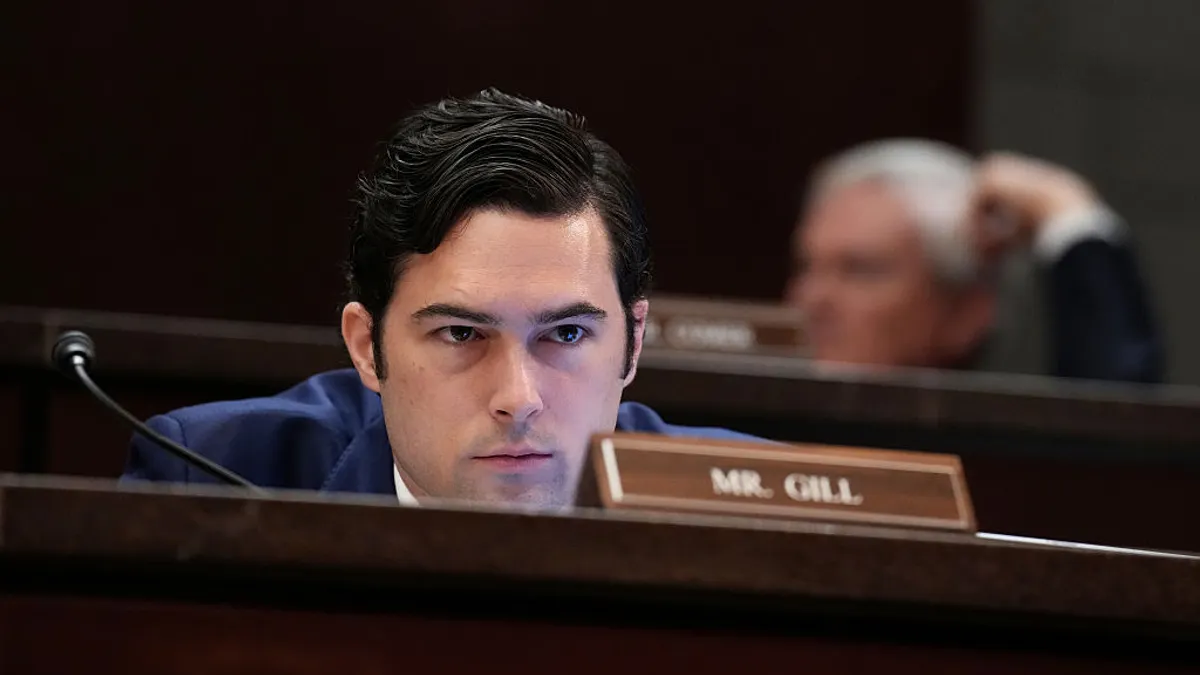
WASHINGTON D.C. – U.S. Representative Brandon Gill, a Republican from Texas, has initiated a significant inquiry into the consulting firm McKinsey and Company, specifically targeting its pervasive influence and recommendations regarding diversity, equity, and inclusion (DEI) initiatives. Gill, a member of the House Oversight and Government Reform Committee, has publicly decried the firm’s practices as "heavy-handed" and questioned the scientific rigor and potential legal implications of its widely cited reports that have guided corporate DEI strategies. The investigation, spearheaded by a task force within the committee, signals a widening net of scrutiny cast upon the consulting industry’s role in shaping corporate social responsibility and human resource policies.
The Genesis of the Investigation
The current focus on McKinsey stems from a broader trend of conservative political and legal challenges to DEI programs across the United States. This movement has gained momentum in recent years, fueled by executive orders, regulatory actions, and public pronouncements from elected officials and legal bodies. Representative Gill’s inquiry is positioned within this larger context, aiming to scrutinize the external forces that have significantly impacted how American businesses approach diversity and inclusion in their workforces.
The investigation’s roots can be traced to an Aug. 17 statement released by Gill, where he articulated his concerns. He stated, "These McKinsey reports have been highly influential, being cited by publicly traded companies, asset managers, proxy advisory firms, and banking institutions, among others, as cause for embedding illegal racial and sex-based targets into hiring, promotion, executive compensation, and asset manager proxy voting policies." This assertion highlights the central tenet of his investigation: that McKinsey’s recommendations may have inadvertently or intentionally led corporations to adopt policies that could be construed as discriminatory or in violation of equal employment laws.
McKinsey’s Influence and Controversial Reports
McKinsey and Company, a global management consulting firm, has long been a prominent advisor to Fortune 500 companies, governments, and non-profit organizations. Its research and reports on various business trends, including DEI, have often been considered seminal and have significantly shaped corporate strategies. Over the years, McKinsey has published numerous reports detailing the business case for diversity, highlighting the correlation between diverse workforces and improved financial performance, innovation, and employee engagement.
However, these reports have not been without their critics. Concerns have been raised about the methodologies employed in some of these studies, the interpretation of data, and the potential for these findings to be misapplied by companies seeking to implement DEI programs. Representative Gill’s investigation appears to be directly addressing these critiques, questioning whether McKinsey’s pronouncements have provided a sound, legally defensible basis for the DEI practices adopted by its clients.
The committee’s statement further elaborated on these criticisms, noting that "Researchers assessing McKinsey’s DEI reports have been unable to replicate the results, and suggest that McKinsey likely swapped the cause and effect in its DEI conclusions." This suggests that the investigation is delving into the academic and empirical validity of McKinsey’s research, probing whether the firm’s conclusions accurately reflect causation or merely correlation, and whether their analysis might have inadvertently promoted flawed or even legally questionable strategies.
A Shifting Landscape for DEI Initiatives
The scrutiny of McKinsey’s DEI influence comes at a time when DEI initiatives are facing increased pressure from various fronts. In the private sector, companies have been working to navigate a complex landscape marked by evolving cultural expectations and shifts in federal policy enforcement.
Under the previous Trump administration, a presidential executive order targeted DEI training programs within federal agencies, signaling a broader governmental skepticism towards certain DEI practices. While the Biden administration has largely reversed some of these policies, the U.S. Equal Employment Opportunity Commission (EEOC) has continued to align with an agenda that scrutinizes potentially discriminatory aspects of employment practices, including those related to DEI.
Furthermore, a notable trend has emerged from Republican attorneys general across several states. These officials have actively engaged with private companies, sending letters to probe their DEI policies and commitments. This coordinated legal and political pressure aims to ensure that corporate diversity initiatives do not inadvertently lead to reverse discrimination or violate anti-discrimination laws. Representative Gill’s investigation into McKinsey can be seen as an extension of this broader effort to hold influential third parties accountable for the guidance they provide to businesses on sensitive human resource matters.

The Broader Implications for Corporate America
The investigation’s focus on McKinsey and Company has significant implications for how businesses approach DEI and the role of consulting firms in shaping these strategies. If the investigation uncovers evidence of flawed methodologies or legally questionable advice, it could lead to a re-evaluation of DEI practices across corporate America.
Companies that have relied heavily on McKinsey’s research to justify or implement their DEI programs may find themselves re-examining their policies and legal compliance. This could trigger a wave of internal reviews, policy adjustments, and potentially even litigation, particularly if any discriminatory outcomes are identified.
Moreover, the investigation could have a chilling effect on the DEI consulting industry as a whole. Consulting firms that advise on DEI might face increased scrutiny from their clients and regulatory bodies, demanding greater transparency and empirical validation of their recommendations. The emphasis may shift from broad pronouncements on the benefits of diversity to a more rigorous, legally sound approach to implementing inclusive practices.
McKinsey’s Defense and the Counterpoint of Research
In response to the growing scrutiny, McKinsey and Company has maintained its stance on its research and recommendations. A spokesperson for McKinsey told HR Dive, "We agree with [Gill] that race and gender should not guarantee outcomes, but we stand by our research on the business and economic impact of a diverse workforce. We also recognize that diversity in the workplace encompasses a broad range of backgrounds, experiences and perspectives."
The firm emphasized its commitment to legal compliance in the U.S. and other markets, asserting that its recommendations are designed to be legally sound and beneficial for businesses. This defense underscores McKinsey’s position that its research provides valuable insights into the economic advantages of diversity without advocating for discriminatory practices.

However, the debate over the effectiveness and methodology of DEI research is ongoing. In a contrasting development, a report published this month by a professor of public policy at the University of California, Berkeley, offered a different perspective. This research suggested that S&P 500 employers that scaled back their DEI initiatives did not necessarily outperform those that maintained their commitments. In some instances, these companies even experienced worse performance. This finding provides a counterpoint to the narrative that rolling back DEI is inherently beneficial for business, suggesting that the impact of DEI is nuanced and complex, and that its removal may not always yield positive results.
Conclusion: A Deep Dive into Corporate Strategy and Influence
Representative Gill’s investigation into McKinsey and Company represents a significant moment in the ongoing national conversation about diversity, equity, and inclusion. By targeting one of the most influential consulting firms in the corporate world, the inquiry seeks to dissect the underpinnings of widespread DEI adoption and to question whether the advice provided has been both effective and legally sound.
As the investigation progresses, it will undoubtedly shed further light on the methodologies, data interpretations, and advisory practices that have shaped corporate DEI strategies for years. The outcomes could have far-reaching consequences, influencing how businesses approach diversity, how consulting firms advise on these critical issues, and the broader legal and regulatory landscape surrounding DEI in the workplace. The committee’s focus on McKinsey underscores the critical need for transparency, empirical validity, and legal compliance in all aspects of corporate strategy, especially concerning initiatives that impact the workforce and organizational culture. The coming months will likely reveal more about the depth of these concerns and the potential for significant shifts in how DEI is understood and implemented across American industries.
About the Author