The rapidly evolving landscape of search engine optimization has introduced a new frontier: Answer Engine Optimization (AEO). As artificial intelligence chatbots like ChatGPT, Claude, and Gemini become increasingly integrated into how users research and gather information, businesses face a critical need to adapt their digital strategies. This article provides an in-depth comparison of two leading tools designed to navigate this shift: HubSpot AEO and Semrush AI Visibility Toolkit. Drawing on practical testing and analysis, this review aims to equip marketing and AEO practitioners with the insights needed to select the optimal solution for their specific needs.
To facilitate a direct comparison, a niche golf website, previously unoptimized for AI search, was utilized as a testing ground. This real-world application allows for a granular examination of each tool’s capabilities, offering screenshots and personal experiences to guide decision-making. The objective is to demystify AEO, Generative Engine Optimization (GEO), and AI visibility, providing a clear understanding of their significance in the modern digital ecosystem.
Understanding the Pillars of AI Visibility: AEO, GEO, and AI SEO
At its core, AEO, or Answer Engine Optimization, is the strategic practice of crafting and refining online content to increase its likelihood of being cited and featured by AI-powered answer engines. While the terms GEO (Generative Engine Optimization) and AI SEO are also used interchangeably, HubSpot primarily advocates for the term AEO. The increasing reliance on AI for information retrieval underscores the importance of AEO. Projections from the Pew Research Center indicate a significant rise in AI chatbot usage, with nearly half of U.S. adults expected to utilize them by 2026, up from one-third in 2024. Furthermore, a notable 60% of American adults report reading AI-generated summaries at the top of search results, highlighting a substantial shift in information consumption patterns. Brands that proactively embrace AEO are poised to gain a distinct competitive advantage in this evolving market.
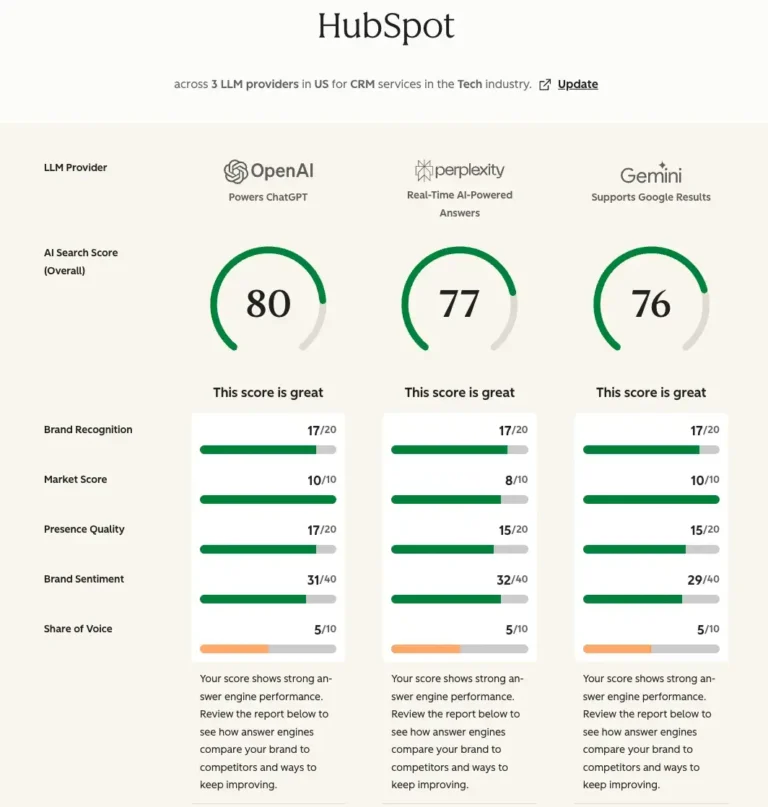
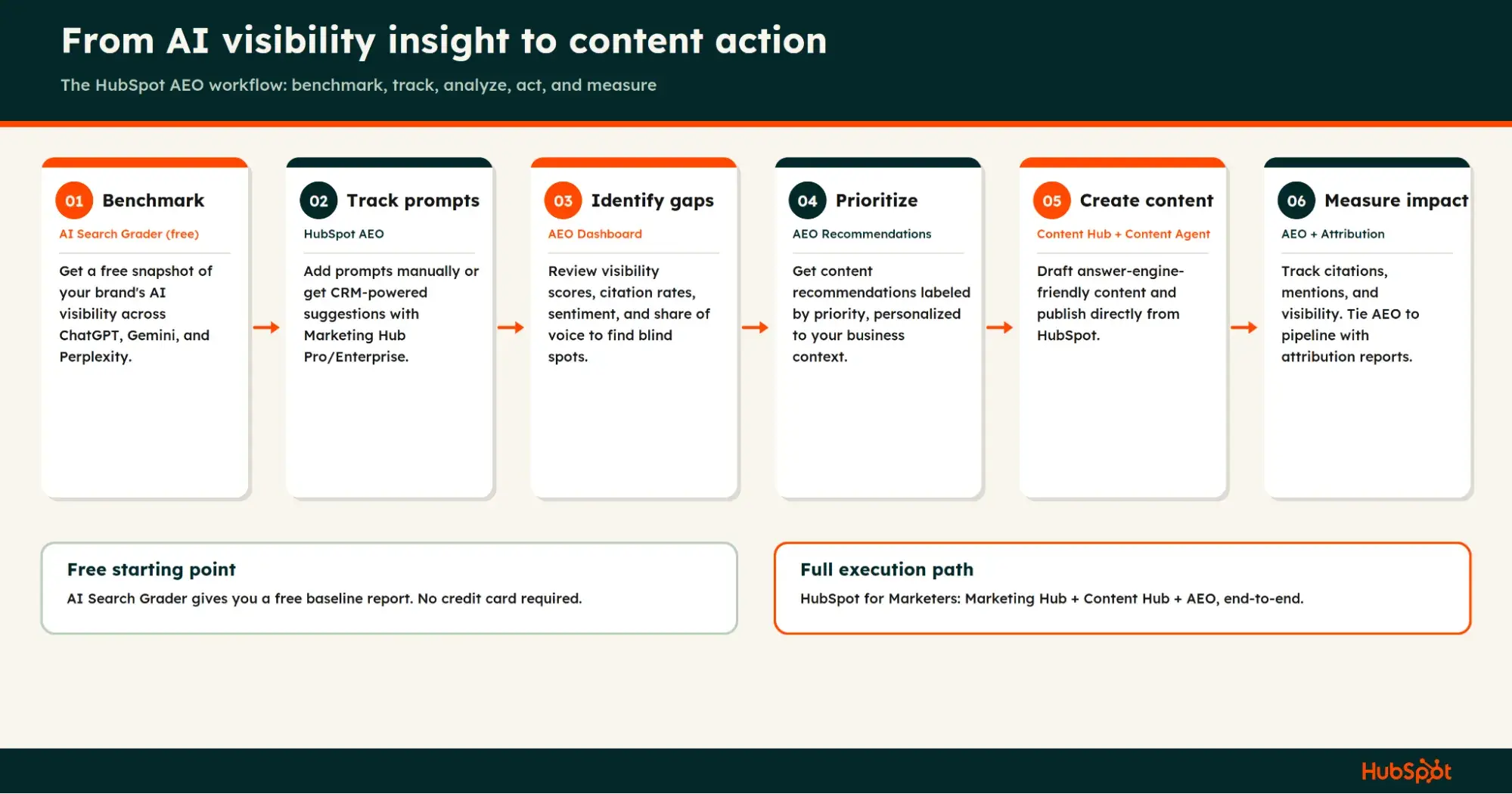
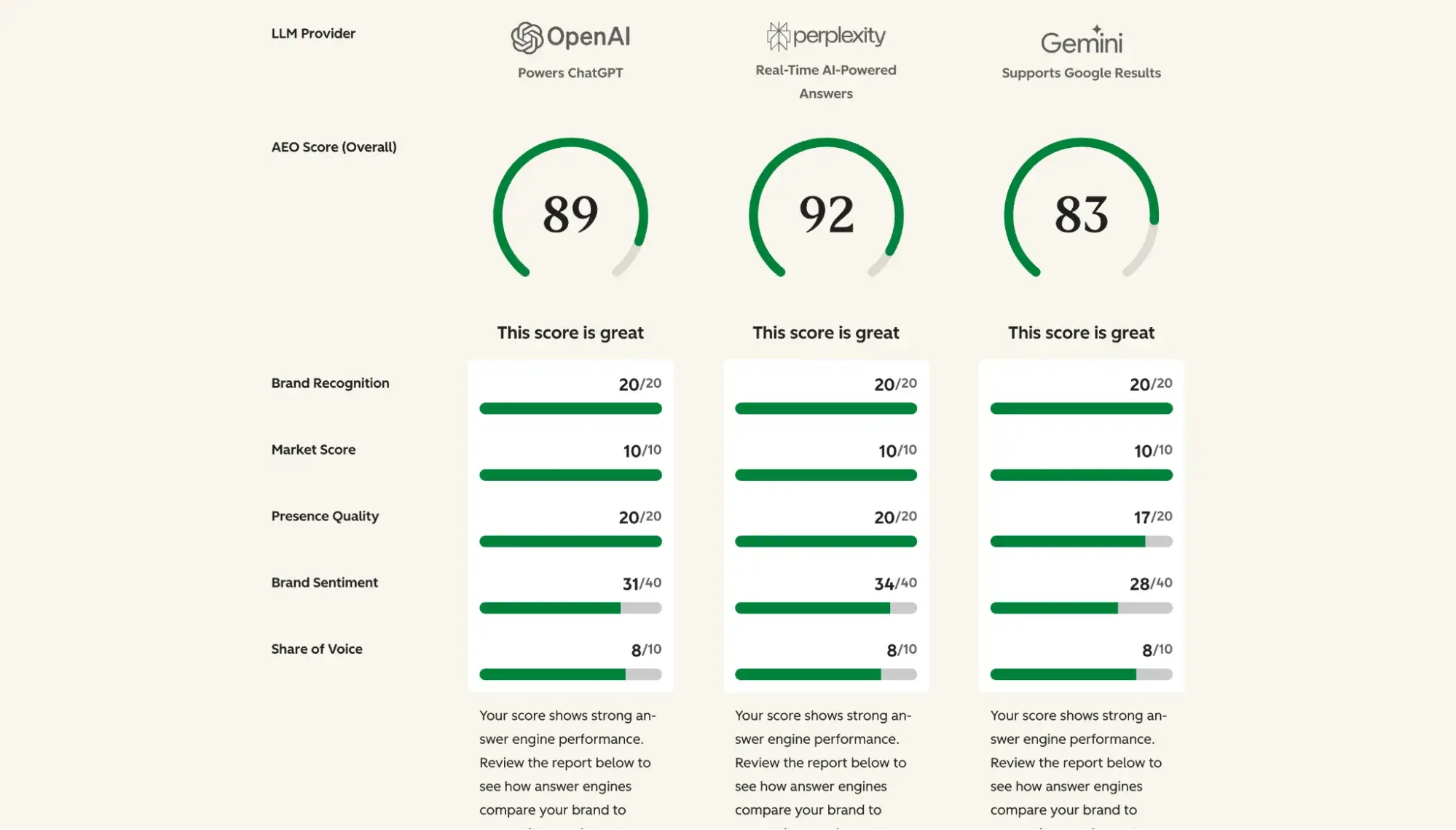
AI visibility, a broader concept, encompasses the metrics used to gauge a brand’s presence within AI-driven search results. This includes key performance indicators such as share of voice, sentiment analysis, citations, and direct mentions. These metrics are crucial for marketers and SEO professionals to effectively track and measure the progress of their AEO initiatives. For an initial assessment of AI visibility, the free HubSpot AI Search Grader tool offers a valuable baseline snapshot.
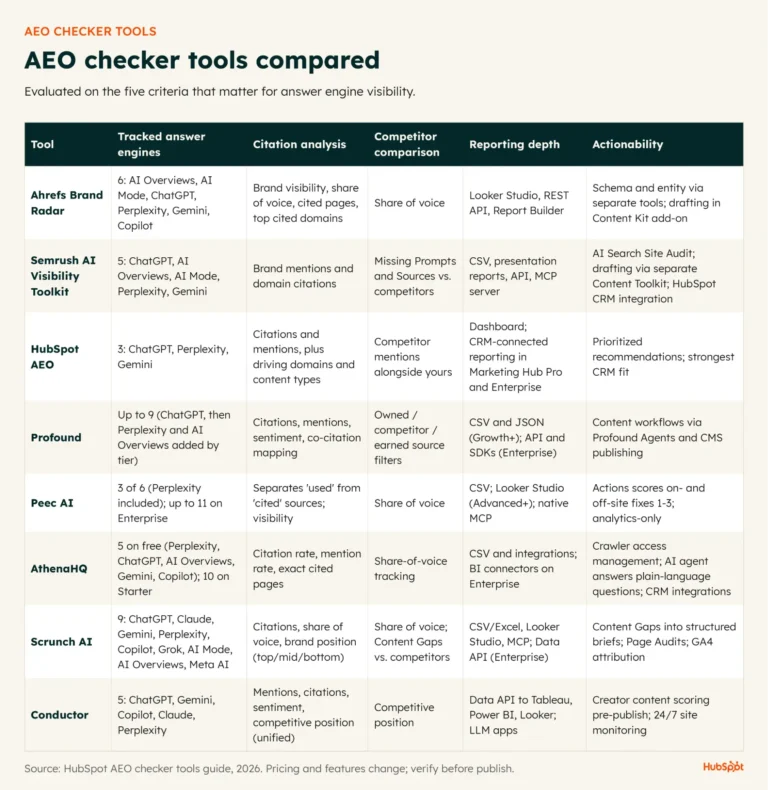
Central to AEO are "prompts," which serve as the AI equivalent of keywords in traditional SEO. Prompts are the specific queries users input into answer engines to obtain information. AEO tools help marketers identify and monitor the prompts their brands should ideally rank for. "Citations" refer to the external sources that an AI consults to generate its answers; these may or may not include direct hyperlinks. "Coverage" is a measure of which Large Language Models (LLMs) an AEO tool monitors, indicating the breadth of AI platforms it tracks. For instance, HubSpot AEO tracks ChatGPT, Gemini, and Perplexity.

HubSpot AEO vs. Semrush AI Visibility: A Feature-by-Feature Comparison
Understanding the product offerings and pricing structures is essential for informed decision-making. HubSpot AEO can be purchased as a standalone product, independent of other HubSpot subscriptions. Additionally, AEO is integrated into HubSpot’s Marketing Hub Professional and Enterprise tiers. Semrush’s AI Visibility Toolkit is also available as a standalone purchase or as an add-on to an existing Semrush subscription. The bundled product, Semrush One, integrates SEO and AEO features. This analysis will primarily focus on the standalone versions of HubSpot AEO and Semrush AI Visibility Toolkit, while also referencing the integrated offerings.
Tracking Prompts, Citations, and Brand Mentions: A Deep Dive
HubSpot AEO’s Approach:
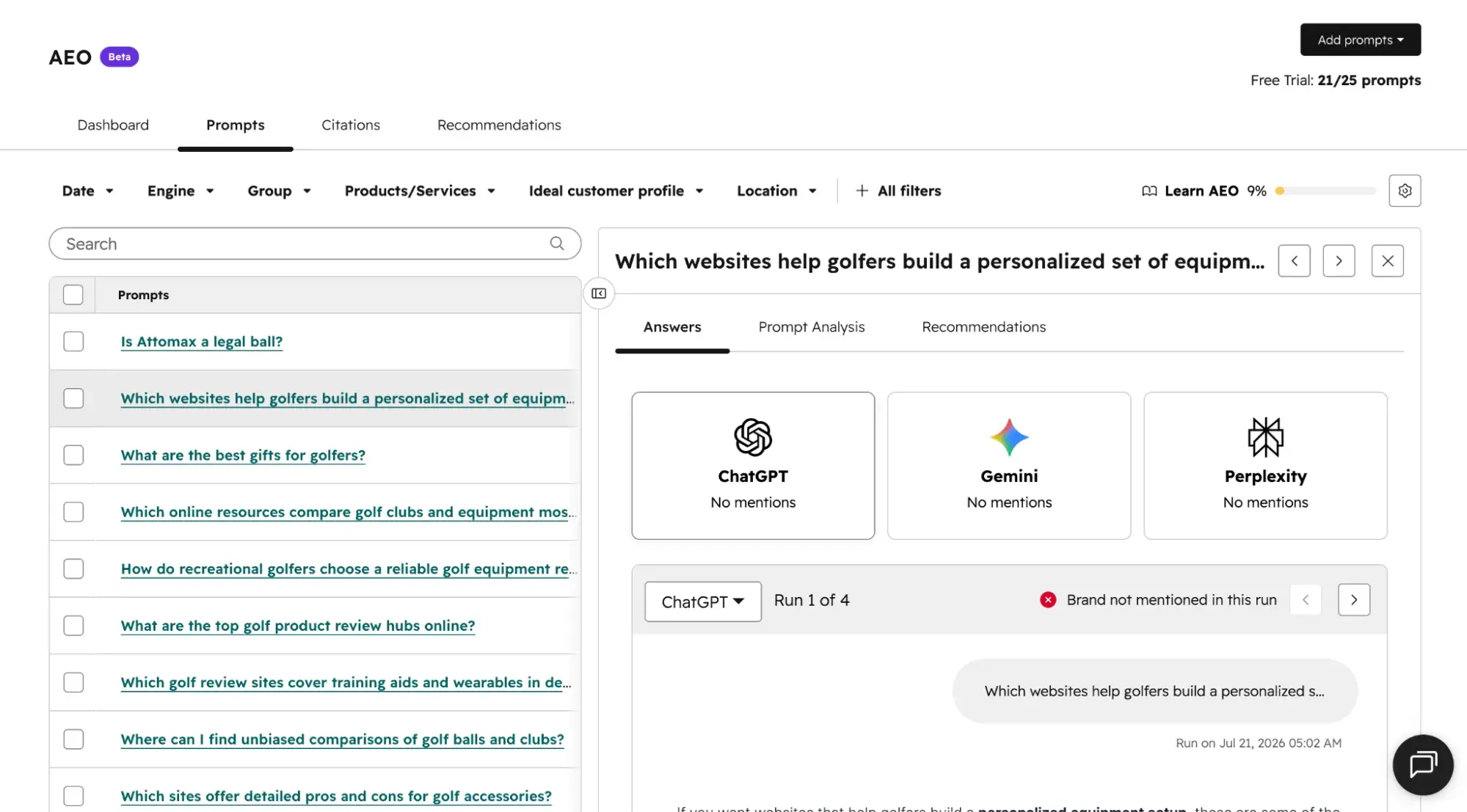
HubSpot AEO leverages the official APIs of ChatGPT, Gemini, and Perplexity to provide daily tracking of user-defined prompts and display the actual AI responses. Users can manually input prompts or receive AI-powered suggestions based on provided company information. For users of AEO within Marketing Hub Professional and Enterprise, these suggestions are further enhanced by CRM data, leading to more contextually relevant and progressively intelligent recommendations over time.
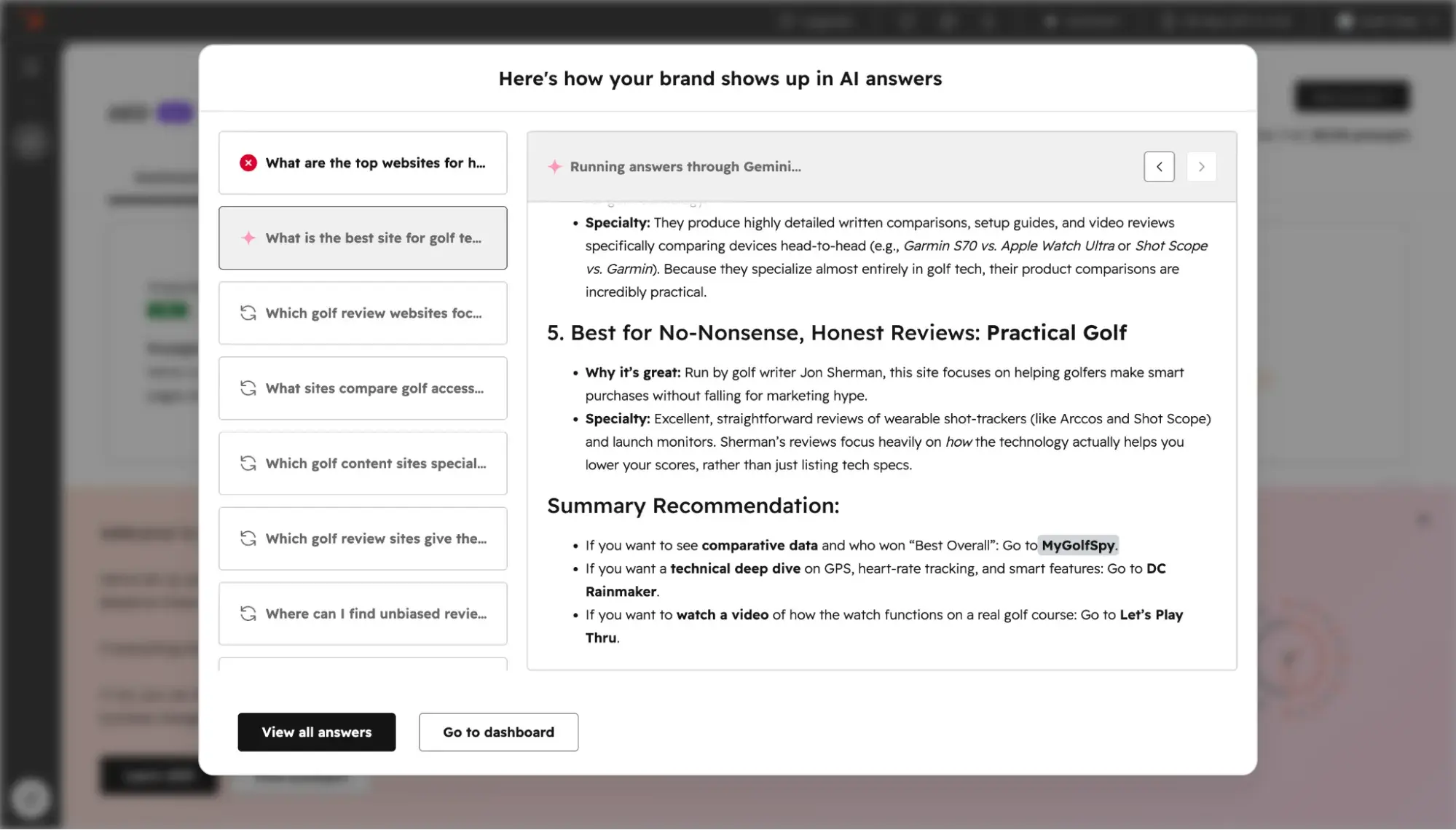
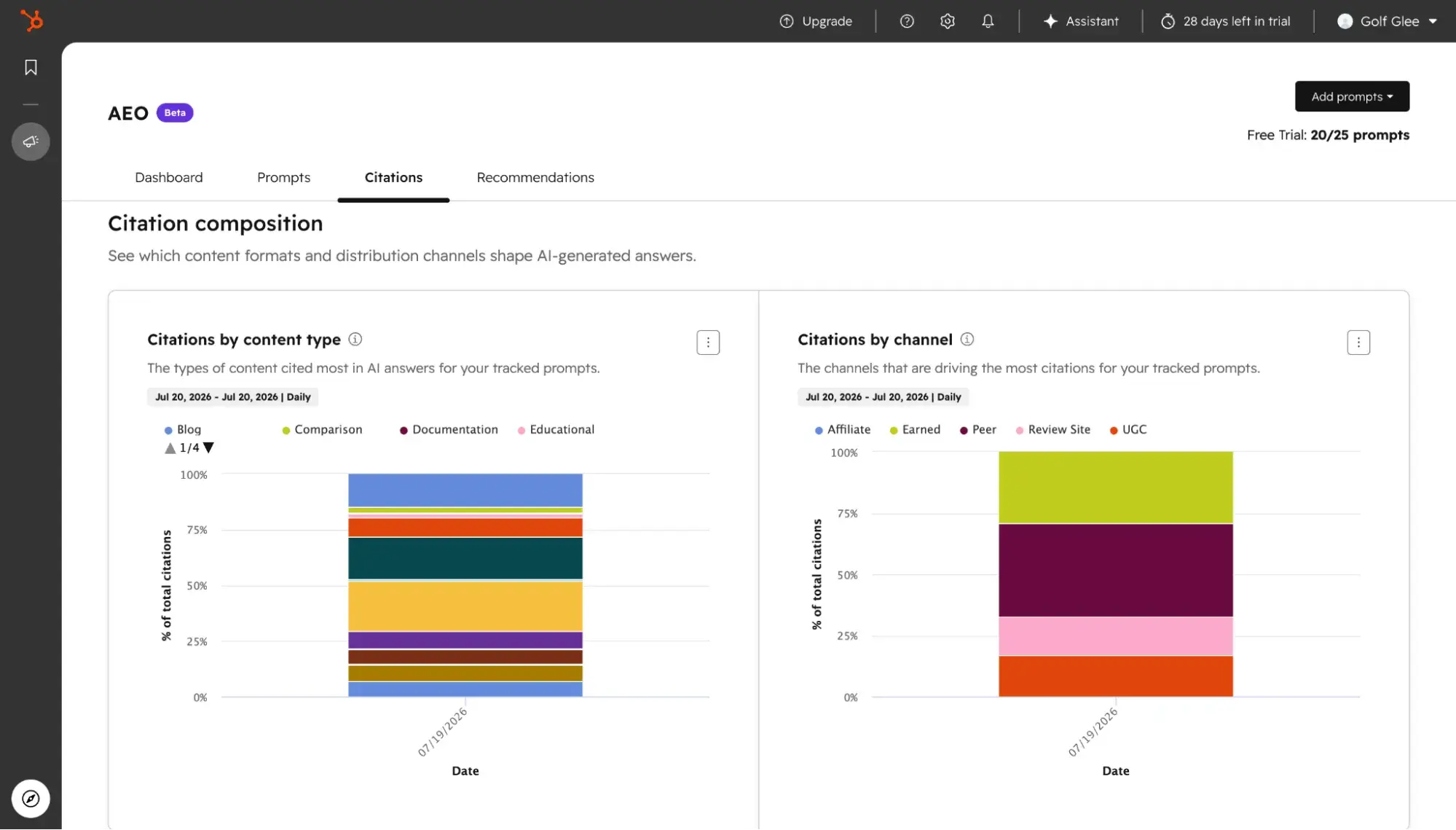
The platform’s citation analysis is detailed, offering insights into owned citation rates versus competitors, as well as citations broken down by content type and distribution channel. Brand mention tracking is accessible through the Dashboard tab, where users can view a brand visibility score and track progress over time. More granular data is available within the Prompt tabs, allowing users to check for brand mentions in specific AI answers across the three tracked answer engines.
Semrush AI Visibility Toolkit’s Approach:
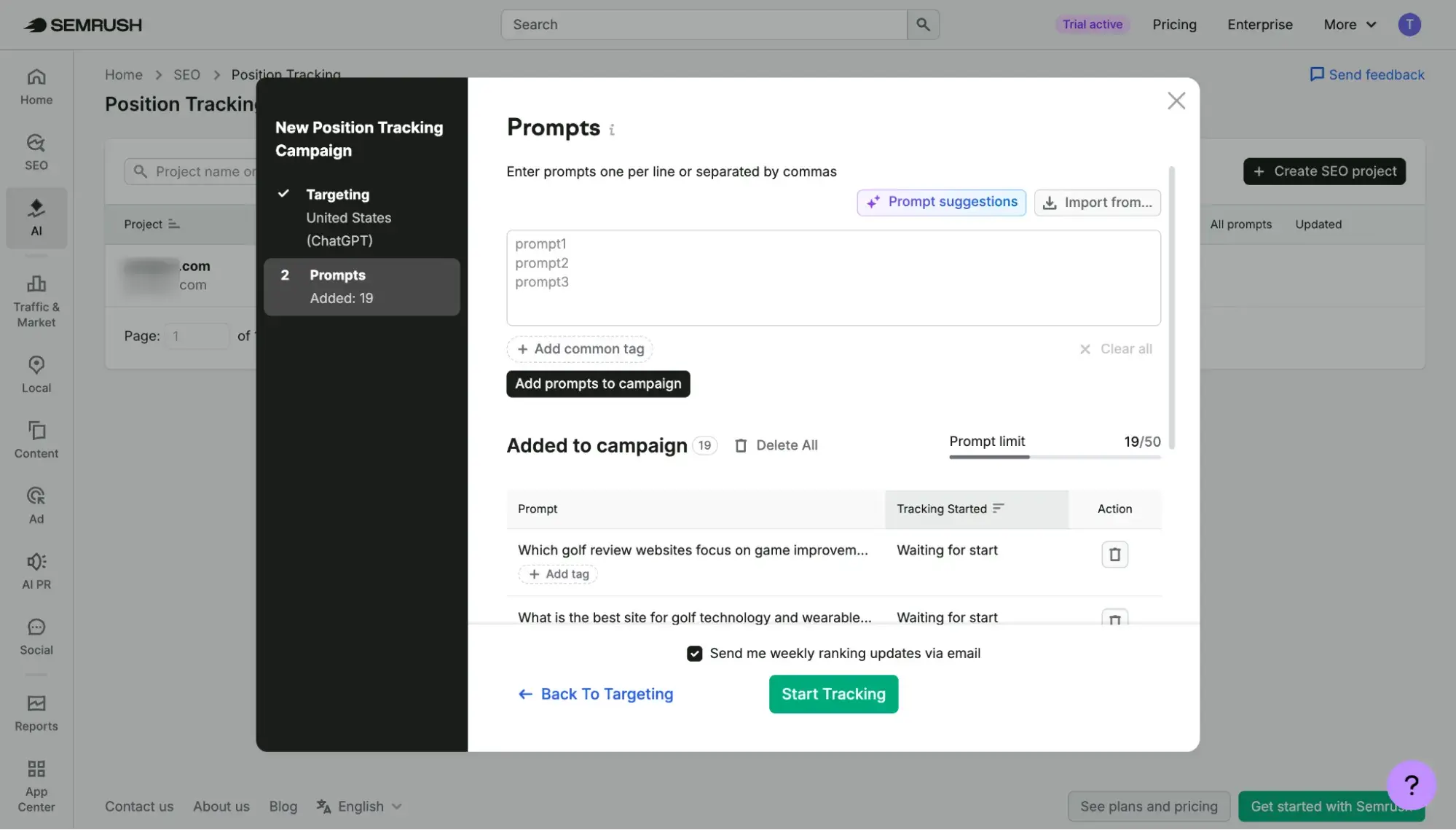
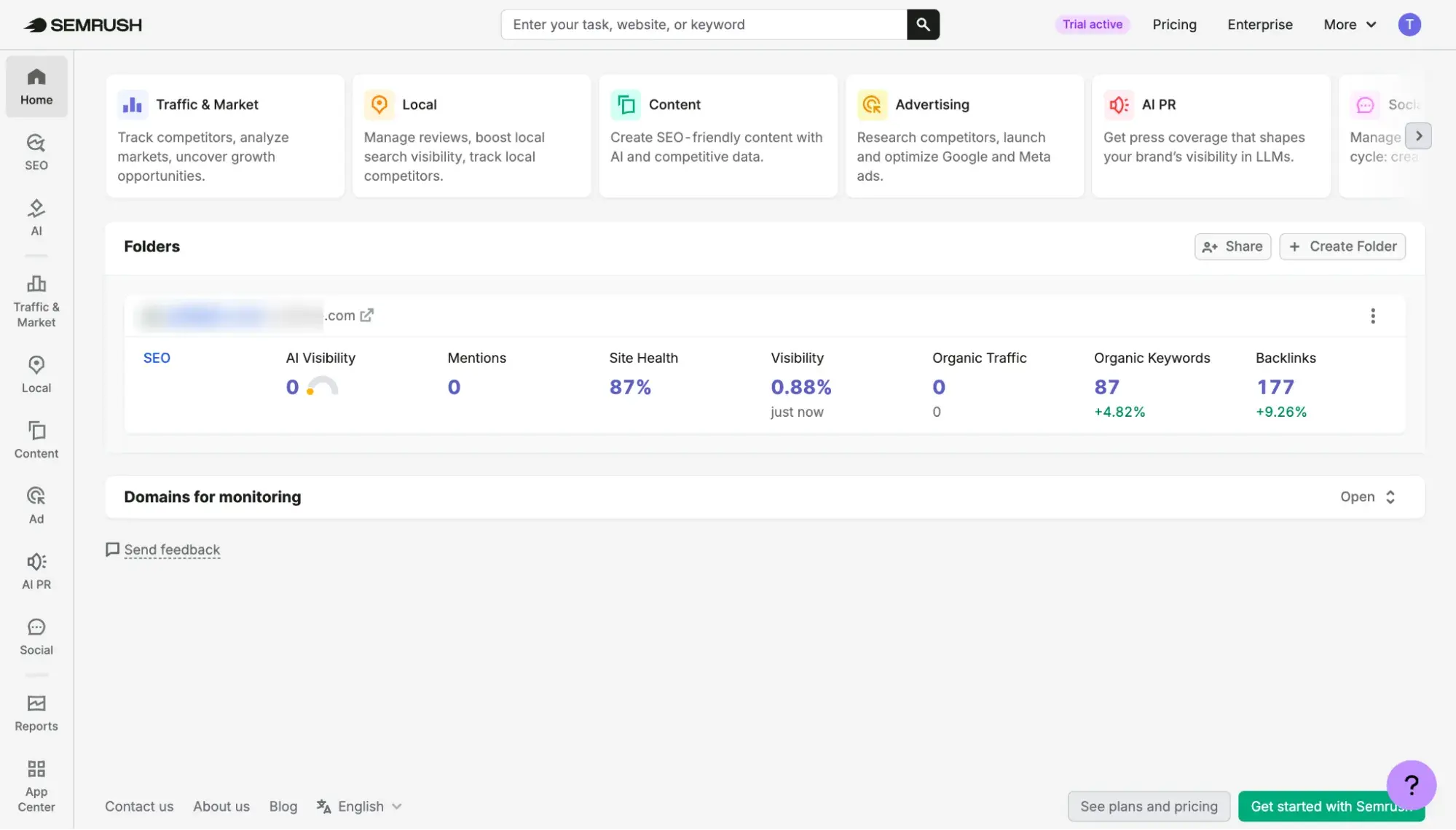
Semrush employs a different methodology for fetching AI answers. Instead of querying each answer engine in real-time for every prompt, it utilizes a proprietary database of over 289 million prompts, updated daily. Users can manually add prompts or utilize Semrush’s suggested prompts, which are generated based on the submitted domain and location. When prompts are manually added, Semrush runs them live to determine the fetched answers.
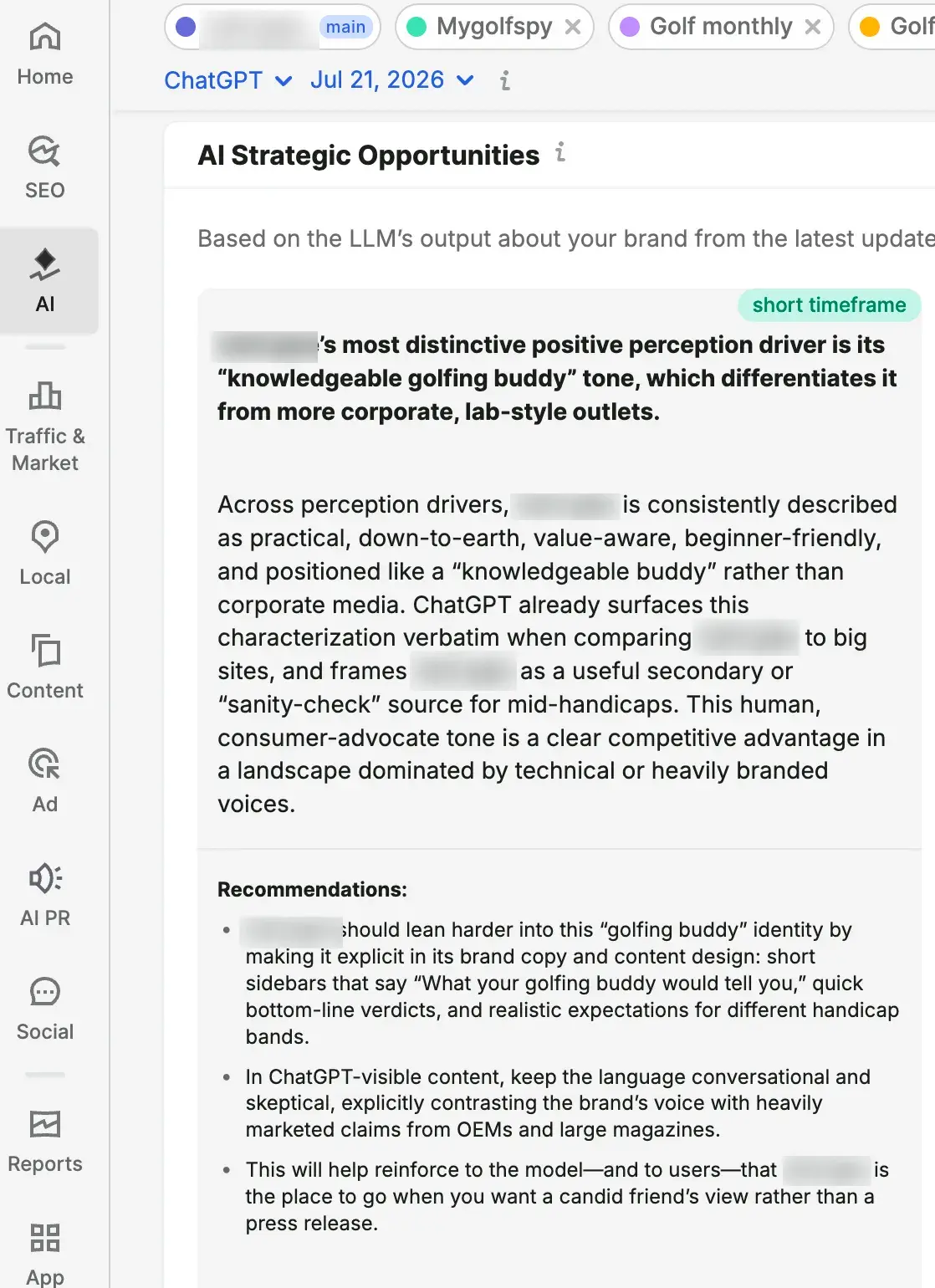
A key distinction is Semrush AI Visibility Toolkit’s lack of a CRM, which prevents it from offering the same level of personalized, business-context-driven prompt suggestions as HubSpot.
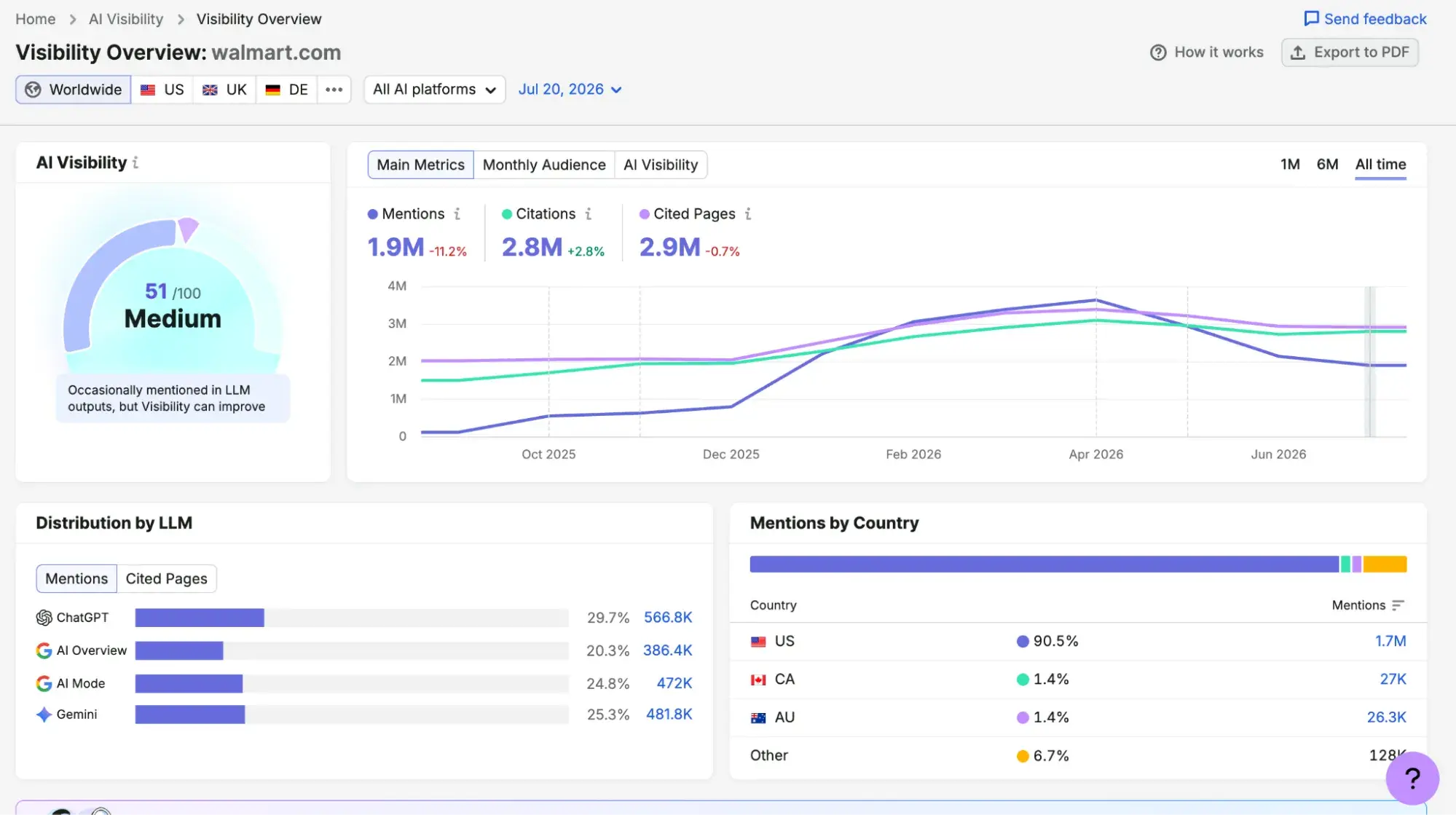
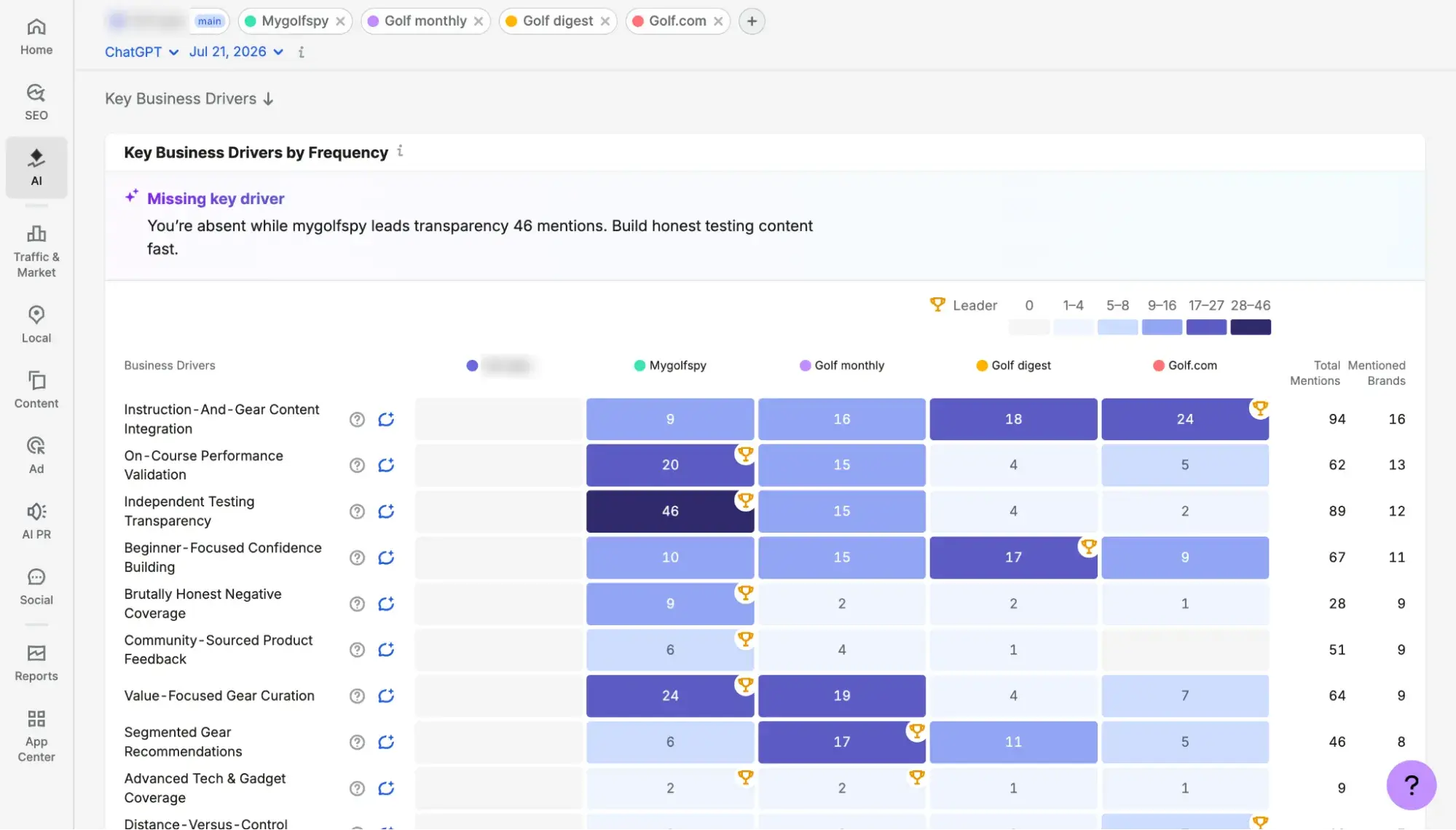
Locating citation data within Semrush’s AI Visibility dashboard can be less intuitive. Instead of a dedicated "Citations" tab, information is dispersed. Users can find data on AI citation frequency under "AI Visibility > Visibility Overview > Citations" and identify specific cited URLs on their website under "Cited Pages." The "Competitor Research > Sources > Missing" section provides insights into third-party websites that contribute to competitors’ AI visibility, presenting opportunities for outreach.
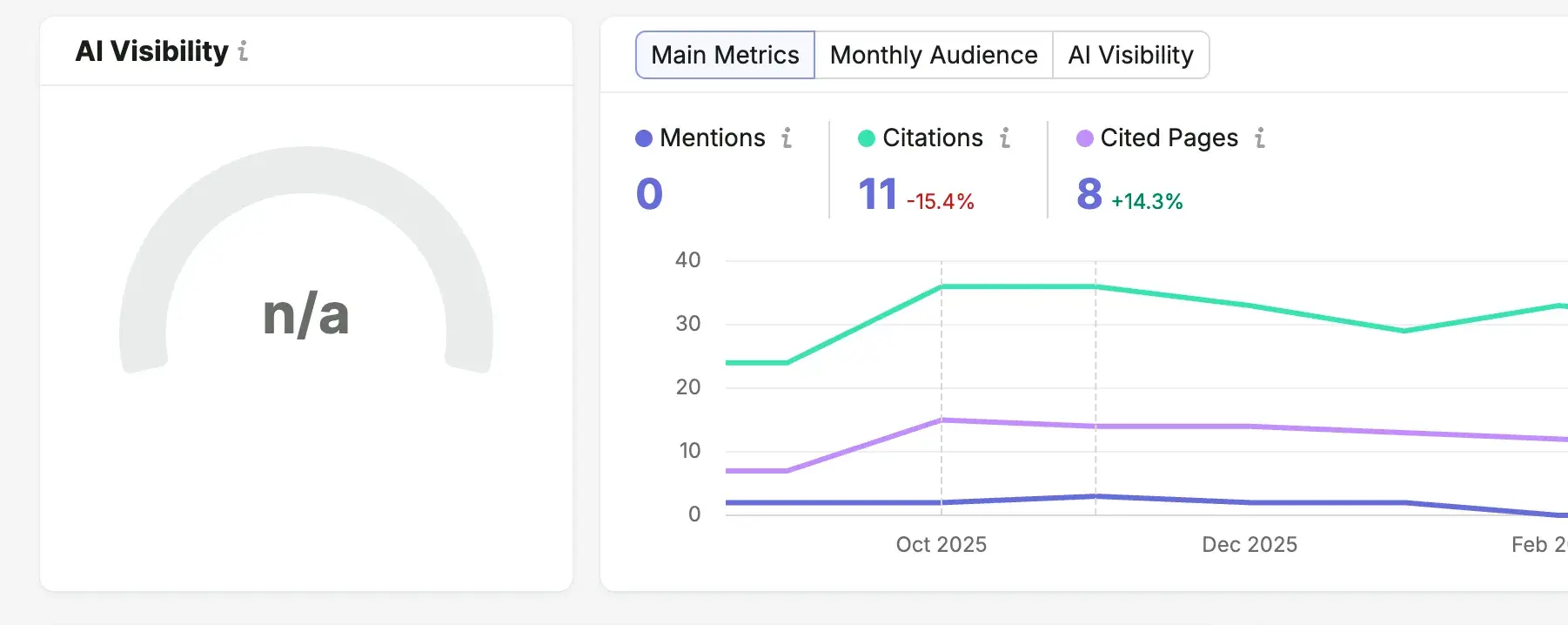
Brand mentions are tracked under "AI Visibility > Visibility Overview," where an AI visibility score and mention trend data are displayed. Mentions can be further segmented by LLM distribution, country, topic, and prompt.
Actionability: Translating Insights into Impact
Winner: HubSpot for Content Creation, Semrush for Technical Optimization
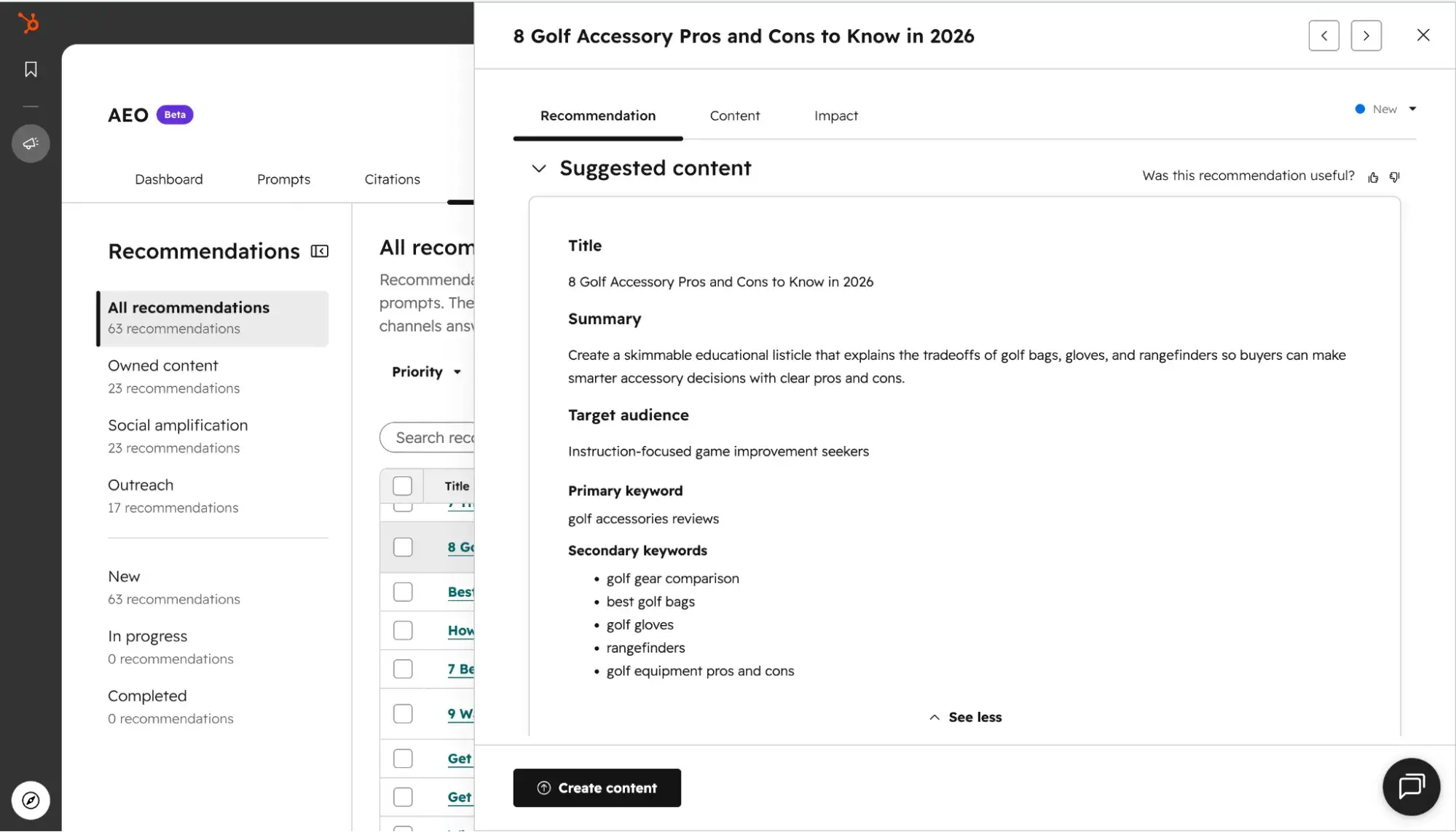
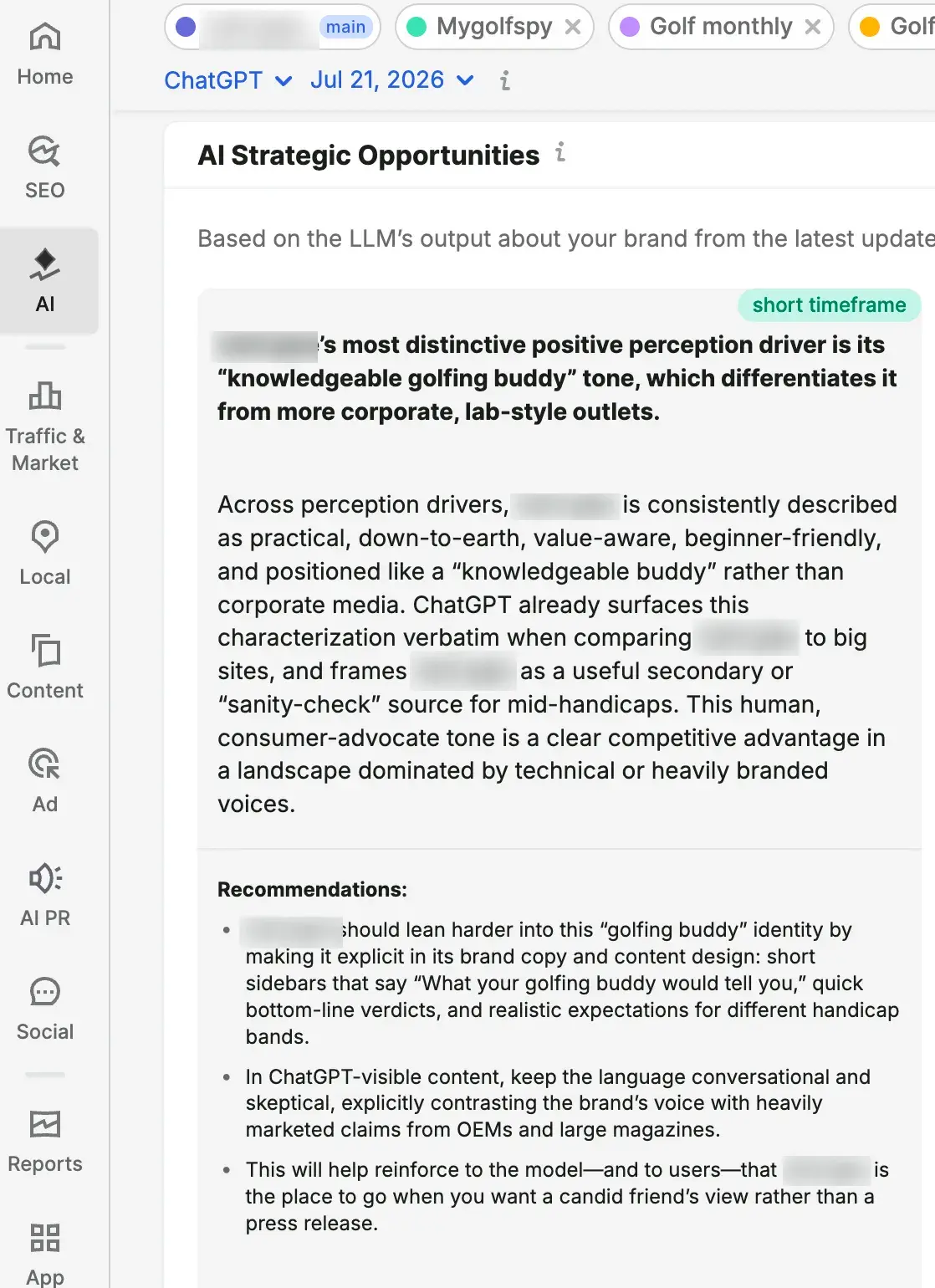
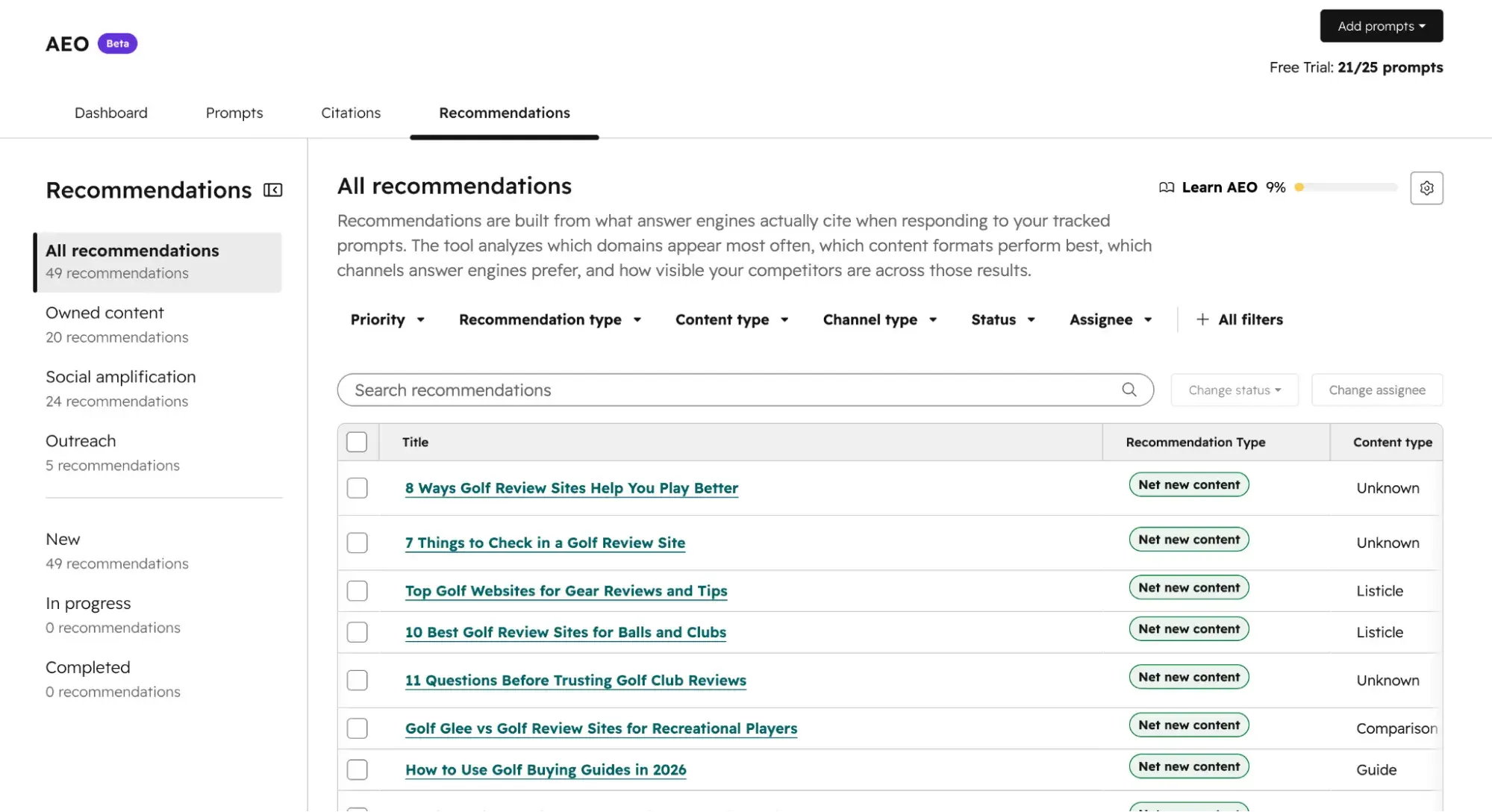
Both tools offer recommendations based on existing AI discussions about a brand, but their levels of detail differ significantly. HubSpot AEO provides prescriptive guidance, suggesting specific blog posts to create with briefs including titles, target audiences, summaries, and primary/secondary keywords. This direct approach facilitates content ideation and creation.
Semrush, conversely, offers more high-level, directional recommendations, such as adjusting brand voice or incorporating specific design elements. Detailed guidance on blog post creation is not a core feature of the AI Visibility Toolkit and may require the Content Toolkit add-on.
The absence of a CMS and CRM within Semrush means a less integrated workflow from insight to implementation. Users will likely need separate tools for content publishing. HubSpot, particularly with its Marketing Hub Professional/Enterprise or HubSpot for Marketers packages, offers a more unified path, integrating AEO insights with CRM data and content creation tools.
For technical optimization, both platforms identify AI-specific issues like robots.txt blocking. However, Semrush’s traditional Site Audit tool includes a dedicated AI Search Health score, making it a more robust option for comprehensive technical SEO.
Accelerating Content Updates with Visibility Gaps:
The most efficient method for transforming visibility gaps into content updates lies with HubSpot for Marketers. This integrated solution combines Marketing Hub, Content Hub, and AEO to expedite the creation of answer engine-friendly content, leveraging real CRM data. Subscribers to HubSpot for Marketers or Marketing Hub Professional/Enterprise can utilize Content Agent to generate research-backed blog posts directly from AEO recommendations.
Strategic Use of AI in AEO Tasks:
While human oversight remains crucial in content creation, AI can significantly accelerate AEO tasks. The key is to employ AI tools that possess adequate brand context. HubSpot’s Marketing Hub Professional and Enterprise subscriptions offer AEO features that tap into CRM data, providing more contextualized prompt suggestions tailored to the business. AI can effectively assist in areas such as prompt generation, content summarization, and identifying content gaps.
Integrations: A Unified Ecosystem
Winner: HubSpot
HubSpot’s primary advantage lies in its native integration with its Smart CRM, as well as its comprehensive marketing and content management tools. Utilizing AEO within Marketing Hub Professional or Enterprise enables an end-to-end ownership of the AEO process, from insight generation to content publication, with closed-loop reporting facilitated by the unified platform. The CRM integration also allows for personalized prompt suggestions grounded in business context. HubSpot further boasts integrations with Google Analytics and Google Search Console, alongside a vast ecosystem of over 1,000 third-party applications available on the HubSpot Marketplace.
Semrush AI Visibility Toolkit integrates seamlessly with the Semrush SEO platform, benefiting existing users. It also offers integrations with Google Analytics and Google Search Console. While Semrush provides more extensive traditional SEO features, it lacks the CRM-driven prompt grounding and personalization found in HubSpot. Semrush’s third-party integrations include popular platforms like WordPress, Trello, Google Docs, and Facebook.
Ease of Use: Navigating the Interface
Winner: HubSpot
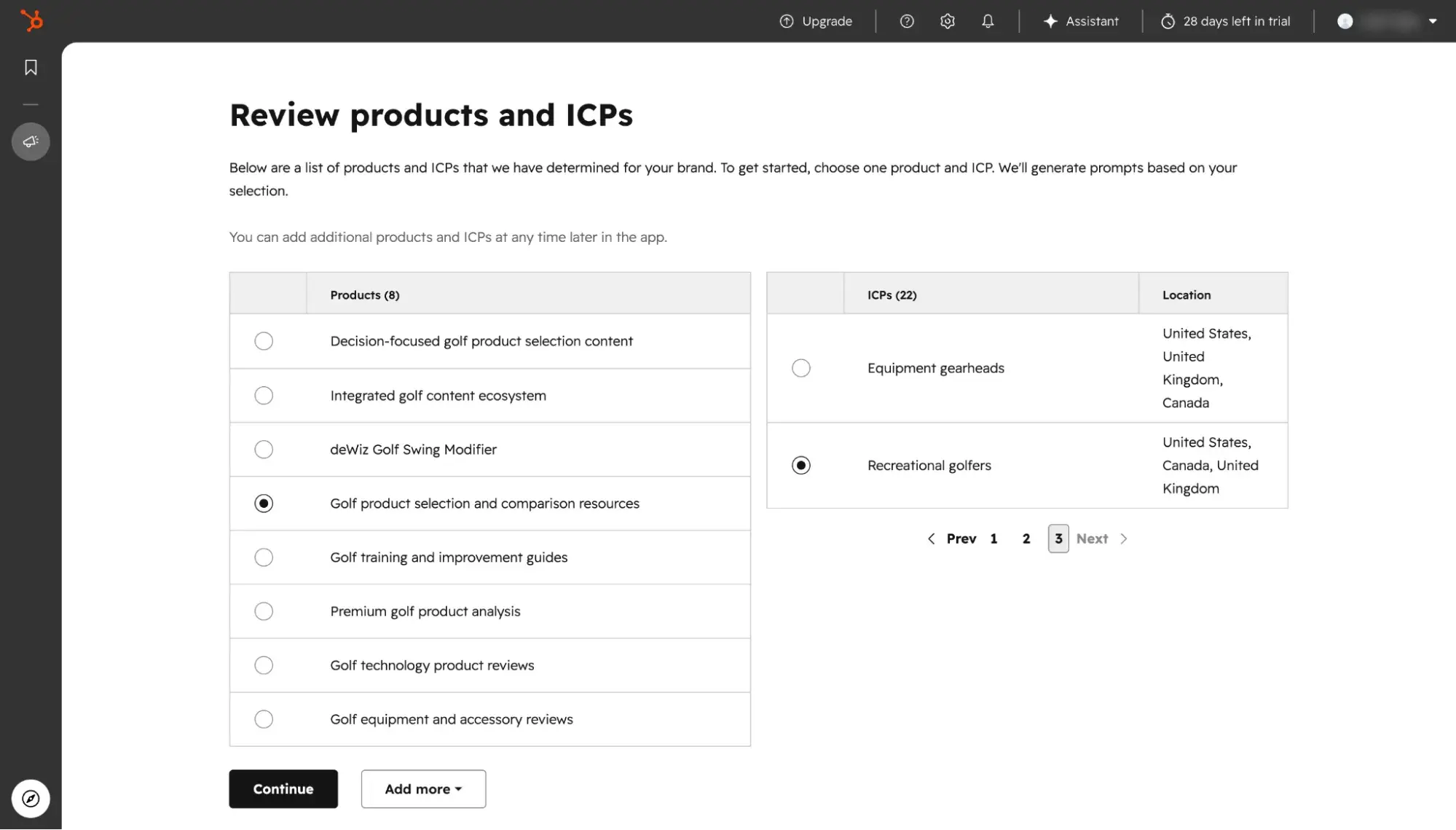
HubSpot AEO emerged as the more user-friendly option during testing, largely due to a superior onboarding experience that offered more guidance and personalization. Semrush, upon initial setup, presented a dashboard without extensive introductory guidance.
HubSpot’s user interface is characterized by its intuitiveness and simplicity, facilitating easy navigation. Semrush’s interface, while potentially more complex, reflects its extensive feature set and requires a greater learning curve. For users prioritizing simplicity and immediate usability, HubSpot AEO is the preferred choice. For those who value robust feature sets and are willing to invest time in learning, Semrush presents a compelling alternative.
Value for Non-SEO Professionals:
Marketers and other non-SEO professionals can derive rapid value from HubSpot AEO, particularly by engaging with its guided onboarding process. Its user-friendly design and marketer-centric features, such as the ability to tailor prompts based on specific Ideal Customer Profiles (ICPs), make it an accessible entry point into AEO.
Pricing and Getting Started: A Path to AEO Success
Step 1: Baseline Assessment with Free Tools
Free Plans:
- HubSpot: While HubSpot AEO does not offer a free plan, the complimentary AI Search Grader provides a valuable, one-time snapshot of a brand’s AI visibility across ChatGPT, Gemini, and Perplexity. This report, based on LLM training data, is useful for establishing an initial benchmark. However, continuous tracking of target prompts and actual progress necessitates an upgrade.
- Semrush: The free Semrush plan offers access to Domain Overview, providing a snapshot of domain mentions, citations, and AI visibility scores. It also includes Site Audit for technical issue analysis on up to 100 pages.
Free Trials:
- HubSpot AEO: Offers a 28-day free trial for its advanced AI visibility features and continuous tracking capabilities.
- Semrush AI Visibility Toolkit: Does not offer a standalone free trial. However, Semrush SEO + AI Search (starting at $199/mo) provides a seven-day free trial.
Both platforms offer a straightforward setup process, typically requiring only domain entry. HubSpot AEO then guides users through an onboarding process to gather business details for personalized prompt suggestions.
Step 2: Paid Tiers for Accelerated Progress
For serious AEO efforts, paid subscriptions are essential for sustained tracking and progress.
- HubSpot AEO: Available as a standalone purchase for $50/month, allowing tracking of 25 prompts daily.
- Semrush AI Visibility Toolkit: Priced at $99/month per domain, also supporting the tracking of 25 prompts.
Choosing the Right Tool: HubSpot AEO vs. Semrush AI Visibility
Select HubSpot AEO if:
- You prioritize ease of use and a streamlined onboarding process.
- Your team lacks extensive SEO expertise and requires a user-friendly interface.
- You need integrated content creation and publishing capabilities.
- Your organization utilizes HubSpot’s CRM and other marketing tools.
- You are looking for personalized prompt suggestions informed by CRM data.
Select Semrush AI Visibility Toolkit if:
- Your organization is already heavily invested in the Semrush ecosystem for SEO.
- You require deep technical SEO analysis alongside AI visibility tracking.
- You need to analyze competitor AI visibility and identify citation opportunities.
- Feature robustness and a comprehensive suite of SEO tools are paramount.
Piloting and Proving Impact: A Strategic Approach
A recommended strategy for evaluating these tools involves a side-by-side pilot. Signing up for HubSpot AEO’s 28-day free trial concurrently with Semrush One’s 7-day free trial allows for direct comparison. During this period, create content based on recommendations from both tools and track key metrics such as citations, mentions, and prompt performance over a three-month period. This comparative analysis will reveal which tool’s recommendations yield the most significant impact on AI visibility and which is most effective and user-friendly for your team.
Alternatives in the AI Visibility Landscape
Beyond HubSpot and Semrush, several other platforms offer specialized AEO solutions:
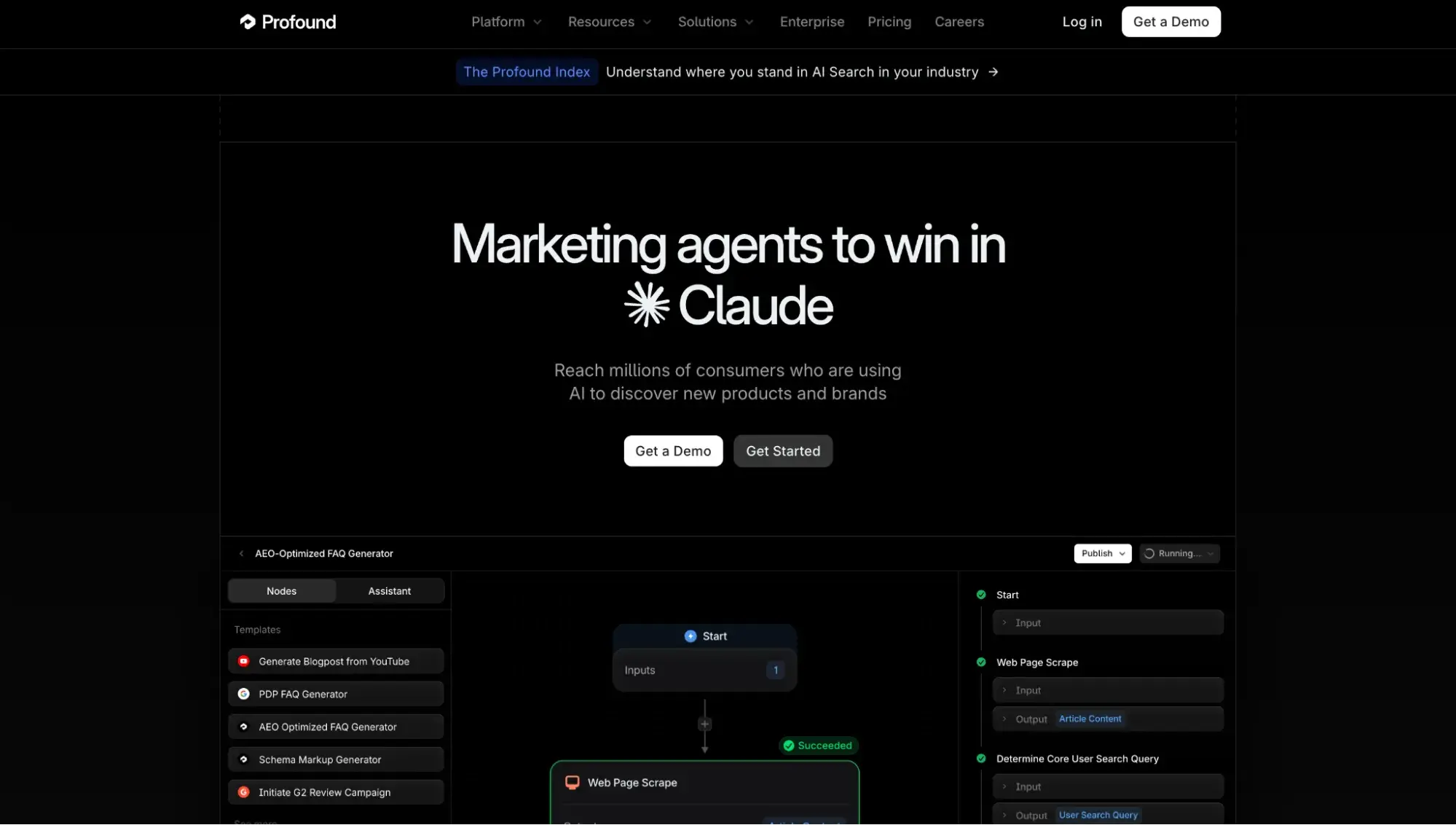
- Profound: Ideal for enterprise teams aiming to automate AEO content creation with human-in-the-loop approval. Pricing starts at $99/month for ChatGPT tracking.
- Scrunch: Caters to mid-market to enterprise clients needing technical optimizations and AI traffic attribution. Pricing begins at $250/month for four answer engines.
- Ahrefs Brand Radar: Suitable for existing Ahrefs users or those focused on AI visibility across social media. Pricing starts at $199/month for one platform.
These tools can complement HubSpot AEO, which can be purchased independently to access ChatGPT, Gemini, and Perplexity data, along with HubSpot’s prompt and content recommendations. For CRM-powered suggestions, upgrading to Marketing Hub Pro+ or HubSpot for Marketers is necessary.
Frequently Asked Questions
Can HubSpot AEO and Semrush be used together?
Yes, a combined approach is often recommended. Semrush excels in traditional SEO, keyword research, and competitor analysis, while HubSpot provides unique CRM-connected prompt suggestions for distinct AI visibility. This synergy can optimize overall digital strategy. Alternatively, leveraging Semrush for SEO and HubSpot AEO as a standalone AEO solution can offer cost-efficiency.
How to measure success beyond visibility scores?
Ultimately, AEO success is tied to pipeline growth. Connecting AEO efforts to tangible business outcomes is crucial. HubSpot Marketing Hub Enterprise, for instance, offers multi-touch attribution to track how AEO initiatives contribute to actual deals.
What is the best way to get cited in AI answers?
Achieving citations in AI answers involves mastering Answer Engine Optimization (AEO). This includes creating "answer-first" content, enhancing off-site reputation, ensuring technical site health, and utilizing dedicated AEO tools.
When to prioritize AEO over traditional SEO?
A strong SEO foundation is a prerequisite for effective AEO. Once established, prioritizing AEO over traditional SEO is advisable if your site is not yet optimized for answer engines. Given the rapid growth of AI search behavior, early adoption of AEO will yield long-term benefits.
In conclusion, both HubSpot AEO and Semrush AI Visibility Toolkit offer robust solutions for navigating the evolving AI search landscape. The optimal choice hinges on an organization’s existing tech stack, team expertise, and specific strategic priorities. By understanding the nuances of each platform, marketers can make an informed decision that drives meaningful engagement and visibility in the age of artificial intelligence.
About the Author