The landscape of consumer brand discovery is undergoing a seismic shift, driven by the rapid integration of Artificial Intelligence (AI) into search functionalities. As AI-powered search engines like ChatGPT, Perplexity, and Gemini increasingly become the primary gateways for information and purchasing decisions, the ability for brands to appear prominently within these generative responses is rapidly emerging as a critical competitive differentiator. This burgeoning field, known as Answer Engine Optimization (AEO), is not merely an experimental marketing tactic but a demonstrably effective strategy for driving business outcomes.
Recent data from the 2026 HubSpot State of Marketing report underscores the tangible impact of AI-driven discovery. The report indicates that a significant 58% of marketers surveyed observed that visitors referred by AI tools convert at higher rates than those arriving through traditional organic search traffic. This statistic alone highlights a profound shift in consumer behavior and the effectiveness of AI as a lead generation and conversion channel. The implications are far-reaching, suggesting that brands that fail to adapt to this new paradigm risk becoming invisible to a growing segment of potential customers.
The core principle of AEO involves structuring digital content in a manner that facilitates easy extraction, citation, and recommendation by AI systems. While many marketing teams are experimenting with common content formats such as lists, tables, and Frequently Asked Questions (FAQs) to achieve this, a comprehensive understanding of which strategies yield measurable business results remains elusive for many. This is where real-world case studies become invaluable, offering concrete evidence of AEO’s return on investment (ROI). By analyzing recent AEO implementations across diverse sectors including Software-as-a-Service (SaaS), digital agencies, and legal services, a clear set of patterns has emerged regarding what drives AI citations, brand mentions, and ultimately, revenue.
This article delves into AEO case studies that demonstrate the tangible ROI of this evolving optimization practice in 2026. It explores how companies have successfully increased AI-referred trials, boosted their citation rates within AI responses, and generated substantial revenue streams directly from AI-driven discovery.
The Evolving Metrics of AI-Driven Success
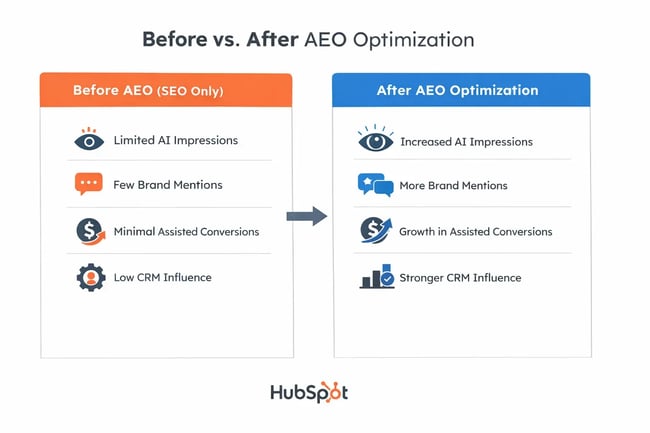
A consistent observation across recent AEO case studies is that the shift in visibility within AI-generated content often precedes significant changes in direct website traffic. Brands are experiencing earlier gains in AI citations, brand mentions, and what are termed "assisted conversions" – instances where AI played a role in the customer journey, even if the final conversion didn’t occur directly on the website.
Traditionally, SEO efforts were measured by keyword rankings and click-through rates. However, the advent of AEO necessitates a recalibration of these metrics. The focus now shifts towards AI Overview visibility, the frequency of brand citations within generative AI responses, and the influence these AI interactions have on customer relationship management (CRM) data. Marketers are increasingly attributing value to assisted deals, revenue influenced by AI-generated information, and enhanced brand recall that stems from AI surfacing a brand in generative answers, rather than solely from direct website visits.
The impact on sales is also becoming increasingly apparent, albeit often indirectly. Agencies, for instance, report a higher baseline familiarity with their brand during initial sales conversations, a reduction in fundamental "what do you do?" questions, and consequently, shorter evaluation cycles following an increase in AI citations. This aligns with the broader trend highlighted in the HubSpot report, where over half of marketers indicate that AI-referred visitors demonstrate higher conversion rates than those from traditional organic channels.
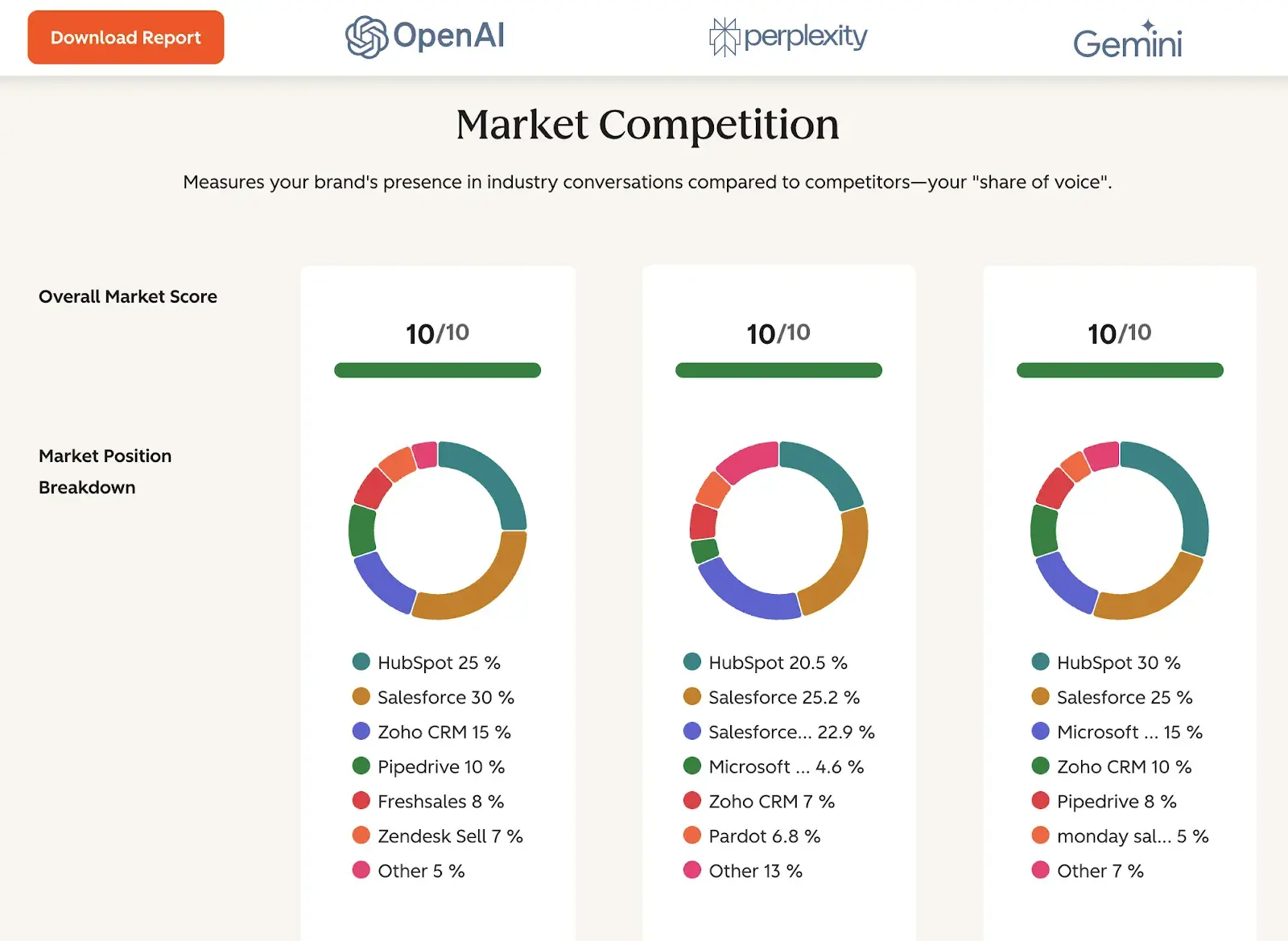
To aid businesses in understanding their current standing and identifying areas for improvement, HubSpot offers a free AEO Grader tool. This tool evaluates websites based on their performance across various Large Language Models (LLMs) and provides actionable recommendations for optimization.
Case Studies: Proving the ROI of Answer Engine Optimization
Answer Engine Optimization is proving to be a powerful growth lever, delivering measurable ROI by increasing brand visibility within AI-generated answers. This leads to higher-quality traffic and stronger brand recall. The following case studies illustrate how companies across different industries have successfully implemented AEO strategies to enhance how AI systems interpret and cite their content, translating AI citations into tangible business outcomes.
Discovered: From 575 to 3,500+ Trials in 7 Weeks for a B2B SaaS Client
This remarkable case study details how Discovered, an organic search agency, achieved a six-fold increase in AI-referred trials for one of its B2B SaaS clients within a mere seven weeks. The client, despite having a mature SEO program, was experiencing diminishing returns and lacked a dedicated AEO strategy. This resulted in minimal business impact, as potential buyers were unable to discover the company within AI-generated answers. Compounding the issue, the existing strategy heavily favored top-of-funnel informational content that was not effectively converting leads. A swift and outcome-oriented solution was imperative.
Execution Breakdown:
The intervention began with a comprehensive technical SEO audit, alongside an AI visibility audit. Critical issues were identified, including broken schema markup, which is a significant impediment to AI citations, duplicate content, and suboptimal internal linking structures. Crucially, there was a complete absence of optimization for LLMs.

Following the resolution of these technical deficiencies, Discovered shifted its focus to publishing a substantial volume of content specifically targeting buyer-intent queries that AI engines were already addressing. Instead of the typical 8-10 monthly posts, the team published 66 AEO-optimized articles in the first month alone. This rapid content deployment was structured around a specific AEO framework designed to maximize AI comprehension and citation.
While the influx of AI citations within 72 hours of publishing this content was a positive initial outcome, Discovered recognized the need to further elevate the client’s brand prominence within LLMs. To achieve this, they focused on increasing trust signals by extending their strategy beyond owned content. This involved strategically seeding helpful comments on relevant subreddits using established accounts, which subsequently ranked highly for target discussions.
The Results:
The impact of this dual approach was rapid and significant. Within just seven weeks, Discovered reported:
- An increase in AI-referred trials from 575 to over 3,500 per month.
- A 6x growth in AI-referred trials.
- A 300% increase in AI-driven lead generation.
Apollo.io: Lifting Brand Citation Rate by 63% for AI Awareness Prompts
Brianna Chapman, who leads Reddit and community strategy at Apollo.io, has significantly influenced how LLMs now cite the company. By strategically leveraging Reddit as a primary source of information for AI search engines, Chapman managed to increase Apollo.io’s brand citation rate by 63% without fundamentally revamping the company’s website content.
The Challenge:
Chapman’s initial investigation into Apollo.io’s presence in AI search engines like ChatGPT, Perplexity, and Gemini revealed a frustrating disconnect. LLMs frequently characterized Apollo.io as "just a B2B data provider," overlooking its comprehensive capabilities as a full sales engagement platform. Competitors were being cited for features that Apollo.io possessed and often excelled at. The core problem stemmed from LLMs drawing information from older, incomplete, or outdated Reddit threads, which, due to their crawlability, were being treated as authoritative sources.
Execution Teardown:
Chapman reframed AI visibility not as a technical SEO challenge but as an exercise in "narrative control." The objective was to shape conversations within platforms that LLMs inherently trust, particularly Reddit, without resorting to disingenuous tactics.
Her precise methodology involved:
- Identifying Key Prompts: Determining the most relevant prompts users were inputting into LLMs.
- Auditing AI Visibility: Assessing Apollo.io’s current presence across AI search engines.
- Gathering First-Party Data: Utilizing customer feedback from Enterpret, social listening tools, and direct prompts from Apollo.io’s AI Assistant to compile approximately 200 prompts per topic.
- Tracking Citations: Monitoring citation performance for these prompts in AirOps.
With this foundational understanding, Chapman established the subreddit r/UseApolloIO as a credible resource. She cultivated this community to over 1,100 members, generating more than 33,400 content views in over five months. A pivotal moment occurred when Chapman posted a detailed comparison within r/UseApolloIO, outlining the advantages of choosing Apollo.io over competitors.
The Results:
Within days of this strategic post, AirOps registered the new thread being actively incorporated into LLM responses. Within a week, this new content had displaced older, less accurate information, resulting in over 3,000 citations across key prompts in LLMs. The measurable outcomes included:
- A 63% increase in brand citation rate for AI awareness prompts.
- A 36% increase for category prompts.
- More positive sentiment on Reddit, which directly contributed to an increase in beta sign-ups and demo requests.
Broworks: Generating Sales Qualified Leads Directly from LLMs Post-AEO
Broworks, an enterprise Webflow development agency, questioned their reliance on traditional search engines for lead generation and explored the potential of building a pipeline directly from AI tools. This led to a deep dive into Answer Engine Optimization across their entire website.
The Challenge:
While Broworks’ brand was occasionally cited in LLMs, these mentions did not translate into quantifiable business impact. There was no structured approach to influence AI-generated answers, nor any clear attribution linking AI-driven sessions back to pipeline outcomes.
Execution Teardown:
Broworks identified and addressed a critical schema markup deficiency. They implemented custom schema markup across key landing pages, case studies, and blog posts, incorporating FAQ Schema, Article Schema, and Local Business and Organization Schema – all essential for LLM indexing.

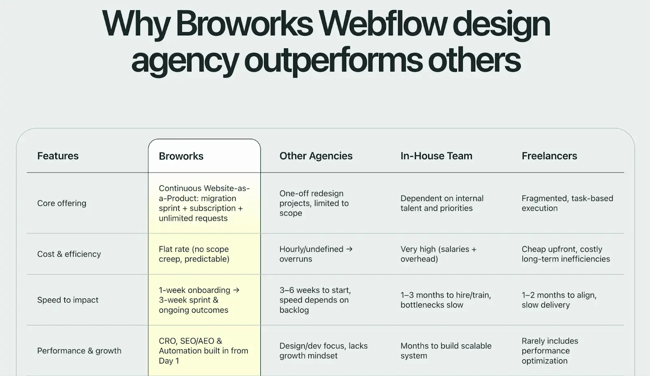
Furthermore, they strategically placed comparison tables directly on their landing pages, providing easily digestible information for both human users and AI crawlers.
The agency also aligned its website content with prompt-driven search, optimizing not for traditional keywords but for the actual questions users posed to AI chatbots. This included phrasing content around queries such as "Who is the best Webflow SEO agency for B2B SaaS?" FAQ sections were integrated into most pages, and key takeaways were summarized at the top of articles. Even their pricing page was enhanced with an FAQ section.
The Results:
Within three months, the combined efforts of AEO and Generative Engine Optimization (GEO) yielded significant improvements, evident in both analytics and sales data:
- A 120% increase in AI-referred lead generation.
- A 40% increase in AI-driven MQLs (Marketing Qualified Leads).
- A 30% increase in AI-driven SQLs (Sales Qualified Leads).
The sales team reported a stronger baseline awareness among prospects, leading to fewer introductory conversations and shorter qualification cycles. Prospects arrived with a clearer understanding of the problem and solution, streamlining the sales process.
Intercore Technologies: $2.34 Million in Revenue Attributed to AI Discovery Over Six Months
Intercore Technologies, a digital agency specializing in serving law firms, helped an established Chicago personal injury firm overcome a significant visibility crisis. Despite ranking #1 for "Chicago personal injury lawyer" and generating over 15,000 monthly organic visitors, the firm’s lead volume was declining. The brand was losing clients to competitors who were more visible in AI search engines, indicating a drastic shift in search behavior within this specific niche.
The Challenge:
The firm was virtually invisible to AI search engines. Despite possessing strong domain expertise, it did not appear in LLM results for the critical query "personal injury lawyer Chicago." In stark contrast, competitors were mentioned in AI responses 73% of the time.
Execution Teardown:
Intercore Technologies approached AEO as a precision-focused endeavor, aiming to make the firm’s expertise legible and quotable for AI search engines evaluating legal intent. Their execution strategy was built on four key pillars:
- Entity Modeling: Clearly defining the firm as a prominent personal injury law entity within Chicago.
- Expertise Reinforcement: Developing content that explicitly detailed the firm’s experience in specific types of personal injury cases, ensuring clarity for AI.
- Trust Signal Amplification: Leveraging high-authority legal directories and publications to bolster the firm’s credibility in the eyes of AI.
- Structured Data Integration: Implementing comprehensive schema markup, including legal service types, case results, and attorney profiles, to enhance machine readability.
The Results:
Following this extensive optimization effort, AI visibility surged to 68% across major LLMs, including ChatGPT, Perplexity, and Claude. This enhanced visibility directly translated into revenue generation:
- $2.34 million in total revenue attributed to AI discovery over six months.
- A 50% increase in AI-referred leads.
- A 25% increase in conversion rates from AI-referred leads.
Key Takeaways for Mastering Answer Engine Optimization
Analyzing these compelling case studies provides a clear roadmap for developing an effective AEO strategy. Growth specialists can adapt these principles to achieve similar results:
1. AI Visibility as a Leading Indicator
A recurring theme across all case studies is that AI citations, brand mentions, and awareness lift materialize weeks or months before significant traffic changes. This underscores the importance of treating AI visibility as a leading indicator of AEO success. Tools like HubSpot’s AEO Grader can assist marketers in monitoring how leading answer engines interpret their brand, revealing critical opportunities and content gaps that directly impact discovery through LLMs.
2. Prioritizing Answer-First Content
Content that directly answers user queries upfront consistently outperforms traditional keyword-first content. Pages that begin with clear answers, concise summaries, or FAQs are cited more reliably by LLMs. This approach flips the traditional SEO model by emphasizing immediate clarity over lengthy narrative build-ups. Marketers should start every page with a direct answer to the primary intent query, followed by supporting context. This increases the likelihood of AI extraction and citation, driving higher-quality traffic over time.
3. Schema Markup is Non-Negotiable
Schema markup is foundational for machine-readable content, enabling AI systems to understand and cite web pages effectively. Case studies repeatedly demonstrate that implementing structured data, including FAQ, HowTo, Product, Offer, Breadcrumb, and Organization schema, directly improves AI extraction and citation rates. Without it, even high-quality content risks being overlooked by LLMs. Auditing high-value pages for relevant schema types and testing them using structured data validators is crucial for AEO success.
4. Narrative Control Beyond On-Site Optimization
On-site AEO optimization is insufficient on its own. LLMs draw from trusted external sources, meaning a brand’s AI visibility is heavily influenced by third-party content. Managing a brand’s narrative in platforms like Reddit or Quora can significantly alter how AI systems describe and recommend it. Actively shaping conversations in trusted communities by providing accurate and helpful content is essential. This can involve creating dedicated subreddits, participating in forums, or posting authoritative comparisons to guide AI systems toward accurate brand representation.
5. Strategic Internal Linking to High-Intent Pages
Internal linking signals context and relevance to AI systems. A clear internal linking structure, particularly linking answer-first pages to high-intent landing pages or product offers, is vital. This ensures that AI-referred traffic not only discovers content but also moves efficiently through the conversion funnel, improving assisted conversions and pipeline influence. Descriptive anchor text that aligns with user queries is paramount for AI systems to understand page relationships.
6. The Critical Role of Page Speed
AI systems require fast and reliable access to content. Pages with slow load times may not be fully fetched or parsed by AI crawlers, limiting citations and visibility. Even excellent content and schema can be undermined by load times exceeding two seconds. Optimizing page speed through image compression, caching, and minimizing render-blocking resources is essential. Prioritizing mobile performance is also key, as many AI systems employ mobile-first indexing.
7. Embracing Question-Based Subheadings
Question-based H2s and H3s directly align with how users query answer engines. Incorporating headings that mirror natural queries, such as "How can marketers structure pages for answer engine optimization?", and providing immediate, concise answers below them, significantly enhances AI comprehension and citation.
Frequently Asked Questions About Answer Engine Optimization
What is Answer Engine Optimization (AEO), and how does it differ from traditional SEO?
AEO focuses on making content easily extractable, understandable, and reusable by AI systems and LLMs for direct answers. Its primary goal is visibility within AI Overviews and generative search results, where users may not click through to a website. Traditional SEO prioritizes rankings, clicks, and traffic. AEO emphasizes "answerability," entity clarity, and citation likelihood, shifting success metrics towards AI mentions, assisted conversions, and CRM influence.
Which schema types are most important for AEO?
FAQ, HowTo, Product, Organization, Breadcrumb, and Article schema are consistently reported to improve AI extraction and citation accuracy. The priority is relevance, ensuring schema reinforces the page’s topic and conceptual connections.
How can I adapt content for AI Overviews and chat answers without compromising User Experience (UX)?
An answer-first content structure is most effective. Sections should begin with a direct, self-contained answer, followed by context for human readers. This approach serves both audiences without content duplication. Short paragraphs, clear headings, summaries, and FAQs enhance AI reuse while maintaining scannability and readability.
How can ROI for AEO be demonstrated when traffic doesn’t always increase directly?
AEO ROI is often reflected in AI citations, brand mentions, assisted conversions, influenced deals, and sales feedback within CRMs. These indicators surface earlier and compound over time. Case studies validate ROI by correlating AI visibility gains with higher lead quality, shorter sales cycles, and lower acquisition costs, expanding measurement beyond last-click attribution.
When should a company consider external AEO services versus an in-house approach?
In-house teams are well-suited when they own content, schema, and analytics workflows and can iterate quickly, particularly for companies with mature SEO foundations and CRM attribution data. External AEO services are beneficial when teams lack expertise in entity modeling, schema depth, or visibility into how AI systems reference their brand.
Answer Engine Optimization: The New Growth Lever
Answer Engine Optimization delivers significant business impact when brands move beyond treating AI visibility as a mere byproduct of SEO. The potential for rapid results is substantial; from the first week of optimizing for AEO, marketers can begin to see a tangible pipeline forming directly attributed to AI recommendations.
To accelerate AEO implementation, the right tools are indispensable. Platforms like HubSpot Content Hub enable teams to publish schema-ready, answer-first content at scale, while visibility checks through tools like HubSpot’s AEO Grader reduce guesswork and speed up iteration. By embracing AEO, businesses can unlock a powerful new growth lever in the evolving digital landscape.
About the Author