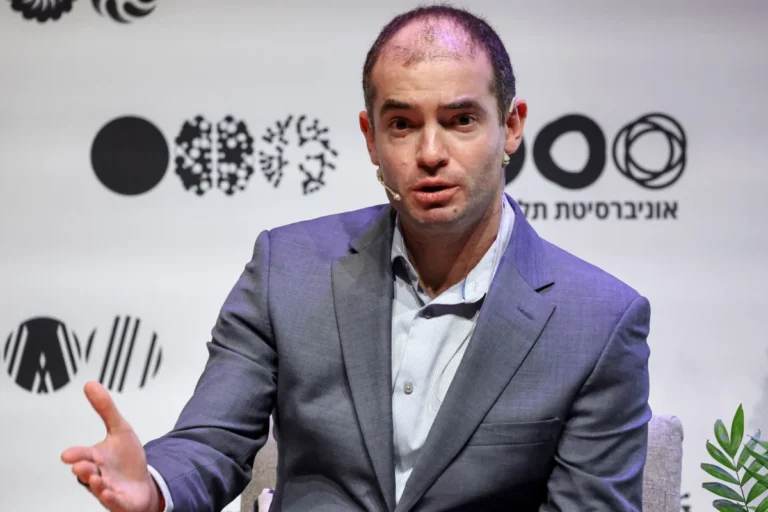
AMI Labs, the ambitious new venture cofounded by the esteemed Turing Prize winner Yann LeCun following his departure from Meta, has successfully completed a colossal funding round, securing $1.03 billion at a pre-money valuation of $3.5 billion. This significant investment positions AMI Labs at the forefront of a nascent yet rapidly burgeoning field: the development of "world models." Unlike the prevalent large language models (LLMs) that primarily learn from textual data, world models are designed to understand and interact with reality, learning from sensory input and environmental feedback. This paradigm shift represents a fundamental reorientation in artificial intelligence research, moving beyond linguistic constructs to build AI capable of genuine environmental comprehension.
The announcement of this record-breaking investment comes at a pivotal moment for the AI industry. While generative AI, largely powered by LLMs, has dominated headlines and attracted immense capital over the past few years, a growing chorus of leading researchers and entrepreneurs is advocating for a more robust and reliable form of artificial intelligence. AMI Labs stands as a testament to this evolving perspective, championed by LeCun, a figure often hailed as one of the "Godfathers of AI" for his foundational contributions to convolutional neural networks.
The Dawn of World Models: A New AI Paradigm
At its core, AMI Labs is dedicated to constructing AI systems that learn from the fabric of reality itself. This concept of "world models" involves creating AI that can build internal predictive models of the physical and interactive world, much like a human or animal brain. These models would enable AI to understand causality, anticipate outcomes, plan actions, and generalize knowledge in ways that current language-centric models struggle to achieve. Instead of merely processing and generating text or images based on vast datasets, world models aim to grasp the underlying physics, logic, and dynamics of their environment.
The theoretical bedrock for AMI Labs’ approach is largely rooted in LeCun’s own research, particularly his 2022 proposal of the Joint Embedding Predictive Architecture (JEPA). JEPA is a self-supervised learning framework designed to predict future or masked representations of data based on current observations, rather than relying on explicit labels or human annotations. This allows the AI to learn latent representations of the world by observing how things change and interact, fostering a deeper, more robust understanding than what can be gleaned solely from linguistic patterns. LeBrun, AMI Labs CEO, succinctly summarized the shift, stating, "My prediction is that ‘world models’ will be the next buzzword. In six months, every company will call itself a world model to raise funding." Despite this anticipated wave of bandwagoners, LeBrun believes AMI Labs’ commitment to fundamental research and its foundational understanding of the real world set it apart.
Yann LeCun’s Vision: Beyond Language-Centric AI
Yann LeCun’s pivot to co-found AMI Labs marks a significant turning point in his illustrious career. A recipient of the Turing Award, the highest honor in computer science, LeCun has long been a vocal critic of the limitations inherent in large language models. While acknowledging their impressive capabilities, he has consistently highlighted their lack of true understanding, common sense, and susceptibility to "hallucinations"—generating plausible but factually incorrect information. His departure from Meta, where he served as Chief AI Scientist, to embark on this new venture underscores his profound conviction that world models represent the necessary next frontier for AI.
LeCun’s vision for AMI Labs is not merely about incremental improvements but a wholesale paradigm shift. He advocates for an AI that can learn efficiently and robustly, much like a child learning about the world through observation and interaction. This contrasts sharply with the current data-hungry LLMs that require massive computational resources and vast quantities of annotated data to achieve proficiency within a narrow domain. His long-standing advocacy for self-supervised learning methods, which allow AI to learn from unlabeled data, finds its ultimate expression in the pursuit of world models at AMI Labs. The company’s very existence, helmed by such a towering figure, sends a clear signal to the global AI community about the direction of future innovation.
Addressing the "Hallucination" Crisis: Healthcare as a Proving Ground
The limitations of LLMs, particularly their propensity for generating factually incorrect yet confidently presented information, pose significant risks in critical applications. In sectors such as healthcare, where accuracy is paramount, such "hallucinations" could have life-threatening repercussions. This pressing concern served as a primary catalyst for both LeCun’s and LeBrun’s shared conviction in the necessity of world models. Alexandre LeBrun, who previously served as CEO of Nabla, a digital health startup where he now acts as chairman, directly experienced these limitations. His tenure at Nabla brought him to the same conclusion as LeCun regarding the inherent unreliability of LLMs for sensitive medical applications.
Consequently, healthcare is slated to be the first major proving ground for AMI Labs’ technology. Nabla will be the company’s inaugural partner, collaborating to explore how world models, grounded in reality and robust understanding, can offer a viable and reliable alternative to LLMs in clinical settings. While LeBrun acknowledges that it will take considerable time for the startup to develop and deploy such an alternative based on JEPA, the potential impact is transformative. Imagine AI systems that can accurately diagnose complex conditions, predict disease progression, or even assist in drug discovery with a profound understanding of biological systems, rather than just pattern-matching from medical texts. The implications for patient safety, diagnostic accuracy, and personalized medicine are profound, marking a potential revolution in how AI integrates with healthcare.
A Mega-Round for Fundamental Research: Investor Confidence Amidst Long Horizons
The $1.03 billion funding round for AMI Labs is not just substantial; it is emblematic of a significant shift in venture capital appetite for foundational AI research. Historically, startups focused on fundamental research, especially those with multi-year timelines for commercialization, have found it challenging to attract such massive early-stage investments. LeBrun himself candidly admitted, "AMI Labs is a very ambitious project, because it starts with fundamental research. It’s not your typical applied AI startup that can release a product in three months, have revenue in six months and make $10 million in [annual recurring revenue] in 12 months." He anticipates it could take years for world models to transition from theoretical frameworks to tangible commercial applications.
Despite this extended time horizon and the inherent risks associated with deep tech, investors poured significantly more capital into AMI Labs than initially rumored. In December, the French AI lab was reportedly seeking approximately €500 million (roughly $540 million USD), but ultimately secured around €890 million ($1.03 billion USD). This near-doubling of the target figure reflects not only the compelling vision but also the exceptional caliber of the team assembled by LeCun and LeBrun. The oversubscribed round highlights a growing understanding among investors that the next generation of AI breakthroughs will likely emerge from foundational research rather than mere iterative improvements on existing models. It signals a willingness to invest in "moonshot" projects that promise to redefine the technological landscape, even if the returns are not immediate.
The Strategic Investor Collective: A Convergence of Industry and Visionaries
The roster of investors backing AMI Labs is as impressive as the funding amount itself, demonstrating a wide-ranging belief in the company’s potential. The round was co-led by prominent venture capital firms including Cathay Innovation, Greycroft, Hiro Capital, HV Capital, and Bezos Expeditions, the personal investment fund of Amazon founder Jeff Bezos. This consortium of lead investors signifies a strong institutional belief in the long-term viability and transformative potential of world models.
Beyond the lead VCs, the list of participants includes a strategic blend of corporate venture arms, industry-tied backers, and influential individual investors. Major technology and industrial giants such as NVIDIA, Samsung, Sea, Temasek, and Toyota Ventures have committed capital, indicating a clear strategic interest in how world models could integrate into their future product lines and operational efficiencies. NVIDIA’s involvement, for instance, speaks to the immense computational demands of training world models and the potential for their hardware to power this new frontier. Toyota Ventures’ participation suggests future applications in autonomous driving, robotics, and smart manufacturing, areas where a true understanding of the physical world is critical.
French industrial players like Association Familiale Mulliez, Groupe Industriel Marcel Dassault, and Publicis Groupe also participated, alongside other funds such as Aglaé Lab, Alpha Intelligence Capital, Artémis, Bpifrance Digital Venture, New Legacy Ventures, SBVA, and ZEBOX Ventures. This strong French contingent not only highlights the company’s Parisian headquarters but also a national push to foster AI leadership.
The presence of individual luminaries further underscores the perceived significance of AMI Labs. Icons like Tim and Rosemary Berners-Lee (co-creator of the World Wide Web), venture capitalist Jim Breyer, entrepreneur Mark Cuban, tech veteran Mark Leslie, French telecommunications mogul Xavier Niel, and former Google CEO Eric Schmidt have all personally invested. Such a diverse and high-profile group of backers, encompassing financial acumen, technological foresight, and industrial reach, signals a collective conviction that AMI Labs is poised to make a profound impact. LeBrun noted that this high interest allowed AMI Labs to "have its pick of investors, both in terms of expectation alignment and background," suggesting a deliberate selection of partners who understand and commit to the long-term, research-heavy journey ahead.
Building a Global Brain: Talent and Compute as Core Pillars
With over a billion dollars in fresh capital, AMI Labs is well-equipped to tackle its two primary cost centers: securing top-tier talent and acquiring vast computational resources. The development of world models, being fundamental research, demands exceptional cognitive horsepower and the infrastructure to train complex AI architectures. LeBrun emphasized a strategy of prioritizing quality over quantity in team building, indicating a focus on attracting the brightest minds in AI research and engineering.
To achieve this, AMI Labs is establishing a global footprint across four key locations. Its headquarters are in Paris, leveraging France’s burgeoning AI ecosystem. New York serves as another crucial hub, capitalizing on Yann LeCun’s academic ties to NYU, where he teaches. Montreal, a recognized global center for AI research, provides a base for Michael Rabbat, VP of World Models, and access to its deep talent pool. Finally, Singapore has been chosen strategically to both recruit AI talent from Asia and to position the company close to future potential clients in the rapidly growing Asian markets. This multi-location strategy allows AMI Labs to tap into diverse research communities, attract a global talent pool, and foster international collaborations crucial for such an ambitious undertaking.
Open Science in a Competitive Era: AMI Labs’ Commitment to Community
In an era where AI research is increasingly becoming proprietary and secretive, AMI Labs is taking a contrarian stance by committing to open research and open-source development. "We will also make a lot of code open source," stated LeBrun, who previously worked at Meta’s AI research laboratory, FAIR (Facebook AI Research), known for its commitment to open science. While acknowledging that open research is "increasingly rare" in the highly competitive AI landscape, LeBrun and the founders firmly believe in its merits.
This philosophy is not merely altruistic; it is a strategic decision. "We think things move faster when they’re open, and it’s in our best interest to build a community and a research ecosystem around us," LeBrun explained. By publishing research papers and open-sourcing significant portions of their code, AMI Labs aims to foster a vibrant community of researchers and developers who can contribute to, build upon, and validate their work. This approach not only accelerates progress but also establishes AMI Labs as a thought leader, attracting further talent and collaboration. It echoes the early days of AI research where collaboration and knowledge sharing were more commonplace, setting a precedent that could potentially influence the broader industry towards greater transparency.
The Road Ahead: Anticipating the "World Model" Buzz and Future Impact
While AMI Labs currently has no immediate plans for revenue generation, its long-term strategy involves early engagement with prospective customers. LeBrun articulated this proactive approach: "We are developing world models that seek to understand the world, and you can’t do that locked up in a lab. At some point, we need to put the model in a real-world situation with real data and real evaluations." This hands-on approach will be critical for iterating on their models and ensuring their practical applicability.
Nabla, the digital health startup, is the first disclosed partner slated to gain access to these early models, but it is certainly not expected to be the last. The presence of numerous industrial players and potential partners within the investment round itself strongly suggests a pipeline of future collaborators eager to explore the deployment of world models across various sectors. The path from fundamental research to commercial application will undoubtedly be long and challenging, requiring sustained effort and iterative development. However, the foundational nature of world models means their impact, once realized, could be far-reaching, transforming industries from healthcare and robotics to autonomous systems and scientific discovery.
The Broader AI Landscape: A Shifting Frontier
AMI Labs’ emergence and substantial funding are indicative of a broader shift in the artificial intelligence landscape. While generative AI, exemplified by companies like OpenAI and Anthropic, has captivated public imagination and investor capital, a growing recognition of its inherent limitations is prompting a search for more robust and generally intelligent AI systems. AMI Labs joins a select but growing club of startups focusing on world models. Other notable players include SpAItial, which raised an unusually large $13 million seed round for a European startup, and Fei-Fei Li’s World Labs, which secured a staggering $1 billion from Autodesk to integrate world models into 3D workflows.
This trend suggests that the "AI race" is evolving beyond simply scaling up LLMs. The next frontier appears to be centered on building AI that possesses a deeper, more intuitive understanding of the world, moving closer to human-like cognition. AMI Labs, with Yann LeCun at its helm and a formidable war chest, is positioned to play a pivotal role in this evolution. Its commitment to fundamental research, open science, and addressing real-world problems like medical inaccuracies, marks it as a company with the potential to not only pioneer a new class of AI but also to reshape the very definition of artificial intelligence itself. The coming years will reveal whether LeBrun’s prediction of "world models" becoming the next major AI buzzword holds true, and more importantly, whether AMI Labs can deliver on its ambitious promise to build AI that truly learns from reality.
About the Author