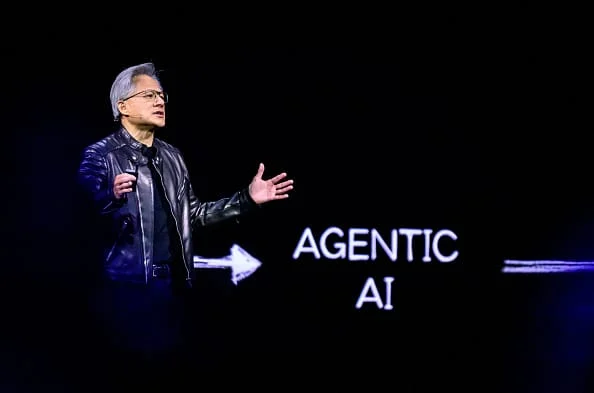
Nvidia, the undisputed titan of artificial intelligence hardware, is reportedly making a significant strategic pivot into the burgeoning realm of AI agents with plans to launch an open-source platform dubbed ‘NemoClaw.’ This ambitious initiative aims to empower enterprise software companies to deploy sophisticated AI agents capable of performing complex, multi-step tasks for their employees, signaling Nvidia’s intent to solidify its position as a full-stack AI powerhouse, extending its influence beyond silicon into the critical software layer. The news, initially broken by Wired, citing anonymous sources intimately familiar with the matter, underscores Nvidia’s proactive approach to capitalize on the escalating demand for advanced AI tools.
The report indicates that Nvidia has already commenced pitching NemoClaw to an array of prominent enterprise software giants, actively seeking collaborative partnerships with industry leaders such as Salesforce, Cisco, Google, Adobe, and CrowdStrike. This move suggests a carefully orchestrated strategy to embed Nvidia’s AI agent technology deeply within the fabric of enterprise operations, leveraging the extensive customer bases and ecosystem integrations of these potential partners. While Nvidia and the aforementioned companies have not yet publicly responded to requests for comment regarding these purported discussions, the implications for the future of enterprise AI and the competitive landscape are substantial.
A Strategic Pivot Towards AI Agents and Open Source
Nvidia’s rumored foray into open-source AI agents with NemoClaw represents a crucial evolution in its corporate strategy. For years, Nvidia has been synonymous with the graphics processing units (GPUs) that power the world’s most demanding AI models, from foundational research to large language model (LLM) inference. However, the company has increasingly recognized the imperative to build a comprehensive software ecosystem around its hardware to maintain its competitive edge and capture a larger share of the rapidly expanding AI market. This includes developing robust software platforms like CUDA, cuDNN, and its extensive suite of AI frameworks and tools.
The shift towards AI agents marks a natural progression from the earlier focus on LLMs. While LLMs excel at understanding and generating human-like text, AI agents go a step further. They are designed not just to comprehend but to reason, plan, and act independently on complex, multi-step tasks. Imagine an AI agent that can autonomously manage a project, troubleshoot IT issues, analyze market trends, or personalize customer interactions across various enterprise applications. This capability to execute sequential, goal-oriented actions positions AI agents as a transformative force for enterprise automation and productivity. Industry analysts project the global AI agent market to expand at a compound annual growth rate (CAGR) exceeding 30% over the next decade, reaching hundreds of billions of dollars as businesses increasingly seek intelligent automation solutions.
The decision to make NemoClaw an open-source platform is particularly noteworthy. Open-source models foster collaborative development, accelerate innovation, and can lead to broader industry adoption by reducing barriers to entry. For Nvidia, an open-source strategy could cultivate a vibrant developer community around NemoClaw, enabling faster iteration, greater transparency, and ultimately, a more robust and widely accepted standard for AI agent deployment. The report suggests that while partners would likely benefit from free usage, early access would be granted in exchange for their contributions to the project, aligning with the collaborative ethos of open-source development. This model also allows companies to access the platform irrespective of whether their underlying infrastructure relies on Nvidia’s chips, strategically broadening its reach and impact across diverse technological environments.
The Architecture of NemoClaw: Empowering Enterprise Automation
While specific technical details remain under wraps, the Wired report indicates that NemoClaw is designed to enable companies to "dispatch AI agents to perform tasks for their employees." This functionality implies a sophisticated orchestration layer that can interface with various enterprise applications, data sources, and user workflows. Crucially, the platform is expected to integrate robust security and privacy tools, addressing a critical concern for businesses considering the adoption of autonomous AI systems. The ability to manage and secure AI agents within an enterprise environment will be paramount for widespread adoption, given the sensitive data and critical operations they might handle.
The underlying architecture of NemoClaw likely leverages Nvidia’s extensive research and development in AI foundation models. In recent months, Nvidia has released several foundational models specifically engineered to power AI agents, including Nemotron and Cosmos. Nemotron, for instance, offers a family of large language models optimized for enterprise applications, providing the core reasoning capabilities required for agents. Cosmos, on the other hand, is designed as a multimodal AI framework that can integrate various data types, enhancing an agent’s ability to perceive and interact with complex environments. These foundational models provide the cognitive building blocks upon which NemoClaw’s agents would operate, offering a comprehensive toolkit for developers.
Furthermore, Nvidia has been actively expanding its ‘NeMo’ platform, a comprehensive suite of tools that assists clients in managing the entire AI agent lifecycle. This encompasses everything from data curation and model customization to real-time monitoring and optimization of agent performance. NeMo’s capabilities would likely form a crucial part of the NemoClaw ecosystem, providing the necessary infrastructure for enterprises to build, deploy, and manage their AI agents effectively and securely. This integrated approach, combining foundational models, lifecycle management, and an open-source platform, positions Nvidia to offer a holistic solution for enterprise AI agent development.
Strategic Partnerships: Unlocking Enterprise Potential
The list of companies reportedly being courted by Nvidia for NemoClaw partnerships – Salesforce, Cisco, Google, Adobe, and CrowdStrike – reveals a calculated strategy to target key segments of the enterprise software market. Each potential partner brings unique strengths and market access that could significantly amplify NemoClaw’s reach and utility:
- Salesforce: As the global leader in customer relationship management (CRM), Salesforce’s integration of AI agents could revolutionize sales, service, and marketing operations. Imagine agents autonomously updating CRM records, personalizing customer communications, or proactively identifying sales opportunities. Salesforce’s existing Einstein AI platform could be a powerful conduit for NemoClaw agents.
- Cisco: A dominant player in networking, collaboration, and cybersecurity, Cisco could leverage AI agents to automate network management, enhance threat detection, streamline IT support, or improve the efficiency of its Webex collaboration tools.
- Google: While a competitor in many AI domains, Google is also a massive enterprise software provider through Google Cloud and Workspace. Partnerships could allow NemoClaw agents to integrate with Google’s extensive suite of productivity tools and cloud AI services, offering enhanced automation to businesses already within Google’s ecosystem.
- Adobe: Known for its creative and marketing software, Adobe could utilize AI agents to automate design tasks, personalize marketing campaigns, manage content workflows, or streamline document processing within its Experience Cloud and Creative Cloud offerings.
- CrowdStrike: A leader in cybersecurity, CrowdStrike could deploy AI agents to bolster threat intelligence, automate incident response, proactively identify vulnerabilities, and enhance endpoint protection, making enterprise defenses more agile and intelligent.
These partnerships, if finalized, would not only provide Nvidia with critical channels for NemoClaw’s adoption but also gather invaluable feedback for its continuous development. The collaborative nature of an open-source project, augmented by insights from these enterprise leaders, could rapidly accelerate NemoClaw’s maturity and relevance in diverse business environments.
The Rise of "Claws" and the Shadow of OpenClaw
Nvidia’s heightened interest in AI agents, and the naming convention ‘NemoClaw,’ also comes amidst a broader industry trend towards "claws" – open-source AI tools designed to run locally on a user’s machine and perform sequential tasks. This phenomenon gained significant traction with the emergence of OpenClaw, which made a notable splash at the start of 2026. Initially known as Clawdbot, then Moltbot, OpenClaw quickly demonstrated the potential for highly autonomous, user-controlled AI agents, captivating the tech community. Its rapid rise culminated in its acquisition by OpenAI, which also onboarded its creator, underscoring the strategic importance of this agent paradigm.
However, the rapid proliferation of such open-source AI tools has not been without its challenges, particularly concerning security. Experts have vocally flagged numerous security risks associated with nascent AI agent tools like OpenClaw, especially when considering their deployment in sensitive enterprise environments. These concerns range from data privacy vulnerabilities and potential for unauthorized access to systems, to the risks of adversarial attacks that could manipulate agents into unintended or malicious actions. The autonomous nature of these agents means that security lapses could have far-reaching consequences, making robust safeguards and strict governance protocols absolutely essential for enterprise adoption.
Nvidia’s reported inclusion of "security and privacy tools" within NemoClaw directly addresses these critical concerns. As a company with deep expertise in secure computing and enterprise-grade solutions, Nvidia is well-positioned to build a more secure and controlled environment for AI agents than purely community-driven open-source projects might initially offer. This focus on enterprise-grade security will be a key differentiator and a prerequisite for gaining the trust of large corporations.
Broader Implications and the Road Ahead at GTC
The timing of this report is particularly significant as Nvidia prepares for its annual developer conference, GTC, scheduled for next week in San Jose, California. Historically, GTC has served as Nvidia’s premier platform for unveiling groundbreaking advancements in hardware, software, and AI research. CEO Jensen Huang’s keynote addresses are highly anticipated events, often setting the tone for the coming year’s innovations in the AI industry. The GTC 2025 event, held on March 18, 2025, saw significant announcements regarding new GPU architectures and software stacks, and it is widely expected that the upcoming conference will continue this tradition, potentially featuring formal announcements or deeper insights into projects like NemoClaw.
Industry observers anticipate that Nvidia will use GTC to not only showcase its latest hardware – possibly new generations of its Blackwell or Rubin architectures – but also to emphasize its expanding software ecosystem. A formal announcement or detailed roadmap for NemoClaw at GTC would cement Nvidia’s ambition to be a leader not just in AI computation, but also in the intelligent automation layer that will define the next wave of enterprise productivity. Such a move would further diversify Nvidia’s revenue streams, reduce its reliance solely on hardware sales, and entrench its technology deeper into the enterprise software stack.
The implications for the broader AI industry are profound. An open-source, Nvidia-backed AI agent platform could accelerate the adoption of intelligent automation across industries, fostering a new era of software development where agents become integral components of enterprise applications. It could also intensify competition in the AI agent space, prompting other tech giants and startups to redouble their efforts in this rapidly evolving domain. For Nvidia, NemoClaw represents a strategic play to maintain its dominance in the AI era, demonstrating that its vision extends far beyond silicon, aiming to power the intelligence that truly transforms businesses worldwide. The coming weeks, especially with the backdrop of GTC, are poised to offer more clarity on Nvidia’s bold moves in the AI agent frontier.
About the Author