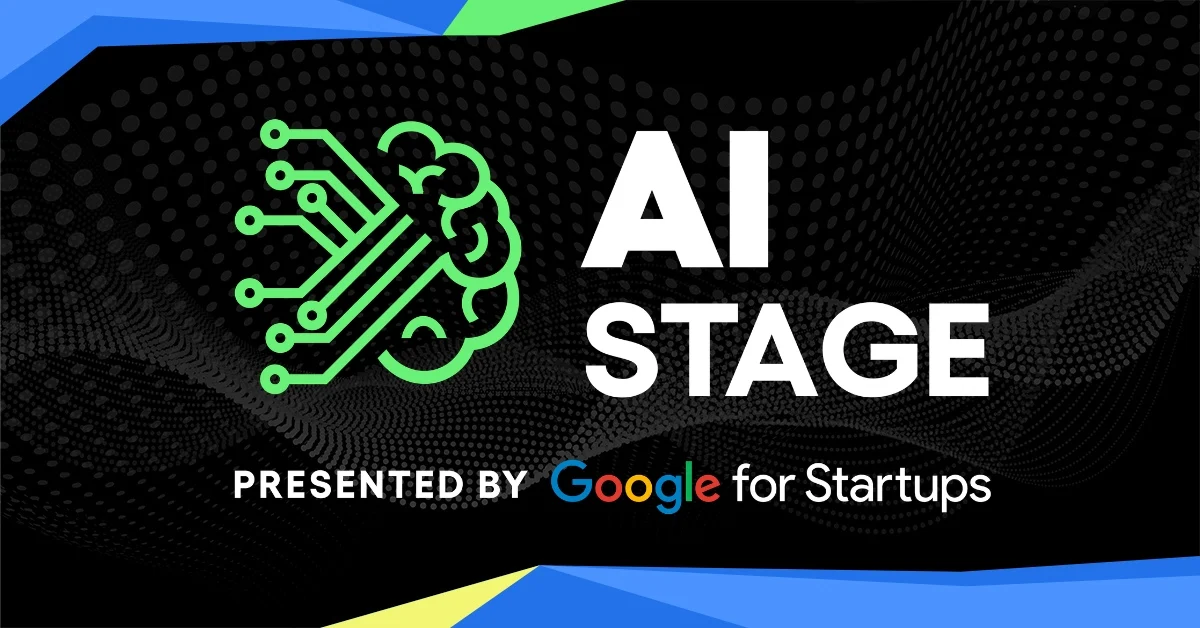
San Francisco, CA – October 13, 2026 – TechCrunch Disrupt 2026 is poised to delve deep into the transformative impact of Artificial Intelligence on the startup ecosystem and the broader enterprise landscape. Presented by Google for Startups, the highly anticipated AI Stage at the Moscone Center will dedicate three days, from October 13th to 15th, to dissecting the profound shifts AI has engendered across business operations, from foundational sales and data security to rapid scaling and the emergence of entirely new job categories. This year’s event promises a comprehensive exploration of the challenges and opportunities presented by an AI-native world, featuring a curated lineup of industry leaders and innovators.
The pervasive influence of AI has moved beyond theoretical discussions to become a tangible force reshaping how companies operate and grow. Startups, in particular, have been at the vanguard of this revolution, not only in their product development but also in their fundamental approaches to sales, customer acquisition, data protection, and the unprecedented velocity of scaling. The AI Stage at Disrupt 2026 aims to provide a pragmatic and insightful platform for founders, executives, and investors to navigate these complex dynamics. The agenda is meticulously designed to address the most pressing questions facing the industry, including the evolving economics of AI product pricing as models become increasingly commoditized, the urgent need to re-architect agent security from the ground up, and the fundamental recalibration required for go-to-market strategies in an AI-centric environment.
This year’s AI Stage programming is set to feature a robust roster of speakers who are at the forefront of AI development and deployment. Among the confirmed sessions is a critical examination of enterprise AI adoption, with Cat de Jong, Head of Applied AI at Anthropic, set to share insights on the real-world deployment of Claude. De Jong’s session, "What Anthropic Sees When Enterprises Actually Deploy Claude," will move beyond pre-deployment discussions to explore the practical realities of integrating AI into critical business workflows. The session promises to reveal patterns of success and stagnation, identifying the factors that differentiate organizations truly deriving value from AI from those still engaged in protracted pilot programs. This provides a crucial post-deployment perspective, shedding light on the tangible outcomes and strategic considerations that emerge once AI solutions are actively operationalized within established enterprise systems. Such insights are invaluable for companies looking to move beyond initial experimentation and achieve sustainable AI integration.
Further illustrating the evolving nature of AI-driven business strategies, Tara Seshan, Head of Productivity at OpenAI, will lead a session titled "What Building AI Native Actually Means." This discussion will trace the dramatic emergence of "GTM engineering" (Go-to-Market engineering) as a critical discipline. What was virtually non-existent just two years prior has rapidly evolved into a burgeoning field, with independent practitioners building substantial businesses. Seshan’s presentation will illuminate how AI has streamlined and, in some cases, dismantled traditional go-to-market stacks, creating a new paradigm for company growth. Attendees will gain a clear understanding of practical AI-native GTM strategies and their impact on scaling operations. This highlights a significant shift in how companies approach customer engagement and market penetration, driven by AI’s ability to automate and optimize complex processes.
The imperative of security in the age of AI will be a central theme, with multiple sessions dedicated to addressing the new vulnerabilities and necessary defenses. Arsalan Tavakoli, Co-founder and SVP of Field Engineering at Databricks, will present "The Enterprise Isn’t Broken. Your Assumptions About It Are." This session will confront the reality that AI is now making autonomous decisions within the most sensitive enterprise systems at speeds that traditional security frameworks were never engineered to handle. Tavakoli’s analysis will break down the essential requirements for enterprise AI security in 2026, encompassing observability, governance, and the architectural underpinnings necessary to differentiate trustworthy deployments from those carrying unacceptable risks. The rapid advancement of AI capabilities, particularly in areas like autonomous decision-making, necessitates a fundamental rethinking of security protocols. Traditional perimeter-based security models are increasingly insufficient against sophisticated AI-driven threats and the inherent complexities of distributed AI systems.
Complementing this, Ric Smith, President of Product & Technology at Okta, will address "The Agent Security Problem Nobody Is Talking About." This session will dive into the inherent security challenges posed by agentic AI, which, despite its power, was not originally designed with robust security in mind. As enterprises seek to leverage these advanced AI agents, they are compelled to rebuild fundamental cybersecurity elements from the ground up. Smith’s candid technical discussion will focus on the infrastructure-level requirements for agent security, the inherent limitations of application-level permission models, and the critical architectural decisions that dictate the success and security of agentic AI deployments. The rise of autonomous AI agents capable of performing complex tasks independently introduces new attack vectors and requires a paradigm shift in security design, moving from human-centric controls to AI-agent-centric security architectures.
The burgeoning field of visual AI will also take center stage in "The Video Intelligence Race: Real-Time, Reasoning, and What Comes Next." This session will feature founders from the cutting edge of visual AI, discussing the transition from impressive demonstrations to real-time inference and sophisticated physical reasoning. Dean Leitersdorf, Co-founder and CEO of Decart, and Amit Jain, Co-founder and CEO of Luma AI, will explore the implications of generative AI capabilities crossing the threshold into genuine artificial intelligence, with profound impacts on industries ranging from robotics and autonomous systems to media and surveillance. The ability of AI to not just process but also understand and reason about visual information in real-time unlocks a vast array of applications previously confined to science fiction.
The fundamental economics of software-as-a-service (SaaS) are also under scrutiny. In "Rewriting SaaS: Why AI Breaks the Old Business Model," a panel of founders and platform leaders, including Arvind Jain (Founder & CEO, Glean), Barr Moses (Co-founder & CEO, Monte Carlo), Cathy Gao (Partner, Sapphire Ventures), and Aaron Jacobson (Partner, NEA), will grapple with the question of whether the traditional SaaS playbook is obsolete or merely evolving. This session aims to provide concrete answers on how to sustainably price AI products, build defensible market positions in an era of commoditized AI models, and adapt SaaS business models for the AI era. The commoditization of foundational AI models, such as large language models, presents a significant challenge to traditional SaaS revenue models that often relied on proprietary technology. Companies must now find new ways to differentiate and create value.
The rapid evolution of job roles in the AI era will be highlighted in "The GTM Engineer: How AI Created Tech’s Next Big Job Category." This session, featuring Kareem Amin, Co-founder and CEO of Clay, will revisit the emergence of GTM engineering. As previously mentioned, this role has experienced explosive growth, with individuals building highly successful businesses around this specialization. Amin will elaborate on the practical applications of AI-native GTM and its transformative effect on how companies achieve growth, underscoring the need for specialized skills in leveraging AI for market penetration.
Further reinforcing the security discussion, Chet Kapoor, VP of Security Services & Observability at AWS, Katie Moussouris of Luta Security, and Wendy Nather of 1Password will present "Securing the AI Enterprise: Why the Cloud Just Got a Lot More Complicated." This session will offer an infrastructure-level perspective on the security demands of AI in enterprise environments. It will cover critical aspects such as enhanced observability, robust governance, and the architectural principles that are essential for building trusted AI deployments in complex cloud ecosystems. The integration of AI into core enterprise systems, especially those handling sensitive data, exponentially increases the attack surface and the potential impact of security breaches. Traditional cloud security postures, designed for a pre-AI era, require significant augmentation to address these new challenges effectively.
The AI Stage at TechCrunch Disrupt 2026 is designed to be a crucial convergence point for professionals seeking to understand and implement AI effectively. Whether the focus is on recalibrating pricing strategies for AI-driven products, fortifying AI stacks against emerging security threats, or developing pioneering go-to-market playbooks for an AI-native world, the stage will offer concrete, actionable insights from those actively shaping this transformative wave.
Beyond the AI-specific programming, attendees will have access to all other stages, the prestigious Startup Battlefield competition, extensive networking opportunities, and the bustling exhibition floor, connecting with over 10,000 fellow leaders from the startup, technology, and venture capital sectors. This holistic environment provides unparalleled opportunities for learning, collaboration, and business development.
The early bird pricing window for TechCrunch Disrupt 2026 is closing soon, offering attendees the opportunity to save up to $200 on their tickets. Interested parties are encouraged to secure their passes promptly via the official TechCrunch Disrupt website.
Disrupt 2026 is set to be a pivotal event in understanding the current trajectory and future potential of artificial intelligence and its profound impact across industries. Further information on headline speakers, founder resources, hotel accommodations, and exhibition opportunities can be found on the TechCrunch website, underscoring the event’s commitment to providing comprehensive support and resources for all participants.
About the Author