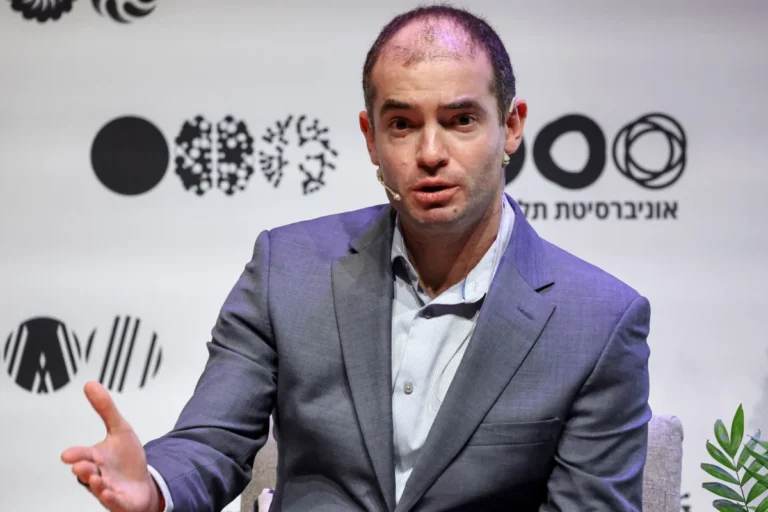
The fast-paced world of early-stage startups often demands not just innovation and speed, but also a robust and adaptable team. In a recent episode of the TechCrunch podcast "Build Mode," hosted by Isabelle Johannessen, the remarkable journey of Bland AI, a burgeoning voice AI company, was brought into sharp focus. Isaiah Granet, CEO and co-founder of Bland, revealed the strategic hiring philosophy that underpinned the company’s meteoric rise from pre-seed funding to a Series B round in a mere 10 months, witnessing its team burgeon to 75 individuals. Granet’s insights offer a compelling narrative on how to unearth exceptional talent in unconventional arenas, challenging traditional recruitment paradigms.
The Genesis of a Rapid Growth Trajectory
Bland AI’s story is an anomaly in the venture capital landscape, where achieving Series B funding typically takes an average of 2-3 years, and often involves multiple, incremental funding rounds. Their compressed timeline underscores a potent combination of a compelling product, strong market fit, and crucially, an exceptional team. Founded by individuals fresh out of college, Bland’s initial hiring strategy was a deliberate departure from the norm, prioritizing raw passion and innate drive over conventional resumes and established pedigrees. This approach laid the groundwork for a culture of intense dedication and scrappiness, mirroring the company’s own early-stage dynamism.
The "Build Mode" podcast, a TechCrunch production, serves as a vital platform for founders to share their experiences and tactical advice on navigating the complexities of startup development. Isabelle Johannessen, a seasoned figure who leads TechCrunch’s iconic Startup Battlefield – a launchpad for promising early-stage companies – brings a wealth of expertise to these discussions. Her role in scouting top founders globally and preparing them for pitching on the Disrupt stage underscores the value she places on compelling narratives and innovative approaches, making Bland’s story particularly relevant for the program’s audience.
Unearthing Hidden Gems: The ‘Passion Over Pedigree’ Mandate
Granet elaborated on Bland’s unique talent acquisition strategy, which eschewed typical recruitment filters. He recounted the challenging search for their founding engineer, a role critical to any tech startup’s initial success. The individual eventually hired possessed a work history that starkly contrasted with what one might expect for a high-stakes engineering position in a rapidly scaling AI firm. Their professional background included a few months at an insurance company in Iowa, preceded by a managerial role at Taco Bell, and even earlier, experience on a factory floor.
This unconventional candidate was discovered not through LinkedIn or traditional job boards, but via their GitHub account – a digital portfolio showcasing coding projects and contributions. While the technical prowess displayed was a factor, Granet emphasized that it was the candidate’s palpable enthusiasm that truly sealed the deal. "The thing that got me was not his tech," Granet stated, recalling the engineer’s response when asked about their hobbies. "We asked him, like, what do you do for fun? And I have never seen a grin as big as on his face. He said, ‘I like to ship code.’" This profound love for the craft, unadulterated by corporate ladder aspirations or brand-name affiliations, became the benchmark for subsequent hires.
Following this pivotal recruitment, Bland intentionally sought individuals who exhibited an obsessive commitment to their passions, irrespective of their field. The team began to comprise an eclectic mix, from philosophy majors whose analytical rigor could be repurposed for complex problem-solving, to beekeepers whose meticulous attention to detail translated into rigorous engineering practices. This diverse pool of talent, drawn from outside the conventional tech ecosystem, provided Bland with a unique competitive edge. Granet articulated this philosophy succinctly: "There’s people out there that have things that are not valuable on résumés, but are incredibly cool. What it just shows is that level of obsession, because that can be put onto anything."
The Strategic Imperative of Non-Traditional Hiring
This "passion over pedigree" model, while seemingly counterintuitive, addresses several critical challenges faced by early-stage startups. Firstly, it allows companies to bypass the intense competition for traditionally credentialed talent, which is often prohibitively expensive for nascent ventures. By focusing on aptitude, drive, and a genuine love for problem-solving, Bland could access a wider, often overlooked, talent pool.
Secondly, individuals with diverse backgrounds bring fresh perspectives and innovative thinking, crucial for disrupting established industries like AI. A philosophy major might approach a UI/UX challenge with a unique understanding of human perception, while a former factory worker might bring an invaluable perspective on operational efficiency and robust system design. This cognitive diversity can lead to more creative solutions and a more resilient organizational culture.
Thirdly, employees who are hired for their intrinsic motivation and passion are often more engaged and dedicated. They are not merely performing a job; they are pursuing an interest. This intrinsic drive is invaluable in the demanding, often unpredictable environment of a startup, where long hours and iterative development are common. Such individuals are more likely to adapt, learn new skills rapidly, and remain committed through inevitable challenges.
Navigating the Growth and Operational Realities
Bland’s explosive growth, from a small founding team to 75 employees within a year, presented its own set of management challenges. While the unconventional hiring strategy yielded significant benefits, Granet acknowledged its inherent downsides. "Scrappy talent can be inexperienced," he conceded, meaning the company often had to invest significant time and resources in training and development. Employees might require extended periods to fully grow into their roles, a luxury not always afforded in a fast-paced startup environment.
To counteract this, Bland established clear expectations regarding employee investment and performance. The company operates on a principle of mutual commitment: if Bland invests in an employee, the employee is expected to reciprocate with diligent effort and a commitment to continuous improvement. Granet outlined a demanding work ethic for those not consistently delivering outcomes: "If you’re not delivering outcomes, our expectation is that you’re going to be in the office six days a week, 12 hours a day." This statement, while intense, reflects the high-stakes reality of scaling a startup at breakneck speed, where every individual’s contribution is critical to maintaining momentum. It underscores a culture of accountability and intense focus, typical of highly ambitious early-stage ventures.
Beyond performance expectations, Bland also prioritized ensuring its unconventional hires were motivated and felt valued. The leadership team focused on developing a transparent and fair pay structure, crucial for retaining talent from diverse backgrounds who might not be familiar with tech industry compensation norms. Furthermore, educating early hires about their equity stakes was paramount. In the startup world, equity can represent a substantial portion of an employee’s long-term compensation, and understanding its value and potential is key to fostering long-term commitment and aligning individual goals with company success. For individuals new to the tech ecosystem, this education can be particularly empowering, transforming their perception of their role from merely a job to a co-ownership in a shared vision.
Scalability and the Founder’s Intuition
A significant challenge for Bland’s hiring philosophy is its scalability. As a company grows, maintaining a hands-on, individualized approach to vetting "obsession" becomes increasingly difficult. The co-founders remain deeply involved in the team’s performance, ensuring the high standards are met. This level of founder involvement, while effective in the early stages, highlights a potential bottleneck as the company continues its rapid expansion. Future growth will likely necessitate the development of scalable processes that can identify similar attributes without direct founder oversight in every hire.
Despite these challenges, Granet stands by the efficacy of their approach, especially for early-stage ventures. He advises fellow founders to trust their instincts: "I think for the most part, honestly, early-stage startup founders should go with their gut and everybody finds their own pattern of hiring that works." This emphasis on intuition and bespoke hiring strategies suggests that there is no one-size-fits-all solution for talent acquisition, particularly when a company is charting new territory.
Broader Implications for the Tech Ecosystem
Bland AI’s success story holds significant implications for the broader tech industry and venture capital community. It challenges the prevailing emphasis on academic credentials and corporate experience, suggesting that a vast reservoir of untapped talent exists outside traditional pathways. This could inspire other startups to rethink their recruitment processes, potentially democratizing access to high-growth tech careers.
For venture capitalists, Bland’s rapid Series B attainment, driven by an unconventional team, reinforces the idea that innovative talent acquisition strategies can be a key differentiator. It suggests that investors might increasingly look beyond conventional team profiles, seeking evidence of strong cultural fit, intrinsic motivation, and a founder’s ability to build a highly committed, albeit diverse, workforce.
The rise of voice AI itself is a significant trend. The global voice AI market, valued at approximately $2.5 billion in 2022, is projected to grow substantially, driven by advancements in natural language processing and the increasing integration of voice assistants in various devices and applications. Bland AI’s positioning within this burgeoning sector, coupled with its unique approach to talent, places it at the forefront of a technological revolution.
Engaging with the TechCrunch Ecosystem
Bland AI’s narrative is a prime example of the kind of innovation and founder insight that TechCrunch actively promotes through its various platforms. The "Build Mode" podcast, produced and edited by Maggie Nye, is just one facet of this engagement. TechCrunch also hosts pivotal industry events like TechCrunch Disrupt, scheduled for October 13-15, 2026, in San Francisco. This event is a nexus for thousands of founders, venture capitalists, and tech enthusiasts, where the Startup Battlefield 200 – the top cohort of early-stage companies – takes center stage. Companies like Bland AI, with their compelling stories of rapid growth and disruptive strategies, embody the spirit of innovation celebrated at Disrupt. Aspiring founders are encouraged to apply to Startup Battlefield, presenting their minimum viable products (MVPs) and potentially following in the footsteps of companies like Bland.
In conclusion, Bland AI’s journey is a testament to the power of vision, tenacity, and a daring approach to talent. By valuing "obsession" and raw potential over conventional qualifications, Isaiah Granet and his co-founders have not only built a rapidly scaling voice AI company but have also offered a potent blueprint for future founders looking to navigate the competitive landscape of startup growth. Their story serves as a powerful reminder that sometimes, the most extraordinary talent lies hidden in the most unexpected places, waiting for an opportunity to ship code, solve problems, and contribute to the next big technological leap.
About the Author