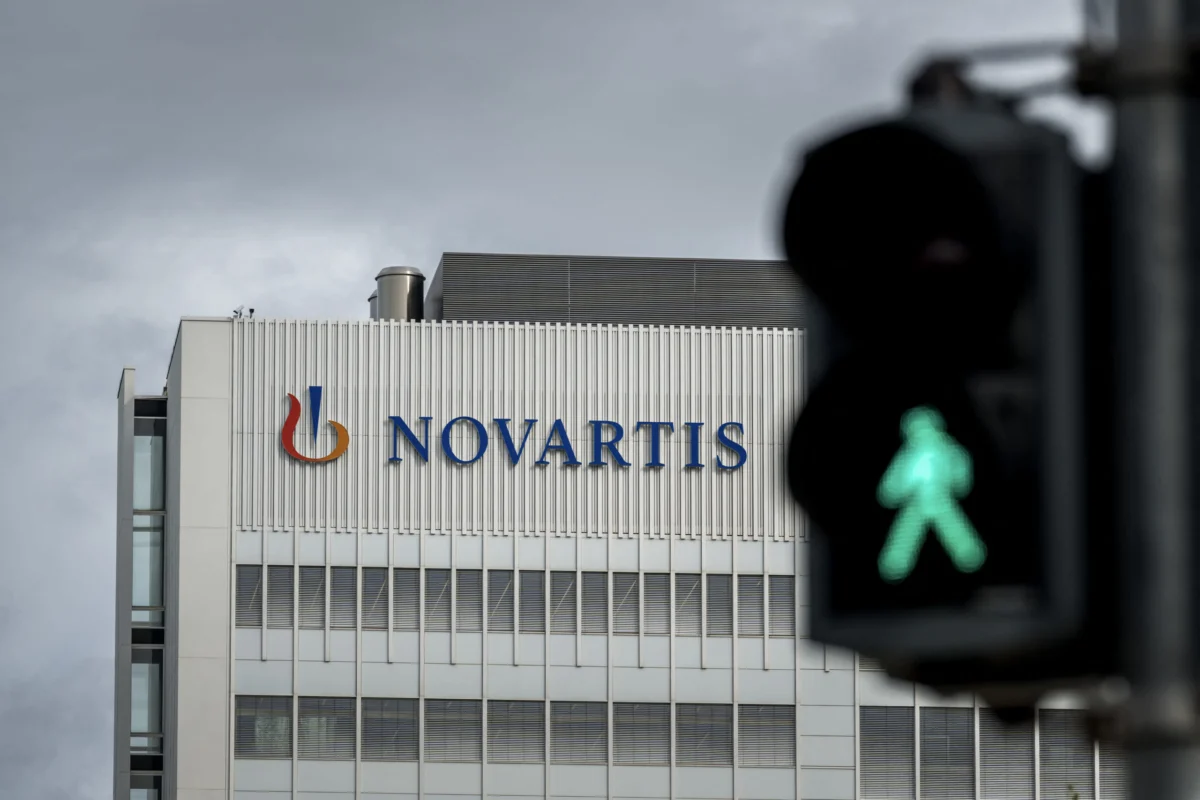
Basel, Switzerland – Swiss pharmaceutical giant Novartis AG announced its intent to acquire U.S.-based biotech firm Excellergy Inc. for up to $2 billion, a strategic move aimed at fortifying its pipeline with a promising next-generation allergy treatment. This significant investment, disclosed on Friday, underscores Novartis’s aggressive strategy to counteract the looming "patent cliff," a period marked by the expiry of exclusivity rights for several of its blockbuster drugs. The acquisition is poised to integrate Exl-111, an early-stage drug candidate, into Novartis’s robust allergy portfolio, signaling a long-term bet on innovative therapies designed to offer superior and faster relief than current market offerings.
The planned acquisition of Excellergy, based in Palo Alto, California, represents a critical "bolt-on" deal in a rapid series of strategic maneuvers by Novartis. The transaction, structured to include both upfront and milestone payments, is anticipated to conclude in the first half of 2026, contingent upon the customary regulatory approvals. While Excellergy, a privately held entity, saw its lead asset remain several years away from market entry, the potential of Exl-111 to redefine allergy treatment pathways has evidently captivated Novartis’s strategic vision. On the day of the announcement, Novartis stock experienced a relatively flat trading session in Zurich, reflecting a market that is digesting the implications of such long-horizon investments amidst immediate financial pressures. Nevertheless, the company’s shares have demonstrated resilience, climbing 33% over the preceding twelve months, indicative of broader investor confidence in its strategic redirection and diversified pipeline development efforts.
The Imperative of Innovation: Navigating the Patent Cliff
The pharmaceutical industry is currently grappling with an unprecedented wave of patent expirations, colloquially known as the "patent cliff." This phenomenon is projected to expose branded drugs generating hundreds of billions of dollars in revenue to generic competition by the end of the decade. For companies like Novartis, this translates into a pressing need to continuously replenish and enhance their drug pipelines with novel, high-potential assets. The loss of exclusivity for top-selling medications forces pharmaceutical companies to intensify their research and development efforts, pursue strategic collaborations, and, most notably, engage in targeted mergers and acquisitions (M&A) to secure future revenue streams.
Novartis CEO Vas Narasimhan has openly addressed this challenge, characterizing the current period as the "biggest patent expiration wave in the company’s history." This candor highlights the urgency driving the company’s recent acquisition spree. Earlier this year, Novartis issued a warning that its profits would likely decline in early 2026, primarily due to the entry of generic competitors for some of its flagship products. The heart medicine Entresto, a significant revenue generator, along with Promacta for thrombocytopenia and Tasigna for chronic myeloid leukemia, saw generics enter the U.S. market in mid-2025. Furthermore, Cosentyx, Novartis’s second-best-selling medicine used for various autoimmune conditions, is slated to lose key exclusivities around 2029.
Incoming CFO Mukul Mehta, in a post-earnings call with analysts in February, underscored the financial impact, stating, "For the first half of the year, we will have a tough prior year base with Entresto, Promacta and Tasigna generics having entered the U.S. market mid-2025." Narasimhan further quantified this immediate impact, noting, "It’s $4 billion that we will absorb over the course of this year across the three medicines." These figures paint a stark picture of the financial pressures Novartis faces, making strategic acquisitions not merely opportunistic but existential for sustained growth and market leadership.
Novartis’s Proactive M&A Strategy: A Chronology of Pipeline Reinforcement
The acquisition of Excellergy is not an isolated event but rather the latest in a series of calculated moves by Novartis to fortify its drug pipeline and offset the impending revenue losses from patent expirations. This proactive M&A strategy reflects a broader industry trend where major pharmaceutical players are aggressively scouting and acquiring innovative biotech assets.
Just a week prior to the Excellergy announcement, Novartis revealed its intent to acquire Pikavation Therapeutics, a subsidiary of Synnovation, for up to $3 billion. This deal was struck to secure the rights to an experimental breast cancer drug, showcasing Novartis’s commitment to oncology, a core therapeutic area. This rapid succession of high-value acquisitions within days underscores the company’s aggressive and focused approach to pipeline enhancement.
Earlier in February, Novartis successfully completed the acquisition of Avidity Biosciences. This transaction added three late-stage programs to its neuromuscular pipeline, with the potential for several product launches before 2030. The Avidity deal was particularly significant as it bolstered Novartis’s capabilities in the emerging field of xRNA therapeutics, aligning with its strategy to embrace cutting-edge modalities.
These strategic "bolt-on" acquisitions, characterized by their focus on specific therapeutic areas or innovative drug mechanisms, are designed to complement Novartis’s existing portfolio and technological capabilities. This approach is distinct from large-scale mergers that often involve complex integrations and rationalizations. Instead, Novartis is selectively acquiring promising assets that fit neatly into its long-term vision of becoming a focused medicines company, specializing in high-impact, innovative therapies. The company aims to balance the immediate financial headwinds from patent expirations with the long-term growth potential derived from these newly acquired assets.
The Promise of Exl-111: A New Horizon in Allergy Treatment
The decision to invest up to $2 billion in Excellergy centers squarely on Exl-111, an early-stage drug candidate targeting allergic diseases. Allergic conditions, ranging from seasonal allergies to severe asthma and chronic urticaria, affect hundreds of millions globally, imposing a significant burden on public health systems and individual quality of life. Current treatments often provide symptomatic relief but rarely offer a curative or fundamentally disease-modifying solution. Existing biologics, such as omalizumab (Xolair, co-marketed by Novartis and Genentech), have revolutionized treatment for severe asthma and chronic urticaria by targeting immunoglobulin E (IgE), a key mediator in allergic reactions. However, there remains a substantial unmet need for therapies that offer faster onset of action, broader efficacy across various allergic conditions, and potentially improved safety profiles or more convenient administration.
Exl-111 is being touted as a "next-generation anti-IgE innovation." This suggests that the drug candidate aims to improve upon the mechanism or efficacy of existing anti-IgE therapies. Without specific details on its mechanism of action, one can infer that it might offer enhanced binding affinity, a different epitope target on the IgE molecule, a longer half-life enabling less frequent dosing, or a more precise modulation of the allergic cascade. The promise of working "faster and better than anything currently on the market" positions Exl-111 as a potential game-changer, capable of significantly improving patient outcomes.
However, the acquisition of an early-stage asset like Exl-111 inherently carries risks. Drug development is a notoriously lengthy and costly process, with a high attrition rate. Many promising candidates fail in clinical trials due to lack of efficacy, safety concerns, or unforeseen side effects. For Novartis, this acquisition represents a calculated risk – a substantial investment in a therapy that is still several years away from potential market entry. The "upfront and milestone payments" structure of the deal is a common mechanism in such acquisitions, allowing the acquiring company to spread the financial outlay and tie significant portions of the payment to the achievement of specific development milestones, thereby mitigating some of the early-stage development risk. This approach aligns with a strategic focus on long-term value creation rather than immediate returns.
Broader Industry Trends and Competitive Landscape
Novartis’s robust M&A activity is mirrored across the pharmaceutical landscape as other major players also confront the patent cliff and seek to secure their future. The second half of 2025 and early 2026 have seen a flurry of M&A announcements from "Big Pharma."
Earlier this week, Merck & Co. announced an agreement to acquire Terns Pharmaceuticals for up to $6.7 billion, further boosting its oncology pipeline. British pharmaceutical giants GSK plc and AstraZeneca plc have also been notably active in the M&A space over the past months, engaging in multiple "bolt-on" deals.
Chris Sheldon, GSK’s global head of business development, articulated a strategy that resonates with Novartis’s recent actions. In an interview late last year, Sheldon indicated a preference for acquisitions in the mid-stage development phase, typically in the $1 billion to $2 billion range. He emphasized targeting assets "where the biology is validated but the outcome of a drug candidate isn’t yet obvious." This philosophy highlights a shared industry understanding: investing in assets that have demonstrated early proof-of-concept but still require significant development, offering a balance between risk and potential reward, and allowing for internal expertise to guide the asset through later-stage trials. Like Novartis and AstraZeneca, GSK is strategically looking for deals that complement its existing portfolio and technological platforms, avoiding disruptive mega-mergers in favor of targeted pipeline enhancements.
This competitive landscape underscores the intensity of the race to acquire innovative biotech assets. Companies are not just looking to replace lost revenue but also to gain a competitive edge in emerging therapeutic areas and novel modalities. The focus on specific disease areas like oncology, neuromuscular disorders, and now allergies, reflects a shift towards precision medicine and therapies that address well-defined unmet medical needs.
Outlook and Future Prospects for Novartis
Despite the immediate financial pressures from patent expirations, Novartis is also witnessing strong growth in several of its newer medicines. The cancer drug Kisqali (ribociclib) and the multiple sclerosis treatment Kesimpta (ofatumumab) are performing robustly, indicating successful innovation and market penetration in their respective therapeutic areas. Kisqali, a CDK4/6 inhibitor, has shown impressive efficacy in certain breast cancer types, while Kesimpta, a B-cell depletor, offers a convenient and effective treatment option for relapsing forms of MS. These growth drivers are critical in buffering the impact of declining revenues from older drugs.
However, as CEO Narasimhan has emphasized, the sheer scale of the patent cliff necessitates continuous and substantial pipeline replenishment. The Excellergy acquisition, alongside the Pikavation and Avidity deals, is a testament to Novartis’s commitment to this strategy. By strategically investing in early to late-stage assets across diverse therapeutic areas, Novartis aims to ensure a sustainable stream of innovative medicines for the coming decade and beyond.
The company’s long-term vision involves transforming into a more focused, innovative medicines company, having spun off its Sandoz generics unit in 2023 to sharpen its focus on patented drugs. This strategic pivot, combined with aggressive M&A, positions Novartis to navigate the complex landscape of pharmaceutical innovation. While the journey from early-stage drug candidate to market approval is fraught with challenges, these strategic investments are crucial for Novartis to maintain its competitive edge, deliver value to shareholders, and ultimately, bring life-changing therapies to patients worldwide. The successful integration of Excellergy’s Exl-111 and its development into a commercially viable product will be a key indicator of the long-term efficacy of Novartis’s current strategic direction.
About the Author