This significant capital injection positions Atorie as a formidable disruptor in the fashion industry, aiming to bridge the gap between high-end luxury and accessible pricing by leveraging an innovative direct-to-consumer model powered by advanced artificial intelligence. The funding round underscores a growing investor appetite for startups that challenge traditional retail paradigms, particularly within sectors ripe for technological transformation and evolving consumer expectations. Atorie’s unique proposition allows shoppers to acquire handbags and apparel crafted from the identical premium materials and produced in the same esteemed factories as those utilized by renowned luxury brands, yet offered at a fraction of the cost. For instance, an Italian leather handbag from Atorie is priced at a few hundred dollars, starkly contrasting with the thousands typically demanded by labels such as Prada or Louis Vuitton for comparable items.
Redefining Value: Atorie’s Disruptive Model
Atorie’s emergence is particularly timely, coinciding with a period of profound shifts in consumer behavior and sentiment towards the luxury sector. The rise of "dupe culture" – where consumers actively seek out cheaper, near-identical replications of high-end goods – has gained unprecedented traction, especially among younger demographics. This phenomenon, amplified by social media platforms like TikTok and Instagram, has transformed the act of finding and showcasing "dupes" into a status symbol in itself. Simultaneously, the post-pandemic era has seen the luxury industry face increasing backlash due to swift and often substantial price hikes, leading to a perception of diminishing value for money among a segment of its traditional customer base.
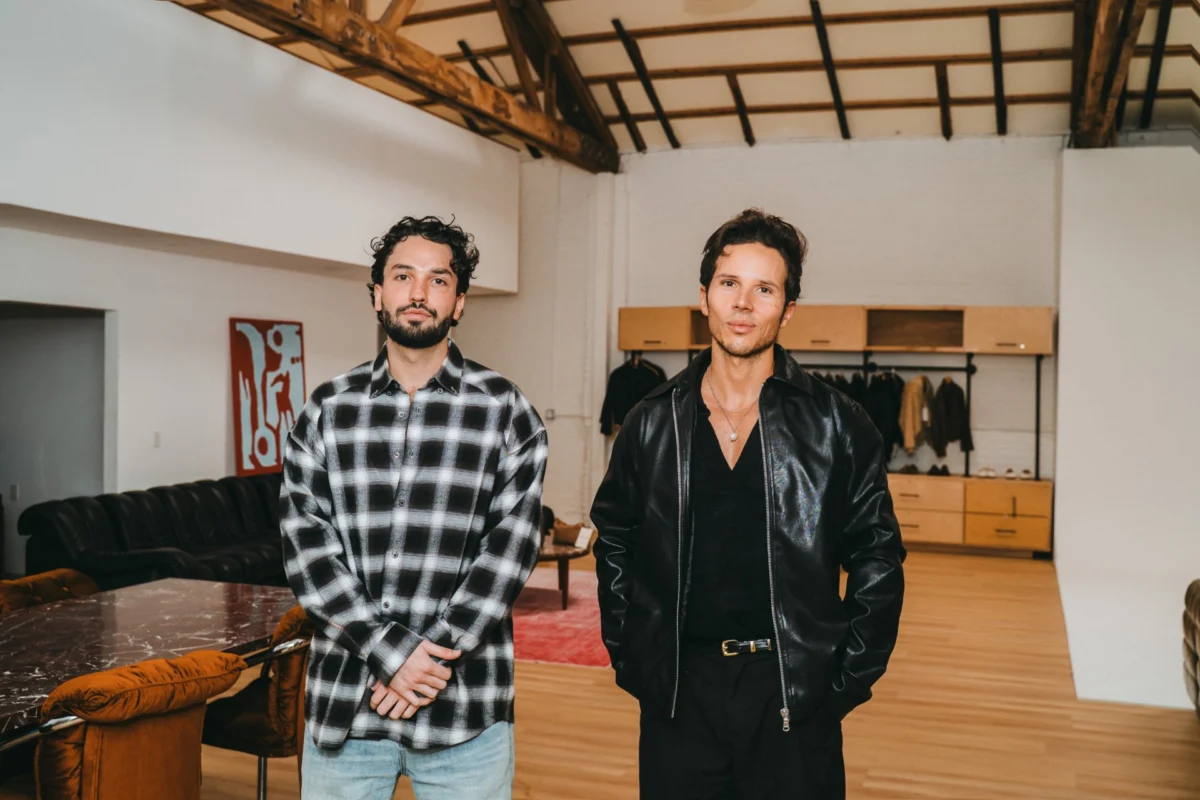
Redouane Ramdani, co-founder and a serial entrepreneur, clarifies that Atorie’s offerings are distinct from mere "dupes." He emphasizes, "It’s the same material, same craftsmanship. It’s coming from the same factories." This distinction is critical, as Atorie is not merely imitating designs but rather making the authentic components of luxury goods more accessible. Furthermore, Ramdani firmly rejects the label of "fast fashion," stating, "It’s slow." This commitment to quality and thoughtful production sets Atorie apart from both the ultra-exclusive luxury market and the environmentally contentious fast fashion giants. The company’s model is built on transparency and efficiency, offering consumers genuine luxury-grade products without the exorbitant markups associated with brand legacy, extensive marketing campaigns, and complex distribution channels.
The Entrepreneurial Journey: From Snipfeed to Atorie
Ramdani’s entrepreneurial journey provides crucial context for Atorie’s genesis. Prior to co-founding Atorie with Luis Angulo, he successfully built Snipfeed, a creator platform that was acquired in 2024. This experience in developing technology-driven platforms for digital creators undoubtedly honed his understanding of online communities, direct engagement, and scalable business models. Ramdani’s personal connection to the luxury manufacturing world runs deep, rooted in his upbringing in France where his family was intimately involved in the industry. This early exposure fostered a lifelong appreciation for quality craftsmanship and instilled in him a latent ambition to one day contribute to the sector he admired.
However, the luxury manufacturing landscape Ramdani encountered upon returning to the industry after the sale of Snipfeed was significantly transformed. The traditional model, where major brands like Ralph Lauren would commission factories to produce their specific designs using brand-provided materials, had inherent inefficiencies. Factories were often compelled to commit to large minimum orders, frequently leading to overproduction and subsequent inventory write-offs or heavy discounting for brands. Concurrently, these factories often relied heavily on a limited number of large brand clients, exposing them to substantial financial and inventory risks if a brand cancelled an order or if market demand shifted unexpectedly.
Revolutionizing the Supply Chain: Factories as Innovators
The most pivotal shift Ramdani observed was the evolution of luxury factories themselves. No longer solely manufacturing hubs, the most advanced factories have increasingly developed their own sophisticated design and product-development capabilities. This fundamental change is central to Atorie’s operational strategy. "What’s changing is that the best factories increasingly have their own design and product-development capabilities," Ramdani explained. "Instead of simply manufacturing someone else’s designs, they can develop products themselves, adapt them quickly, and produce in smaller batches." This newfound agility allows factories to innovate independently, respond more dynamically to market trends, and mitigate the risks associated with large, inflexible production runs.
This evolution is further empowered by the integration of artificial intelligence into factory operations. AI systems are now capable of analyzing vast datasets to identify product trends and forecast consumer demand with remarkable accuracy, even before significant production commitments are made. This data-driven approach significantly reduces the likelihood of overproduction, thereby minimizing waste and financial exposure for factories. "That reduces overproduction and allows factories to diversify beyond a handful of large customers," Ramdani noted, highlighting the symbiotic benefits for both the factories and new entrants like Atorie. By connecting these forward-thinking manufacturers directly with consumers, Atorie bypasses layers of intermediaries, brand overheads, and traditional retail markups, offering premium goods at accessible price points. This model is akin to that of successful direct-to-consumer retailers like Quince, known for delivering high-quality, affordably priced items by streamlining the supply chain.
The AI Advantage: From Production to Personalization
Artificial intelligence is not merely an auxiliary tool for Atorie; it is integral to its operational DNA and consumer experience. Ramdani envisions a future where AI agents fundamentally transform the shopping process, potentially allowing consumers to simply instruct AI assistants to make purchases on their behalf. In the present, Atorie employs AI across multiple critical functions. On the production side, AI analyzes fashion trends, evaluates aesthetic elements like color palettes for products, and estimates consumer demand with precision. This predictive capability extends to supply chain management, where AI agents are trained to anticipate material shortages, enabling factories to proactively stock up and avoid production delays.

On the consumer-facing side, the Atorie website features an AI agent designed to enhance the shopping experience. This agent can curate entire outfits based on a customer’s specific inspirations – whether a particular style icon, an event, or a mood. Over time, Atorie’s AI learns individual shoppers’ habits, preferences, and purchase history, enabling it to offer highly personalized recommendations for future purchases. This level of personalized service, traditionally associated with high-end personal shoppers, is democratized through AI, making it accessible to a broader audience. The effectiveness of this AI integration is already evident, with Atorie reportedly seeing an increase in sales referrals from advanced conversational AI platforms like ChatGPT and Claude, indicating a paradigm shift in how consumers discover and acquire products.
Market Context: Dupe Culture, Luxury Backlash, and Sustainability
Atorie’s launch comes at a fascinating inflection point for the global fashion industry. The luxury market, valued at approximately $300 billion annually, has traditionally thrived on exclusivity, heritage, and aspirational pricing. However, recent economic pressures, coupled with a generational shift in consumer values, have challenged this model. Post-pandemic price hikes, driven by factors such as inflation, supply chain disruptions, and a strategic move by some brands to further enhance their exclusivity, have alienated a segment of the market. For instance, data from market research firms has shown luxury prices increasing by an average of 15-20% in certain categories since 2020, far outpacing general inflation rates in many regions.
This has fueled the "dupe culture," which is more than just a trend; it’s a commentary on value perception. Platforms like TikTok have become hotbeds for showcasing affordable alternatives, with hashtags related to "dupes" garnering billions of views. Young consumers, in particular, are increasingly savvy and value conscious, prioritizing quality and style over brand prestige when the price differential is astronomical. Atorie taps directly into this sentiment, offering an authentic alternative that validates the desire for quality without the brand-inflated cost.
Moreover, Atorie’s "slow fashion" ethos stands in stark contrast to the environmental and ethical concerns surrounding fast fashion. The fast fashion industry, estimated to be worth over $100 billion globally, is notorious for its rapid production cycles, reliance on cheap labor, and significant environmental footprint, including massive textile waste and carbon emissions. Consumers, particularly Gen Z and millennials, are increasingly aware of these issues and are actively seeking more sustainable and ethically produced alternatives. Ramdani’s assertion that "consumers are getting tired of pure fast fashion, especially because of the harmful impact it’s having on the environment" reflects a broader societal shift towards conscious consumption. By focusing on well-made, durable items from established luxury factories, Atorie inadvertently aligns itself with principles of sustainability, offering products designed to last rather than be quickly discarded.
Financial Trajectory and Future Horizons
Atorie’s early financial performance underscores its rapid market acceptance and the efficacy of its model. The company concluded last year with approximately $5 million in sales and projects an impressive annualized run rate exceeding $55 million for the current year. This exponential growth trajectory speaks volumes about the unmet demand for high-quality, affordably priced fashion. "We are growing super fast," Ramdani affirmed, highlighting the company’s extensive network, which currently spans over 40 factories worldwide. This broad manufacturing base not only ensures diverse product offerings but also provides resilience against potential supply chain disruptions.
The recently secured $9.5 million seed capital will be strategically deployed to fuel this growth. Key areas of investment include enhancing logistics infrastructure to ensure efficient delivery, further developing Atorie’s proprietary AI tools to refine demand forecasting and personalization, and scaling production capabilities to meet escalating consumer demand. Beyond its current offerings, Atorie has ambitious plans for expansion. The company intends to launch its own in-house line, reminiscent of Amazon Essentials, providing a curated collection of core fashion staples. Furthermore, recognizing the power of the creator economy, Atorie plans to collaborate with influencers and content creators, enabling them to swiftly launch their own clothing lines. This initiative not only diversifies Atorie’s product portfolio but also positions it as an enabler for emerging fashion talent, further solidifying its presence in the evolving digital commerce landscape.
Broader Implications for the Fashion Industry
Atorie’s success and innovative approach carry significant implications for the wider fashion industry. For traditional luxury brands, Atorie represents a potent competitive threat, challenging their long-held pricing strategies and exclusive distribution models. It may compel established brands to re-evaluate their value propositions, potentially leading to more transparent pricing or diversified product lines that cater to a broader consumer base. For fast fashion retailers, Atorie offers a compelling alternative that addresses growing consumer fatigue with low-quality, disposable garments, while still maintaining affordability.
The investment from prominent venture capital firms like a16z speedrun, Night Capital, and Lightspeed Ventures (with involvement from Jeremy Liew, a notable investor in consumer tech) signals strong confidence in Atorie’s disruptive potential. These investors are likely drawn to Atorie’s scalable, tech-first approach to a massive global market, its proven ability to generate significant revenue quickly, and its alignment with emerging consumer trends such as value-consciousness, sustainability, and AI-powered commerce. Atorie is not just selling clothes; it is pioneering a new blueprint for how luxury-grade products can be manufactured, distributed, and consumed in the 21st century, making high quality accessible and sustainable for a new generation of shoppers.
About the Author