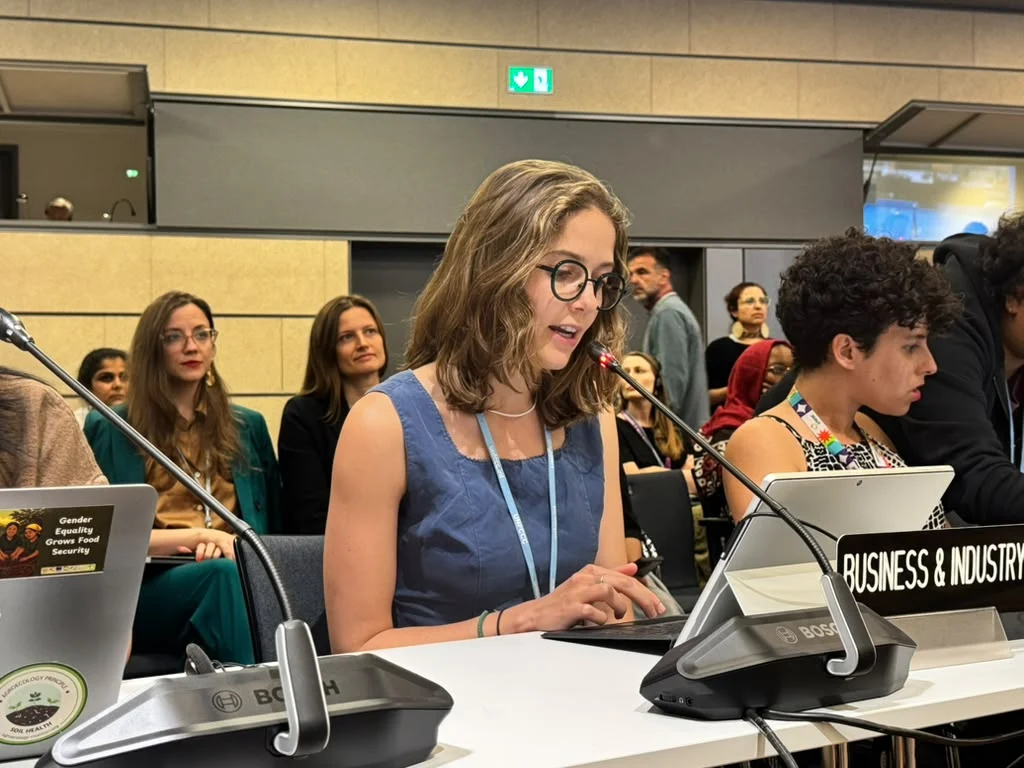
The conclusion of the June climate talks in Bonn, Germany, has left a complex landscape for international diplomacy, as business representatives and global delegates grapple with significant ideological divides that threaten the pace of global climate action. Addressing the closing plenary of the Subsidiary Bodies (SB 60) meetings, representatives for the global business community expressed profound concern over the lack of progress on the Mitigation Work Programme (MWP) and the ongoing challenges surrounding the New Collective Quantified Goal (NCQG) on climate finance. As the world moves toward COP29 in Baku and looks ahead to COP31, the private sector has signaled that while it is ready to mobilize capital and innovation, the current lack of political consensus and the presence of significant regulatory barriers in emerging markets are hindering the transition to a low-carbon economy.
The Bonn Climate Change Conference, traditionally a technical mid-year gathering designed to lay the groundwork for the year-end Conference of the Parties (COP), was characterized this year by what observers described as "divergent views" that appeared increasingly difficult to bridge. While the 2023 Dubai summit (COP28) resulted in the historic "UAE Consensus" and the first Global Stocktake (GST) outcome, which called for a transition away from fossil fuels, the translation of these high-level ambitions into technical workstreams in Bonn has proven contentious. Business leaders emphasized that the Mitigation Work Programme remains central to the objectives of the Paris Agreement, serving as a critical space to identify opportunities and barriers for action. However, the deadlock in Bonn suggests that the momentum generated in Dubai may be stalling at a time when the International Energy Agency (IEA) warns that global emissions must peak by 2025 to keep the 1.5°C warming limit within reach.
The Standoff Over the Mitigation Work Programme
The lack of progress on the Mitigation Work Programme was a primary point of contention throughout the two-week session in Bonn. The MWP was established to urgently scale up mitigation ambition and implementation in this critical decade. For the private sector, the MWP is not merely a diplomatic forum but a necessary signal-generating mechanism. Businesses require sustained policy signals to justify long-term investments in green technology, carbon capture, and renewable energy infrastructure. The inability of Parties to move beyond procedural disagreements into substantive discussions on accelerating implementation has raised alarms among institutional investors and corporate leaders.
The divergence in views largely falls along traditional North-South lines. Developing nations have argued that any discussion on increased mitigation ambition must be accompanied by a corresponding increase in financial and technological support. Conversely, developed nations have pushed for a more robust MWP that includes specific sectoral targets and follow-up mechanisms for the Global Stocktake. Without a resolution, the business community fears that the "impact" required to drive real-world decarbonization will be lost in a sea of diplomatic gridlock. The call from the private sector is clear: Parties must unite to translate the MWP into a platform that drives tangible results rather than serving as a theater for circular debates.
The Financial Architecture and the NCQG
At the heart of the friction in Bonn was the issue of climate finance, specifically the development of the New Collective Quantified Goal (NCQG). The NCQG is intended to replace the previous commitment by developed countries to provide $100 billion annually to developing nations—a target that was only met for the first time in 2022, years behind schedule. The new goal, which must be finalized at COP29 in Baku, is expected to be significantly larger, with some estimates suggesting a requirement of $1 trillion to $2.4 trillion annually by 2030 for emerging markets and developing economies (EMDEs), excluding China.
Business leaders in Bonn underscored that while the private sector is essential for scaling up climate finance, the current investment climate in many developing nations remains prohibitive. High interest rates, currency volatility, and a lack of "bankable" project pipelines have created a risk profile that many private investors find untenable. The private sector’s message to the SB Chairs and Parties was focused on the urgent need to address these "regulatory and operational barriers." To attract the level of investment needed to achieve the NCQG, the global community must engage in a serious debate on how to create domestic enabling environments. This includes legal reforms, the elimination of fossil fuel subsidies that distort markets, and the implementation of transparent carbon pricing mechanisms.
Data and Economic Realities of the Climate Transition
The scale of the challenge is reflected in the latest economic data. According to the United Nations Conference on Trade and Development (UNCTAD), the investment gap in sectors related to the Sustainable Development Goals (SDGs) in developing countries has increased to $4.2 trillion per year. Furthermore, the OECD reports that while climate finance reached $115.9 billion in 2022, the vast majority of private finance remains concentrated in developed markets or a few large emerging economies like India and Brazil.
For the least developed countries (LDCs) and small island developing states (SIDS), the cost of capital can be up to seven times higher than in Europe or North America. This "green premium" on financing makes renewable energy projects—which have high upfront capital costs but low operating costs—more expensive than coal or gas plants in the very regions where energy demand is growing most rapidly. Business leaders at Bonn highlighted that without addressing these structural financial inequities, the "transformations needed to put commitments into action" will remain out of reach for a majority of the world’s population.
A Comprehensive Agenda: Beyond Mitigation and Finance
While mitigation and finance dominated the headlines, the business community also stressed the importance of a holistic approach to the COP31 roadmap. This includes significant progress on Adaptation, Article 6, Trade, Just Transition, and Agriculture.
- Article 6 and Carbon Markets: The private sector is particularly focused on Article 6 of the Paris Agreement, which governs international carbon markets. Technical delays in Bonn regarding the rules for bilateral carbon trading (Article 6.2) and a centralized UN-led market (Article 6.4) have created uncertainty. Businesses are looking for a high-integrity, transparent carbon market that can lower the cost of emissions reductions and facilitate cross-border investment.
- Adaptation and Resilience: As climate impacts intensify, the business community is increasingly recognizing the need for investment in physical resilience. The Global Goal on Adaptation (GGA) requires clear metrics so that businesses can align their supply chain strategies with national adaptation plans.
- Trade and Just Transition: The intersection of climate policy and international trade is becoming a flashpoint, with the introduction of mechanisms like the EU’s Carbon Border Adjustment Mechanism (CBAM). Business leaders are calling for a "just transition" that ensures workers and communities dependent on fossil fuel industries are not left behind, while also ensuring that trade policies do not become "green protectionism."
- Agriculture: With the food system responsible for roughly a third of global greenhouse gas emissions, the private sector is pushing for the "Sharm el-Sheikh joint work on implementation of climate action on agriculture and food security" to provide clear pathways for sustainable farming practices and resilient supply chains.
Chronology of Climate Negotiations Leading to COP31
The road to COP31 is marked by several critical milestones that will determine the success of the Paris Agreement. The timeline began with the 2015 Paris Agreement, but the current cycle was set in motion by the conclusion of the first Global Stocktake at COP28 in December 2023.
- June 2024 (SB 60, Bonn): Technical negotiations aimed at refining the NCQG and MWP. The session ended with "informal notes" rather than formal agreements in many areas, shifting the burden to upcoming ministerial meetings.
- September 2024 (UN General Assembly/Summit of the Future): Expected to provide political momentum for finance reforms and the "Bridge-to-Baku" initiative.
- November 2024 (COP29, Baku): The "Finance COP." The primary goal is to set the new climate finance target (NCQG) and finalize Article 6 rules.
- February 2025: Deadline for countries to submit their updated Nationally Determined Contributions (NDCs). These must be significantly more ambitious than current plans to align with the 1.5°C goal.
- November 2025 (COP30, Belém): The "Amazon COP." Focus will shift back to nature-based solutions and the implementation of the new NDCs.
- 2026 (COP31, Australia/Pacific bid): This summit is envisioned as a turning point where the finance and mitigation frameworks established in 2024-2025 are fully operationalized.
Stakeholder Reactions and Analysis of Implications
The reaction to the Bonn talks has been one of frustrated pragmatism. Environmental NGOs have criticized developed nations for being "evasive" on finance figures, while some developing nations have been accused of blocking mitigation progress as a bargaining chip. However, the intervention by the business community suggests a third perspective: that the delay is not just a diplomatic failure but a market failure.
"Business is ready to work with the incoming COP31 Presidencies and all Parties," the representative stated, but this readiness is contingent on a predictable policy environment. If COP29 in Baku fails to deliver a credible finance goal, analysts suggest we could see a fragmentation of climate action, where wealthy blocs move ahead with "green clubs" and trade barriers, while the rest of the world remains trapped in carbon-intensive development due to a lack of affordable capital.
The implications for global stability are profound. The closing statement in Bonn linked climate action directly to "peace, stability and prosperity for all." This reflects a growing consensus among security experts and economists that climate change is a "threat multiplier" that exacerbates resource scarcity and migration. For the private sector, the climate transition is no longer seen as a corporate social responsibility (CSR) initiative but as a fundamental requirement for long-term economic viability.
Conclusion: The Path Forward
The challenges identified in Bonn are immense, but as the business community noted, they carry a unique opportunity to forge a new path for global cooperation. The transition to a net-zero economy requires an unprecedented level of coordination between united nations, cities, businesses, and civil society. The focus now shifts to the political leadership of the upcoming COP Presidencies (Azerbaijan, Brazil, and the potential Australia-Pacific partnership).
The "Bonn Gap"—the space between technical possibilities and political will—must be closed before the world arrives in Baku. For the private sector, the priority remains the creation of "domestic enabling environments" that can turn the billions of dollars in public finance into the trillions of dollars of private investment needed. As the SB 60 chairs concluded the session, the message from the global business community was one of urgent partnership: the world cannot afford to wait for the perfect agreement if it comes at the cost of immediate action. The progress made, or lack thereof, in the coming months will determine whether the "unique opportunity" for global prosperity is seized or lost to the rising tide of diplomatic divergence.
About the Author