The global energy landscape finds itself in an unprecedented state of vulnerability, reeling from the twin blows of a near-standstill in the Strait of Hormuz and the complete cessation of liquefied natural gas (LNG) production from Qatar, a critical supplier to world markets. Following a targeted Iranian drone attack last week, which prompted Qatar to halt all LNG output, crude oil prices surged on Monday, but the more profound and enduring ramifications are expected to be felt across the highly concentrated and less flexible global LNG market. With approximately 20% of the world’s LNG flows, predominantly from Qatar, transiting the Strait, the current crisis highlights acute geopolitical risks and exposes significant structural fragilities in global energy security.
The Geopolitical Flashpoint: Strait of Hormuz and Iranian Actions
The Strait of Hormuz, a narrow waterway connecting the Persian Gulf to the open ocean, stands as the world’s most vital oil transit chokepoint. Through its 21-mile wide channel, an estimated one-fifth of global oil consumption and a substantial portion of the world’s LNG supply pass daily. Its strategic importance cannot be overstated, making any disruption a matter of international concern. The recent escalation stems from an Iranian drone attack last week, which targeted critical energy infrastructure, reportedly leading to a direct hit on facilities in Qatar. While specific details of the attack remain under tight wraps by Qatari authorities, the immediate consequence was a decisive move by Qatar’s state-owned energy company to halt all LNG production. This action, taken amid heightened regional tensions between the U.S.-Israeli axis and Iran, has effectively severed a significant artery of global energy supply. The closure, or severe impediment, to traffic in the Strait of Hormuz amplifies the crisis, as even if production could theoretically resume, the safe passage for vital energy shipments is compromised. The history of the Strait is replete with instances of tension, from the "Tanker War" of the 1980s to more recent episodes of harassment and seizures, underscoring its perennial status as a flashpoint for geopolitical rivalries.
Qatar’s Pivotal Role in Global LNG and its Unique Vulnerability
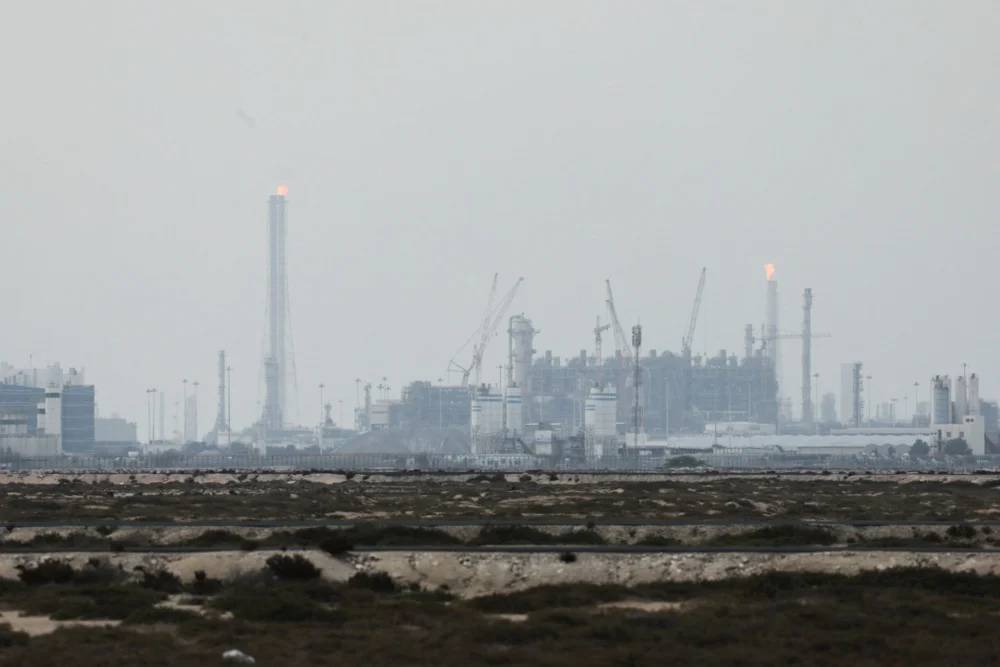
Qatar has cemented its position as one of the world’s leading LNG exporters, a status underpinned by its vast natural gas reserves, primarily from the colossal North Field, shared with Iran. Its industrial complex at Ras Laffan is a marvel of modern engineering, housing multiple liquefaction trains and export terminals. This single industrial hub is responsible for a disproportionately large share of global LNG supply, making the market highly dependent on its uninterrupted operation. The concentration of such immense production capacity in one location, while efficient in peacetime, becomes an acute vulnerability during periods of conflict. Unlike crude oil, which is produced across numerous fields and by multiple states in the Middle East and can be partially rerouted through pipelines (as Saudi Arabia and UAE have done to some extent), natural gas, once liquefied, relies almost exclusively on specialized LNG tankers for long-distance transport. There is no equivalent pipeline network for LNG spanning continents, reinforcing the centrality of maritime routes and the vessels that ply them. This singular point of failure at Ras Laffan, now offline, has created a supply vacuum that the global market is ill-equipped to fill in the short term.
Market Upheaval: Prices Soar Globally and Supply Chains Divert
The repercussions of Qatar’s production halt and the Strait’s near-closure were immediate and dramatic across global gas markets. European natural gas prices witnessed an astounding 63% surge last week, marking their largest percentage gain since March 2022, when Russia’s full-scale invasion of Ukraine triggered an unprecedented energy crisis on the continent. Benchmark European gas futures contracts soared, reigniting fears of renewed energy inflation and supply scarcity. However, the impact on Asian markets has been even more severe. Given that the majority of Qatari LNG exports are typically destined for Asia’s energy-hungry economies, prices there skyrocketed to an even higher premium, trading at $23.40/mmbtu (million British thermal units) on Monday morning.
This significant price differential between Europe and Asia has triggered a frantic scramble for available cargoes and an opportunistic re-routing of vessels. Several LNG tankers originally bound for European ports have reportedly executed U-turns, diverting their precious cargo towards Asian buyers willing to pay a substantially higher price. This dynamic, while economically rational for ship operators, further complicates supply chains and intensifies competition for limited resources, exacerbating the supply crunch in both major consuming regions. The global LNG market, already operating with limited spare capacity, is now under immense strain, with buyers frantically searching for alternatives amidst an environment of escalating costs and profound uncertainty.
The Unique Vulnerabilities of LNG: Operational Challenges and Restart Hurdles
The complexity of LNG production and transportation renders its market particularly susceptible to disruptions. Liquefying natural gas involves cooling it to approximately -162 degrees Celsius (-260 degrees Fahrenheit), reducing its volume by about 600 times. This is an intricate, capital-intensive industrial process requiring specialized infrastructure and highly trained personnel. The notion that LNG operations can be simply ramped up or down based on fluctuating geopolitical temperatures is a dangerous misconception.
Alex Munton, director of global gas and LNG research at Rapidan Energy, underscored this critical distinction, noting that the real risk lies in the difficulty of restarting Qatar’s LNG production at Ras Laffan once safe transit through the Strait is assured. "Given the complexities of cooling gas, which is fundamentally an industrial process, it will take much longer to restart than oil production," Munton explained. Rapidan Energy predicts that LNG exports from the region will not resume until there is "100% certainty" regarding the safety of ship transits through the Strait. This certainty is not merely about perceived de-escalation; it involves practical considerations such as securing adequate insurance coverage for LNG tankers, which can cost upwards of $250 million each. The highly integrated nature of the Ras Laffan complex means that a complete shutdown is an almost unprecedented event. Rapidan estimates that fully restarting operations will take "weeks, rather than days," a timeline that Munton believes the global market has yet to fully appreciate. "I don’t think in the first few days of this conflict – we’re only a week in – that there is an appreciation for the length of time that Qatar is going to be offline and the effect it will have on global supply and the global markets," he stated.
The Broader Energy Security Landscape: Limited Alternatives and Demand Destruction
The global LNG market currently offers little in the way of readily available spare capacity to compensate for Qatar’s absence. The United States, having emerged as the world’s largest LNG exporter in recent years, is largely operating at or near its maximum production capacity. Other major producers like Australia and Russia also have limited flexibility to significantly boost exports in the short term. This lack of additional output worldwide means that the market’s rebalancing mechanism will likely come through "demand destruction." This painful process involves industries and consumers reducing their gas consumption due to prohibitive prices or outright supply shortages. Potential strategies for demand destruction include switching to alternative, albeit often more carbon-intensive, fuels such as relatively inexpensive coal, particularly in industrial sectors and power generation where dual-fuel capabilities exist. However, such switches carry environmental implications and may not be feasible for all sectors.
The crisis highlights the delicate balance of global energy security, where a single, concentrated point of failure can have cascading effects worldwide. Governments and energy companies across Europe and Asia are now likely re-evaluating their energy diversification strategies, scrutinizing contingency plans, and potentially accelerating investments in renewable energy sources and energy efficiency measures to mitigate future reliance on volatile supply chains.
Escalation Risks and Long-Term Implications: A "Sitting Duck" Scenario
Beyond the immediate operational challenges, the specter of further escalation looms large. Alex Munton voiced grave concerns regarding the vulnerability of Qatar’s concentrated LNG infrastructure. He characterized the Ras Laffan industrial complex as a "sitting duck," suggesting that Iran’s prior attacks might have been merely "warning shots." "If Iran wanted to do major damage to Qatar’s LNG capacity, it could… There is no way of defending completely against an Iranian attack if Iran was hell-bent on damaging the plant," Munton warned. This chilling assessment underscores the profound strategic risk associated with the market’s reliance on a single, exposed facility.
The contrast with oil production is stark. "It’s not like one node can take out all Middle East oil production, because there’s just too many fields, there’s too many countries, there’s too many plants and facilities… but with LNG it’s one facility. It’s a gigantic complex, but it’s just one facility," Munton elaborated. This inherent structural vulnerability of the LNG market to targeted attacks on critical infrastructure presents a long-term geopolitical and energy security challenge. It raises questions about the future of energy infrastructure investment, the need for greater diversification of supply sources, and the imperative for de-escalation in the Middle East to safeguard global energy stability.
Impact on Qatar’s Expansion Plans and Future Outlook
The immediate fallout from the crisis has already begun to affect future energy projects. QatarEnergy, the state-owned giant, has reportedly delayed its ambitious expansion plans for its gas facilities until 2027, according to Bloomberg. This postponement of projects, which were intended to significantly boost Qatar’s LNG export capacity, signals a cautious approach in the face of heightened geopolitical risk and operational uncertainty. Such delays will have long-term implications for global supply growth, potentially tightening the market further in the coming years and impacting the energy transition away from more carbon-intensive fuels.
In conclusion, the confluence of the Strait of Hormuz disruption and Qatar’s LNG production halt has thrust the global energy market into an unprecedented period of instability. The unique characteristics of LNG production and transport, coupled with the concentrated nature of Qatari supply, mean that the ramifications are likely to be more severe and protracted than for crude oil. As energy-importing nations grapple with soaring prices and potential shortages, the crisis serves as a stark reminder of the intricate linkages between geopolitics, energy security, and the delicate balance of global supply chains. The coming weeks and months will be critical in determining the full extent of the damage and the long-term adjustments required to navigate this volatile new energy reality.
About the Author