The global liquefied natural gas (LNG) market is grappling with unprecedented volatility following the effective closure of the Strait of Hormuz and a critical halt in Qatari LNG production, precipitating a sharp rise in international gas prices and raising severe energy security concerns worldwide. Crude oil prices experienced an immediate surge on Monday as maritime traffic through the vital Strait of Hormuz ground to a near standstill. However, the longer-term ramifications for the LNG sector are projected to be far more profound and enduring, primarily due to the inherent complexities of LNG transport and the highly concentrated nature of its production infrastructure.
The Immediate Aftermath: Market Shockwaves
The ramifications of these developments were immediate and severe across global energy markets. European natural gas benchmarks witnessed a staggering 63% increase last week, marking its most significant percentage gain since March 2022, a period characterized by intense market upheaval following Russia’s full-scale invasion of Ukraine. This latest surge underscores the enduring vulnerability of Europe’s energy supply, which has increasingly relied on LNG imports, particularly from Qatar, to compensate for reduced Russian pipeline gas flows.
Prices in Asia, a primary destination for Qatari LNG, soared even higher, with Monday morning trading reaching $23.40/MMBtu (Million British Thermal Units). This significant premium reflects the intense competition among Asian nations — including major importers like Japan, South Korea, China, and India — to secure dwindling supplies. The widening price differential between European and Asian markets has already triggered a notable shift in shipping patterns, with several LNG vessels originally destined for European ports executing U-turns mid-voyage to reroute towards more lucrative Asian markets. This dynamic, while economically rational for shippers, exacerbates supply concerns for European consumers.
While Saudi Arabia and the UAE have managed to reroute a portion of their crude oil exports through alternative pipeline networks, such extensive infrastructure does not exist for natural gas. LNG, by its very nature, demands specialized liquefaction plants, cryogenic tankers for transport, and regasification terminals at import locations, making it an entirely ship-dependent commodity for long-distance trade. This lack of flexible rerouting options amplifies the market’s sensitivity to disruptions in maritime chokepoints.
The Strait of Hormuz: A Critical Chokepoint for Global Energy
The Strait of Hormuz is arguably the world’s most critical oil transit chokepoint, connecting the Persian Gulf with the Arabian Sea and beyond. Approximately one-fifth of the world’s total oil consumption, along with roughly 20% of global LNG flows, transits through this narrow waterway. For LNG, the majority of this volume originates from Qatar, the world’s second-largest exporter of the super-chilled fuel. The Strait’s effective closure, triggered by escalating regional tensions and the Iranian drone attack, has thus directly imperiled a substantial portion of global gas supply, particularly impacting key Asian and European economies heavily reliant on Qatari exports.
The geopolitical backdrop to this crisis involves an intensified regional conflict, reportedly linked to broader U.S.-Israeli tensions with Iran. The Iranian drone attack on Qatari energy infrastructure, specifically targeting facilities vital for LNG production, represents a direct escalation. Such actions threaten not only immediate supply but also the perceived safety and security of energy infrastructure across the Gulf region, raising the risk premium for all maritime trade.
Qatar’s Pivotal Role and the Vulnerability of Concentrated Infrastructure
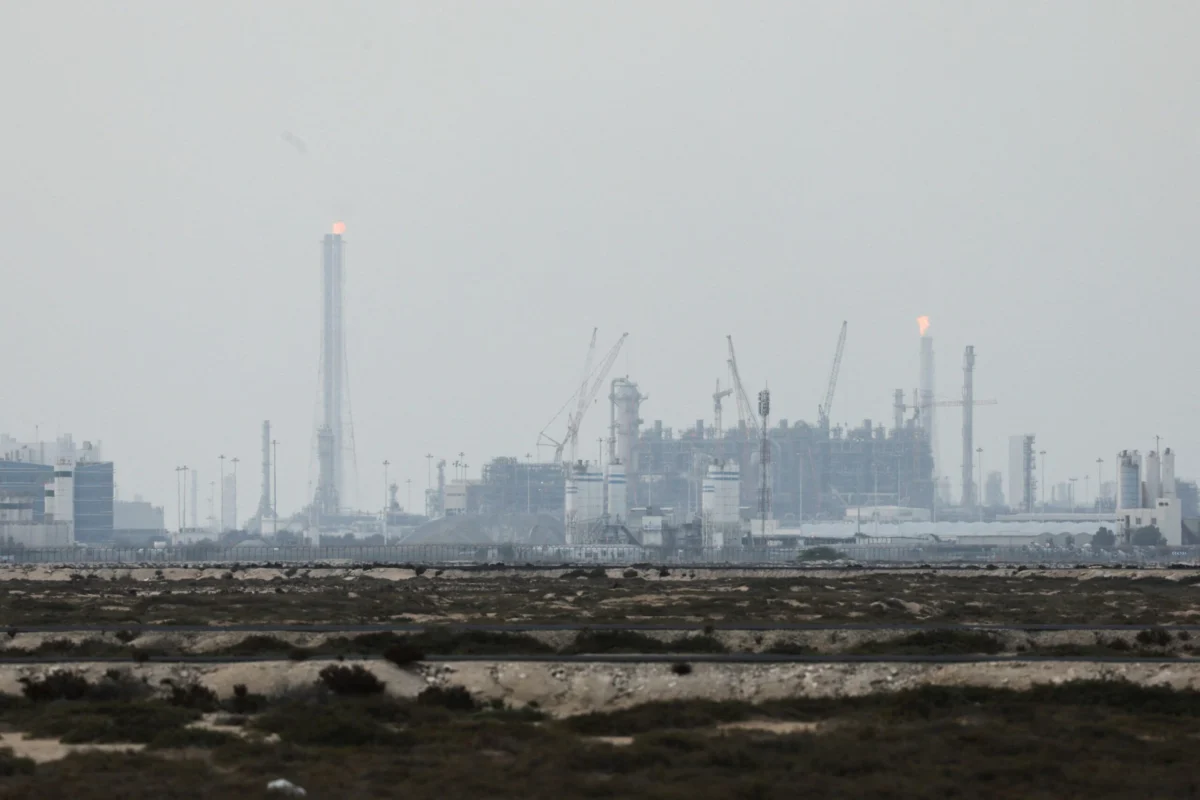
Qatar holds an exceptionally influential position in the global LNG market. Its state-owned energy company, QatarEnergy, operates a massive industrial complex at Ras Laffan, which houses the country’s entire LNG production capacity. This complex, one of the largest in the world, processes natural gas from the colossal North Field, shared with Iran (where it is known as South Pars). Rapidan Energy’s director of global gas and LNG research, Alex Munton, highlighted the extreme vulnerability inherent in this concentration. "While many states in the Middle East produce oil, gas production is concentrated at one industrial complex in Qatar, making the market much more vulnerable going forward," Munton noted.
The sheer scale and singular location of Qatar’s LNG facilities mean that any disruption there has an outsized impact on global supply. Unlike oil production, which is distributed across numerous fields, countries, and facilities, LNG production is highly centralized in Qatar. This makes the Ras Laffan complex a strategic target and a significant point of fragility for the global energy system.
Chronology of Escalation and Impact
The crisis unfolded rapidly, beginning with an Iranian drone attack last week, reportedly on March 2, 2026, which prompted Qatar to halt its LNG output. This critical decision immediately sent shockwaves through the market.
- March 2, 2026: Iranian drone attack targets Qatari energy infrastructure, leading QatarEnergy to halt LNG production at Ras Laffan.
- Week of March 3-7, 2026: European natural gas prices soar by 63%, their largest weekly gain since March 2022. Asian spot LNG prices climb significantly.
- March 8, 2026: Crude oil prices jump as traffic in the Strait of Hormuz faces a near standstill. Asian LNG prices are reported at $23.40/MMBtu. Shipping companies begin rerouting LNG tankers from Europe to Asia.
- March 9, 2026 (Reported): Bloomberg reports that QatarEnergy is delaying its ambitious North Field expansion project until 2027, a direct consequence of the heightened security risks and operational uncertainties.
This swift sequence of events underscores the acute sensitivity of global energy markets to geopolitical instability in the Middle East, particularly when it impacts critical energy chokepoints and concentrated production hubs.

The Complexities of Restarting LNG Operations
A major concern for market analysts and energy policymakers is not just the initial halt but the significant challenges and timeframes involved in restarting Qatar’s LNG production at Ras Laffan. Alex Munton of Rapidan Energy emphasized that "given the complexities of cooling gas, which is fundamentally an industrial process, it will take much longer to restart than oil production."
LNG production is a highly intricate, energy-intensive industrial process involving super-cooling natural gas to approximately -162 degrees Celsius (-260 degrees Fahrenheit), reducing its volume by about 600 times for efficient transport. This process requires continuous, stable operation of vast cryogenic plants, compressors, and heat exchangers. Bringing such a complex facility back online after a complete shutdown is not a matter of simply flicking a switch. It involves:
- Safety Protocols: Rigorous safety checks and procedures must be meticulously followed to ensure the integrity of the plant and prevent accidents involving highly flammable, super-cooled gas.
- Gradual Ramp-Up: Operations cannot be instantly restored to full capacity. The liquefaction trains must be brought online incrementally, a process that can take weeks, not days.
- Equipment Stress: Sudden shutdowns and restarts can place immense stress on specialized equipment, potentially leading to maintenance issues and further delays.
- Human Resources: A large, skilled workforce is required to manage the restart, and their safety must be assured in a potentially volatile security environment.
Rapidan Energy predicts that LNG exports from the region will not resume until there is "100% certainty that it is safe for ships to transit the Strait." This assurance extends beyond military security to practical considerations like insurance coverage. An LNG tanker, costing upwards of $250 million, represents a substantial asset, and shipping companies will demand robust insurance policies, which become exorbitantly expensive or even unavailable in high-risk zones. The firm noted that the entire Ras Laffan plant has never been taken offline before, meaning there is no historical precedent for estimating the restart duration accurately. "I don’t think in the first few days of this conflict — we’re only a week in — that there is an appreciation for the length of time that Qatar is going to be offline and the effect it will have on global supply and the global markets," Munton told CNBC, underscoring the potential for a prolonged disruption.
Global Reactions and Energy Security Concerns
The abrupt halt in Qatari LNG production has sent ripples of concern across major importing nations, particularly in Europe and Asia. For Europe, which has invested heavily in LNG import capacity since the war in Ukraine, the disruption threatens to undermine its hard-won energy security gains. Countries like Germany, France, and Italy, which have diversified away from Russian pipeline gas, are now exposed to the volatility of the global spot LNG market, which is currently seeing prices driven sky-high. European energy ministers are likely to be convening emergency meetings to assess their strategic reserves and contingency plans.
Asian nations, which account for the majority of Qatari LNG exports, face an even more immediate and acute challenge. Japan, South Korea, China, and India are heavily reliant on imported LNG to fuel their economies and power their industries. The competition for available cargoes is intense, leading to price spikes that could translate into higher electricity bills for consumers and increased operating costs for businesses, potentially impacting economic growth. Governments in these regions are likely exploring all available options, including drawing down strategic reserves, optimizing domestic gas production where possible, and even considering temporary shifts to alternative, potentially more polluting, fuels.
The United States, as the world’s largest LNG exporter, is theoretically positioned to help bridge the supply gap. However, U.S. LNG production facilities are already running at or near maximum capacity. With little additional output available worldwide in the short term, the market’s rebalancing mechanism will likely rely on "demand destruction." This could involve industrial users curtailing operations, power generators switching to cheaper, albeit often higher-emission, alternatives like coal, or even government-mandated energy conservation measures.
Broader Economic and Geopolitical Implications
The current crisis carries significant broader implications beyond immediate market fluctuations.
- Demand Destruction and Fuel Switching: The soaring prices make LNG prohibitively expensive for some industrial users and power generators. This could lead to a temporary resurgence in coal consumption, particularly in Asia, undermining efforts to transition to cleaner energy sources and potentially impacting climate goals.
- Insurance Market Instability: The elevated risk profile of the Strait of Hormuz will undoubtedly lead to higher insurance premiums for all vessels traversing the region, including oil and LNG tankers. This will add to shipping costs and could further deter vessel operators from entering the area, prolonging supply disruptions even after military tensions subside.
- Long-Term Investment Decisions: The vulnerability exposed by this crisis could influence future investment decisions in LNG infrastructure. Importing nations may accelerate efforts to diversify their supply sources and build greater resilience into their energy systems, potentially favoring more distributed and less chokepoint-dependent supply chains. Exporting nations, conversely, might face increased scrutiny regarding the security of their production facilities.
- Geopolitical Ramifications: The attack on Qatari infrastructure and the Strait’s closure underscore the fragility of global energy supply chains in the face of regional conflicts. It serves as a stark reminder that geopolitical flashpoints in the Middle East have immediate and far-reaching economic consequences globally, compelling international actors to seek diplomatic resolutions to de-escalate tensions.
- Impact on Qatar’s Expansion Plans: The reported delay in QatarEnergy’s ambitious North Field expansion project until 2027 is a direct, tangible consequence of the heightened security environment. This expansion was crucial for meeting anticipated growth in global LNG demand, and its deferral will have long-term implications for future supply availability and pricing.
Expert Perspectives and Warnings
Rapidan Energy’s Alex Munton articulated a grave warning regarding the potential for further escalation and its catastrophic consequences. Munton characterized Iran’s prior attacks against Ras Laffan as a "warning shot that wasn’t the real deal," suggesting that Iran possesses the capability to inflict far greater damage. "It’s a sitting duck," Munton said of the industrial complex. "If Iran wanted to do major damage to Qatar’s LNG capacity, it could. … There is no way of defending completely against an Iranian attack if Iran was hell bent on damaging the plant."
This stark assessment highlights the existential threat posed to Qatar’s singular LNG facility. Unlike oil production, which is geographically dispersed, the concentration of virtually all of Qatar’s LNG output at Ras Laffan presents a unique and profound vulnerability. "It’s not like one node can take out all Middle East oil production, because there’s just too many fields, there’s too many countries, there’s too many plants and facilities… but with LNG it’s one facility. It’s a gigantic complex, but it’s just one facility," Munton elaborated. This vulnerability underscores the imperative for all stakeholders – from importing nations to international security bodies – to prioritize de-escalation and secure transit through the Strait of Hormuz.
The current crisis in the Strait of Hormuz and the halt in Qatari LNG production represent a critical juncture for global energy markets. The confluence of geopolitical instability, concentrated infrastructure, and the inherent complexities of LNG logistics has created a volatile environment with profound implications for energy security, economic stability, and international relations for the foreseeable future.
About the Author