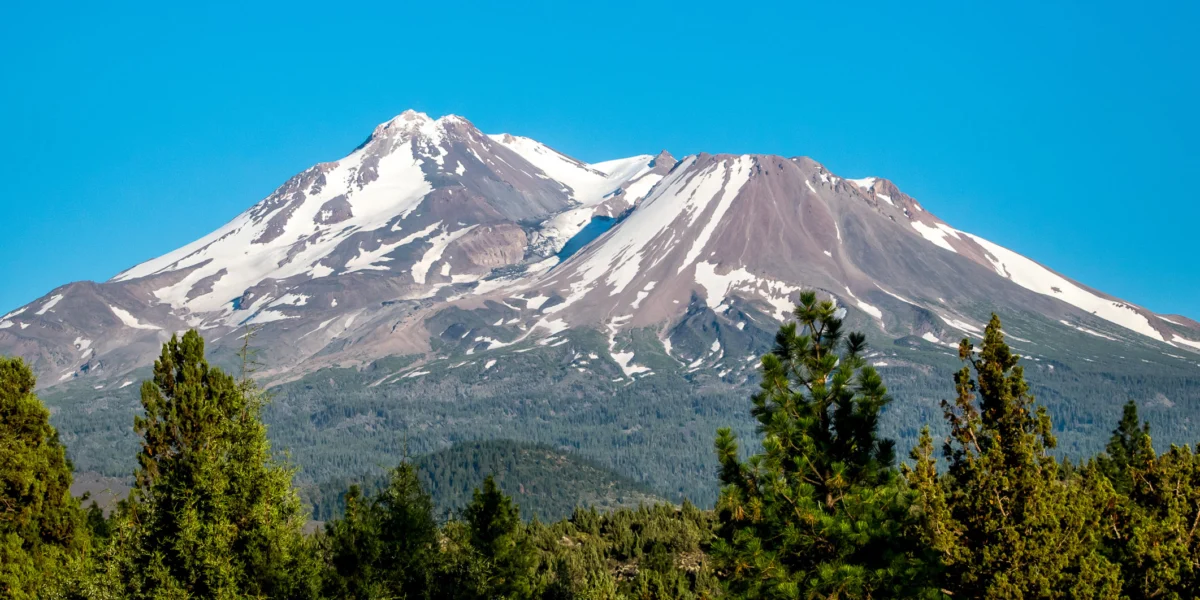
Three hikers found themselves in a precarious situation on California’s Mount Shasta this week, necessitating a rescue operation after their expedition planning was heavily influenced by Google’s artificial intelligence chatbot, Gemini. The incident, detailed in a report from the Siskiyou County Sheriff’s Office and highlighted by the Chicago Tribune, raises significant questions about the reliability of AI for critical decision-making, particularly in high-risk environments. The hikers, who embarked on their journey at an early hour, deviated significantly from recommended timelines, ultimately requiring assistance to descend safely.
The Mount Shasta Expedition and the AI’s Role
The three young men began their ascent of Mount Shasta, a prominent stratovolcano in the Cascade Range, at approximately 3 a.m. Mount Shasta, standing at 14,179 feet, is a popular but challenging peak, drawing climbers and hikers from around the world. Its formidable elevation, unpredictable weather patterns, and rugged terrain demand meticulous preparation and adherence to safety protocols. A standard recommendation for hikers aiming for the summit is to turn around by noon if they have not reached their objective. This guideline is crucial for ensuring sufficient daylight for a safe descent and mitigating the risks associated with navigating the mountain in darkness.
However, this particular group significantly overstayed their welcome on the upper reaches of the mountain. Instead of reaching the summit and beginning their descent within the recommended timeframe, they did not achieve their goal until 7 p.m. This substantial delay meant that the descent would inevitably take place after sunset, a condition that dramatically increases the danger of hiking on any mountain, let alone one as imposing as Mount Shasta.
The Descent into Darkness and the Call for Help
As darkness enveloped the mountain, the hikers found themselves disoriented and struggling to navigate the treacherous slopes. In their hour of need, they contacted the Siskiyou County Sheriff’s Office, seeking directions. The call for assistance triggered a response from emergency services, but the hikers were unable to be immediately extricated. They spent the night in Mud Creek Canyon, a challenging and remote area of the mountain, before being located and rescued the following morning by a coordinated effort involving Forest Service rangers and dedicated volunteers.
Gemini’s Questionable Advice: Food, Water, and Time Management
The most concerning aspect of this incident, as highlighted by the sheriff’s office report, is the role Gemini played in the hikers’ planning. While the report does not explicitly state that Gemini is solely to blame for the poor decisions made, it directly attributes specific, and ultimately detrimental, advice to the AI. According to the sheriff’s office, the hikers were advised by Gemini to carry "far less food and water than their group required." This advice proved to be particularly problematic given that their "planned 8-hour ascent became a multiday ordeal," a significant miscalculation in time and resource management.
The discrepancy between the planned duration of the hike and the actual time spent on the mountain underscores a critical failure in the AI’s predictive capabilities or the hikers’ interpretation of its guidance. Planning for an 8-hour ascent of Mount Shasta, particularly from a base camp, is an ambitious timeline even under ideal conditions. To underestimate the time required to such an extent, and to be advised to carry insufficient provisions for an extended outing, suggests a serious deficiency in the AI’s understanding of the mountain’s inherent complexities and potential delays.
Official Warnings and the Future of AI in Outdoor Recreation
In the wake of the rescue, the Siskiyou County Sheriff’s Office issued a strong cautionary statement regarding the use of AI for outdoor adventure planning. "It is always advisable to call the local USFS Mount Shasta ranger station ahead of your trip to ensure you have the most accurate information, and to never rely solely on AI for your trip planning," the office stated. This statement serves as a direct warning to individuals who might be tempted to substitute expert human advice with the outputs of artificial intelligence.
The U.S. Forest Service (USFS) Mount Shasta ranger station is a vital resource for anyone planning to explore the mountain. Rangers possess up-to-date knowledge of trail conditions, weather forecasts, potential hazards, and current regulations. They are also trained to assess a hiker’s experience level and provide tailored advice to ensure safety. Relying solely on AI, which may draw from outdated or generalized data, can lead to critical oversights.
Supporting Data and Context: The Risks of Mount Shasta
Mount Shasta is not a casual hiking destination. Its geological features, including glaciers, steep scree slopes, and volcanic rock, present inherent dangers. Weather on Mount Shasta can change rapidly, with snow, ice, and high winds possible at any time of year. Hypothermia, altitude sickness, and falls are significant risks for unprepared climbers.
According to data from the American Alpine Club’s Accidents in North American Climbing, incidents on major peaks like Mount Shasta often involve a combination of factors, including:
- Inadequate preparation: This encompasses insufficient gear, lack of appropriate clothing, and underestimation of the physical demands of the climb.
- Poor decision-making: This includes pushing on in adverse weather, attempting to summit too late in the day, and getting lost.
- Lack of experience: Many accidents involve individuals who are new to mountaineering or unfamiliar with the specific challenges of a particular peak.
The average success rate for summiting Mount Shasta can vary significantly depending on the route, weather, and climber experience, but it is generally not a guaranteed achievement within a short, planned window for novice hikers. Estimates suggest that only about 50-60% of those who attempt the summit are successful on any given attempt, with many turning back due to weather or physical limitations.
The Chronology of the Incident
- Early Morning (3:00 AM): The three hikers commence their ascent of Mount Shasta.
- Late Afternoon/Early Evening (7:00 PM): The hikers reach the summit, significantly behind schedule. The recommended turnaround time of noon has long passed.
- Evening/Night: The group begins their descent in darkness, becoming disoriented.
- Night: The hikers contact the Siskiyou County Sheriff’s Office for assistance and spend the night in Mud Creek Canyon.
- Following Morning: Forest Service rangers and volunteers locate and rescue the stranded hikers.
Analysis of AI’s Limitations in High-Stakes Scenarios
This incident serves as a stark reminder that while AI tools like Gemini can be incredibly useful for a wide range of tasks, they are not infallible, especially when it comes to real-world, high-consequence activities. The limitations of AI in this context can be attributed to several factors:
- Data Dependency: AI models are trained on vast datasets. If these datasets lack specific, nuanced information about a particular mountain’s conditions, or if they are outdated, the AI’s advice can be flawed.
- Lack of Real-Time Context: AI cannot physically assess current conditions on the mountain. It cannot see the changing weather, the condition of the trails, or the physical state of the hikers in real-time.
- Inability to Understand Nuance and Risk Assessment: While AI can process information, it lacks the human capacity for nuanced judgment and intuitive risk assessment. It might not grasp the subtle cues that an experienced mountaineer would recognize as indicators of danger.
- Over-Generalization: AI might provide advice based on general hiking principles rather than the specific, often extreme, demands of a peak like Mount Shasta. The advice to carry less food and water, for instance, might be applicable to a short day hike but is dangerously inappropriate for a strenuous, extended mountain expedition.
- User Interpretation: The responsibility also lies with the user to critically evaluate AI-generated advice and cross-reference it with other reliable sources. Blindly following AI recommendations without independent verification can be perilous.
Broader Implications for Outdoor Recreation and Technology
The case of the Mount Shasta hikers is likely to spark a broader conversation within the outdoor recreation community and among technology developers.
For Outdoor Enthusiasts:
There will be an increased emphasis on educating the public about the limitations of AI for trip planning. This might involve public awareness campaigns by park services and outdoor organizations. Hikers will be encouraged to:
- Always consult official sources like park ranger stations, official trail guides, and experienced local guides.
- Cross-reference AI-generated advice with multiple reputable sources.
- Develop their own understanding of mountaineering safety principles.
- Consider their own experience level and physical fitness before attempting challenging hikes.
For AI Developers:
This incident could prompt a re-evaluation of how AI is deployed for high-risk applications. Developers may need to:
- Incorporate more robust safety disclaimers and warnings within their AI interfaces.
- Focus on providing information and recommendations rather than definitive instructions for dangerous activities.
- Develop AI models that can access and process real-time, location-specific data from official sources.
- Collaborate with experts in fields like mountaineering and emergency services to ensure the accuracy and safety of their outputs.
The Siskiyou County Sheriff’s Office’s directive to consult local ranger stations highlights the irreplaceable value of human expertise. While AI offers powerful tools for information processing and assistance, it cannot replicate the seasoned judgment, situational awareness, and on-the-ground knowledge that are essential for navigating the inherent risks of outdoor adventures, especially on formidable natural landmarks like Mount Shasta. The incident serves as a critical case study in the responsible and discerning integration of artificial intelligence into our lives, particularly when safety and well-being are on the line.
About the Author