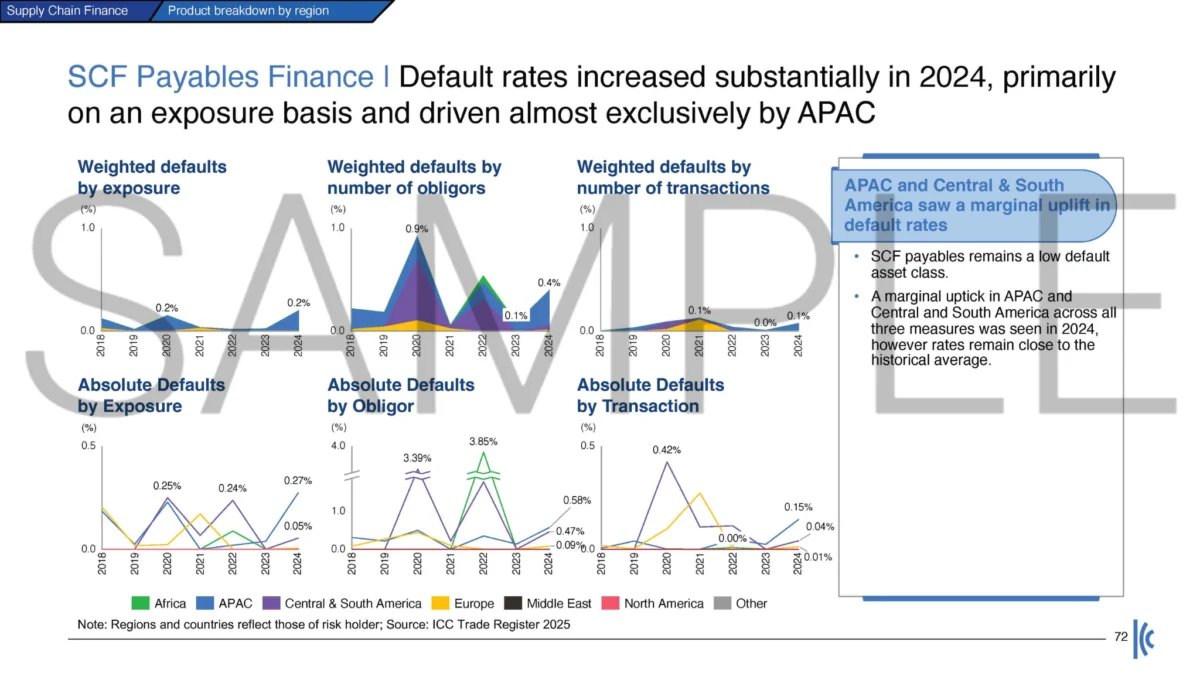
The International Chamber of Commerce (ICC) has announced the upcoming release of its 2026 Global Trade Intelligence Report, marking a significant milestone in the evolution of trade finance analytics. As the global economy grapples with shifting geopolitical landscapes, inflationary pressures, and the ongoing digitalization of supply chains, this report serves as the definitive roadmap for financial institutions, policymakers, and corporate treasurers. Built upon a foundation of more than a decade of aggregated data, the 2026 edition represents the most comprehensive analysis of trade finance risk and performance ever assembled. By leveraging data from 22 of the world’s leading global banks and covering a staggering $25.7 trillion in transactions, the ICC continues to provide the industry with the empirical evidence necessary to advocate for trade finance as a low-risk, high-impact asset class.
The ICC Global Trade Intelligence Report has transitioned from its origins as a data repository into a sophisticated strategic asset. It delivers actionable insights into default and loss rates across various trade finance products, including Letters of Credit (LCs), Guarantees, and increasingly, Supply Chain Finance (SCF) instruments. In an era where financial volatility can disrupt the flow of essential goods, the report’s ability to offer a benchmark for risk performance is indispensable. It allows global financial institutions to support more informed decision-making processes, optimize capital allocation, and identify emerging market opportunities that might otherwise be obscured by perceived risk.
Historical Evolution and the Roadmap to 2026
The journey of the ICC Global Trade Intelligence Report began over ten years ago with the establishment of the ICC Trade Register. Initially conceived as a response to the regulatory changes following the 2008 financial crisis, the project sought to provide the Basel Committee on Banking Supervision and other regulatory bodies with hard data regarding the safety and soundness of trade finance. At the time, there was a growing concern that stringent capital requirement regulations (such as Basel III) would disproportionately penalize trade finance, despite its historically low default rates.
Over the years, the scope of the project expanded significantly. What began as a focused study on default rates has evolved into a multi-faceted intelligence platform. Between 2015 and 2020, the ICC integrated more sophisticated data collection methods, moving beyond simple default counts to include Loss Given Default (LGD) and Exposure at Default (EAD) metrics. By 2023, the report had successfully incorporated a broader range of supply chain finance products, reflecting the industry’s shift toward open-account trading.
The 2026 report represents the latest stage of this chronology. It incorporates post-pandemic recovery data and the impacts of recent regional conflicts on trade corridors. This timeline of data collection allows the ICC to provide a longitudinal view of the market, offering a perspective that single-year snapshots cannot achieve. The 2026 edition is not merely a collection of statistics but a narrative of how global trade has adapted to a decade of unprecedented disruption.
Unpacking the $25.7 Trillion Data Foundation
The sheer scale of the data powering the 2026 report is its most compelling feature. The $25.7 trillion in transactions analyzed represent a significant portion of total global trade, providing a statistically significant sample that covers virtually every industry and geographic region. This data is contributed by a consortium of 22 global member banks, including major Tier-1 institutions that facilitate the lion’s share of international trade finance.
The methodology behind the report is rigorous. Data is aggregated and anonymized to ensure competitive neutrality while maintaining the highest standards of accuracy. This process is overseen by a strategic partnership involving the International Chamber of Commerce, the Boston Consulting Group (BCG), and Global Credit Data (GCD). BCG provides the strategic and analytical framework, while Global Credit Data—a non-profit association owned by over 50 member banks—manages the technical database and ensures that the loss data meets the stringent requirements of internal ratings-based (IRB) models used by banks.
This robust data set allows the report to offer specific benchmarks for different trade finance products. For example, the report distinguishes between "Import Letters of Credit" and "Export Letters of Credit," noting the different risk profiles associated with each. It also delves into the performance of "Performance Guarantees" versus "Financial Guarantees," providing granular detail that is essential for risk managers who must price these instruments accurately in a competitive market.
Strategic Implications for Global Banking and Regulation
One of the primary functions of the ICC Global Trade Intelligence Report is to influence the regulatory treatment of trade finance. For years, the ICC has argued that trade finance is fundamentally different from general corporate lending. Trade finance transactions are typically short-term, self-liquidating, and backed by the underlying movement of goods. The 2026 report continues to reinforce this argument with updated evidence.
Industry experts and bank representatives have frequently noted that without the ICC’s data, trade finance might face significantly higher capital charges under Basel IV. By demonstrating that default rates for trade finance are consistently lower than those for traditional commercial loans, the ICC provides banks with the ammunition they need to engage with regulators. This has a direct impact on the "Trade Finance Gap"—the multi-trillion dollar shortfall in the availability of trade credit, which particularly affects Small and Medium-sized Enterprises (SMEs) in emerging markets.
Furthermore, the report serves as an internal benchmarking tool. Member banks can compare their own portfolio performance against the global and regional averages provided by the ICC. If a bank’s default rate in a specific region is significantly higher than the ICC benchmark, it may indicate a need to refine their underwriting standards. Conversely, if a bank is outperforming the benchmark, it can use that data to justify expanding its footprint in that market.
Regional Insights and Emerging Market Opportunities
The 2026 report is structured to provide tailored insights through its Global Overview Report, regional data analysis, and product-specific deep dives. This structure is particularly valuable for institutions looking to navigate the complexities of emerging markets. While global averages are useful, the risk profile of trade finance in Southeast Asia differs vastly from that in Sub-Saharan Africa or Latin America.
The regional analysis sections of the report examine the impact of local economic conditions, currency stability, and political risk on trade finance performance. In recent years, there has been a notable shift in trade patterns, with "near-shoring" and "friend-shoring" becoming more prevalent. The 2026 report tracks these shifts, showing how trade finance volumes and risk profiles are evolving in regions like Mexico, Vietnam, and Poland as they become more integrated into Western supply chains.
Additionally, the report highlights the resilience of trade finance in the face of regional shocks. Historically, even when a country faces a sovereign debt crisis, trade finance obligations are often prioritized to ensure that essential imports—such as food and medicine—continue to flow. The ICC data captures this "preferential treatment," providing a nuanced understanding of risk that goes beyond simple credit ratings.
Enhancing Transparency Through Strategic Partnerships
The high standard of the ICC Global Trade Intelligence Report is a direct result of its collaborative model. The partnership between the ICC, BCG, and GCD ensures that the report is not only data-rich but also strategically relevant. BCG’s involvement brings a consulting perspective that translates complex data into "actionable intelligence," helping banks understand the "why" behind the numbers.
Global Credit Data’s role is equally critical. As a bank-owned association, GCD ensures that the data collection process adheres to the highest industry standards. Their expertise in credit risk modeling ensures that the report’s findings are robust enough to be used in formal regulatory filings. This level of transparency is vital for maintaining the credibility of the report in the eyes of central banks and international financial institutions.
The ICC also offers membership opportunities for banks to join this elite group of data contributors. Membership provides institutions with early access to findings, detailed benchmarking reports, and a seat at the table where the future of trade finance intelligence is shaped. For non-bank corporations, the ICC provides sponsorship opportunities, allowing them to raise their visibility within the global banking sector and align themselves with the industry’s leading source of intelligence.
Conclusion: Shaping the Future of Global Trade
As the 2026 Global Trade Intelligence Report nears its full release, the international trade community anticipates a document that will redefine how risk is perceived and managed. In a world characterized by "permacrisis," the availability of reliable, aggregated data is a form of economic infrastructure. By providing a clear view of the risk performance of $25.7 trillion in transactions, the ICC is not just publishing a report; it is safeguarding the mechanisms that allow global commerce to function.
The findings of the 2026 report will likely influence everything from the pricing of letters of credit in emerging markets to the development of new digital trade platforms. As the industry moves toward greater automation and the adoption of Electronic Bills of Lading (eBLs), the baseline data provided by the ICC will be essential for calibrating the algorithms and AI models that will drive the next generation of trade finance.
Ultimately, the ICC Global Trade Intelligence Report 2026 serves as a testament to the power of industry collaboration. By coming together to share data and insights, the world’s leading banks, under the stewardship of the ICC, are ensuring that trade finance remains a resilient, transparent, and vital component of the global financial system. The upcoming report will be a strategic asset for any institution looking to navigate the complexities of the modern trade landscape with confidence and precision.
About the Author