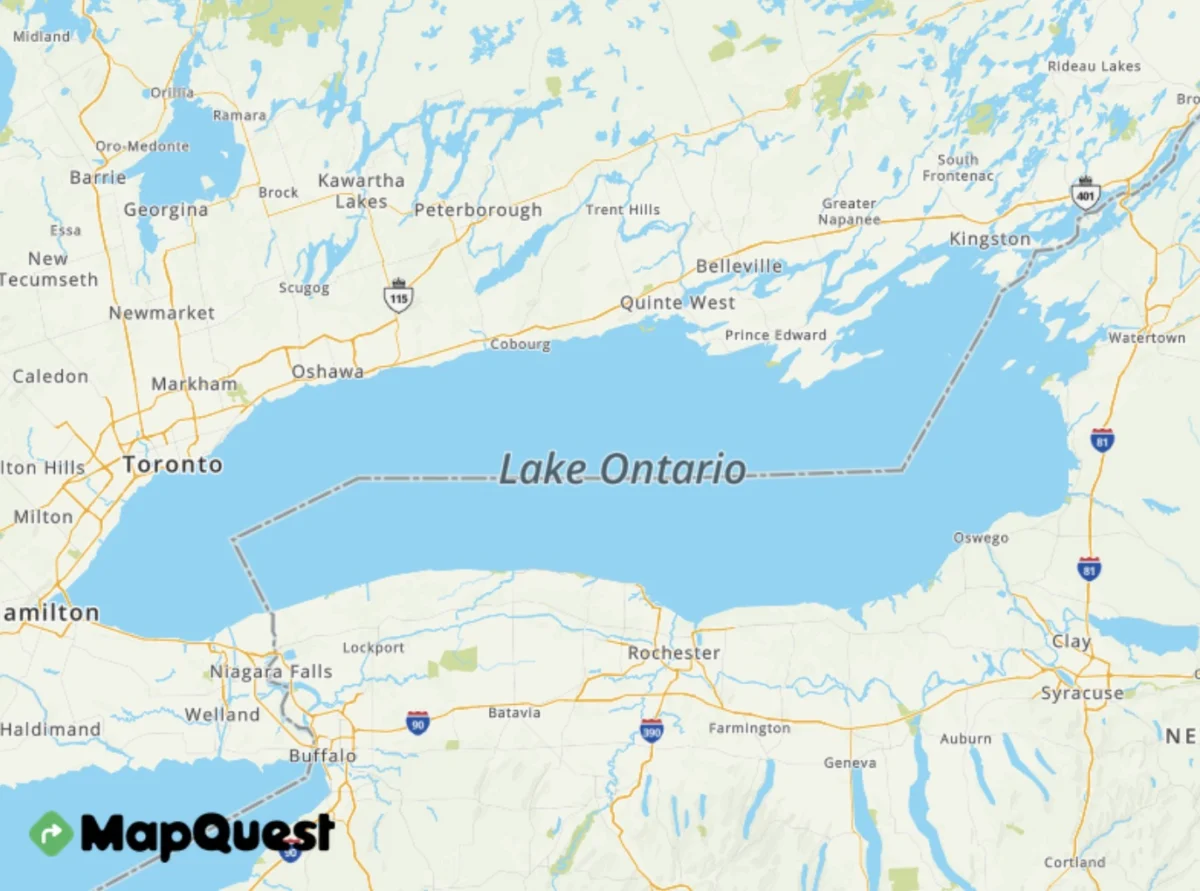
MapQuest, a once-dominant mapping application that many believed had faded into digital obscurity, has experienced a dramatic and unexpected resurgence, topping the U.S. App Store as the No. 1 overall app. This remarkable comeback, a significant leap from its previous ranking of No. 8 just the day before, was directly inspired by the company’s principled refusal to alter the name of Lake Ontario to "Lake America" following a directive from President Trump. The move has not only reignited interest in the legacy mapping service but also highlighted a growing public sentiment for digital platforms to maintain a stance on historical and geographical accuracy.
The catalyst for this surge in downloads was an executive order issued by President Trump on August 27th, which directed the U.S. geographic naming service to adopt "Lake America" as the new designation for Lake Ontario. This directive was framed within the context of the President’s ongoing trade initiatives, aiming to imbue geographical landmarks with a stronger nationalistic identity. However, the proposed name change for one of the Great Lakes quickly sparked debate and drew criticism from various quarters, including those concerned with the preservation of established geographical nomenclature.
MapQuest’s decisive action came swiftly after the executive order. On August 27th, the company issued a statement on X, formerly Twitter, declaring its unwavering commitment to retaining the original name of the lake. This stance stood in stark contrast to the responses of major tech competitors. Google Maps, a dominant player in the digital navigation space, announced its adoption of the new name shortly thereafter, citing its policy of updating names to reflect changes in official government sources, such as the Geographic Names Information System (GNIS). Apple Maps, following a similar trajectory, also acquiesced to the presidential directive, though it did not issue a detailed public statement explaining its decision.
The divergent responses from these tech giants created a clear dichotomy for consumers. As Google Maps and Apple Maps implemented the name change, MapQuest’s refusal to do so began to resonate with a segment of the app-using public. Users, seemingly motivated by a desire to support a company that took a stand on what they perceived as a matter of principle, began to download the MapQuest application in significant numbers. This groundswell of support translated directly into a dramatic improvement in MapQuest’s App Store rankings.
The climb was methodical and rapid. On August 28th, the day after the executive order, MapQuest’s U.S. App Store ranking was 128. By the following day, it had climbed to 92. The ascent continued, reaching No. 3 on Monday, August 31st, a day on which it also secured the No. 1 position within the competitive Navigation category. The culmination of this surge occurred on Tuesday of the following week, when MapQuest ascended to the coveted No. 1 spot across all apps and games on the U.S. App Store.
Data-Driven Insights into the Download Surge
Market intelligence firm Sensor Tower has provided granular data illuminating the scale of this unexpected user influx. According to their estimates, since the executive order was issued, MapQuest has seen approximately 632,000 new downloads in the United States. When reached for comment, MapQuest itself reported an even more substantial figure, stating that the app had garnered over 1.5 million installs across both the U.S. and Canada combined.
The engagement levels of these new users have also been a point of emphasis for MapQuest. The company indicated that this influx is not merely comprised of casual downloaders but rather individuals who are actively interacting with the application and providing feedback. Doug Berger, General Manager of MapQuest, conveyed this sentiment in an email to TechCrunch: "What’s been incredible is that people aren’t just installing our app – they care enough to communicate directly with us – making feature requests and submitting bug reports on social, and in our app reviews. Our small team has been working around the clock to build features people are asking for. We are aiming for everyone to have a great experience with the app." This indicates a strong level of user investment and a renewed sense of community around the brand.

The timing of this surge is particularly noteworthy. Sensor Tower’s data reveals that over half of MapQuest’s year-to-date U.S. downloads – precisely 56% – occurred between August 27th and September 1st. During this concentrated five-day period, the app’s U.S. downloads experienced a staggering 123% increase day-over-day. Furthermore, compared to the same period in the previous year, MapQuest’s U.S. downloads were up more than 50 times, underscoring the unprecedented nature of this recent growth.
A Contrast with Big Tech Giants
A significant factor contributing to MapQuest’s successful appeal was the stark contrast it presented to its much larger and more established Big Tech rivals. While Google Maps explained its decision to comply with the name change by referencing its adherence to official government sources like the GNIS, and Apple Maps followed suit without detailed explanation, MapQuest’s decision to stand firm on historical naming conventions was perceived by many as a principled stand against undue political influence.
This divergence in approach highlights the inherent advantages and disadvantages of different scales of operation within the tech industry. Google and Apple, as dominant platforms with extensive data operations and established relationships with government data repositories, often prioritize maintaining seamless integration with official information streams. Their compliance, therefore, can be seen as a function of their operational models and their commitment to aligning with authoritative sources.
In contrast, MapQuest, as a smaller player in the current mapping landscape, possesses greater agility and potentially more freedom to diverge from conventional industry practices. This autonomy allows for a more pronounced and public articulation of its values, which, in this instance, resonated deeply with a segment of the consumer base. The company’s historical adherence to established names, such as its continued use of "Gulf of Mexico" instead of a hypothetical "Gulf of America," further reinforces its brand identity as a custodian of geographical integrity.
A History of Principled Stances and Rebranding
MapQuest’s decision to resist the renaming of Lake Ontario is not an isolated incident but rather an extension of a pattern of behavior that has allowed it to maintain a unique identity. Prior to its acquisition by System1 in 2019, the company had already established a reputation for preserving established geographical names. This commitment to historical accuracy appears to be a deliberate strategy, allowing the brand to carve out a niche in a market dominated by giants.
Adding a touch of levity and further engaging its user base, MapQuest also launched a humorous online tool that allows users to playfully rename Lake Ontario to their preferred moniker and share the results on social media. This interactive feature not only generated buzz but also served as a direct invitation for users to express their own sentiments regarding the naming controversy, further solidifying MapQuest’s position as a champion of user choice and historical preservation.
The journey of MapQuest is a fascinating narrative of technological evolution and market dynamics. Once the undisputed leader in online mapping, the platform ceded its dominance to Google Maps over the years. Its acquisition by System1 from Verizon, which had previously acquired AOL (MapQuest’s initial acquirer) in 2015, marked a new chapter for the company. Under new ownership, MapQuest has been reinventing itself, and this recent surge in popularity, driven by a principled stand, suggests a renewed relevance and a potential for significant growth. The company’s ability to leverage its brand heritage and respond to contemporary societal concerns has proven to be a powerful strategy in capturing user attention and loyalty in an increasingly competitive digital landscape. The future trajectory of MapQuest will be closely watched as it navigates this newfound prominence and continues to build upon the momentum generated by its courageous stance.
About the Author