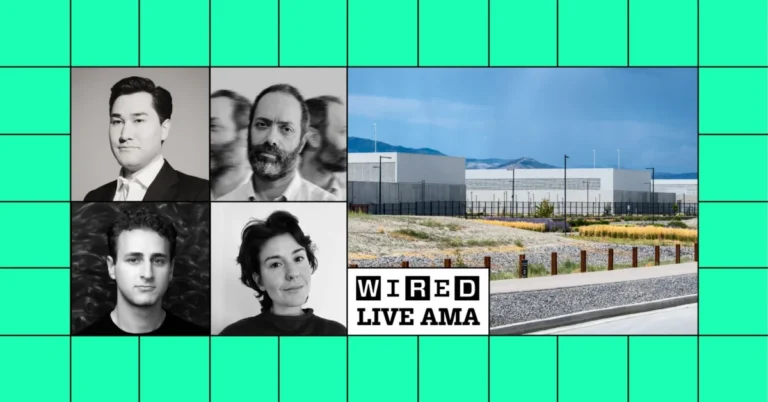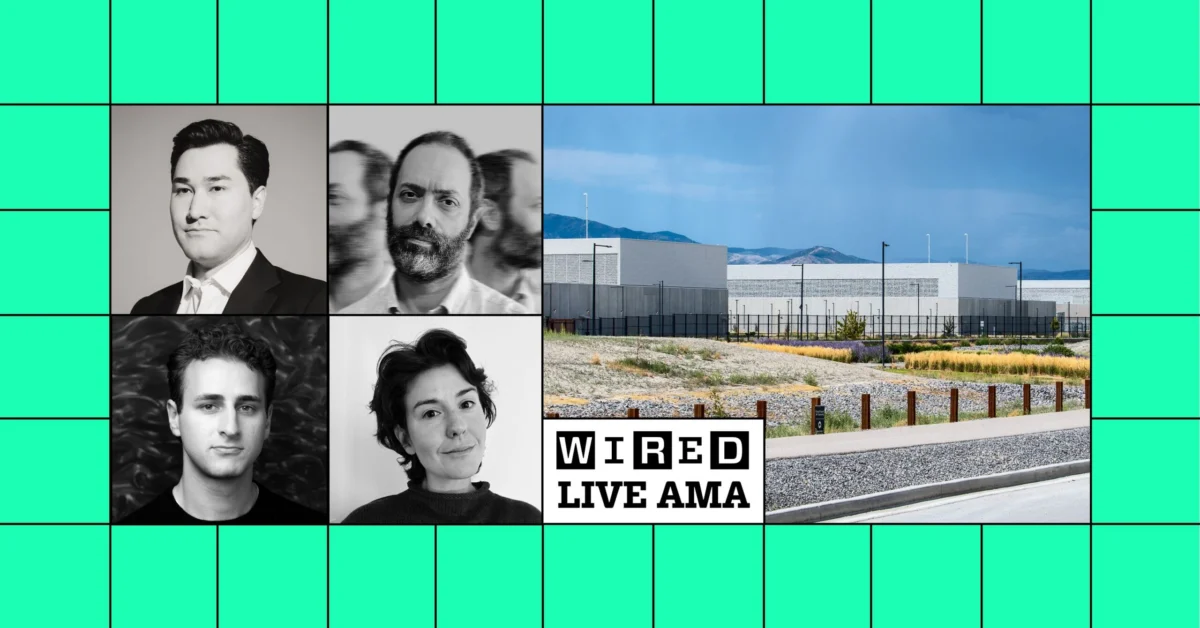
The rapid expansion of data centers, once considered the silent and invisible backbone of the internet, has moved to the forefront of American public discourse, sparking intense debates over energy consumption, environmental sustainability, and local zoning laws. As the infrastructure required to support the burgeoning artificial intelligence (AI) industry continues to proliferate across the United States, WIRED has announced a comprehensive livestream Ask Me Anything (AMA) event scheduled for September 10 at 12:00 PM ET / 9:00 AM PT. This event aims to address the complexities of an industry that has become a lightning rod for political and social activism as the nation approaches the 2026 midterm elections.
For decades, data centers operated largely out of the public eye, housed in nondescript warehouses located in industrial zones or remote rural areas. However, the advent of generative AI and the massive computational power required to train large language models (LLMs) have necessitated a new generation of "hyperscale" facilities. These massive complexes often consume as much electricity as small cities and require millions of gallons of water for cooling, leading to a significant shift in public perception. What was once viewed as a sign of economic progress is now frequently met with skepticism or outright hostility from local communities concerned about noise pollution, rising utility costs, and the strain on natural resources.
The Evolution of Data Infrastructure: A Chronology of Growth
The trajectory of data center development in the United States can be divided into three distinct phases, each marked by increasing scale and complexity. The first phase, beginning in the late 1990s and continuing through the mid-2000s, focused on the transition from on-premise corporate servers to centralized colocation facilities. During this era, data centers were relatively small and primarily served the needs of the nascent e-commerce and financial sectors.
The second phase, roughly from 2010 to 2020, was defined by the rise of cloud computing. Giants such as Amazon Web Services (AWS), Microsoft Azure, and Google Cloud began building massive campuses to host the world’s data. While these facilities were significantly larger than their predecessors, they remained largely uncontroversial, often welcomed by local governments for the property tax revenue they generated without placing a heavy burden on public services like schools or emergency departments.
The current phase, which began in earnest in late 2022 with the public release of advanced AI tools, represents a fundamental shift in scale. AI workloads are significantly more energy-intensive than traditional cloud storage or web hosting. A single query to an AI chatbot is estimated to require ten times the electricity of a standard Google search. This surge in demand has forced developers to seek out new locations with access to high-voltage power lines and reliable water sources, often bringing them into direct conflict with residential neighborhoods and environmental conservationists.
Supporting Data: The Scale of Resource Consumption
The physical footprint of the data center industry is expanding at an unprecedented rate. According to a report by the Electric Power Research Institute (EPRI), data centers could consume up to 9% of the total electricity generated in the United States by 2030, doubling their current share. In specific regions, such as Northern Virginia—the world’s largest data center hub—these facilities already account for a staggering portion of the total energy load.
Water usage is another critical metric driving the current debate. Hyperscale data centers utilize evaporative cooling systems to prevent servers from overheating. Research indicates that a large data center can consume upwards of 1 million to 5 million gallons of water per day, comparable to the usage of a town of 10,000 to 50,000 people. In drought-prone states like Arizona and Utah, the approval of new data center projects has become a point of contention among residents who fear for the long-term viability of their local aquifers.
Furthermore, the economic impact is a double-edged sword. While data centers contribute billions in tax revenue—Loudoun County, Virginia, for example, receives over $500 million annually in personal property taxes from these facilities—they create relatively few permanent jobs once construction is complete. This "low employment, high revenue" model is increasingly being questioned by urban planners who argue that the massive land use could be better utilized for housing or diverse industrial developments.
Political Implications and the 2026 Midterm Landscape
The upcoming 2026 midterm elections are expected to be a pivotal moment for data center policy. Unlike many issues that fall along traditional partisan lines, the backlash against data centers is a cross-spectrum phenomenon. Conservative voters often express concerns regarding property rights, the preservation of rural landscapes, and the potential for increased electricity rates driven by the need for grid upgrades. On the other side of the aisle, progressive voters and environmental advocates focus on the carbon footprint of the industry and its impact on climate goals.
In states like Georgia, Maryland, and Ohio, local candidates are already being asked to take definitive stances on data center zoning and tax incentives. Some municipalities have moved to implement moratoriums on new construction until more stringent environmental and noise regulations can be established. This grassroots activism is forcing state and federal legislators to reconsider the "light-touch" regulatory approach that has characterized the industry for the last two decades.
The WIRED AMA panel is expected to dive deep into these political dynamics, exploring how the industry might navigate a future where its "social license to operate" is no longer guaranteed. The discussion will likely touch upon the tension between the federal government’s desire to maintain a global lead in AI and the local government’s responsibility to protect the quality of life for its constituents.
Industry Responses and Technological Mitigation
In response to the growing backlash, the technology sector has begun to pivot toward more sustainable and less intrusive designs. Major players have committed to "carbon-neutral" or "carbon-free" energy goals, investing heavily in wind and solar farms to offset their consumption. However, critics argue that these offsets do not solve the immediate problem of local grid congestion or the intermittent nature of renewable energy.
To address these challenges, some companies are exploring advanced cooling technologies, such as liquid cooling or "dry" cooling systems, which significantly reduce water consumption but increase energy requirements. There is also a renewed interest in small modular reactors (SMRs) and other forms of next-generation nuclear power to provide a constant, carbon-free energy source specifically for data center campuses.
Noise mitigation has also become a priority. Residents living near data centers have reported a constant, low-frequency hum emanating from the massive industrial fans used in cooling towers. New architectural designs and acoustic baffling are being deployed to dampen this sound, though the efficacy of these measures remains a subject of debate in local town halls.
The Broader Impact on the American Economy
The debate over data centers is, at its core, a debate over the future of the American economy. As the country transitions toward an AI-driven model of productivity, the infrastructure required to support that transition must be built somewhere. The central question facing policymakers is how to balance the strategic necessity of digital infrastructure with the rights and needs of the communities where that infrastructure is located.
The WIRED livestream event will provide a platform for experts to analyze these implications in real-time. By bringing together voices from the tech industry, environmental science, and public policy, the AMA aims to provide a holistic view of the challenges and opportunities presented by the data center boom. The discussion will serve as a critical resource for voters, investors, and residents who are trying to make sense of a rapidly changing landscape.
Subscribers to WIRED will have the opportunity to engage directly with the panel, asking questions that range from the technical specifications of AI hardware to the legal intricacies of land-use law. For those unable to attend the live session, a full replay will be available, ensuring that the insights shared during the event contribute to the ongoing national conversation.
As the industry moves toward 2026, the decisions made today regarding data center regulation and construction will have long-lasting effects on the nation’s power grid, its environmental health, and its standing in the global technological race. The upcoming AMA represents an essential step toward transparency and public engagement in an era where the "cloud" has finally come down to earth.
About the Author