
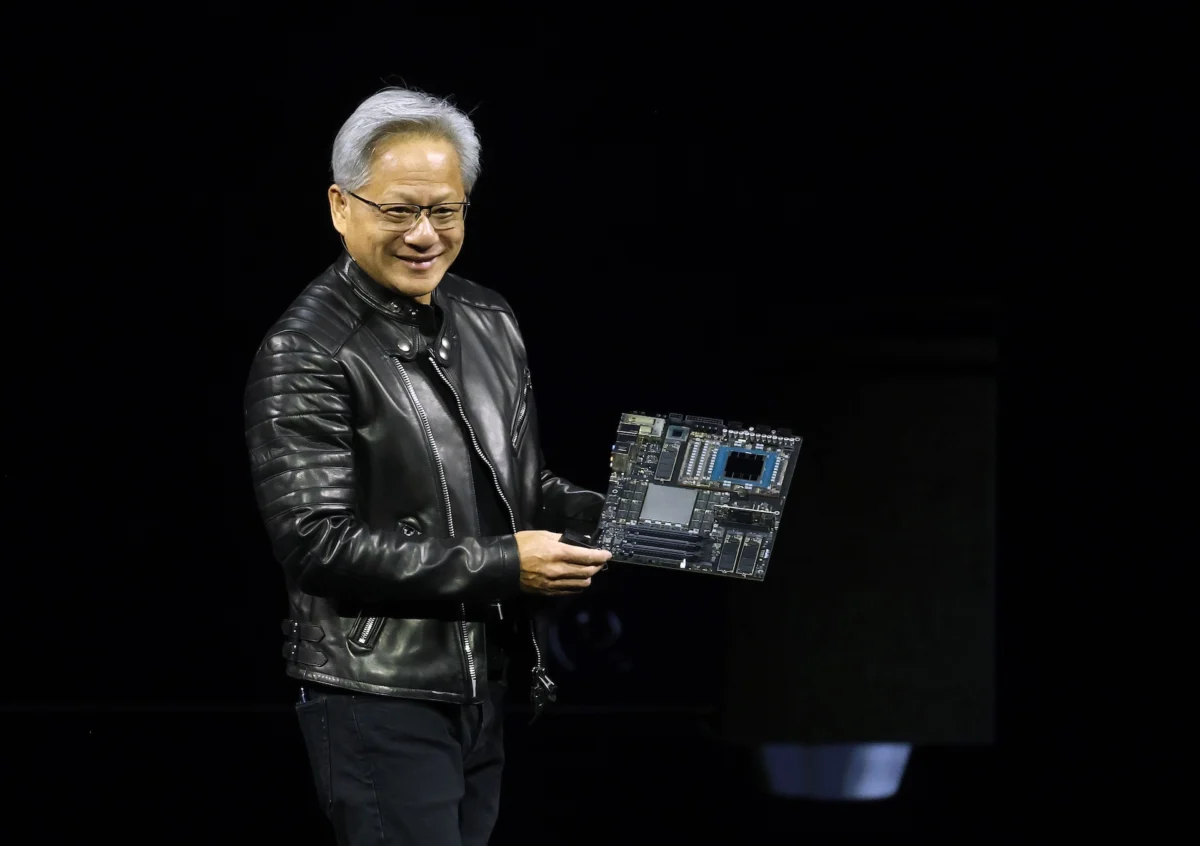
Nvidia, the titan of artificial intelligence and high-performance computing, is set to ignite the technology landscape with the commencement of its annual GPU Technology Conference (GTC) in San Jose, California. The highly anticipated event, running from March 16 to March 19, will officially kick off on Monday with a keynote address from CEO Jensen Huang, scheduled for 11 a.m. PT / 2 p.m. ET. This flagship gathering is not merely a conference; it serves as Nvidia’s primary platform for unveiling groundbreaking products, forging strategic partnerships, and articulating its visionary roadmap for the evolution of computing, with a pronounced emphasis on the transformative power of artificial intelligence.
Huang’s Vision for an AI-Driven Future
Jensen Huang’s keynote address, a cornerstone of GTC, is expected to delve deeply into Nvidia’s pivotal role in shaping the future of computing and artificial intelligence. The two-hour presentation will offer attendees and the global audience a comprehensive overview of the company’s latest advancements, strategic initiatives, and its overarching philosophy regarding the integration of AI into every facet of modern life. The address will be accessible to a wide audience, with the option to attend in person at the expansive SAP Center or to experience it live via livestream on the official GTC website. A YouTube livestream is also embedded for convenient access, signaling the event’s global reach and commitment to broad dissemination of information.
GTC: A Nexus for AI Innovation Across Industries
The broader GTC event, spanning three days, is meticulously designed to explore the frontier of artificial intelligence and its burgeoning applications across a diverse spectrum of industries. From revolutionizing healthcare with AI-powered diagnostics and drug discovery to enhancing the precision and autonomy of robotics, and from accelerating the development of safer autonomous vehicles to optimizing complex industrial processes, GTC 2026 promises to showcase the pervasive influence of AI. The conference agenda features a rich tapestry of sessions, workshops, and demonstrations, underscoring Nvidia’s commitment to fostering a collaborative ecosystem for AI innovation.
Rumors of NemoClaw: Democratizing Enterprise AI Agents
Whispers within the tech community, notably amplified by reports from Wired, suggest that Nvidia may be poised to launch a significant new software initiative: an open-source platform for enterprise AI agents, tentatively codenamed "NemoClaw." This potential offering would represent a strategic move to empower businesses with a structured and accessible framework for building, deploying, and managing AI agents. These sophisticated software entities are capable of executing multi-step tasks autonomously, a capability that is rapidly becoming a competitive imperative for organizations across all sectors.
The introduction of NemoClaw would position Nvidia to directly challenge and potentially redefine the burgeoning market for AI agent platforms. Companies like OpenAI have already made significant strides in this domain, offering their own solutions for enterprise AI agent development. By releasing an open-source platform, Nvidia could not only democratize access to advanced AI agent technology but also foster a vibrant community of developers and businesses, accelerating the adoption and innovation of AI agents globally. This move aligns with Nvidia’s broader strategy of building a robust software ecosystem around its hardware, further solidifying its dominance in the AI landscape. The implications for businesses are profound, potentially leading to increased operational efficiency, enhanced customer service, and the creation of entirely new business models driven by intelligent automation.
Hardware Advancements: Accelerating AI Inference
On the hardware front, the grapevine is buzzing with anticipation for a new chip designed to dramatically accelerate the AI inference process. Inference, the stage where trained AI models are applied to generate predictions, make decisions, or produce outputs, represents a critical bottleneck in the widespread scaling of AI applications. Unlike the computationally intensive training phase, which demands immense processing power, inference requires speed, efficiency, and cost-effectiveness, especially as AI models are deployed at an unprecedented scale.
This rumored new chip is poised to address this crucial demand, offering a significant leap forward in inference performance. This development is not merely an incremental upgrade; it is a strategic gambit by Nvidia to solidify its leadership not only in the AI training market, where it currently holds an estimated 80% market share, but also to capture a dominant position in the increasingly competitive inference market. The inference landscape is witnessing a surge of innovation, with tech giants like Google and Amazon developing their own custom silicon solutions to optimize AI workloads. Nvidia’s purported new chip would be a direct response to this intensifying competition, signaling its intent to maintain its technological edge and market supremacy. The potential impact on various industries is substantial, promising to unlock new possibilities for real-time AI applications, from sophisticated recommendation engines and personalized user experiences to advanced fraud detection and real-time natural language processing.
Partnerships and Demonstrations: Showcasing AI’s Pervasive Reach
Beyond product announcements, GTC is renowned for its extensive showcase of strategic partnerships and cutting-edge demonstrations. Attendees can expect a wealth of announcements detailing new collaborations and innovations that highlight Nvidia’s expanding AI capabilities across a myriad of sectors. These demonstrations will likely illustrate how Nvidia’s technology is being leveraged to solve complex problems and drive transformative change in areas such as healthcare, automotive, scientific research, and entertainment. The emphasis will be on practical applications, providing tangible evidence of AI’s growing impact on our daily lives and the global economy.
The Groq Connection: Unpacking a Strategic Investment
Senior equity strategist Kevin Cook of Zacks Investment Research has indicated that attendees should keenly observe any discussions surrounding Nvidia’s relationship with Groq. This follows reports from late last year suggesting that Nvidia made a substantial investment of approximately $20 billion to license Groq’s inference technology. The nature of this tie-up has generated considerable curiosity within the industry, particularly given that Jonathan Ross, Groq’s founder, and Sunny Madra, Groq’s president, along with other key members of the Groq team, have reportedly joined Nvidia. Their integration is understood to be aimed at advancing and scaling the licensed technology.
The strategic rationale behind this significant investment and talent acquisition is likely multifaceted. Groq is recognized for its innovative approach to AI inference, and by securing access to its technology and key personnel, Nvidia appears to be making a bold move to bolster its inference capabilities. This partnership could unlock new avenues for optimizing AI performance, potentially leading to even faster and more efficient AI deployments. The market will be watching closely for details on how this collaboration will manifest in Nvidia’s future product roadmap and its competitive positioning in the inference space.
Historical Context and Evolution of GTC
The GPU Technology Conference, now a cornerstone of the tech calendar, has evolved significantly since its inception. Initially focused primarily on the graphical processing capabilities of GPUs, the conference has transformed into a premier event dedicated to the broader applications of parallel processing and, more recently, the explosive growth of artificial intelligence. The early days of GTC saw Nvidia showcasing advancements in graphics rendering for gaming and professional visualization. However, as researchers and developers began to harness the immense parallel processing power of GPUs for scientific computing and, crucially, for accelerating the computationally intensive tasks involved in machine learning and deep learning, GTC’s focus began to pivot.
Over the years, the conference has become synonymous with major announcements in AI hardware and software. Landmark product launches and strategic pronouncements that have shaped the trajectory of the AI industry have frequently been unveiled at GTC. The increasing sophistication of AI models, coupled with the exponential growth in data generation, has necessitated more powerful and specialized hardware, a demand that Nvidia has consistently met with its GPU architectures. The evolution of GTC mirrors the evolution of computing itself, from specialized applications to a pervasive, intelligence-driven paradigm.
The Broader Economic and Societal Implications
The announcements emanating from GTC 2026 are poised to have far-reaching economic and societal implications. Nvidia’s innovations in AI hardware and software are not just technological advancements; they are catalysts for innovation across industries. The acceleration of AI inference, for instance, could unlock new frontiers in areas such as personalized medicine, where real-time analysis of patient data can lead to more effective treatments. In the automotive sector, enhanced AI capabilities are critical for the development of fully autonomous vehicles, promising to reshape transportation and logistics.
Furthermore, the potential democratization of AI agent technology through platforms like NemoClaw could empower small and medium-sized enterprises to leverage AI for enhanced productivity and competitive advantage, potentially leveling the playing field in various markets. The widespread adoption of AI agents could automate mundane tasks, freeing up human capital for more creative and strategic endeavors, thereby transforming the nature of work itself.
However, these advancements also raise important questions about ethics, data privacy, and the future of employment. As AI systems become more capable and integrated into society, responsible development and deployment, alongside robust regulatory frameworks, will be paramount. GTC 2026, while celebrating technological progress, also implicitly underscores the ongoing dialogue needed to navigate the complex ethical and societal challenges that accompany the rapid advancement of artificial intelligence.
Looking Ahead: Nvidia’s Continued Dominance
As GTC 2026 unfolds, the tech world will be closely watching Nvidia’s every move. The company’s consistent ability to innovate and anticipate the future needs of the computing and AI landscape has cemented its position as a market leader. The announcements expected from this year’s conference are likely to reinforce that dominance, setting the stage for the next wave of AI-driven transformation. Whether through groundbreaking hardware, expansive software platforms, or strategic partnerships, Nvidia’s GTC remains a critical barometer for the future of technology. The event serves as a powerful testament to the company’s relentless pursuit of pushing the boundaries of what is possible, driving forward the relentless march of artificial intelligence and its profound impact on our world.
About the Author





