An enterprise SEO audit is a deep dive into the search engine performance, technical health, and content strategy of a large-scale website. This critical process aims to uncover opportunities for growth across potentially millions of web pages, demanding seamless collaboration between marketing, engineering, and product development teams. In today’s competitive digital landscape, where complex site architectures can hinder crawlability and visibility, a robust enterprise SEO audit is paramount for maintaining a strong presence in high-volume search environments.
However, the challenges of executing such a comprehensive strategy are significant. A recent survey indicated that a substantial 57% of enterprises identified limited in-house SEO expertise as a major obstacle. This is particularly concerning given that organic search remains a top-converting marketing channel, with conversion rates averaging 2.6% for B2B and 2.1% for B2C transactions. This underscores the urgent need for enterprise teams to re-evaluate and refine their SEO audit processes, overarching strategies, and implementation methodologies.
This article delves into the strategic frameworks and detailed technical workflows essential for conducting an effective enterprise SEO audit. We move beyond superficial checklists to focus on the core principle of "operationalizing SEO" – integrating technical precision and strategic content engineering into the very fabric of an organization’s operations.
What Constitutes an Enterprise SEO Audit?
At its core, an enterprise SEO audit is a systematic evaluation of a high-authority website’s capacity to rank prominently in organic search results. This comprehensive analysis scrutinizes the website’s technical infrastructure, on-page optimization elements, and backlink profile on a massive scale. Unlike audits for smaller websites or local businesses, the enterprise-level audit is designed to identify systemic issues and to pave the way for automated solutions that can impact thousands or even millions of URLs simultaneously.
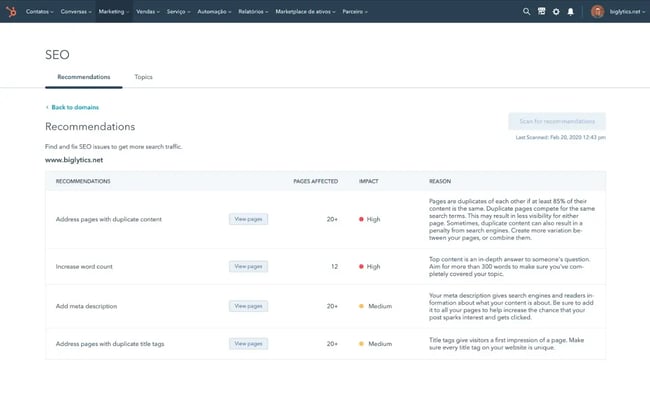
Tools like HubSpot’s SEO tools are designed to simplify this complex process for enterprise-level websites. They aggregate data from vast web properties, providing actionable insights and automating the scanning of enterprise sites to flag critical technical errors. By employing centralized reporting, these platforms enable teams to prioritize fixes based on their potential business impact, rather than solely on raw traffic volume projections.
Distinguishing Enterprise SEO Audits from Standard Audits
While a standard or local SEO audit serves as a foundational element for any online presence, the sheer scale and complexity of a corporate ecosystem necessitate a more sophisticated and robust methodology for enterprise audits. Understanding these distinctions is crucial for organizations to effectively allocate the necessary technical resources and implement appropriate automation tools.
The key differences lie in the scope, complexity, and the strategic approach required. Standard audits often focus on individual pages or smaller site sections, whereas enterprise audits must consider the interconnectedness of vast digital assets and the potential for cascading effects of any changes.
| Feature | Standard SEO Audit | Enterprise SEO Audit |
|---|---|---|
| Scope | Individual pages, small website sections, or local listings | Entire website (millions of URLs), multiple subdomains, international versions |
| Complexity | Relatively straightforward technical and content checks | Deep technical analysis, complex architecture, cross-departmental dependencies |
| Objectives | Improve rankings for specific keywords, local visibility | Drive systemic organic growth, optimize crawl budget, enhance user experience at scale |
| Methodology | Manual checks, basic tool usage | Advanced crawling, log file analysis, data integration, automation, cross-functional alignment |
| Team Involvement | SEO specialist or small marketing team | Cross-functional teams (Marketing, Engineering, Product, Legal, IT) |
| Solution Focus | Page-level fixes, content tweaks | Systemic solutions, template-level optimizations, architectural changes, process integration |
| Reporting | Standard reports, keyword performance | Business-impact focused reports, ROI analysis, integration with CRM and sales data |
The Enterprise SEO Audit Process: A Strategic Workflow
Executing an enterprise SEO audit demands a structured methodology that can navigate disparate departments and complex technical stacks. This workflow is designed to ensure that data collection leads to cross-functional alignment and demonstrable organic growth.
Establishing Cross-Functional Governance and Ownership
The initial and arguably most critical step in an enterprise SEO audit is establishing clear governance and ownership. Stakeholders must define project roles meticulously, identifying the specific individuals and departments responsible for both implementing and approving SEO recommendations. In a large organization, a well-defined ownership hierarchy ensures that technical SEO requirements are treated with the same urgency as other critical development tasks, preventing them from being relegated to optional extras within product and engineering backlogs.

Daniel Horowitz, Enterprise SEO Lead at Informatica, highlights a common pitfall: "A common enterprise mistake is letting product pages, web architecture, and campaign content evolve independently, then expecting an audit to magically align them." To counter this, he advocates for creating a unified "operating system" with:
- Defined roles and responsibilities: Clearly outlining who is accountable for what aspect of SEO.
- Standardized processes: Establishing consistent workflows for content creation, technical implementation, and updates.
- Integrated roadmaps: Ensuring SEO objectives are woven into the broader product and marketing strategies.
These "guardrails," as Horowitz describes them, facilitate smoother cross-functional execution, ensuring that all teams are working towards shared topical maps rather than developing disconnected, siloed pages.
Auditing Crawl, Indexation, and URL Governance
Search engines manage the vast index of the internet, and an enterprise audit must ensure that a company’s website is optimally positioned within this index. This phase involves a deep-dive crawl of the entire domain to identify:
- Crawl errors: Broken links, server errors (5xx), and client errors (4xx) that prevent bots from accessing content.
- Indexability issues: Pages blocked by robots.txt, noindex tags, or canonicalization problems that prevent them from appearing in search results.
- Duplicate content: Multiple URLs serving the same content, which can dilute ranking signals.
- Thin or low-quality content: Pages lacking sufficient value for users, potentially flagged by algorithms like Google’s Helpful Content Update (HCU).
Effective URL governance is paramount, ensuring that only high-quality, relevant pages are presented to search engine bots for indexing. The practice of creating numerous pages solely to target specific keywords at scale, while potentially yielding short-term gains, often proves detrimental in the long run as search engine algorithms evolve. Google’s HCU, released in 2022, specifically targeted content created primarily for search engines rather than users, leading to significant visibility drops for such pages.
Jess Scholz, a growth marketing consultant specializing in technical SEO and content distribution, cautions, "Over-indexing is often quietly destroying domain reputation. Stuffing the index with low-quality, thin, commodity content may feel productive, but it undermines long-term performance. Google does not judge pages in isolation. It judges domains."
To future-proof a brand’s online presence, Scholz advises managing the index like a portfolio:
- Curate aggressively: Regularly review and remove or consolidate low-value pages.
- Optimize for topical clusters: Ensure content is organized thematically to demonstrate expertise.
- Focus on user intent: Create content that directly addresses what users are searching for.
HubSpot’s SEO Tools, integrated within the Marketing Hub, can automate site crawls and provide technical SEO recommendations for discovered URLs. The tool flags issues like duplicate content, crawl errors, and indexability concerns across scanned domains, empowering teams to improve site health without relying solely on external tools.
Validating Log Files and Crawl Budget
Server logs provide an unfiltered view of how search engine crawlers interact with a website, revealing which directories and pages are being prioritized and which are being overlooked. Analyzing these log files is crucial for validating the crawl budget – the number of pages a search engine crawler can and is willing to crawl on a site within a given period.
Ensuring that search bots are allocating their limited time to high-value, revenue-driving pages, rather than low-value archive or tag pages, is essential for maximizing organic visibility. A poorly managed crawl budget can lead to critical pages being missed or indexed with significant delays, impacting a brand’s ability to capture relevant search traffic.

Peter Rota, an SEO consultant with over 15 years of experience, emphasizes focusing on crawl depth when determining crawl budget. "Anything that is going to take more resources for Google to crawl your site will affect your crawl budget. My favorite way to improve this is using an HTML sitemap, which helps move your pages closer to the root domain," he explains.
Managing International Targeting
Global organizations must meticulously manage their international SEO strategies. This phase involves validating the correct implementation of regional signals, such as hreflang tags, which inform search engines about the language and regional variations of content. Furthermore, it includes assigning "keyword ownership" to different business units or regional teams to prevent internal competition for the same search terms.
Proper mapping ensures a unified global search strategy that maximizes market share without internal teams cannibalizing each other’s efforts. Beyond technical implementation, effective localization is key. Studies suggest that localization efforts can yield up to a threefold return on investment, but only when executed accurately. The goal is to match each local keyword group to a specific local page, ensuring search engines understand the intended audience.
Missteps in localization, such as relying solely on automated AI translation plugins, can fail to capture regional nuances and cultural contexts that resonate with local audiences. Maja Walczak, founder of Langbay, an agency specializing in Polish SEO localization for SaaS, advises a manual approach: "Global to local keyword mapping means taking big, broad keywords and turning them into location-specific ones that match how real people search locally. You have to do this manually; translation won’t work because local search language, intent, and phrasing are different in every area."
Reviewing Content Quality, Semantic Depth, and Cannibalization
Content audits are essential for measuring the performance of existing assets. This review process identifies underperforming content, outdated information, and instances of keyword cannibalization where multiple pages compete for the same search intent. Enterprise teams leverage this data to decide which assets require refreshing with greater semantic depth or consolidation to strengthen topical authority across the domain.
Content that lacks semantic depth often underperforms, particularly in an era of Generative Engine Optimization (GEO), where AI is increasingly providing direct answers to user queries. AI models also appear to favor fresher content, with studies indicating a preference for content that is approximately 25.7% newer than that favored by traditional search engines.
Polly Clover, an SEO writer and consultant, highlights the consequences of neglecting content quality and freshness: "During enterprise SEO audits, you may find that some pages have grown in word count over time without becoming more helpful. When content is expanded for SEO reasons without adding new insights, real examples, or clarity for the reader, it can actually weaken the page’s performance rather than improving it."
Clover recommends a reader-centric approach: "When reviewing content quality and semantic depth, I recommend looking at whether each section genuinely helps the reader understand the topic or make a decision. If the content doesn’t support the page’s primary goal, it’s usually better to refine or remove it."
HubSpot’s Content Hub editor offers real-time SEO recommendations, including keyword suggestions, heading optimizations, and meta description improvements, aiding content teams in enhancing search visibility and quality.
Analyzing Internal and External Authority
Links are the conduits of domain authority. This analysis evaluates how link equity flows through the internal site architecture and assesses the health and relevance of the external backlink profile. A strong internal linking structure ensures that valuable content receives sufficient authority, while a robust backlink profile signals to search engines that the site is a credible and authoritative source.
Ivan Palii, Founder of Ivanhoe Digital Looker Studio Agency, points out a common enterprise mistake: "The biggest mistake big websites make in internal linking is sending too much link weight to the wrong pages." He stresses the importance of identifying the most valuable pages and then tasking developers with updating internal links to direct more authority to these key assets.
Regarding external links, Palii cautions against the hasty deletion of pages that may receive backlinks but no direct engagement. Instead, he suggests repurposing these pages by adding internal links to high-converting landing pages, thereby leveraging their existing authority.
Optimizing Page Experience and Performance by Template
Technical performance directly influences user retention and search engine rankings. Instead of individually auditing millions of pages, enterprise teams often analyze Core Web Vitals (LCP, INP, CLS) at the template level. This approach allows for global fixes to be applied across page categories, such as product listings or blog posts, significantly improving performance and the user experience across the entire domain.
Optimizing templates ensures that improvements are automatically rolled out to multiple pages, a far more efficient strategy than addressing issues page by page on a large-scale website. Communicating these system-level changes to development teams requires translating SEO objectives into technical requirements that developers can understand and prioritize.
HubSpot CRM and its integrated SEO Tools can assist enterprise teams in building and optimizing templates, providing on-page optimization support directly within the development environment.
Aligning Revenue, Reporting, and Deployment Readiness
The ultimate goal of any SEO initiative is to drive business outcomes. The final phase of an enterprise SEO audit involves mapping organic traffic and keyword performance to conversion and revenue data within the CRM. This alignment ensures that the search strategy is driven by tangible business value, not just vanity metrics.
A "deployment readiness" assessment is also crucial, evaluating potential implementation risks and ensuring the organization is prepared to execute recommended changes safely and effectively.
Andrew Holland, Director of SEO at JBH, emphasizes the importance of understanding revenue attribution: "When it comes to understanding revenue and reporting, you should be absolutely obsessed with where purchases take place on your website. The amount of traffic that is going to those pages matters greatly. Where that traffic comes from is key."
Holland recommends actionable steps:
- Map keyword groups to revenue-generating pages: Understand which search terms drive valuable traffic.
- Segment traffic by conversion intent: Analyze how different traffic sources contribute to sales.
- Track organic contribution to the pipeline: Quantify the direct impact of SEO on lead generation and revenue.
Enterprise SEO Audit Checklist
A standardized checklist ensures consistency and thoroughness across all business units involved in an enterprise SEO audit:
Technical Infrastructure:
- Crawlability and Indexability Audit
- Robots.txt and XML Sitemap Analysis
- Site Speed and Core Web Vitals Assessment
- Mobile-Friendliness and Responsiveness
- HTTPS and Security Implementation
- Structured Data Markup (Schema) Review
- Canonicalization and Hreflang Tag Implementation
- Redirect Chain Analysis and Optimization
- JavaScript Rendering and SEO Impact
International SEO:
- Hreflang Tag Accuracy and Implementation
- Country/Language Targeting Strategy
- Internal Linking for International Audiences
- Localization Quality Assessment
- Competitor Analysis for International Markets
Content and On-Page SEO:
- Content Quality and Relevance Assessment
- Keyword Cannibalization Identification
- Semantic Depth and Topical Authority Review
- Meta Title and Description Optimization
- Header Tag Structure (H1-H6)
- Image Optimization (Alt Text, File Size)
- Internal Linking Strategy within Content
- User Engagement Metrics (Bounce Rate, Time on Page)
AI and AEO Readiness:
- Content Formatting for AI Consumption
- Structured Data for AI Understanding
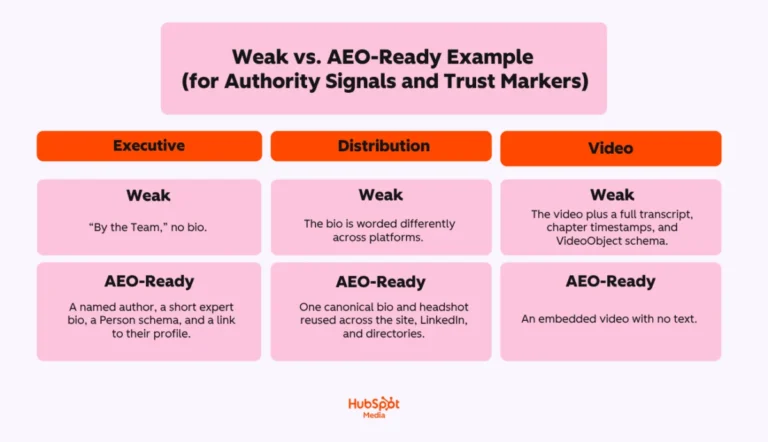
- E-E-A-T (Experience, Expertise, Authoritativeness, Trustworthiness) Signal Assessment
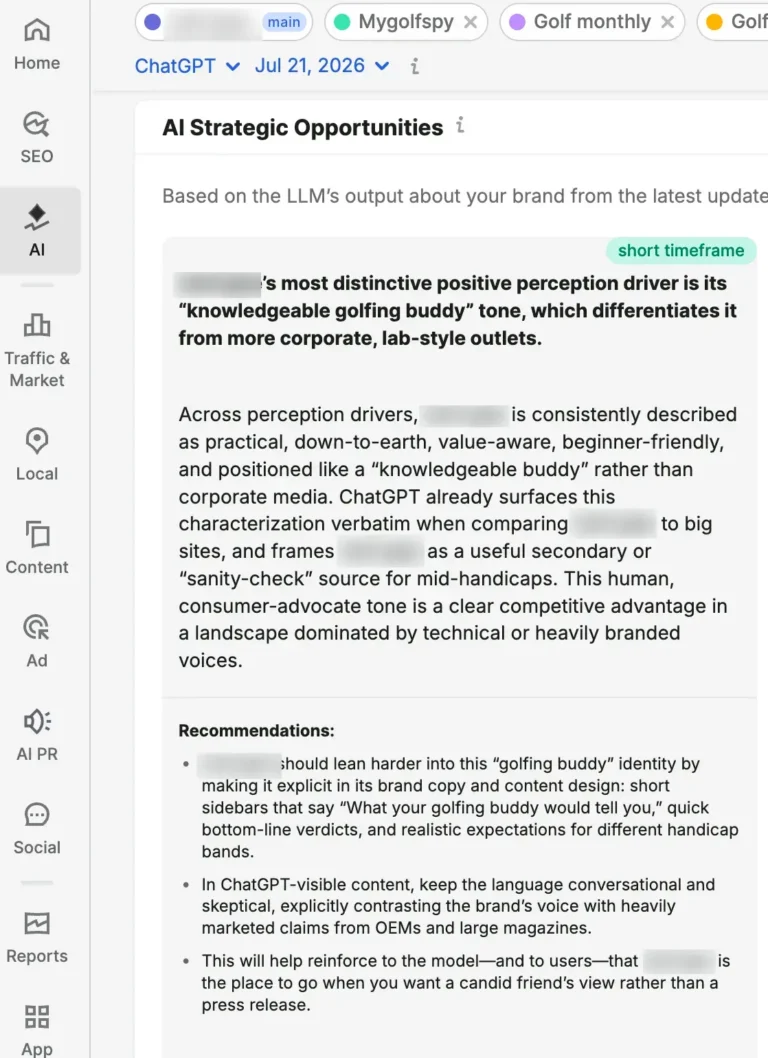
- Brand Mentions and Sentiment Analysis in AI Responses
- Competitive Analysis for AI Search Visibility
Tools and AI for an Enterprise SEO Audit
Leveraging the right tools is crucial for executing an enterprise SEO audit efficiently and effectively.
1. HubSpot’s SEO Tools (Marketing Hub & Content Hub)
HubSpot’s SEO Tools are integrated directly into the marketing workflow, offering actionable insights for large-scale websites. These tools automate site scanning, identify SEO opportunities, and prioritize them based on their potential impact on search rankings. By centralizing SEO data within the Marketing Hub, teams gain shared visibility into performance metrics, making them accessible to all stakeholders involved in the digital experience.
- Key Features: Site crawls, automated technical recommendations, keyword tracking, competitor analysis, topic cluster mapping, integrated SEO recommendations within content creation.
- Best for: Marketing teams requiring a centralized, user-friendly SEO management system.
- Pricing: Included in Marketing Hub Professional and Enterprise tiers.
2. Breeze (HubSpot’s AI Agent)
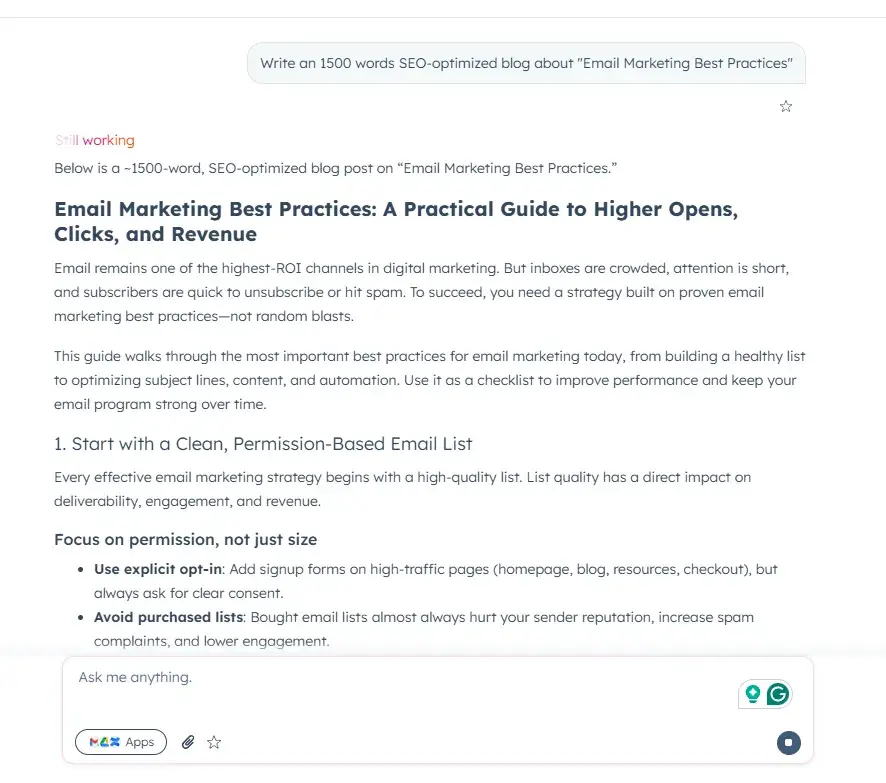
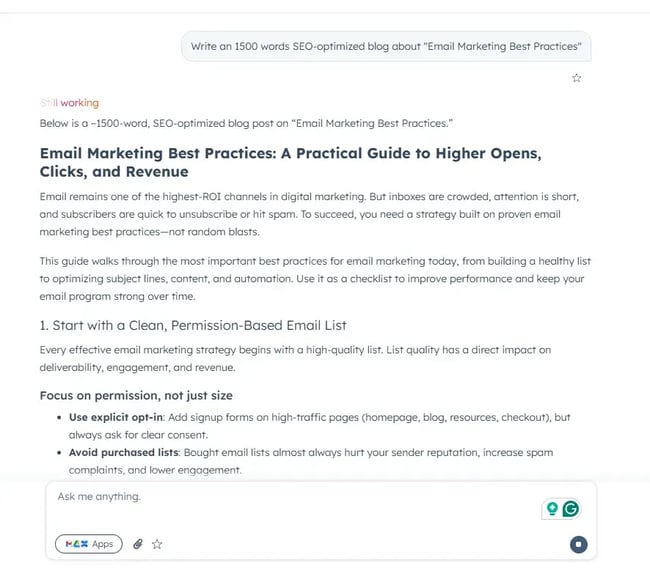
Breeze is HubSpot’s AI agent designed to accelerate content creation and optimization. Within an enterprise SEO audit, Breeze assists teams in generating SEO-compliant content based on audit findings, ensuring new pages align with identified semantic requirements. It automates the technical "polishing" phase, analyzing underperforming assets and suggesting real-time optimizations like generating high-CTR meta descriptions or expanding on subtopics.
- Key Features: AI-powered content generation, SEO optimization suggestions, meta description and title tag creation, content summarization.
- Best for: Large content teams aiming to scale production while maintaining SEO quality.
- Pricing: Included in HubSpot plans.
3. HubSpot Website Grader
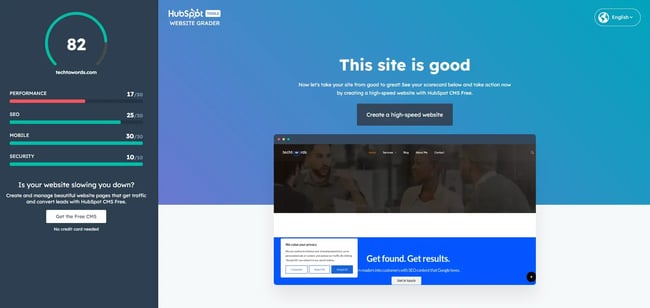
HubSpot Website Grader provides an immediate, objective snapshot of a site’s fundamental health across Performance, SEO, Mobile, and Security. It identifies high-level friction points that hinder organic growth, such as bloated image files or poor mobile responsiveness. For enterprises, this tool offers a standardized "health score" to communicate the urgency of technical debt to non-technical stakeholders.
- Key Features: Performance analysis, SEO scoring, mobile optimization assessment, security check, actionable recommendations.
- Best For: Quick audits and benchmarking foundational site health.
- Pricing: Free.
4. HubSpot AEO Grader
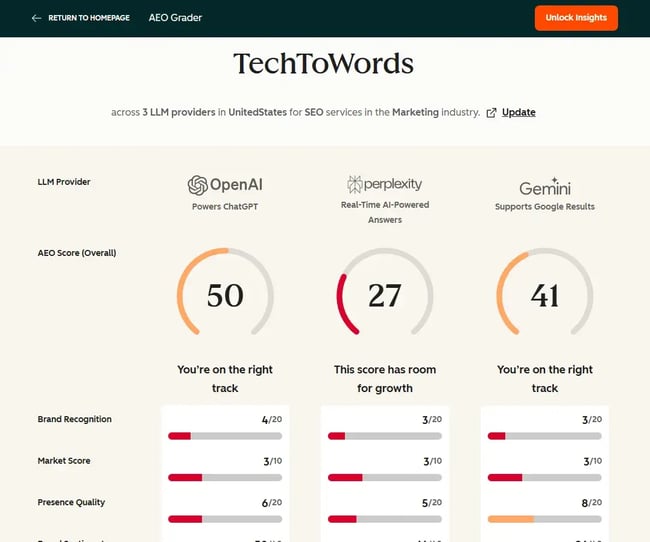
HubSpot’s AEO Grader is a free tool that evaluates a brand’s representation and citation in responses from major AI engines. It offers competitive analysis, sentiment scoring, and recommendations to improve visibility and positioning in AI-driven search results. This tool bridges the gap between traditional SEO and the evolving landscape of AI-powered discovery.
- Key Features: AI engine visibility analysis, competitive benchmarking, sentiment scoring, AI-specific optimization recommendations.
- Best For: Future-proofing content for AI-driven search environments.
- Pricing: Free.
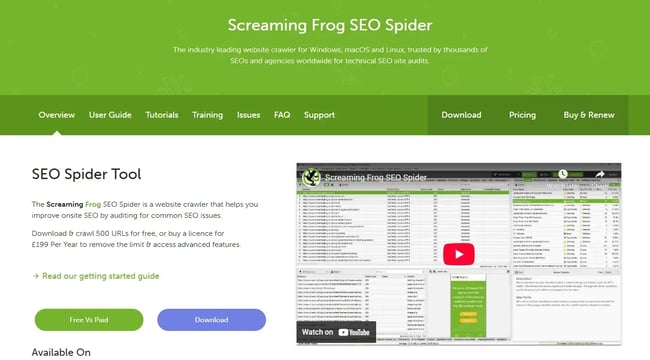
5. Screaming Frog SEO Spider
Screaming Frog SEO Spider is a desktop-based website crawler essential for auditing technical SEO issues. Its ability to handle extremely large datasets and provide granular control over the crawling process makes it a staple for enterprise audits.
- Key Features: Comprehensive site crawling, URL discovery, metadata extraction, link analysis, broken link detection, duplicate content identification.
- Best for: Deep technical SEO dives and identifying specific crawl errors.
- Pricing: Free version available; paid version at $279 per year.
6. Ahrefs
Ahrefs is a comprehensive suite of SEO tools used for backlink analysis, keyword research, and competitor benchmarking. For enterprise audits, it’s invaluable for evaluating site authority and identifying content strategy gaps relative to market leaders.
- Key Features: Site Explorer, Content Explorer, Keyword Explorer, Rank Tracker, backlink analysis, content gap analysis.
- Best for: Off-page SEO and competitive intelligence.
- Pricing: Tiered monthly subscriptions starting from $29 per month.
Implementing Enterprise SEO Audit Recommendations
Translating an enterprise SEO audit report into measurable organic growth requires a structured project management approach that integrates SEO tasks into existing workflows.
Assigning Ownership and Accountability
Clear roles are fundamental to implementation success. Accountability ensures that every technical and content recommendation is assigned to a specific individual or team with the authority to execute. Without designated owners, critical SEO tasks can stall between departments, leading to fragmented results and unresolved technical debt.
Luke Thorn, Founder of WebRefresh, emphasizes the communication challenge: "Teams either over-communicate (recurring syncs that turn into ideation and status theatre) or under-communicate (a ticket dump across departments with no single owner driving decisions and follow-through)."
Thorn advises appointing a clear internal implementation driver who can:
- Facilitate communication between departments.
- Track progress and address roadblocks proactively.
- Ensure recommendations are translated into actionable development tickets.
Prioritizing Issues by Impact and Effort
Strategic prioritization ensures that limited resources are allocated to the most significant opportunities. Recommendations should be categorized using a prioritization matrix based on expected ranking improvement relative to the technical effort required. High-impact, low-effort tasks, such as optimizing meta titles or repairing broken internal links, should be tackled first to secure "quick wins."
However, it’s crucial to balance immediate tactics with long-term growth drivers. While critical technical issues that promise near-immediate traffic gains should take precedence, the growing importance of content freshness and semantic depth in search engine algorithms necessitates integrating "content engineering" into the SEO pipeline. Ahrefs data indicates that over 70% of Google’s top 10 results are over three years old, presenting a significant opportunity for enterprises to gain ground by systematically updating aging assets.
Long-term growth drivers include:
- Developing comprehensive topical authority.
- Enhancing user experience and site performance.
- Building a sustainable backlink acquisition strategy.
Integrating SEO Tasks into Development Sprints
Technical SEO implementation must align with the organization’s existing development workflow. Instead of delivering a massive PDF report, SEO teams should translate recommendations into specific tickets (e.g., Jira or GitHub) that fit within current sprint cycles. This proactive approach prevents SEO from being an afterthought and avoids "layers of approvals" that can stall progress.
To overcome implementation friction, SEO requires constant education and open communication, ensuring all stakeholders understand their role. Integrating technical SEO tools with the development pipeline allows teams to use automated insights to identify potential issues before deployment.
Utilizing AI for Content Remediation
Content decay is inevitable at scale, with thousands of legacy pages often losing relevance. Manually auditing and refreshing these assets is frequently cost-prohibitive, leading to "thin" content that dilutes domain authority and wastes crawl budget.
AI tools can expedite content remediation by comparing existing text with various sources to suggest updates. For instance, Breeze can generate initial content refreshes or meta descriptions directly within HubSpot’s editor. Paired with HubSpot’s Content Hub’s centralized reporting, enterprise teams can track the impact of these updates in real-time, connecting content engineering to ROI.
Establishing Continuous Monitoring and Reporting
Ongoing measurement validates the success of the enterprise SEO audit and identifies new issues as they arise. After implementing changes, teams must monitor key performance indicators such as organic traffic, keyword rankings, and crawl health.
As AI search evolves, traditional metrics may not fully capture performance. AI SEO advisors recommend reporting on demand, AI visibility, and revenue impact. This includes tracking:
- Year-over-year growth in organic demand.
- Share of voice against key competitors in AI search results.
- Direct and indirect revenue attribution from organic search.
These metrics provide stakeholders with answers to the critical questions: Are we experiencing increased demand, outperforming competitors, and driving business results? HubSpot’s SEO Tools offer automated reporting capabilities to facilitate these discussions.
Frequently Asked Questions About Enterprise SEO Audits
How long should an enterprise SEO audit take?
An enterprise SEO audit typically spans four to eight weeks, encompassing initial crawls, stakeholder interviews, manual content reviews, and the development of a strategic roadmap. The duration depends heavily on the site’s size and the number of teams involved.
How do we prevent content cannibalization after the audit?
Content cannibalization is prevented by establishing a clear topical map and utilizing canonical tags. During the audit, identify pages targeting similar keywords and decide whether to merge them, redirect weaker pages, or differentiate content to target unique search intents. HubSpot’s SEO Tools can visualize these relationships through topic cluster features.
How should we handle crawl budget on very large sites?
Crawl budget is managed by ensuring search engines prioritize high-value, indexable pages. This involves using robots.txt to block low-value parameters, fixing redirect chains, and maintaining an up-to-date XML sitemap. Removing duplicate content and improving site speed also allows bots to crawl more pages efficiently.
When should we use subfolders versus subdomains for international sites?
Subfolders are generally preferred for international SEO as they consolidate domain authority under a single root. Subdomains can be treated as separate entities, making it harder to pass authority. Subdomains may be necessary for distinct regional sites with different technical stacks or server locations.
What’s the best way to align SEO with sales and pipeline goals?
SEO aligns with sales by mapping keywords to the buyer’s journey stages. Tracking organic conversions within a CRM like HubSpot allows teams to identify which content drives leads and revenue, enabling prioritization of optimizations that impact the company’s bottom line.
Turning SEO Audit into Enterprise Growth
Conducting an enterprise SEO audit is a complex yet essential process for maintaining digital visibility at scale. Success hinges on a combination of robust technical tools and a coordinated strategy across multiple teams. By leveraging integrated platforms like HubSpot’s SEO Tools, Breeze, and Website Grader, enterprises can centralize data, automate optimizations, and empower every team member to contribute to organic growth. These tools provide the necessary infrastructure to transform standard audit findings into a significant competitive advantage in an ever-evolving search landscape.
About the Author