
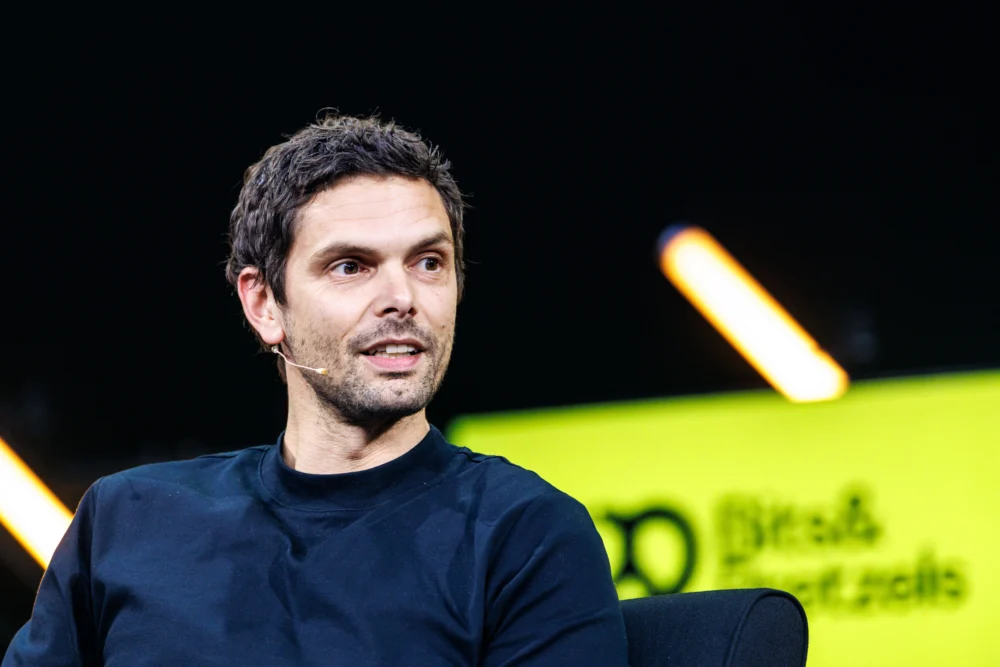
Eighteen months after his artificial intelligence startup was acquired by chipmaker AMD for a substantial $665 million, Finnish entrepreneur Peter Sarlin has stepped down from his leadership role at the unit, now known as AMD Silo AI. This strategic move signals Sarlin’s next chapter, focusing on two ambitious new ventures: NestAI, a physical AI laboratory, and QuTwo, an AI startup dedicated to preparing businesses for the advent of quantum computing.
A New Quantum Frontier for AI
Sarlin’s departure from his CEO position at AMD Silo AI, a unit that grew out of his previous company, marks a significant pivot in his entrepreneurial journey. While the terms of his departure from AMD have not been publicly disclosed, the timing suggests a deliberate transition to pursue his vision of integrating quantum computing capabilities into mainstream AI applications. QuTwo, in particular, is positioned as a critical bridge between the current AI landscape and the burgeoning quantum era, aiming to equip enterprises with the tools and strategies necessary to harness the potential of this transformative technology.
QuTwo: An AI Lab for the Quantum Era
Currently fully funded by Sarlin’s family office, PostScriptum, QuTwo operates under the bold declaration of being "an AI lab for the quantum era." Unlike ventures that adopt a wait-and-see approach to quantum computing’s maturation, QuTwo is actively engaging with enterprise clients. A notable collaboration is underway with European fashion retailer Zalando. Together, they are developing "lifestyle agents," a novel category of AI tools designed to transcend traditional product search functionalities. These agents are envisioned to proactively suggest products and experiences tailored to individual consumer lifestyles, representing a significant leap in personalized commerce.
This initiative with Zalando underscores QuTwo’s practical approach to quantum-inspired AI. The development of "lifestyle agents" goes beyond mere product recommendations; it aims to create AI systems that understand and anticipate user needs and desires, potentially revolutionizing customer engagement and loyalty in the retail sector. The implications for e-commerce, marketing, and supply chain management are profound, suggesting a future where AI can dynamically curate entire consumer journeys.
Addressing AI’s Efficiency Wall with Quantum Potential
QuTwo’s foundational premise is that current AI technologies are approaching an efficiency bottleneck. While classical computing has powered the AI revolution to date, its limitations in processing power and energy consumption are becoming increasingly apparent as AI models grow in complexity and scale. Quantum computing, with its inherent ability to perform complex calculations exponentially faster than classical computers, holds the promise of overcoming these limitations.
However, Sarlin is pragmatic about the timeline for widespread quantum computing adoption. He emphasized to TechCrunch that QuTwo is not making its primary bet on when quantum hardware will become fully mature and accessible. Instead, the startup is focused on building QuTwo OS, an innovative orchestration layer. This operating system is designed to enable companies to transition seamlessly from classical to quantum computing paradigms, facilitating a hybrid computing approach that leverages the strengths of both technologies along the way.
Strategic Investments and a Growing Quantum Ecosystem
Sarlin’s commitment to the quantum computing landscape is further evidenced by his investments through PostScriptum in prominent Finnish quantum companies, including IQM and QMill. These investments align with a growing conviction among a significant segment of the investment community that quantum computing will eventually surpass classical computers across a broad spectrum of industry applications. Furthermore, the potential for quantum computing to significantly reduce the substantial energy demands of AI workloads is a critical factor driving this interest.
Sarlin’s vision emphasizes the necessity of mixed hardware environments in the initial phases of quantum AI integration. He anticipates that enterprises will prioritize solving their core business challenges, preferring to delegate the complexities of quantum computing to specialized solutions. QuTwo OS aims to fulfill this need by acting as an intelligent routing system, ensuring that AI workloads are processed on the most appropriate hardware, whether classical or quantum.
Quantum-Inspired Computing: A Viable Stepping Stone
The concept of "quantum-inspired" computing offers a compelling middle ground. This approach leverages classical hardware while simulating quantum behavior, thereby circumventing the current technological hurdles that impede the development of robust quantum hardware. The viability of quantum-inspired solutions today makes them an attractive option for businesses seeking to gain a competitive edge without waiting for the full realization of quantum computing’s potential.
QuTwo OS is engineered with this flexibility in mind, designed to support a diverse range of quantum and non-quantum algorithms and chips. This adaptability ensures that businesses can begin experimenting with and integrating quantum capabilities into their operations without being locked into specific hardware architectures. The system’s ability to dynamically route tasks to the optimal processing environment is a key differentiator, offering a pragmatic path to quantum readiness.
A Powerhouse Team at the Intersection of Quantum and AI
QuTwo has assembled a formidable team with expertise spanning both the quantum computing and artificial intelligence domains. On the quantum side, the team includes Kuan Yen Tan, a co-founder of IQM, and Antti Vasara, a board member at IQM and the chairman of SemiQon, a Finnish semiconductor startup specializing in quantum chips. This brings deep technical knowledge of quantum hardware development and implementation.
The enterprise AI perspective is equally well-represented, with Sarlin himself and Kaj-Mikael Björk, one of his former co-founders at Silo AI. Their experience in delivering AI solutions to businesses provides a crucial understanding of market needs and practical implementation challenges. Further bolstering the leadership, Pekka Lundmark, the former CEO of Finnish telecommunications giant Nokia, has joined QuTwo’s board, bringing extensive experience in scaling global technology companies and navigating complex industry transformations.
Collectively, the QuTwo team comprises over 30 distinguished quantum and AI scientists. Sarlin articulated the company’s strategic positioning clearly: "We’re building for the quantum world, but QuTwo is an AI company." This statement signifies that QuTwo’s primary objective is to facilitate the migration of AI workloads from classical computing environments to quantum systems, thereby enhancing their performance and efficiency.
Broad Market Applicability and Commercial Momentum
The broad applicability of QuTwo’s solutions suggests a diverse customer base. Beyond the fashion retail sector with Zalando, QuTwo has also initiated a joint quantum AI research initiative with OP Pohjola, a major Finnish financial services provider. This collaboration highlights the potential of quantum AI in the financial industry, where complex data analysis, risk modeling, and fraud detection are critical.
From its inception, QuTwo has adopted a commercially driven strategy. Sarlin revealed that the company has already secured "large design partnerships which are in the tens of millions." These partnerships, where QuTwo co-develops products with enterprise clients, serve a dual purpose. Firstly, they provide invaluable insights into customer expectations and refine QuTwo’s product development roadmap. Secondly, they represent an early strategic investment by enterprises keen to establish a foothold in the emerging quantum computing landscape. This approach mitigates risk for both parties, fostering innovation while de-risking the adoption of nascent technologies.
The Broader Implications for AI and Enterprise Computing
Sarlin’s pivot to QuTwo and NestAI underscores a significant trend: the convergence of artificial intelligence and quantum computing. As AI applications become more pervasive and computationally intensive, the limitations of classical hardware are increasingly evident. Quantum computing offers a potential paradigm shift, promising unprecedented computational power that could unlock new frontiers in AI research and application.
QuTwo’s focus on creating an orchestration layer for hybrid quantum-classical computing is particularly noteworthy. This approach acknowledges the gradual nature of quantum technology adoption and provides a practical pathway for businesses to begin integrating quantum capabilities without a complete overhaul of their existing infrastructure. The development of "lifestyle agents" for Zalando exemplifies how this hybrid approach can yield tangible benefits in the near term, even as the full potential of quantum computing is yet to be realized.
The venture’s funding by PostScriptum, Sarlin’s family office, provides a degree of autonomy and long-term strategic vision, allowing QuTwo to pursue its ambitious goals without the immediate pressures of external market demands. This stability is crucial for a company operating at the cutting edge of technological innovation.
The recruitment of prominent figures like Pekka Lundmark to the board further legitimizes QuTwo’s mission and signals its intent to become a major player in the quantum AI space. The collective expertise of the team, bridging deep quantum knowledge with practical AI implementation experience, positions QuTwo to effectively navigate the complexities of this evolving technological frontier.
The implications of QuTwo’s work extend beyond mere technological advancement. By making quantum computing more accessible and manageable for enterprises, QuTwo could democratize access to its transformative power, accelerating innovation across various industries. The reduction in energy consumption associated with quantum-enhanced AI could also contribute to a more sustainable technological future. As businesses grapple with increasingly complex challenges, the promise of quantum-ready AI, facilitated by companies like QuTwo, offers a compelling vision for the future of computing.
About the Author





