Washington D.C. — The United States has initiated a significant expansion of its trade enforcement efforts, launching new investigations under Section 301(b) of the Trade Act of 1974 into 60 economies suspected of failing to adequately curb imports of goods produced with forced labor. This move, announced on Thursday, follows closely on the heels of a separate set of Section 301 investigations commenced just a day prior, targeting 16 trading partners for alleged unfair trade practices related to industrial overcapacity. The breadth and timing of these probes signal a robust and potentially disruptive new phase in U.S. trade policy, particularly after recent judicial setbacks for the administration’s prior tariff strategies.
The latest wave of investigations, spearheaded by the United States Trade Representative (USTR), includes major global economic players such as China, the European Union, India, and Mexico. These nations, alongside dozens of others, will face scrutiny over their domestic measures and enforcement mechanisms designed to prevent the entry of forced labor goods into their markets. U.S. Trade Representative Jamieson Greer emphasized the moral and economic imperative behind these actions. "Despite the international consensus against forced labor, governments have failed to impose and effectively enforce measures banning goods produced with forced labor from entering their markets," Greer stated, adding that "These investigations will determine whether foreign governments have taken sufficient steps to prohibit the importation of goods produced with forced labor and how the failure to eradicate these abhorrent practices impacts U.S. workers and businesses."
The Pervasive Threat of Forced Labor in Global Supply Chains
Forced labor, a grave violation of human rights, is a pervasive issue globally, with estimates from the International Labour Organization (ILO) suggesting that millions of people are trapped in forced labor, generating hundreds of billions of dollars in illicit profits annually. Goods produced under such conditions often enter international supply chains, creating unfair competition for businesses that adhere to ethical labor standards and undermining global efforts to promote decent work. The U.S. has increasingly prioritized combating forced labor, notably through legislation like the Uyghur Forced Labor Prevention Act (UFLPA), which presumes goods made in China’s Xinjiang region are products of forced labor and bans their import. These new Section 301 investigations represent a significant escalation from targeted product bans to a broader examination of entire national regulatory frameworks.
The inclusion of the European Union in these probes has drawn particular attention. The EU has recently enacted its own comprehensive legislative framework aimed at prohibiting forced labor practices within its market, a point that has raised questions among trade experts regarding the USTR’s rationale. Critics argue that targeting an ally with its own robust, albeit nascent, enforcement mechanisms might be counterproductive and misdirect resources from countries with demonstrably weaker records.
Addressing Global Industrial Overcapacity
The forced labor investigations came immediately after Wednesday’s announcement of Section 301 probes into excess industrial capacity. These investigations targeted 16 economies, including China, Australia, Indonesia, Japan, Malaysia, Singapore, South Korea, Switzerland, and Thailand. The issue of industrial overcapacity, particularly from China, has been a long-standing point of contention in global trade. Beijing’s extensive state subsidies and support for key industries, such as steel, aluminum, and increasingly advanced manufacturing sectors like electric vehicles and renewable energy components, have led to production surpluses that often flood international markets at prices below fair value. This practice is widely seen by Western nations as distorting global trade, harming foreign competitors, and threatening domestic industries and jobs.
The United States has consistently argued that China’s non-market policies create an uneven playing field, hindering fair competition and innovation. While China is a primary focus of these overcapacity investigations, the inclusion of other developed and developing economies underscores the USTR’s broad interpretation of the problem’s scope. The expansion of countries under Section 301 scrutiny, now encompassing nations like the U.K., Brazil, and Russia, highlights the administration’s intent to apply pressure across a wide spectrum of trading partners.
The Legal Hammer: Section 301 of the Trade Act of 1974
At the heart of these sweeping actions is Section 301 of the Trade Act of 1974, a powerful tool that permits the U.S. to impose tariffs or other trade restrictions on countries found to have engaged in unfair trade practices that burden or restrict U.S. commerce. Crucially, this authority can be exercised without explicit congressional authorization, granting the President significant leverage in trade disputes.
Section 301 has a storied history, serving as a primary instrument of U.S. trade policy for decades. In the 1980s and 1990s, it was frequently employed to address perceived unfair trade practices by Japan and the European Union. More recently, the Trump administration extensively utilized Section 301 during its first term to levy substantial duties on a wide array of Chinese goods, igniting a protracted trade war. The Biden administration also conducted Section 301 investigations, with probes into Brazil and China remaining ongoing, demonstrating the bipartisan appeal of this legal mechanism. The current administration’s deployment of Section 301 signals a return to a more aggressive, unilateral approach to trade enforcement, reminiscent of previous eras.
A Strategic Pivot Post-Supreme Court Ruling
The timing and scope of these new investigations are not coincidental. They appear to represent a strategic pivot following a significant legal setback for the administration last month. In February, the U.S. Supreme Court invalidated the president’s "reciprocal tariffs," ruling that the executive branch had exceeded its constitutional authority in imposing these duties. The reciprocal tariffs were designed to match tariffs imposed by other countries on U.S. goods, aiming to create a level playing field. However, the Court found that this specific application of presidential power lacked sufficient statutory basis.
Following the Supreme Court’s decision, President Trump immediately imposed a 10% global blanket tariff based on Section 122 of the Trade Act of 1974, a different legal authority pertaining to balance-of-payments issues, and threatened to raise it further to 15%. This swift response indicated the administration’s determination to maintain leverage in trade negotiations despite the judicial rebuke. Wendy Cutler, vice president at the Asia Society Policy Institute and a former U.S. trade representative, observed this shift, stating, "With the strike-down of the reciprocal tariffs, the administration made it clear that their plan-B would be rolled out soonest." The extensive use of Section 301 now appears to be a key component of this "plan-B," offering an alternative legal pathway to pursue trade grievances and potentially impose tariffs without needing new congressional approval.

Feasibility, Rationale, and Expert Scrutiny
The sheer scale of these investigations has drawn considerable scrutiny from trade experts, who question both their feasibility and underlying rationale. The USTR has announced hearings on these investigations from April 28 to May 1. Deborah Elms, head of trade policy at the Hinrich Foundation, described this timeline as "unrealistically short" given the unprecedented breadth of countries under scrutiny. Managing investigations into 60 economies simultaneously, each requiring detailed analysis of domestic laws, enforcement records, and economic impacts, presents an enormous logistical and analytical challenge for the USTR’s limited resources.
Elms also voiced concerns regarding the rationale for including the European Union, which has proactively developed its own legislative framework against forced labor. She argued that targeting allies while potentially sparing countries with significantly weaker enforcement records "does not make sense" and risks undermining collaborative efforts.
Diplomatic Fallout and Strained Alliances
Beyond the logistical hurdles, the sweeping breadth of these trade probes carries significant diplomatic risks. Experts warn that alienating key partners could squander the goodwill necessary to forge a collective response to shared economic challenges, particularly addressing Chinese industrial overcapacity. Wendy Cutler articulated this concern, stating, "The administration is losing an important opportunity to work with partners to address the real excess capacity problem in the world, [which is] China." She added, "By adding more than a dozen countries into an investigation on excess capacity our partners will be in no mood to work with us to address the serious challenges China’s excess capacity is presenting globally."
Many allied nations, while often sharing U.S. concerns about China’s trade practices, prefer multilateral approaches and cooperation over unilateral actions that might ensnare them in disputes. These investigations could be perceived as a broad-brush approach that fails to differentiate between genuine offenders and those actively working to address trade imbalances or human rights issues, potentially fracturing alliances and complicating future cooperative endeavors.
U.S.-China Dynamics Amidst Escalating Tensions
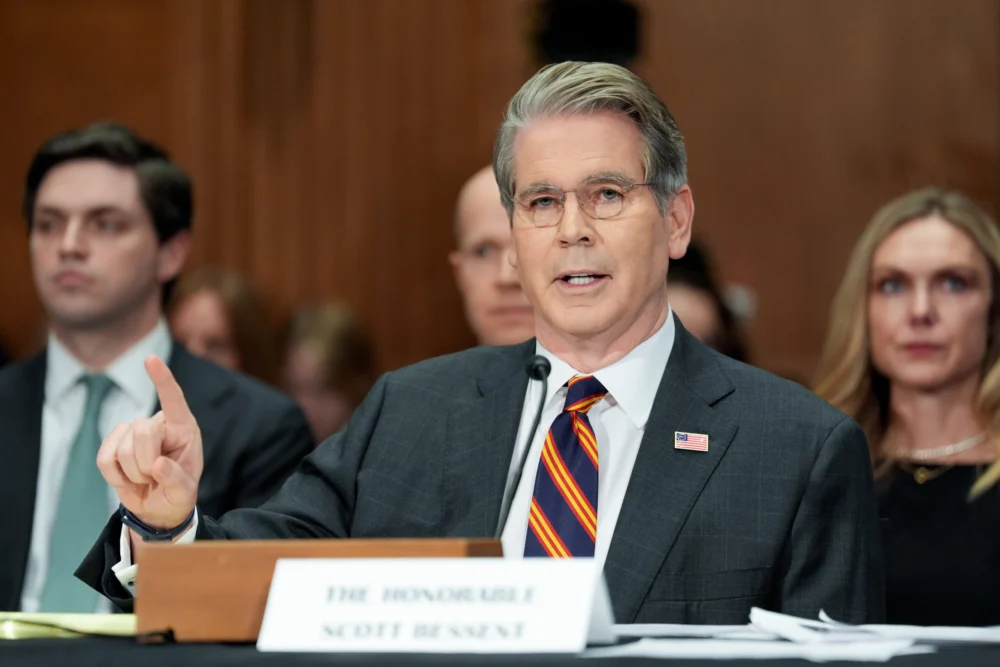
The investigations are unfolding at a particularly sensitive moment in U.S.-China relations. U.S. Treasury Secretary Scott Bessent is slated to meet with his Chinese counterpart, He Lifeng, in Paris this weekend (March 14-17) to continue crucial trade and economic talks. This meeting is widely anticipated to lay the groundwork for a potential summit between President Trump and Chinese President Xi Jinping.
Launching new trade investigations involving China just before such high-level diplomatic engagements sends a mixed signal, according to observers. Wang Huiyao, founder of the Center for China and Globalization, a prominent Beijing-aligned think-tank, commented, "Launching new trade investigations right before the summit sends the wrong signal. A unilateral approach is not going to work. Section 301 has been tried before, and what the two sides need now is to find a way to work together – including on what is happening in the Middle East."
Beijing’s initial reaction to the U.S. Section 301 probes has been notably restrained compared to the more combative exchanges seen during the height of trade tensions last year. A spokesperson for China’s foreign ministry on Thursday stated Beijing’s opposition to all forms of unilateral tariff measures, a measured response that suggests a desire to avoid immediate escalation. However, the underlying displeasure is palpable. Stephen Olson, a senior visiting fellow at the ISEAS-Yusof Ishak Institute and a former U.S. trade negotiator, noted, "China will not view this as good news and will use the upcoming meeting in Paris to express its displeasure." Despite this, Olson believes both sides remain committed to keeping the Trump-Xi meeting on track, suggesting, "I wouldn’t expect this [trade probe] to upset the apple cart." The delicate balance between confrontation and cooperation will define the path forward for the world’s two largest economies.
Broader Implications and the Road Ahead
The extensive use of Section 301 marks a significant shift in U.S. trade strategy, moving away from the "reciprocal tariffs" concept and toward a more traditional, albeit aggressive, application of unilateral trade remedies. The outcome of these investigations could have profound implications for global trade flows, supply chain resilience, and international diplomatic relations.
For U.S. businesses, the prospect of new tariffs on goods from a vast array of countries introduces uncertainty and potential increases in input costs. For consumers, these actions could lead to higher prices for imported goods. On the other hand, proponents argue that such measures are necessary to protect U.S. industries and workers from unfair competition and to uphold ethical standards in global commerce.
As the USTR prepares for its April-May hearings, the global community will be watching closely. The process will test the U.S. administration’s capacity to manage such a broad portfolio of investigations, its diplomatic skill in navigating complex international relationships, and ultimately, the effectiveness of Section 301 as a tool for achieving its trade policy objectives in an increasingly interconnected and fraught global economy. The coming months will reveal whether this assertive strategy can deliver desired outcomes without incurring prohibitive costs to U.S. alliances and global economic stability.
About the Author