America’s leading philanthropists collectively donated an extraordinary $22.4 billion to charitable causes in 2025, marking a significant year for generosity at the top echelons of wealth, according to the Chronicle of Philanthropy’s meticulously compiled annual ranking. This substantial sum, directed towards a myriad of critical issues from public health initiatives to arts and education, underscores the profound influence of ultra-high-net-worth individuals on the non-profit sector. Media magnate Michael Bloomberg emerged as the preeminent donor for the third consecutive year, contributing an impressive $4.3 billion to various causes, reaffirming his long-standing commitment to large-scale philanthropic endeavors. However, this record-setting year was also characterized by an intensifying debate over donor transparency, highlighted by the conspicuous absence of billionaire philanthropist MacKenzie Scott from the coveted Philanthropy 50 list, despite her publicly announced giving of nearly $7.2 billion in 2025.
The 2025 Philanthropy 50: A Snapshot of Elite Giving
The Chronicle of Philanthropy’s annual "Philanthropy 50" serves as a crucial barometer for tracking the giving patterns of the nation’s wealthiest individuals. For 2025, the aggregated $22.4 billion from the top 50 donors demonstrates the enduring power of private wealth in addressing societal needs that often fall outside the purview of government funding. Michael Bloomberg’s consistent leadership on this list reflects a strategic, high-impact approach to philanthropy, with his donations typically channeled through Bloomberg Philanthropies to support initiatives in public health, environment, arts and culture, government innovation, and education. His multi-billion-dollar contributions have funded global efforts to combat climate change, improve public health outcomes, and bolster cultural institutions, showcasing a model of proactive and sustained giving.
The methodology behind the Philanthropy 50 is rigorous, counting confirmed donations to foundations and donor-advised funds (DAFs), while carefully avoiding double-counting disbursements from these entities. This precise accounting aims to present an accurate picture of the initial charitable capital deployed by donors. The collective impact of these 50 individuals is immense, providing critical resources to thousands of organizations nationwide and internationally, enabling them to pursue their missions ranging from medical research to poverty alleviation.
The MacKenzie Scott Anomaly: Transparency and DAF Disclosure
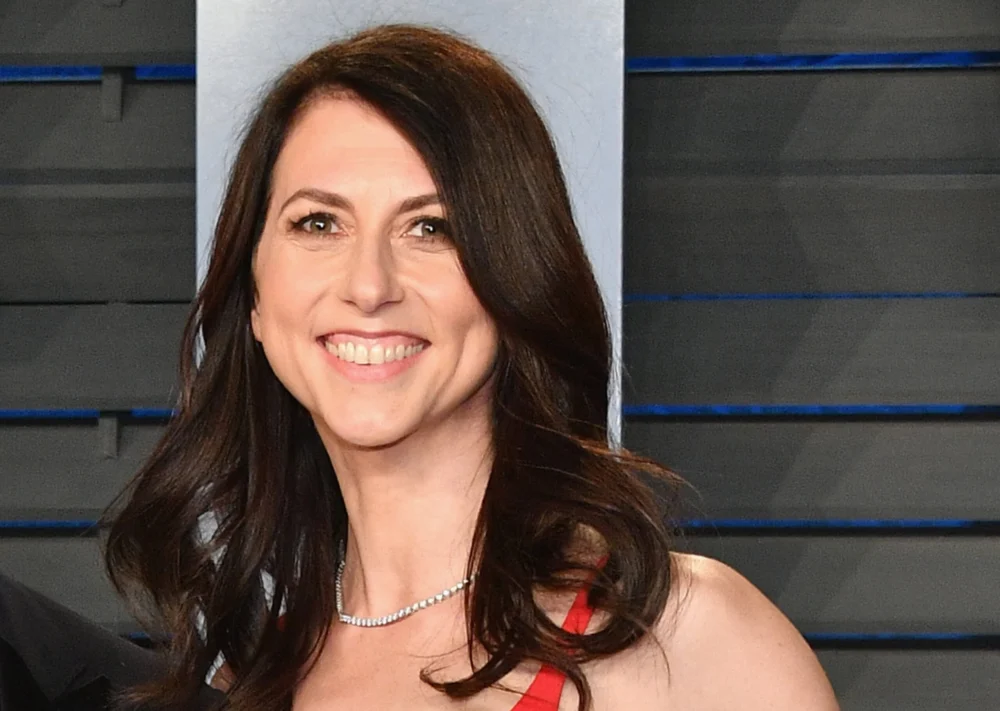
One of the most significant narratives surrounding the 2025 ranking was the notable exclusion of MacKenzie Scott, whose unconventional and impactful giving strategy has redefined modern philanthropy. Scott announced in early December 2025 that she had disbursed nearly $7.2 billion to approximately 225 organizations over the preceding 12 months. Since 2020, her total philanthropic contributions, as detailed on her philanthropic organization Yield Giving’s website, have surpassed $26 billion. Her approach, characterized by large, unrestricted grants to often overlooked organizations, has garnered widespread acclaim for its trust-based model and focus on equity.
Despite her immense contributions and public declarations, Scott did not appear on the Philanthropy 50. Maria Di Mento, senior editor at the Chronicle of Philanthropy and a veteran of the rankings for 21 years, clarified the reason for this exclusion to CNBC’s Inside Wealth. Scott’s representatives declined to confirm the exact amounts she had contributed to her donor-advised funds. This disclosure gap proved critical, as the Chronicle’s criteria mandate confirmation of contributions to DAFs and foundations for inclusion. Without this verification, the full scope of her direct charitable capital deployment, as per their specific accounting standards, could not be confirmed, leading to her omission from the ranking. This incident highlighted a growing tension between publicly declared giving and the specific disclosure requirements of philanthropic tracking organizations.
The Shifting Sands of Disclosure: Donor Privacy and Scrutiny
Di Mento’s insights further illuminated a broader trend: ultra-wealthy philanthropists are becoming increasingly secretive about their charitable giving. This trend, she noted, has intensified in recent years, coinciding with a heightened level of public scrutiny directed at the ultra-rich. "I do think the desire for privacy has grown in recent years because the ultra wealthy are under so much more scrutiny than they used to be," Di Mento observed. "While I think there has always been some resentment towards the ultra rich, that resentment, particularly very recently, has grown by leaps and bounds."
This increased scrutiny from media, policymakers, and the public often questions the sources of vast wealth, its accumulation, and its deployment, including philanthropic activities. In response, some donors opt for a lower public profile to avoid unwanted attention or criticism. Furthermore, Di Mento pointed to a pragmatic concern frequently voiced by donors: the incessant solicitation from non-profits. "Donors tell me this all the time: When they attach their name to a gift, they will get bombarded by major gift fundraisers from other organizations," she explained. This constant influx of funding requests can overwhelm even well-staffed philanthropic offices, prompting some to prefer anonymous or less publicized giving to manage the influx of appeals. For individuals who may not have extensive personal or philanthropic staff, the administrative burden of public recognition can be a significant deterrent.
The Forbes 400 Paradox: Wealth Versus Public Philanthropy
The disconnect between extreme wealth and public philanthropic recognition was further underscored by the low representation of America’s wealthiest individuals on the Philanthropy 50. Only 19 members of the Forbes 400, the definitive list of the nation’s richest people, made the Chronicle’s ranking. This proportion, Di Mento noted, has remained remarkably consistent even as the overall wealth of the country’s richest has skyrocketed.
Several prominent figures from the Forbes 400, including Elon Musk and Larry Ellison, both centibillionaires and often at the forefront of the wealth rankings, were conspicuously absent from the 2025 Philanthropy 50. Di Mento presented a dual perspective on this phenomenon: "I think a lot of the ultra wealthy are not giving as much as they could be, but the other part is that there’s no law that says they have to disclose their giving."
The lack of mandatory disclosure for private charitable giving means that a significant portion of philanthropic activity by the ultra-wealthy may occur outside the public eye. For the Chronicle to accurately count donations, verification and cooperation from billionaires or their representatives are often essential. For instance, Elon Musk disclosed in a regulatory filing that he gifted approximately 210,000 Tesla shares, valued at nearly $100 million, to "certain charities" in December 2025. However, without specific details on the recipients and confirmation that these entities were not involved in lobbying or political campaigns, the Chronicle could not count this donation toward the Philanthropy 50 list. This highlights the precise criteria and ethical considerations involved in compiling such rankings, aiming to differentiate pure charitable giving from other forms of financial transfers.
Similarly, Larry Ellison, who has appeared on the list in prior years, has not cooperated with the Chronicle for several years, according to Di Mento. Ellison famously pledged in 2010 to give away at least 95% of his net worth. However, in the summer of 2025, he amended his philanthropic focus to concentrate resources on technology research rather than traditional non-profit organizations. "It’s not really clear what he’s giving to or what he’s giving anymore," Di Mento remarked, illustrating the challenge of tracking the evolving strategies of mega-donors who may shift their focus or mechanisms of giving.
Understanding Donor-Advised Funds (DAFs): A Key Mechanism in Modern Philanthropy
The issue of DAF disclosure, central to MacKenzie Scott’s exclusion, merits a deeper exploration. Donor-advised funds are increasingly popular financial vehicles for charitable giving, offering donors flexibility, tax advantages, and privacy. Essentially, a DAF allows a donor to make an irrevocable charitable contribution to a sponsoring organization (often a public charity or a financial institution’s charitable arm), receive an immediate tax deduction, and then recommend grants from that fund to qualified charities over time.
Benefits of DAFs:
- Tax Efficiency: Donors receive an immediate tax deduction when assets are contributed to the DAF, regardless of when the grants are distributed to charities. This can be particularly advantageous for highly appreciated assets like stocks.
- Simplicity: DAFs eliminate the administrative burden of managing a private foundation, as the sponsoring organization handles compliance, record-keeping, and grant administration.
- Flexibility: Donors can recommend grants to virtually any IRS-qualified public charity at any time, allowing them to adapt their giving strategies to evolving needs.
- Anonymity: Donors can choose to remain anonymous when grants are distributed, addressing the privacy concerns highlighted by Di Mento.
Criticisms and Disclosure Debates:
Despite their benefits, DAFs have faced criticism, primarily concerning the "payout rate" – the rate at which funds are distributed from the DAF to active charities. Unlike private foundations, which typically have a minimum annual payout requirement (5% of assets), DAFs have no such federal mandate. This has led to concerns that significant sums of charitable capital could sit in DAF accounts indefinitely, accruing interest and providing tax benefits to the donor without immediately reaching operating charities.
The Chronicle of Philanthropy’s decision to count contributions to DAFs but not from them (to avoid double-counting) is a standard practice among philanthropic trackers. However, the inability to verify the initial contribution to the DAF, as in Scott’s case, creates a blind spot in rankings that aim to capture the deployment of new charitable capital. This ongoing debate around DAF transparency is a crucial element in understanding the complexities of contemporary philanthropy.
Historical Context and Evolving Philanthropic Models
Philanthropy in America has a rich history, evolving from the large endowments of industrialists in the late 19th and early 20th centuries (e.g., Carnegie, Rockefeller) to the more strategic, outcomes-focused giving of today. The rise of mega-donors in the 21st century, often technology billionaires, has introduced new models. MacKenzie Scott’s "trust-based philanthropy," characterized by unrestricted grants and minimal reporting requirements for recipients, represents a significant departure from traditional models that often impose stringent conditions and metrics. This approach aims to empower organizations directly, reducing the administrative burden on non-profits and fostering greater innovation.
The "giving while living" movement, championed by figures like Bill Gates and Warren Buffett (through The Giving Pledge), encourages billionaires to commit to giving away the majority of their wealth during their lifetimes rather than solely through bequests. This philosophy underscores a desire for donors to actively participate in the impact of their giving and to see the fruits of their contributions during their lives. However, even within this movement, the mechanisms and transparency of giving can vary widely.
Challenges in Tracking and Transparency
The difficulties faced by organizations like the Chronicle of Philanthropy in accurately tracking and reporting on elite giving are multifaceted. The absence of a centralized, mandatory reporting system for all charitable gifts, especially those routed through private vehicles, poses a significant hurdle. Wealthy individuals often utilize complex financial structures, including family offices and private foundations, which may not be fully transparent to the public or even to researchers.
Moreover, the definition of "charitable giving" itself can sometimes be nuanced. As seen with Elon Musk’s donation, the Chronicle scrutinizes recipients to ensure they align with purely charitable purposes and are not primarily engaged in lobbying or political activities. This due diligence is critical for maintaining the integrity of their rankings and for distinguishing genuine philanthropy from other forms of influence. The lack of cooperation from some billionaires, as in the case of Larry Ellison, further complicates efforts to provide a comprehensive public account of their philanthropic endeavors.
The Broader Implications for Society and Non-profits
The trends observed in 2025 have significant implications for the non-profit sector and broader society.
- Accountability: Increased donor privacy, while understandable from a donor’s perspective, can reduce public accountability. When large sums of money are directed to causes, transparency helps ensure that funds are used effectively and in alignment with public interest.
- Sector Impact: Mega-donations can dramatically alter the landscape of specific fields, such as public health or climate research. However, a concentration of giving from a few powerful individuals can also lead to funding imbalances, with certain causes receiving disproportionate attention while others struggle.
- Non-profit Sustainability: The reliance on a relatively small pool of ultra-wealthy donors can make non-profits vulnerable to shifts in donor priorities or changes in giving patterns. While large grants are invaluable, a diversified funding base remains crucial for long-term sustainability.
- Public Trust: The perception of secrecy surrounding elite giving can erode public trust in both the wealthy and the philanthropic sector. Clear, consistent reporting on major donations can help foster greater confidence.
Conclusion: A Complex and Evolving Landscape
The philanthropic landscape of 2025, characterized by robust giving from the top 50 donors led by Michael Bloomberg, alongside the significant yet unranked contributions of MacKenzie Scott, underscores a complex and evolving dynamic. While billions of dollars continue to flow into critical causes, the increasing desire for privacy among the ultra-wealthy, coupled with the intricate mechanisms of modern giving like DAFs, presents ongoing challenges for transparency and comprehensive reporting. The paradox of immense wealth existing alongside a relatively small number of publicly recognized major donors, as highlighted by the Forbes 400 figures, prompts deeper questions about the responsibilities and choices inherent in extreme affluence. As the world grapples with persistent societal challenges, the methods and transparency of philanthropic giving will remain a crucial area of focus for media, researchers, and the public alike, continually shaping the impact of private wealth on the public good.
About the Author