The digital art world is currently navigating a landscape fraught with controversy, particularly concerning the use of artificial intelligence in creative endeavors. A recent social media experiment, designed to expose this inherent bias, has sparked widespread discussion about our perception of art, effort, and the burgeoning role of AI in creative production. The core of the experiment involved presenting a well-known painting as AI-generated, only to later reveal its true human origin, demonstrating how our assumptions about an artwork’s creation significantly influence our judgment of its quality.
The Genesis of the Experiment: A Social Media Spark
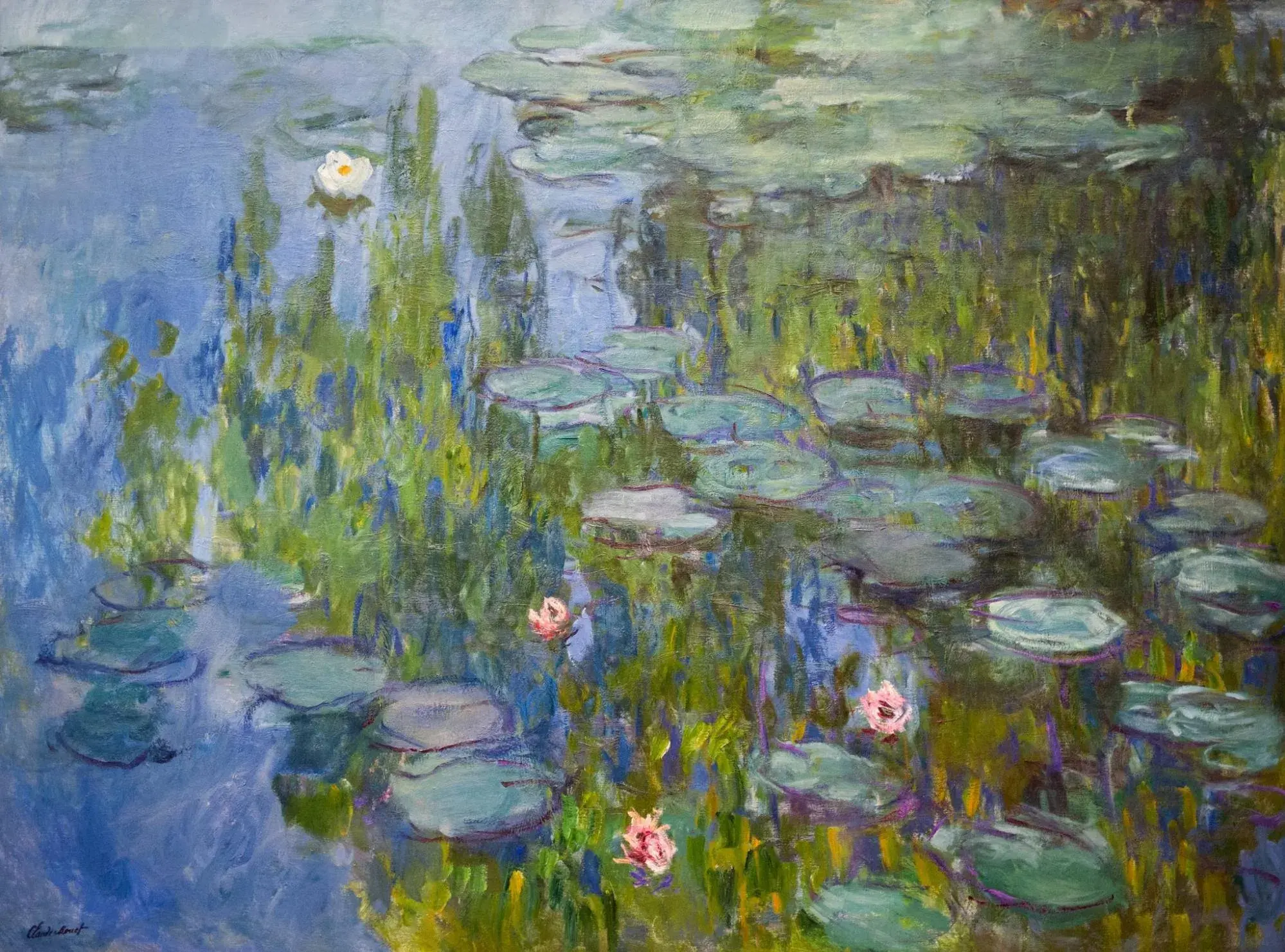
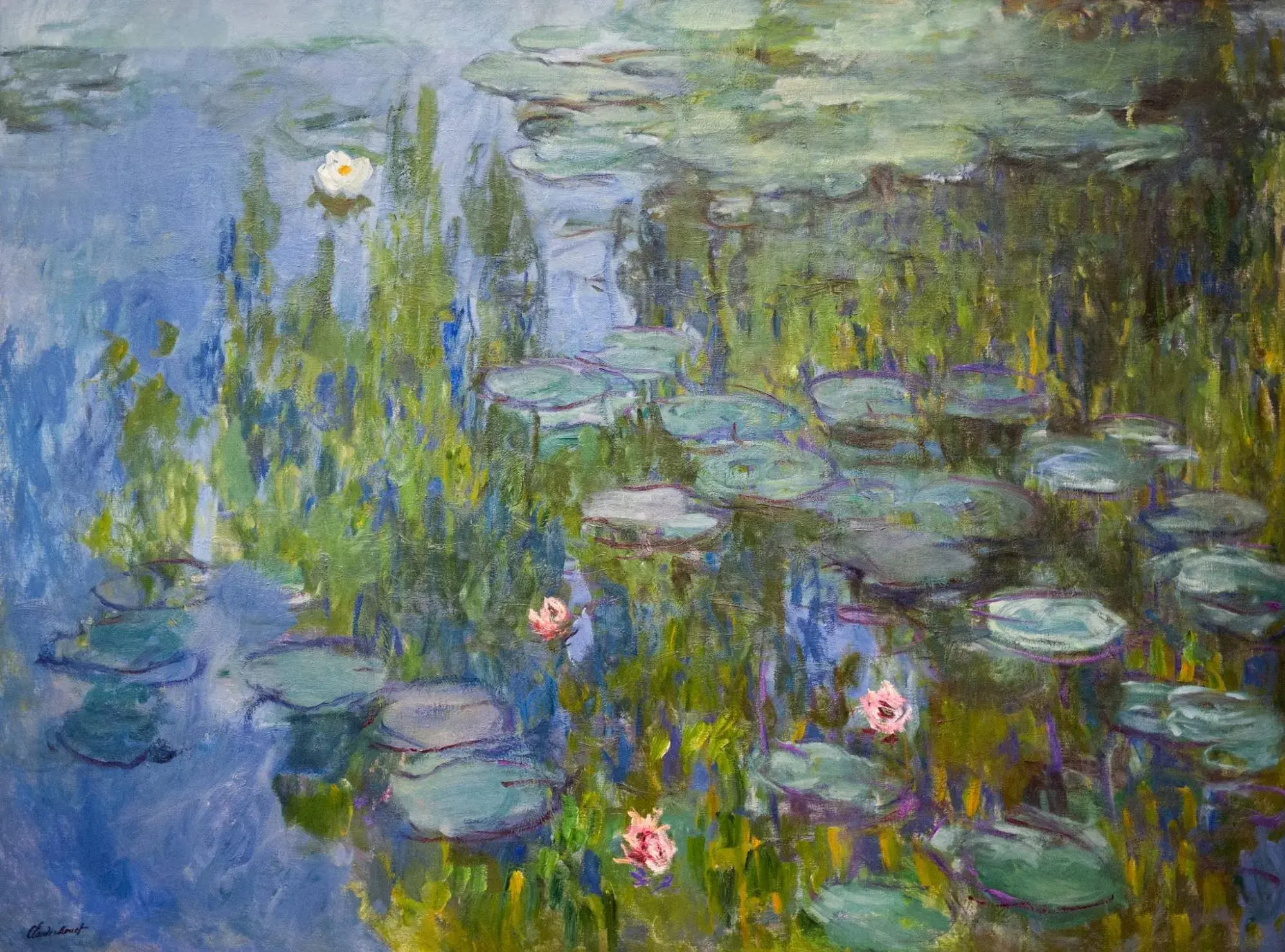
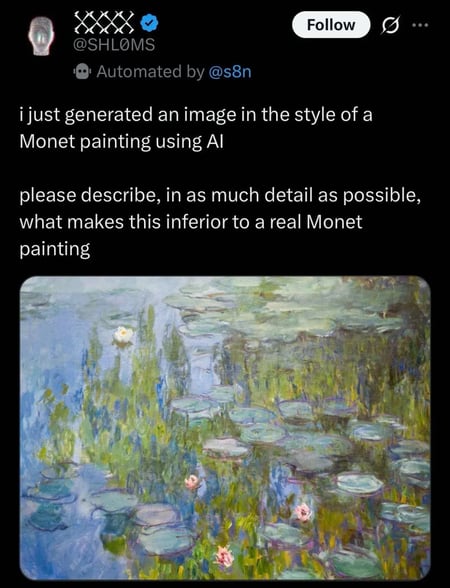
The catalyst for this widespread reaction was a post by user SHL0MS on the platform X (formerly Twitter). On or around May 16, 2024, SHL0MS shared an image of a painting, accompanied by a prompt for viewers to critique it. The prompt, as reported, stated: "I just generated an image in the style of a Monet painting using AI. Please describe, in as much detail as possible, what makes this inferior to a real Monet painting." The image itself, a serene depiction of water lilies, was presented as a product of advanced AI models trained on vast datasets of world-class art.
The response was swift and overwhelmingly negative. Over 1,300 users engaged with the post, offering a barrage of critiques. Common criticisms included a lack of "coherent composition," an "incoherent muddle" of colors, and an overall impression of the artwork "trying too hard." Many users dismissed the image outright as "obvious AI slop," "garbage," or "borked nonsense with no sense of space." The sentiment was clear: the AI-generated artwork was perceived as fundamentally flawed, lacking the depth, meaning, and "magical quality" attributed to human creativity.
The Unveiling: A Twist of Truth
The experiment took a sharp turn when SHL0MS revealed the truth: the image was not AI-generated at all. It was, in fact, a genuine painting by the Impressionist master Claude Monet, specifically one of his renowned "Water Lilies" series. This revelation exposed a critical flaw in human perception – our predisposition to devalue art when we believe it to be the product of artificial intelligence, regardless of its actual origin or artistic merit. The widespread criticism of a Monet painting, simply because it was believed to be AI-generated, underscored a deep-seated bias against AI in the creative sphere.
The "Effort Heuristic" at Play: Understanding Our Bias

This phenomenon can be largely attributed to what Professor Andrea Morales of Arizona State University terms the "effort heuristic." Morales, the Lonnie L. Ostrom Chair in Business and a professor in the Department of Marketing, has extensively researched consumer responses to perceived effort. The core idea is that humans often use the amount of effort invested in creating something as a proxy for its quality, especially when objective quality assessment is difficult.
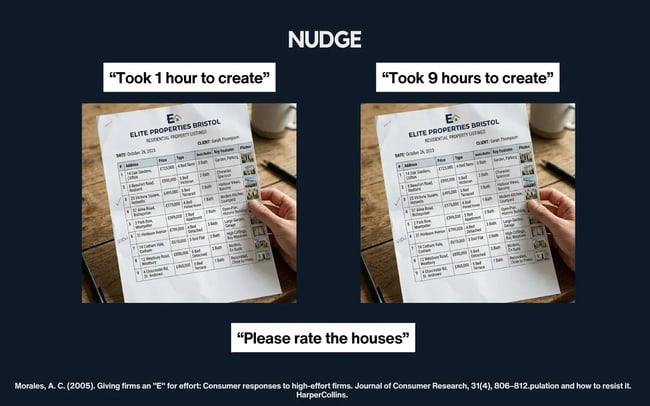
A foundational study by Morales, published in the Journal of Consumer Research in 2005, explored this concept through a real estate scenario. Participants seeking new homes were presented with personalized lists of apartments. Crucially, half were told their real estate agent had "did everything manually and spent nine hours building the list," while the other half were informed the agent "used a computer program, spending only one hour on the list." In reality, the lists were identical and always took the agent one hour to compile. The results were striking: participants who believed the list required nine hours of manual effort rated the apartments 30.5% higher than those who believed it took only one hour with a computer program.
This research highlights a fundamental psychological principle: we tend to value and respect creations that appear to have demanded significant time, skill, and dedication. Conversely, when something can be generated instantaneously or with minimal apparent effort, our inclination is to dismiss it as less valuable or even inferior. The Monet experiment perfectly mirrored this dynamic. The initial assumption of AI generation – implying rapid, effortless creation – triggered an immediate negative judgment, overriding any objective appreciation of the artwork’s aesthetic qualities. The more than 6.8 million individuals who witnessed the post, and subsequently critiqued the Monet as AI-generated "slop," were all, in essence, falling prey to this effort heuristic.
The "Death By Sepia" Phenomenon: A Broader Marketing Implication
The implications of this bias extend far beyond the realm of fine art and into the practicalities of marketing and content creation. Dave Harland, a copywriter and author of "The Word" newsletter, has termed this effect "Death By Sepia," referencing a hypothetical scenario of a restaurant’s visually appealing, yet AI-generated, billboard. While such a sign might be colorful and informative, the subtle visual cues often associated with AI-generated imagery – a certain flatness, an overly uniform aesthetic, or an unnatural "sepia" tone – can subconsciously signal a lack of human craft.
As Harland posits, even if an AI-generated sign is technically proficient, audiences may instinctively perceive it as lacking the soul and intention that comes from human creation. This perception can lead to a visceral dislike, as the audience feels an unspoken disconnect, a sense that no individual genuinely cared about the message or product being presented. The Monet experiment serves as a potent real-world example of this: the perceived lack of human effort, masked by the label of AI, led to immediate condemnation.
The Challenge for AI Adoption in Creative Industries
The current discourse surrounding AI in creative industries often emphasizes its potential for efficiency and innovation. Businesses are repeatedly encouraged to embrace AI to remain competitive. However, the Monet experiment and the underlying psychology it reveals present a significant challenge to this narrative. If audiences inherently devalue content perceived as AI-generated, simply adopting AI tools without careful consideration could prove counterproductive.
The critical question then becomes: how can creators and marketers leverage the power of AI while mitigating the negative perceptions associated with it? The answer likely lies not in a complete rejection of AI, but in a strategic integration that prioritizes human oversight, intentionality, and the demonstrable infusion of craft.
Expert Insights on AI and Human Creativity
Professor Matt Johnson, a specialist in the psychology of decision-making and marketing, has addressed this topic in various forums. In discussions on podcasts like "Nudge," Johnson has explored why certain AI-generated content fails to resonate emotionally. His analysis often circles back to the human desire for connection and authenticity. When content feels manufactured without genuine human input, it can lack the emotional depth that captures attention and fosters engagement.
The implication for marketers is clear: while AI can be a powerful tool for generating ideas, drafting copy, or creating visual elements, the final output must still bear the imprint of human creativity and intention. This could involve significant human editing, refinement, and the addition of unique perspectives that AI alone cannot replicate. The goal should be to use AI as an assistant, not a replacement for human ingenuity.
Reconciling AI’s Potential with Human Psychology
The core tension lies in reconciling AI’s rapid advancement with enduring human psychological needs. As the Monet experiment demonstrated, our brains are wired to value effort and human touch. When we believe something was created effortlessly by a machine, we subconsciously question its authenticity, its depth, and ultimately, its value.
This doesn’t mean AI has no place in creative fields. Instead, it suggests a need for a more nuanced approach. The focus should shift from merely generating content to crafting meaningful experiences. This involves understanding that:
- Perception is paramount: How content is presented and perceived is as crucial as its intrinsic quality. Transparency about AI usage, when done thoughtfully, could potentially mitigate negative reactions, but the "effort heuristic" suggests this is a complex challenge.
- Human oversight is essential: AI should be a tool to augment human creativity, not supplant it. The final product should reflect human judgment, taste, and emotional intelligence.
- Meaning and intention drive connection: Audiences crave content that feels authentic, purposeful, and imbued with a sense of care. This requires human creators to infuse their work with their own unique perspectives and values.
The Monet experiment serves as a vital cautionary tale. It highlights that as AI becomes more sophisticated, our inherent biases and psychological responses will continue to shape how we interact with and value its output. The path forward for creators and marketers will likely involve a delicate balance: harnessing the efficiency and power of AI while steadfastly upholding the irreplaceable value of human effort, intention, and artistry. The ultimate goal is not just to create content, but to create something meaningful that resonates deeply with the human spirit.
About the Author