Roughly 58% of consumers now integrate AI answer engines into their weekly product research, a figure experiencing rapid ascent. As AI-powered platforms like ChatGPT, Perplexity, and Google AI Overviews solidify their positions as primary discovery surfaces, content and SEO professionals are grappling with a critical question: is there a residual relationship between backlinks and AI answer engine optimization (AEO), or is it time for a complete overhaul of the traditional authority playbook? The short answer is that contextually relevant backlinks retain significant value for AEO, but they no longer constitute the sole determinant of authority. This evolution necessitates a nuanced understanding of how these signals interact and what constitutes a balanced, modern authority strategy.
The seismic shift in consumer behavior toward AI-driven information retrieval marks a pivotal moment for digital marketing. For years, backlinks have served as the bedrock of search engine optimization (SEO), acting as votes of confidence from one website to another. Search engines traditionally weighed these votes based on the linking domain’s authority, the contextual relevance of the link, and the anchor text used. AI answer engines, however, do not entirely discard this foundational logic; instead, they layer a more sophisticated set of evaluation criteria on top. This development means that while a robust backlink profile remains a crucial asset, it is no longer a sufficient condition for achieving visibility within the burgeoning landscape of AI-powered search.
The Shifting Sands: Backlinks and AEO in a New Era
Traditional search engines have long relied on backlinks as a primary indicator of a website’s authority and trustworthiness. A link from a reputable domain to a specific page was, and to a degree still is, interpreted as an endorsement. The weight of this endorsement was historically determined by factors such as the linking domain’s overall authority, the thematic relevance of the content surrounding the link, and the specific keywords used in the anchor text. This system, a cornerstone of off-page SEO for over two decades, is now being re-evaluated in the context of AI answer engines.
AI answer engines, when tasked with responding to user queries, do not simply rank pages based on the sheer volume of backlinks. Instead, they endeavor to identify sources that can reliably ground their generated answers. This involves a more multifaceted assessment of a source’s credibility and relevance. While established SEO principles remain relevant, AI systems incorporate additional layers of analysis to ensure the accuracy and trustworthiness of the information they present. This necessitates a recalibration of how content and SEO teams approach authority building, moving beyond a singular focus on backlink acquisition.
Do Links Still Move the Needle? A Nuanced Perspective
The consensus among industry experts is that backlinks continue to play a role in AI answer engine optimization, particularly given that SEO forms the fundamental scaffolding for any effective AI search strategy. However, the nature and quality of these links have become far more critical than in the past.
Nathaniel Miller, Head of Marketing at Ashbrook Technologies, articulated this shift in a recent interview. "The companies ranking highest across AI platforms tend to be the ones with both strong authority and strong backlink profiles," Miller stated. He further elaborated, "If you’re not getting qualified traffic from that link, it’s basically a logo slap. The real value is in relevance and authority – not just size." This sentiment underscores a key distinction: while a high domain authority (DA) from a linking site might have historically boosted rankings, AI systems place a greater emphasis on semantic alignment and topical relevance.
In essence, the transition from traditional search to AI answer engines means that a link from a high-DA, low-relevance website, which might have offered a significant boost in classic SEO, now offers a considerably weaker signal for AEO. Conversely, a link from a high-DA, highly relevant source, particularly one that aligns thematically with the brand’s core topic clusters, carries immense weight. This granular evaluation means that the quality and contextual fit of a backlink are now paramount.
The influence of different link types on both classic SEO and AEO can be visualized as follows:
| Link Type | Classic SEO Influence | AEO Influence |
|---|---|---|
| High-DA, low-relevance link | High | Low (weak semantic signal) |
| High-DA, high-relevance link | Very High | Very High |
| Industry publication link | High | High (especially if a grounding source for AI) |
| Niche blog link with topical depth | Moderate | High (semantic adjacency reinforces entity) |
| Directory or aggregator link | Low-Moderate | Minimal |
| Co-citation in expert roundup | Indirect | High (positions brand alongside authorities) |
Beyond direct hyperlinks, unlinked brand mentions and co-citations are emerging as equally vital signals for AI answer engines. A simple mention of a brand name within a credible piece of content, even without a hyperlink, informs an AI system that the source is referencing the brand within a specific topical context. When such mentions are recurrent across authoritative platforms, they contribute significantly to building the kind of entity authority that influences the likelihood of citation in AI-generated responses.
It is important to note that while brands with a strong backlink profile are more likely to be cited, the AI-generated answer may not always include a direct link. Charlie Graham, founder of RivalSee, highlighted this trend, observing that approximately 85% of brands mentioned in ChatGPT responses lack a citation link. However, this absence of a direct link does not diminish the brand’s visibility; users who see a brand name in an AI answer are likely to conduct a subsequent search for it, creating a valuable downstream effect that serves as a potent, albeit indirect, authority signal.
AEO vs. SEO: Distinguishing the Practical Differences
AI answer engine optimization (AEO) should not be viewed as a replacement for traditional SEO but rather as an extension and evolution of it. AEO builds upon the established foundations of SEO, adapting them to an environment where the interface and the criteria for evaluation are fundamentally different.
The primary objective of SEO has historically been ranking. The goal is to appear prominently in search engine results pages (SERPs) for relevant queries, thereby earning a click and driving traffic to a specific web page. In contrast, AEO’s primary goal is to answer. It aims to establish a brand as a trusted source that an AI system will quote, paraphrase, or cite when a user poses a question. This divergence in objectives leads to distinct differences in content structure, key performance indicators (KPIs), and optimization priorities.
The comparative breakdown of these differences is as follows:
| Dimension | SEO | AEO |
|---|---|---|
| Primary Goal | Rank in search results | Earn citations in AI-generated answers |
| Content Structure Priority | Keyword placement, internal linking | Direct answers, fact statements, FAQ blocks |
| Authority Signal | Backlink profile | Backlinks + mentions + entity clarity + structure |
| Primary KPIs | Organic traffic, ranking position, CTR | AI citation frequency, brand mention share, grounding query coverage |
| Optimization Target | Individual page, keyword cluster | Brand entity, topic authority across multiple pages |
| Measurement Tools | Google Search Console, rank trackers | AI visibility tools, AI Performance in Bing Webmaster Tools |
Organizations achieving the most significant AEO results are those that integrate AEO strategies into their existing SEO programs rather than treating them as separate initiatives. This involves refining SEO practices to prioritize quality over sheer volume, ensuring content clarity over keyword density, and layering entity and mention-based strategies on top of traditional link-building efforts.
How AI Systems Interpret Links and Mentions
The intricate process by which AI answer engines interpret signals beyond simple backlinks is crucial for understanding modern authority. Platforms like ChatGPT, Perplexity, and Google AI Overviews do not solely rely on traditional Google ranking factors. Instead, they aim to ground their responses in credible and trustworthy source material. This involves a multi-stage process:
-
Source Parsing: AI systems ingest and index vast amounts of web content, including news sites, blogs, academic publications, and structured data. The selection of content for parsing is influenced not only by backlinks but also by crawlability, recency, and the semantic structure of the web pages themselves.
-
Authority Weighting: Unlike traditional PageRank algorithms that count links, AI systems assess authority by evaluating the consistent and credible appearance of content or brands within contexts relevant to a specific query. A brand frequently cited in authoritative industry publications, mentioned in expert roundups, and consistently associated with a particular topic area will carry more AI authority than a brand with a strong backlink profile built primarily through less discerning methods like directory submissions or generic outreach campaigns.
-
Signal Merging: A critical aspect of AI interpretation is the merging of various signals. Links, mentions, and page structure are not evaluated in isolation. A page with a strong backlink profile may still be overlooked if its content is ambiguous, outdated, or poorly structured. Conversely, a page with moderate link authority but exceptional clarity— featuring clear headings, direct answers, supporting data, and consistent entity signals—can achieve citation precedence over technically superior but less accessible competitors. Backlinks build foundational trust, but clarity, freshness, and structure ultimately determine whether a page is selected for citation.
Key Signals Beyond Links for AEO Success
While backlinks remain a crucial component of an authority strategy, several other signals directly influence a brand’s likelihood of being cited by AI answer engines. These signals, when working in concert with backlinks, create a robust authority graph:
-
Unlinked Brand Mentions: These occur when a brand name appears in credible sources without an accompanying hyperlink. They are invaluable for AEO as they directly map a brand to specific topic clusters and build entity authority, making the brand an obvious choice for citation.
-
Co-citations: When a brand is mentioned alongside other recognized brands or sources within the same content, it signals to AI systems that the brand belongs in authoritative company. This is a powerful, yet often underutilized, AEO tactic.
-
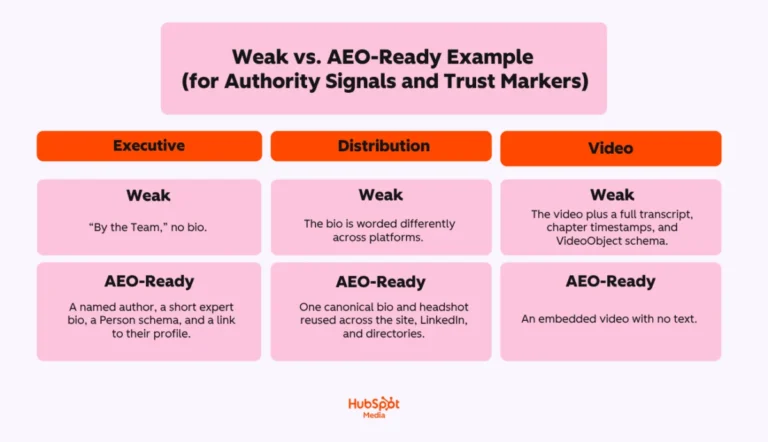
Entity Clarity: This refers to consistent naming conventions, the use of structured data (like Organization or Person schema), and a clearly defined area of expertise across all digital channels. AI engines will not cite a brand they cannot confidently identify, making entity confusion a significant impediment to AEO success.
-
Interplay with Backlinks: The synergistic relationship between these signals and backlinks is paramount. A strong entity with numerous mentions but no backlinks may struggle with verification, while a robust backlink profile lacking entity clarity or mention frequency will likely underperform in AI citation environments. The brands achieving the highest AI citation rates effectively integrate authoritative links, consistent mentions, strong co-citation associations, and clear entity definition.
Crucially, the quality of the content itself remains a non-negotiable factor. As Nathaniel Miller emphasized, "If your content isn’t great, no number of backlinks will help." High-quality, genuinely useful, and well-structured content forms the foundation upon which all other authority signals are built.
Structuring Content for Optimal Backlink and AEO Citation
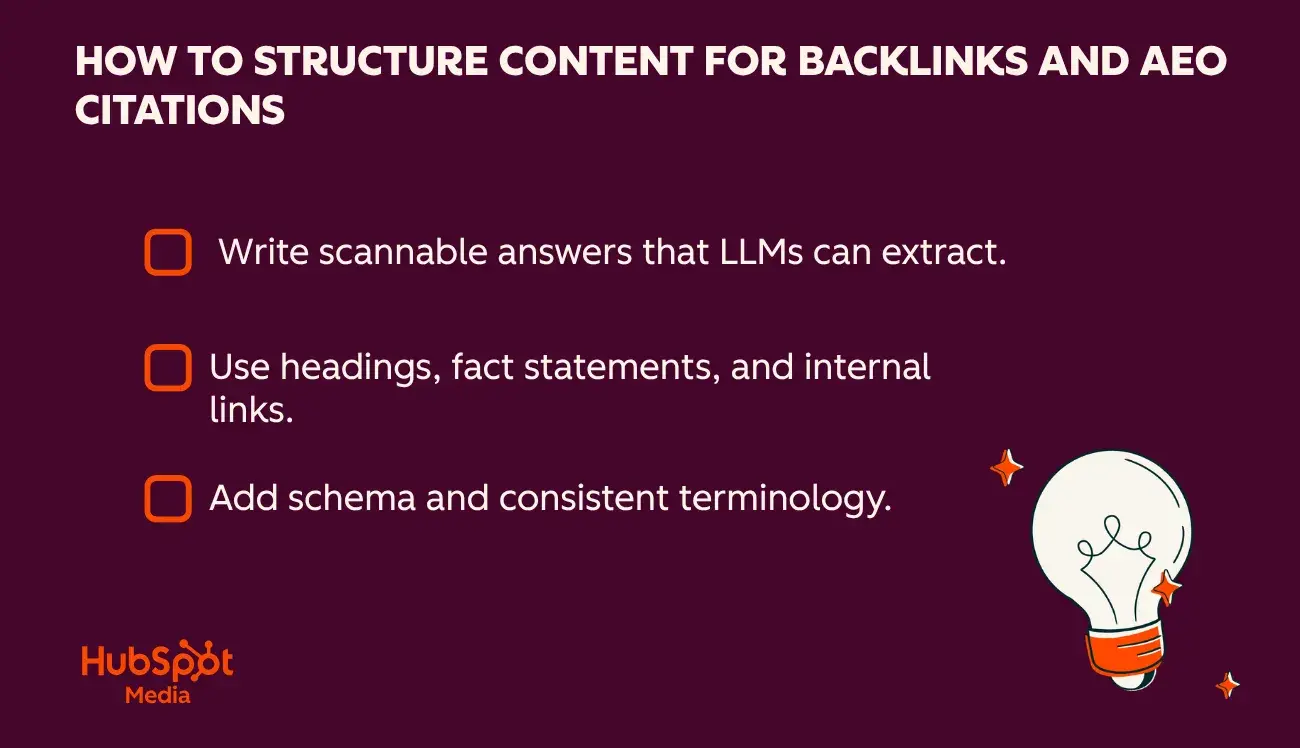
AI systems extract information from indexed content, and pages that are easily parsable, clearly organized, and directly responsive to user questions are systematically more likely to be cited. To optimize content for both backlinks and AEO citations, content creators should focus on:
-
Scannable Answers: Lead each major section of a page with a direct, self-contained answer to the implied question, followed by supporting context, data, or examples. This "answer first, evidence second" structure significantly enhances LLM extraction and citation likelihood, mirroring the format favored by featured snippets in traditional search.
-
Strategic Use of Headings, Fact Statements, and Internal Links: Employ clear headings (H2, H3) to delineate topics. Incorporate distinct fact statements and bulleted lists that present information concisely. A dense internal linking structure that builds out topic clusters signals topical depth, contributing to the "Freshness, Structure, Authority" (FSA) framework essential for AI systems.
-
Schema Markup and Consistent Terminology: Implementing schema markup (e.g., Organization, Article, FAQPage schema) clarifies page purpose and structure for AI systems. Equally important is maintaining consistent terminology across all platforms to ensure AI engines can build a clear association with the brand’s entity. Using a canonical term for each concept across the website, social profiles, and external mentions is vital for avoiding entity confusion.
Building Backlinks and AEO-Salient Mentions Across Platforms

Effective AEO strategies integrate link building and mention building into a unified effort. Every outreach action should aim to generate both a structural link signal and a brand mention that AI systems can index. Key approaches include:
-
Prioritizing AI-Friendly Formats: Content formats such as original research, data reports, and standalone "Key Findings" sections with clearly labeled statistics are particularly effective for AI citation due to their extractable nature.
-
Earning Relevant Links and Co-citations with Original Research: Original research is a highly efficient method for simultaneously acquiring backlinks and co-citations. Well-designed studies provide publishers with a compelling reason to link back to the brand as a primary source, fostering co-citation opportunities and strengthening AEO authority. Digital PR, including earned media placements, expert commentary, and podcast appearances, also serves as a potent strategy for generating both link authority and authentic mentions.
-
Participating in Authoritative Conversation Hubs: AI systems index content from various authoritative sources, including industry forums, Q&A platforms (like Quora and Stack Overflow), and expert networks (like HARO and Qwoted). Contributing expert commentary, thought leadership, and guest appearances on podcasts within these platforms expands a brand’s footprint and builds credibility. This relationship-building can lead to organic outreach from other creators seeking expert input, generating valuable third-party mentions.
Measuring the Impact: A Repeatable Loop for AEO
Brands achieving tangible progress in AI visibility are actively experimenting and meticulously measuring the effectiveness of their strategies. A clear feedback loop, where content and outreach activities inform subsequent optimizations, is essential. The Loop Marketing framework, which emphasizes benchmarking, tying changes to activity, and reporting on scalable actions, provides a robust model for AEO measurement:
-
Benchmark AI Visibility and Citations: Establish a baseline by assessing current AI citation frequency, identifying which pages are earning citations, and analyzing the types of queries that trigger AI answers.
-
Tie Changes to Content and Outreach Activity: Diligently log all content updates and outreach efforts (e.g., publishing new content, guest posting, digital PR campaigns). Track subsequent changes in AI visibility and cited pages to identify which activities yield the most impact.
-
Report on Scalable Actions: Regularly analyze performance data to determine which strategies are most effective. Focus on scaling successful initiatives and discontinuing or refining those that are not delivering desired results, creating a compounding strategy over time.
Frequently Asked Questions About Backlinks and AEO
-
Do unlinked mentions help answer engine optimization? Yes, unlinked brand mentions are a meaningful signal in AEO. They help AI systems map your brand to topic areas and build entity authority, making you a more likely citation choice.
-
Do nofollow links matter for AEO? While they contribute less to traditional PageRank, nofollow links from highly relevant, trusted sources can still carry significant entity and mention signals for AEO. AI systems parse the content and register the reference to your brand regardless of the link attribute.
-
How long does it take to see AEO impact from link building? Similar to traditional SEO, meaningful movement typically occurs within three to six months of a sustained campaign, with compounding results over 12 months. Entity and mention-based signals can sometimes surface faster, especially from high-visibility placements.
-
Should I stop classic link building in favor of AEO? No, classic link building remains central to AEO. The approach should be to evolve your link-building strategy to prioritize relevance, co-citation opportunities, and entity-reinforcing placements, rather than abandoning it entirely. SEO and AEO are complementary.
The Enduring Place of Backlinks in the AI Landscape
The future of digital authority is not a dichotomy between backlinks and AEO; rather, it is a synthesis of both. Backlinks provide the foundational structural credibility that ensures content is indexed and trusted as a grounding source. Brand mentions, co-citations, entity clarity, and content structure then build the broader signal that informs AI systems about a brand’s authority and relevance within specific topic areas.
Content teams that are currently achieving measurable progress in AI visibility are not abandoning their SEO programs. Instead, they are refining them, making them more precise, entity-aware, and consistently structured. Tools that offer visibility into AI citation performance, alongside traditional search metrics, are essential for moving from guesswork to iterative optimization. The integration of these strategies ensures that brands can effectively navigate and capitalize on the evolving landscape of AI-driven information discovery.
About the Author