
The digital marketing realm is undergoing a profound transformation, driven by the rapid ascent of artificial intelligence in search. As AI-powered "answer engines" increasingly become the primary gateway for consumers seeking information, brands that fail to establish a robust presence within these new interfaces risk missing critical early-stage influence. McKinsey research indicates a significant shift, with 50% of consumers now utilizing answer engines and over 70% relying on them to ask questions and gather information. This trend means a substantial portion of the discovery process is occurring within AI tools before users even navigate to traditional websites, underscoring the burgeoning importance of Answer Engine Optimization (AEO).
Navigating this new frontier presents a challenge for marketers: how can they effectively gauge and improve their brand’s performance within these evolving search models? The answer lies in specialized AEO tools, such as Profound and Bluefish AI. These AI visibility platforms are designed to empower marketing teams to monitor, measure, and enhance their brand’s presence within AI-driven search experiences. As AEO solidifies its position as a strategic priority, many organizations are now evaluating platforms like Profound and Bluefish AI to determine which best delivers superior visibility, ensures secure brand positioning, and offers a clear return on investment. This comprehensive analysis delves into what each tool offers, their key differentiators, and how they align with distinct AEO strategies.
Understanding the Leading AEO Platforms: Profound and Bluefish AI
What is Profound?
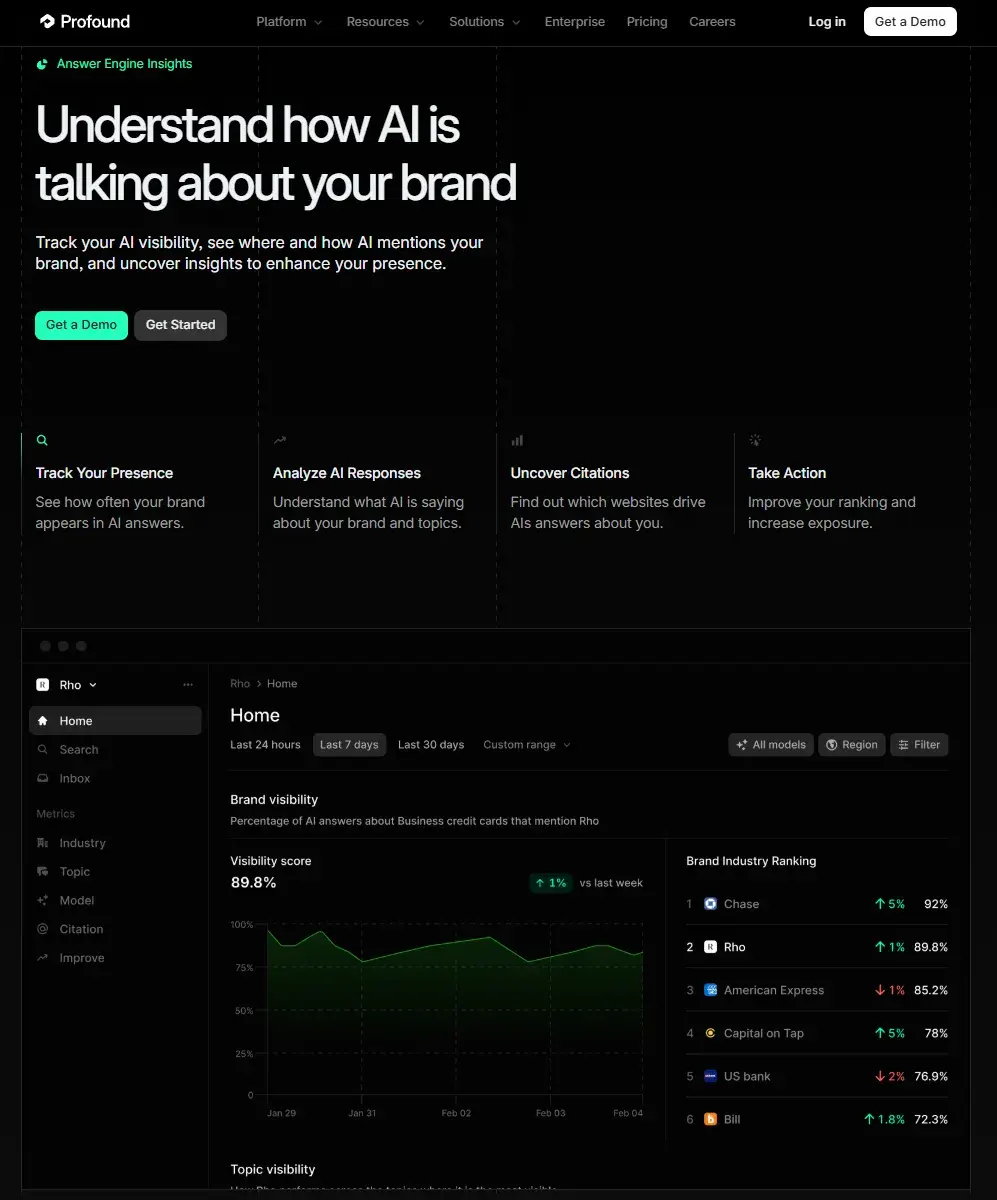
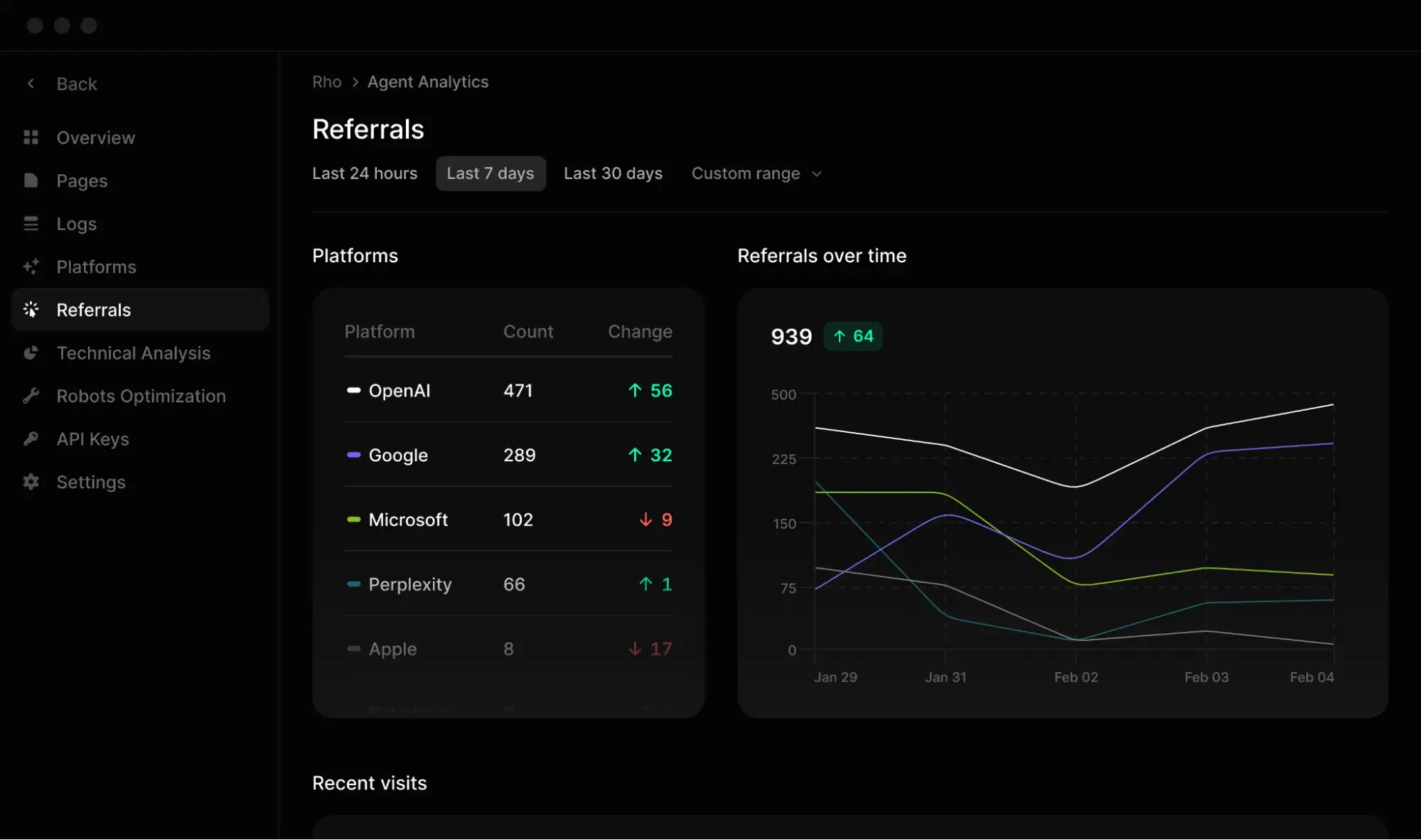
Profound positions itself as an enterprise-grade AI search visibility and Answer Engine Optimization platform. Its core mission is to equip brands with the insights and tools necessary to understand and enhance their appearance within AI-generated answers. The platform’s primary strengths lie in its advanced AI visibility tracking and comprehensive citation analysis. Profound meticulously monitors how brands are referenced across major AI systems, tracks the origin of these citations, and provides granular, prompt-level insights. This allows marketing teams to pinpoint precisely where and why their brand appears in AI responses, offering a level of detail previously unattainable.
For marketing and SEO leaders, Profound distinguishes itself through the depth of its data, its enterprise-ready reporting capabilities, and its seamless workflow integrations. It aims to bridge the gap between AI search visibility and demonstrable business outcomes, enabling teams to transition from passive observation to active, data-driven optimization. As AI answers increasingly supplant traditional search result pages, platforms like Profound offer the essential infrastructure for measuring, attributing, and improving a brand’s digital footprint within these rapidly evolving AI-driven search environments.
What is Bluefish AI?
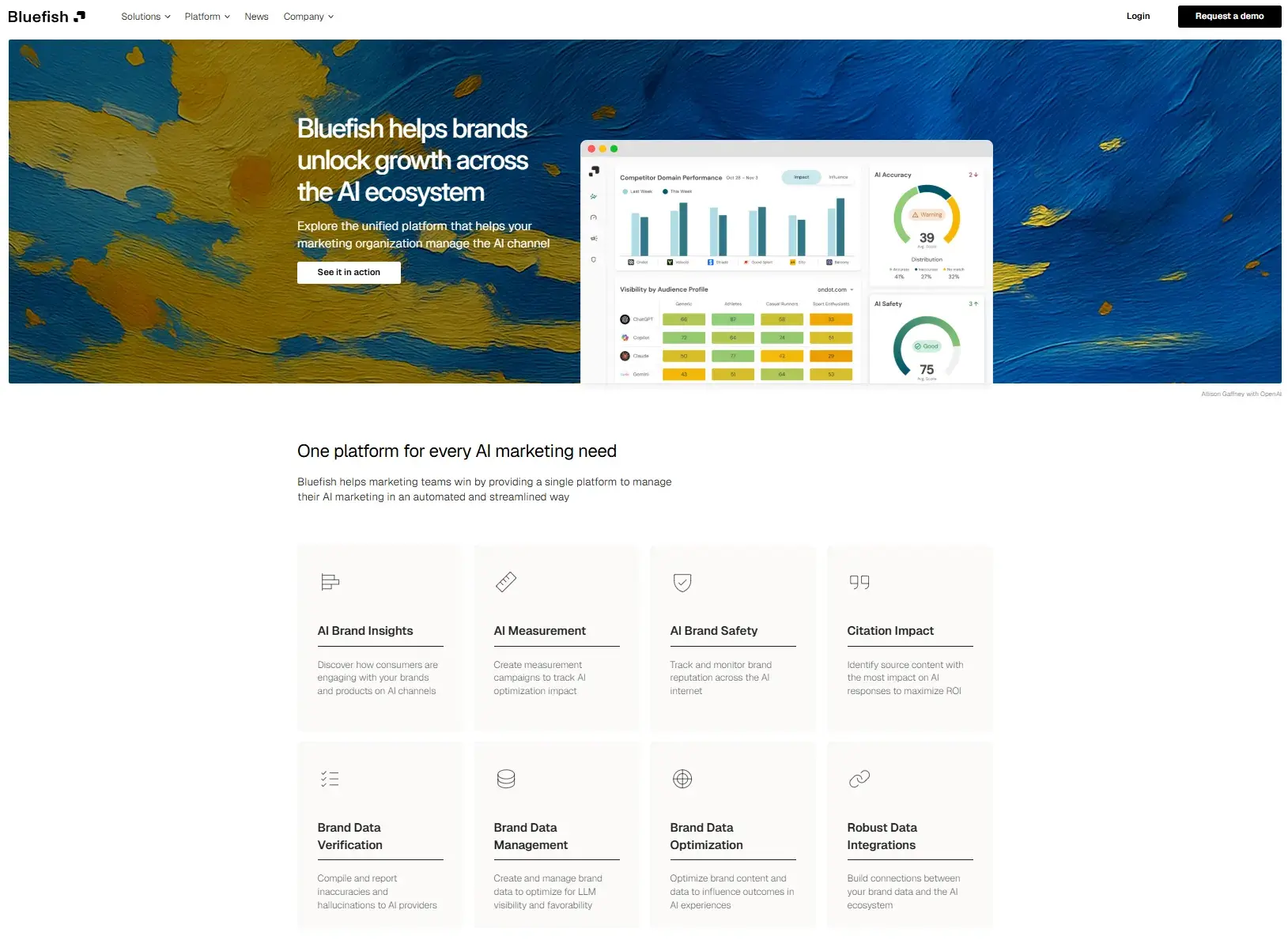
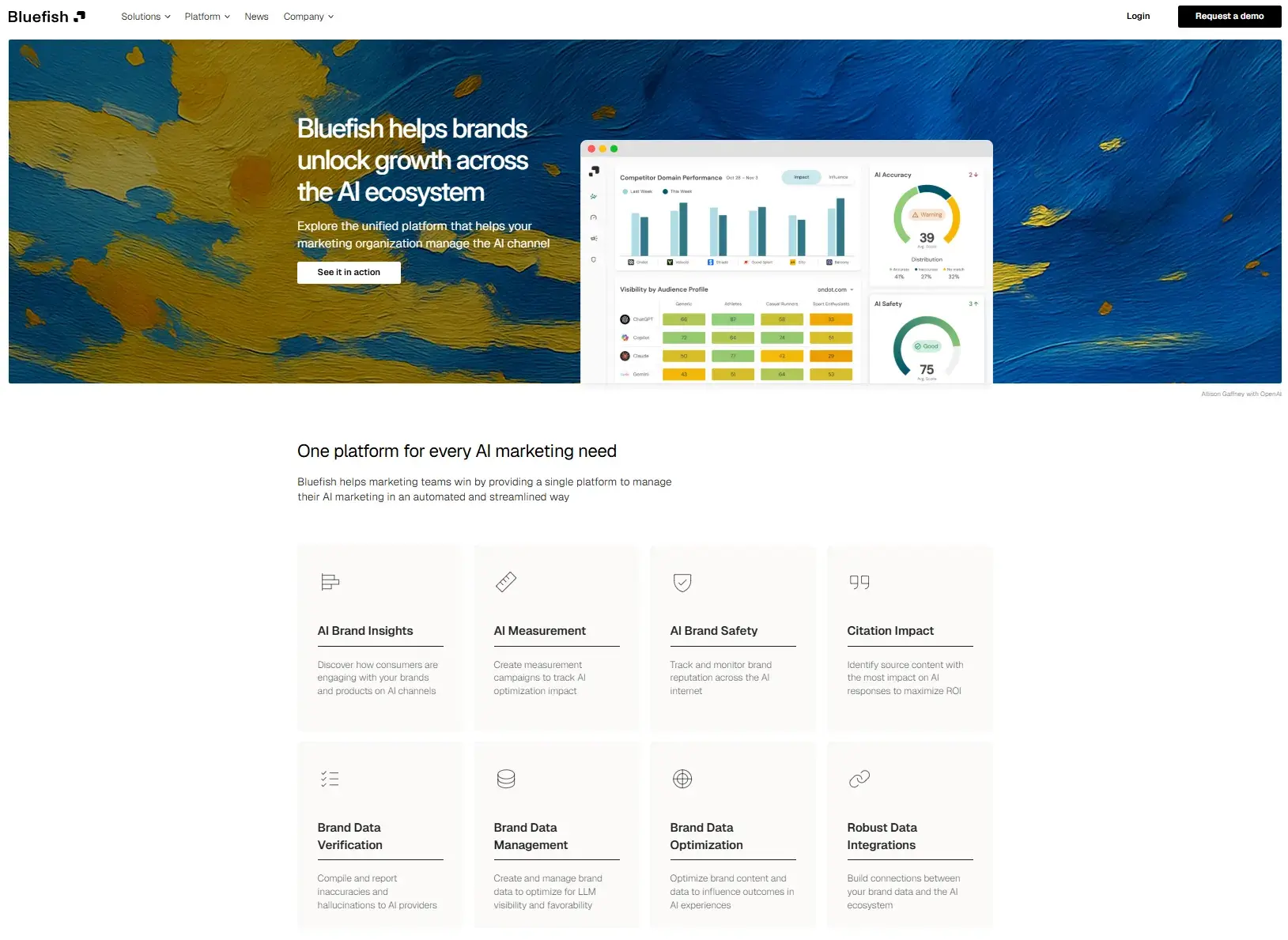
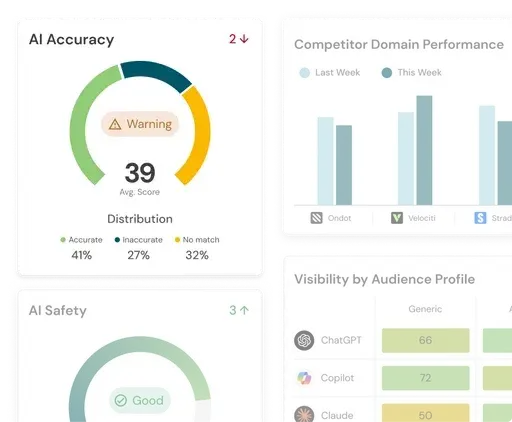
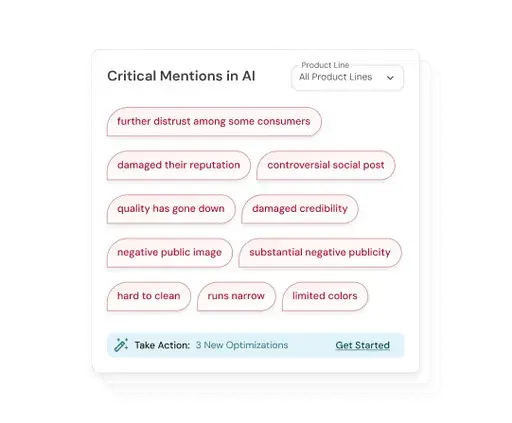
Bluefish AI is an AI visibility and brand safety platform specifically engineered to assist organizations in monitoring their brand’s representation within AI-powered search and generated answers. A key differentiator for Bluefish AI is its strong emphasis on risk management and accuracy, aiming to protect brand integrity above all else. The platform extends beyond basic visibility metrics to actively alert teams when their brand is misrepresented, associated with potentially harmful content within Search Generative Experiences (SGE), or appears in AI responses that could pose significant reputational risks.

For industries with stringent regulatory requirements, such as healthcare, finance, and legal sectors, as well as large-scale enterprise brands, Bluefish AI provides context-rich insights, robust governance workflows, and sophisticated signal filtering. These features empower marketers to maintain a high degree of control over how AI systems cite and present their content. As AI-generated answers become an integral part of the customer journey, tools like Bluefish offer a nuanced perspective on visibility that combines optimization with diligent oversight, helping teams not only track their presence but also proactively manage the associated risks.
Benchmarking AI Visibility: The Role of Free Tools
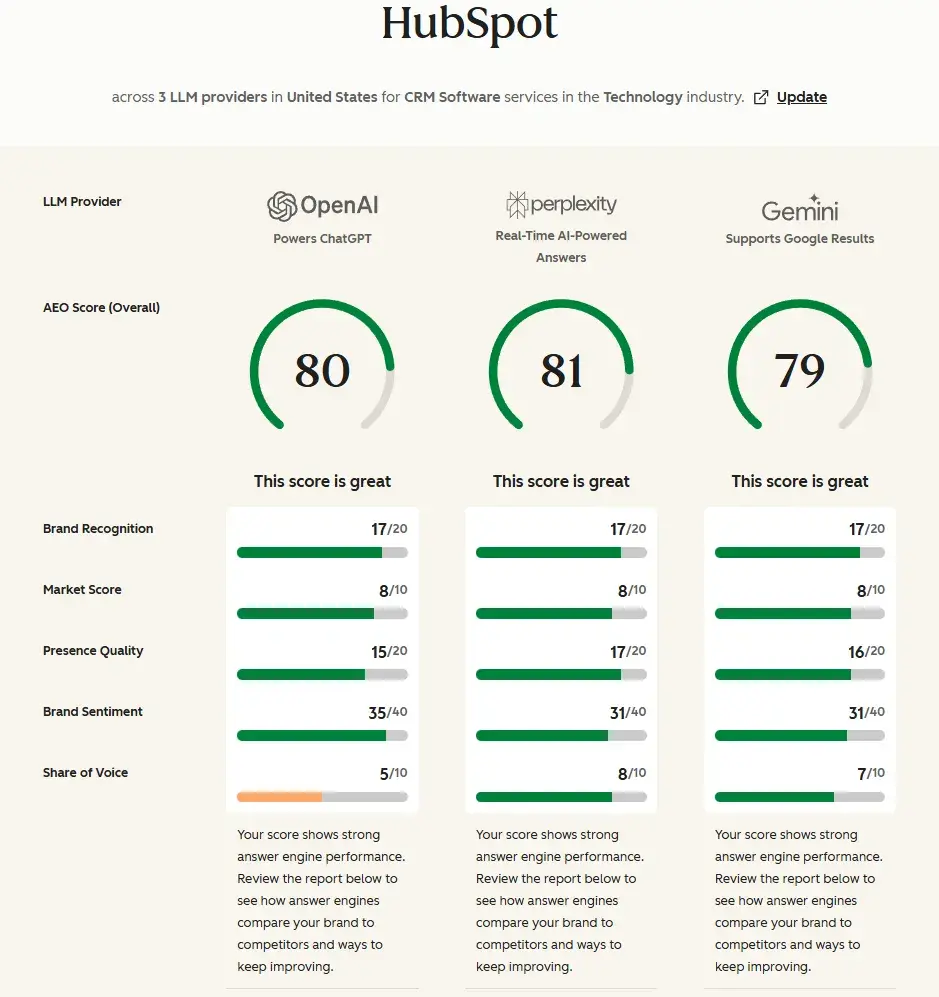
Before committing to enterprise-level solutions, many organizations opt to utilize free AEO tools for initial benchmarking. HubSpot’s AEO Grader, for instance, offers a rapid, practical assessment of how major answer engines represent any given brand. This free tool provides marketing leaders with an immediate snapshot of their AI visibility, allowing them to evaluate their standing before investing in platforms like Profound or Bluefish AI.
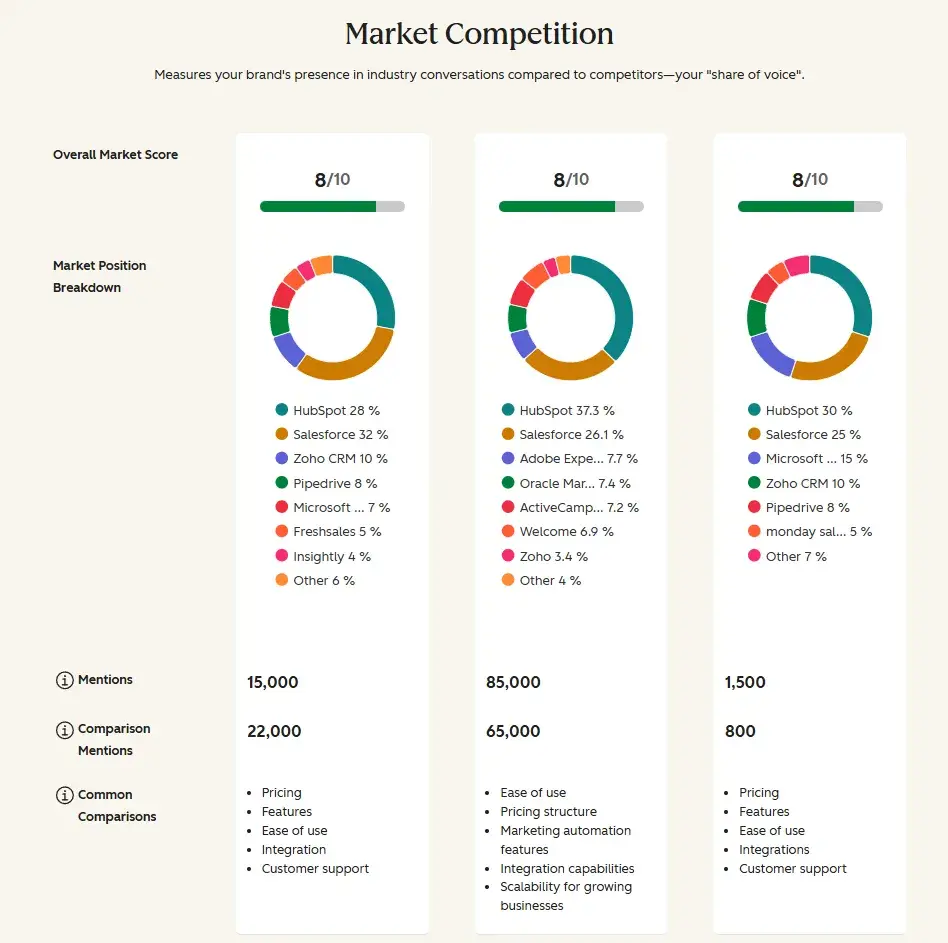
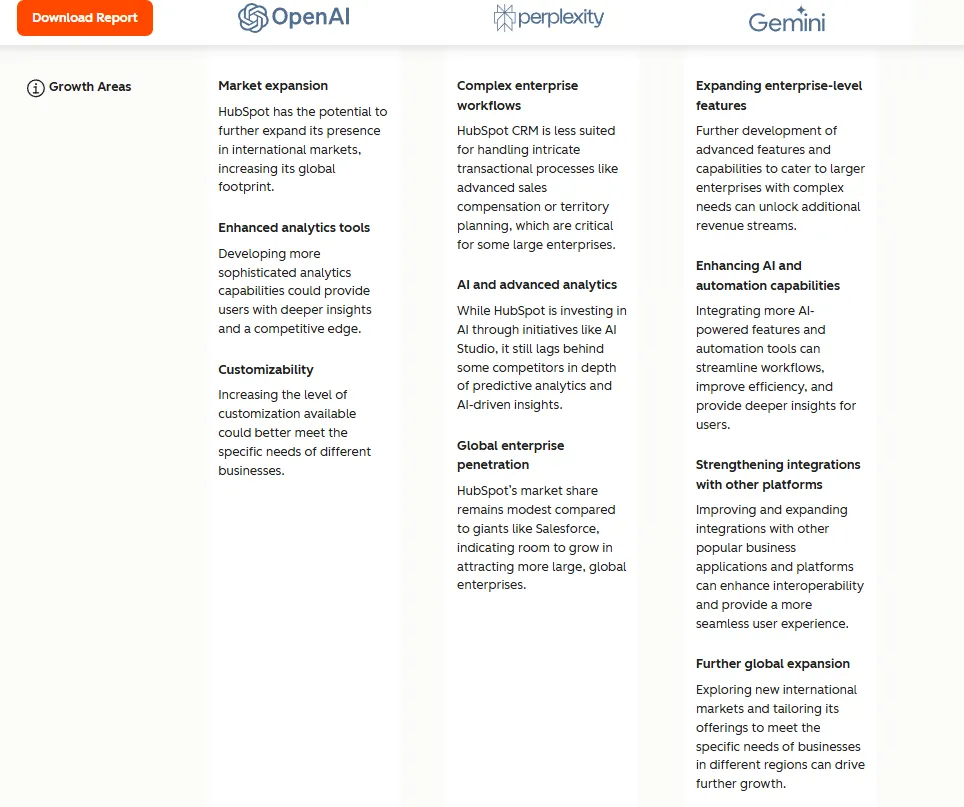
The AEO Grader typically delivers a detailed breakdown of a brand’s performance across various AI systems. It highlights competitive positioning, provides visibility scores, and quantifies how frequently a brand is cited in comparison to its competitors. Key metrics often include a "Market Competition" score, which indicates a brand’s standing within its industry, and actionable recommendations for improving AI visibility. These recommendations can range from strategic content adjustments to opportunities for building greater authority.
Furthermore, the tool often provides specific, actionable steps that marketers can take to address AEO issues using free resources. This allows teams to begin rectifying AEO challenges before escalating to paid solutions. The detailed action plans generated by such graders can serve as a roadmap for initial improvements, making the subsequent evaluation of paid platforms like Profound or Bluefish AI more informed and targeted. This approach ensures that investments in advanced AEO tools are strategically aligned with identified needs and opportunities.
Profound vs. Bluefish AI: A Comparative Analysis
When evaluating enterprise-level AEO solutions, a detailed comparison of key features is essential. Four critical areas—platform coverage, reporting depth, integrations, and pricing—provide a framework for understanding the distinct offerings of Profound and Bluefish AI.
Supported AI Engines and Platform Coverage
For marketers investing in AEO, the breadth of an AI platform’s coverage is paramount. Consumers engage with a diverse array of AI systems, including Google AI Overviews, ChatGPT, Perplexity, Gemini, and numerous other emerging AI models. A monitoring platform that tracks only a limited selection of these engines will inevitably provide incomplete data, leading to potentially flawed strategic decisions.
Bluefish AI’s Approach to Platform Coverage:
Bluefish AI strategically focuses its monitoring on major generative AI platforms that significantly influence consumer research and enterprise risk exposure. Its coverage prioritizes widely adopted AI engines where misinformation or brand misrepresentation could lead to substantial reputational damage. Rather than striving for exhaustive lists of experimental models, Bluefish centers its tracking on high-impact environments and employs an alert-driven monitoring system. This approach is particularly beneficial for organizations that are less concerned with experimental model coverage and more focused on safeguarding their presence within the most commercially relevant AI ecosystems.
Profound’s Approach to Platform Coverage:
Profound adopts a more expansive, visibility-first strategy. It supports a comprehensive range of AI systems, including Google AI Overviews, ChatGPT (and its search-integrated variants), Perplexity, Claude, Gemini, Microsoft Copilot, Grok, DeepSeek, and other nascent models. By utilizing front-end capture and prompt-level tracking, Profound enables marketers to analyze response variations across multiple engines, compare the order of citations, and monitor competitive share of voice at scale. This makes Profound particularly well-suited for teams executing proactive, multi-engine AEO programs aimed at maximizing broad AI presence.
Reporting Depth and Competitive Intelligence
The efficacy of AI visibility tracking hinges on its ability to drive actionable insights. Marketing leaders require more than simple mention counts; they need context, a clear understanding of their competitive positioning, and intelligence on how AI narratives are being shaped.
Bluefish AI’s Reporting and Competitive Intelligence:
Bluefish AI places a strong emphasis on brand safety monitoring and misinformation alerts. It highlights instances where a brand is misrepresented, associated with sensitive topics, or inaccurately cited in AI responses. The platform prioritizes signal clarity, ensuring that critical mentions requiring immediate attention are surfaced effectively. This focus on risk mitigation makes Bluefish AI invaluable for compliance-driven teams where narrative control and the avoidance of reputational damage are paramount, often outweighing aggressive optimization efforts. Its reporting is designed to provide a clear, actionable overview of potential brand threats within AI search.
Profound’s Reporting and Competitive Intelligence:
Profound excels in providing analytical depth. The platform specializes in AI visibility tracking and citation analysis, empowering teams to evaluate citation order, share of voice, prompt-level response variations, and cross-engine positioning. Through its granular tracking capabilities, marketers can analyze:
- Citation Order: Understanding where a brand appears in lists of sources.
- Competitive Share of Voice: Measuring brand presence relative to competitors.
- Prompt-Level Variations: Identifying how different queries impact brand visibility.
- Cross-Engine Positioning: Assessing how a brand performs across multiple AI platforms.
This comprehensive analytical framework supports structured experimentation and attribution, making it ideal for teams treating AEO as a strategic growth channel rather than a mere monitoring function.
Integrations and Workflow Connectivity
For AEO to deliver measurable ROI, it cannot operate in isolation. Seamless integration with existing marketing technology stacks is crucial. Both Profound and Bluefish AI offer integration capabilities, but their approaches and depth vary.
Bluefish AI’s Integrations and Workflow Connectivity:
Bluefish AI supports API access and data exports, enabling teams to incorporate AI monitoring insights into broader reporting environments. The platform’s integration strategy is geared towards governance workflows, efficient alert routing, and structured reporting for compliance and brand teams. For organizations prioritizing oversight, this ensures that AI-related brand risks are promptly communicated to the relevant stakeholders, facilitating rapid response and mitigation.
Profound’s Integrations and Workflow Connectivity:
Profound boasts an extensive integration ecosystem designed to operationalize AEO insights across the entire marketing stack. Rather than confining visibility data to standalone dashboards, the platform connects with content management systems (CMS), content delivery networks (CDNs), marketing intelligence tools, analytics systems, and collaboration software. This comprehensive connectivity ensures that AI visibility data becomes actionable, rather than remaining isolated. It allows teams to integrate AI search signals into:
- Content Strategy: Informing content creation and optimization based on AI performance.
- SEO Workflows: Aligning AEO with broader search engine optimization efforts.
- CRM Systems: Connecting AI visibility to customer engagement and lead generation.
- BI Tools: Enabling holistic data analysis and performance attribution.
This robust integration framework is particularly beneficial for growth-focused teams seeking to directly link AI visibility to measurable business outcomes.
Pricing Structure, Onboarding, & Scalability
The financial implications and scalability of AI tools are often decisive factors in platform selection. Budget constraints, internal resource availability, and long-term growth projections all influence which platform best fits an organization’s needs.
Bluefish AI’s Pricing, Onboarding, and Scalability:
Bluefish AI does not publicly disclose its pricing structure, onboarding processes, or scalability models. Interested parties are required to contact the sales team directly for detailed information. This lack of transparency can present a challenge for organizations seeking to conduct initial cost-benefit analyses.
Profound’s Pricing, Onboarding, and Scalability:
Profound is positioned as an enterprise-grade solution, catering to growth-focused marketing organizations. It offers robust enterprise-grade security controls, compliance features, and structured onboarding processes designed for large, distributed teams. The implementation model typically aligns with enterprise procurement cycles, involving comprehensive stakeholder onboarding, governance setup, and technical integration planning. While this structured approach may extend the initial ramp-up time compared to lighter-weight solutions, it ensures scalable deployment across global regions and business units.
Regarding pricing, Profound offers defined paid tiers. The starter package, which focuses on ChatGPT, begins at approximately $82.50 per month, with Growth packages around $332.50 per month. Enterprise pricing is customized based on specific needs. It’s important to note that while CTAs may suggest free trials, the company’s typical model involves direct paid packages.
Strategic Considerations: Which Platform for Your AEO Needs?
The choice between Profound and Bluefish AI ultimately hinges on an organization’s strategic priorities rather than a simple feature comparison. The fundamental question is: is the primary objective to optimize for growth and attribution, or to safeguard brand integrity within AI-generated responses? AEO platforms serve as enablers of strategy, not creators of it.
Scenarios for Choosing Between Profound and Bluefish AI:
- For Proactive Growth and Optimization: Organizations aiming to actively improve their visibility, understand competitive landscapes in AI search, and attribute AI presence to business outcomes would likely find Profound’s comprehensive tracking, citation analysis, and integration capabilities to be a stronger fit. Its focus on data depth and actionable insights supports a growth-driven AEO strategy.
- For Brand Safety and Risk Mitigation: Companies operating in highly regulated industries or those with a paramount concern for brand reputation may lean towards Bluefish AI. Its emphasis on misinformation alerts, brand misrepresentation detection, and contextual risk analysis provides a crucial layer of oversight and control. This is particularly relevant for brands where brand integrity is non-negotiable.
An Alternative Approach: HubSpot AEO
For organizations seeking a holistic solution that combines measurement, optimization, and actionable guidance, HubSpot’s AEO offering presents a compelling alternative. HubSpot AEO provides ongoing AI visibility measurement and optimization, integrating prompt tracking, competitive intelligence, citation analysis, and prioritized recommendations. Its key capabilities include:
- AI Visibility Tracking: Monitoring how brands appear in AI-generated answers across various engines.
- Competitive Intelligence: Benchmarking against competitors within the AI search landscape.
- Citation Analysis: Understanding the sources and context of brand mentions.
- Prioritized Recommendations: Actionable guidance on how to improve AI visibility.
For users of HubSpot Marketing Hub Pro and Enterprise, these recommendations seamlessly integrate with existing content and social media tools, allowing teams to act on AEO insights without leaving the platform. The optimization layer is particularly noteworthy, as it surfaces prioritized recommendations that guide teams on specific actions, such as creating new content, updating existing pages, or engaging in third-party outreach. This makes AEO strategy more executable and demonstrably measurable.
Frequently Asked Questions About Profound vs. Bluefish AI for AEO
What is the main difference between Profound and Bluefish AI for Answer Engine Optimization?
Profound is engineered for proactive AI search visibility and optimization, offering deep citation analysis, prompt-level tracking, and competitive benchmarking to enhance share of voice across AI engines. In contrast, Bluefish AI prioritizes brand integrity and risk management, focusing on alerting teams to misrepresentation, misinformation, and potentially damaging contextual associations within AI responses.
Which AI engines and platforms do Profound and Bluefish AI track?
Profound’s coverage is broad, encompassing major AI systems like Google AI Overviews, ChatGPT (including search variants), Perplexity, Gemini, Claude, Microsoft Copilot, Grok, and other emerging engines. Bluefish AI also tracks key generative platforms, focusing on those where misattribution or harmful contextual associations pose the most significant risk.
Is Profound or Bluefish AI better for multi-region and multi-language tracking?
Profound generally offers stronger capabilities for multi-region and multi-language AEO, particularly when consistent, comparable visibility data across markets is required. While Bluefish AI supports multi-region monitoring, its primary strength lies in contextual accuracy rather than exhaustive linguistic coverage.
How does Profound and Bluefish AI pricing compare?
Bluefish AI does not publicly disclose pricing. Profound offers defined paid tiers, with starter packages beginning around $82.50/month, Growth packages at approximately $332.50/month, and custom Enterprise pricing.
The Bottom Line: Navigating the Future of AEO
As AI-powered search continues to reshape digital discovery, the choice between Profound and Bluefish AI hinges on an organization’s strategic intent. Profound is designed for proactive growth, offering deep citation tracking, competitive intelligence, and integration into revenue workflows. Bluefish AI is built for governance, providing brand safety monitoring, misinformation alerts, and risk control in high-stakes industries.
For marketing teams focused on measurable AI visibility, attribution, and scalable content optimization, Profound is often the more suitable choice. Conversely, if the primary objective is protecting brand integrity and managing reputational risk across AI systems, Bluefish AI may be the more prudent selection.
Before committing to either platform, initiating with a free benchmark tool like HubSpot’s AEO Grader is highly recommended. This provides an initial assessment of a brand’s current AI visibility, helping marketers understand their starting point before allocating budget and resources. Ultimately, the most significant strategic error is selecting an AEO tool without first defining whether the overarching strategy is defensive or growth-driven. Clarity on this fundamental question simplifies the platform decision and ensures that any investment directly supports measurable outcomes.
About the Author


