The software-as-a-service (SaaS) industry is experiencing a profound transformation in how potential customers discover and evaluate solutions. While traditional Search Engine Optimization (SEO) principles remain relevant, the ascendance of Artificial Intelligence (AI) in search necessitates a strategic shift towards AI-driven search optimization (AEO). This new paradigm demands that SaaS brands not only rank well in search results but also ensure their product, expertise, and unique value propositions are accurately understood and surfaced by AI-powered systems, particularly during the critical buyer discovery and evaluation phases. This comprehensive guide delves into the intricacies of AEO for SaaS, outlining its importance, key strategies, measurement methodologies, and essential tools for marketing teams.
The Imperative of AEO for SaaS Companies
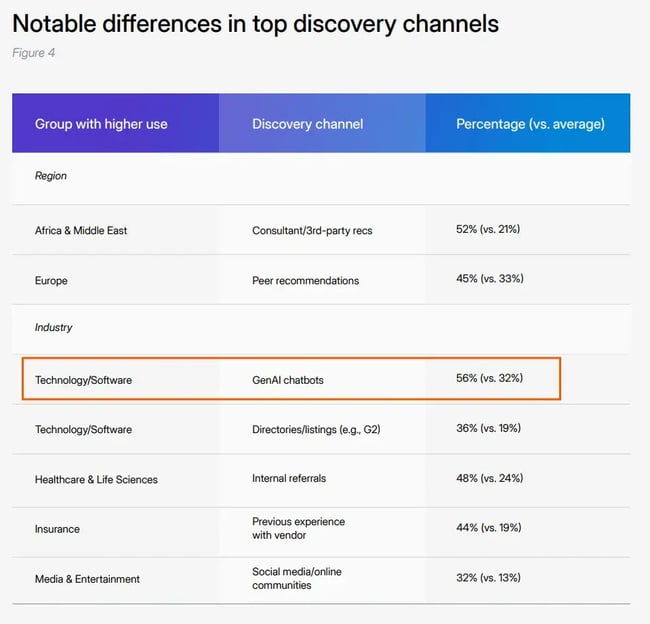
The way buyers engage with information has been fundamentally altered by AI. Research indicates a significant pivot in B2B buyer behavior. A study by Responsive, titled "Inside the Buyer’s Mind 2025," reveals that 32% of B2B buyers initiate vendor discovery through generative AI chatbots, a figure nearly matching the 33% who still rely on traditional web search. However, for the SaaS sector, this shift is even more pronounced. A striking 56% of SaaS buyers now commence their vendor research using generative AI tools. This dramatic change places SaaS brands at a considerable risk of missing crucial opportunities if they are not adequately visible within AI-driven search environments.
Unlike traditional search engines that primarily rank web pages, AI-driven answer engines synthesize expertise from websites and knowledge bases, compare options, and deliver summarized recommendations directly within the AI interface. This means that if a SaaS brand is not cited or referenced in these AI-generated results, potential buyers may overlook it entirely during the formative stages of vendor shortlisting. Consequently, companies can be effectively eliminated from consideration before they even reach the evaluation or trial phases.
Strategic Pillars of AEO for SaaS Companies
To effectively navigate this evolving landscape, SaaS teams must adopt a multifaceted AEO strategy. These strategies not only bolster traditional search performance but critically enhance the likelihood of being surfaced, referenced, and trusted by AI-driven answer engines at pivotal moments in the buyer’s journey.
1. Optimizing for Early-Stage Visibility to Fuel Evaluation
For SaaS companies, securing visibility during the initial learning and exploration phases of a buyer’s journey is paramount. This involves ensuring that AI answer engines accurately interpret and associate products with specific problems, use cases, and desired outcomes. Practically, this translates to:

- Defining and clearly articulating product-solution-problem associations: Content should explicitly link SaaS products to the challenges they solve and the benefits they deliver.
- Mapping content to buyer intent for informational queries: Understanding the questions buyers ask during their research phase is crucial for creating content that AI can readily extract and summarize.
- Ensuring factual accuracy and demonstrable expertise: AI systems prioritize reliable and expert information.
- Creating content that answers top-of-funnel questions: Addressing broad informational queries positions a brand as a knowledgeable resource.
AI-driven answer engines are particularly well-suited for buyers in the early stages of learning, exploring, and validating options before committing to a formal evaluation. As McKinsey research highlights, approximately 70% of users engaging with AI-powered search still pose top-of-funnel questions to gain knowledge about a category, brand, product, or service. Visibility at this stage is instrumental in shaping how AI search engines frame the market, associate vendors with specific use cases, and consistently surface relevant products throughout the SaaS customer lifecycle.
Buyers typically begin with an extensive list of potential solutions, often around eight vendors, before narrowing it down to a more manageable three or four for in-depth evaluation. Optimizing for early-stage AEO visibility ensures a product is prominently associated with the right problems, use cases, and outcomes in AI-generated responses. This early exposure significantly increases the probability of a brand being carried forward into evaluation-stage queries, where shortlists and trial decisions are ultimately made. While traditional SEO might suggest deprioritizing top-of-funnel content due to the decline in direct clicks, AEO metrics reveal a different narrative. Visibility, citation, and inclusion in AI-generated answers become critical inputs for buyer discovery, recognition, and progression through the buyer journey.
2. Tailoring Content for Evaluation-Stage Questions
Once buyers have a foundational understanding of a problem, their focus shifts from education to evaluation, involving the comparison of options and validation of fit. SaaS teams must address these needs in a manner that serves AEO. Similar to informational searches, many evaluation queries will be answered directly within AI interfaces, often without necessitating a click to the brand’s website. Without visibility at this stage, a product is unlikely to make a buyer’s shortlist.
To optimize for evaluation-stage questions:
- Develop dedicated comparison pages: These pages should clearly delineate product features, benefits, and pricing against competitors.
- Create use-case specific content: Content tailored to specific industries, roles, or advanced functionalities helps AI systems understand the nuanced fit of a product.
- Showcase customer testimonials and case studies: Real-world examples provide AI with third-party validation and demonstrate product effectiveness.
- Address pricing and integration queries directly: Transparency in these areas is crucial for AI to provide accurate summaries.
Crucially, evaluation-stage questions that go unanswered by a brand will likely be addressed by competitors, potentially with content that misrepresents the product’s positioning. For instance, if SaaS pricing is obfuscated, AEO systems may struggle to paraphrase accurate information, resorting to less reliable sources. The ability for brands to directly influence whether a product makes a buyer’s shortlist is a significant advantage of optimizing for evaluation-stage AEO.
3. Leveraging PR, Third-Party Validation, and Credibility Signals
AI-driven answer engines place substantial weight on third-party sources when evaluating and recommending SaaS products. While first-party content establishes relevance, credibility is often inferred through independent validation.

Key strategies include:
- Securing positive press coverage: Media mentions lend an air of authority and trustworthiness.
- Engaging with industry analysts: Analyst reports and ratings are highly regarded by AI systems.
- Encouraging customer reviews on reputable platforms: Reviews provide direct user feedback and social proof.
- Building strong partner ecosystems: Collaborations and co-marketing efforts can generate valuable third-party content.
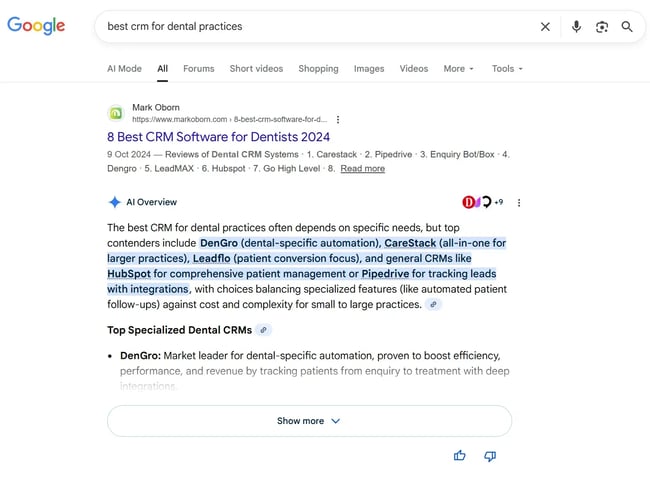
When multiple independent sources consistently describe a SaaS product in similar terms, AI systems gain confidence in summarizing and positioning the brand. PR coverage, analyst insights, reviews, and partner content collectively help answer engines validate claims, resolve ambiguity, and assess trustworthiness. This is particularly vital for comparison, "best for," and alternative-style queries, where AI systems are less inclined to rely solely on first-party messaging. SaaS brands with robust third-party footprints are more frequently cited and consistently included in AI-generated evaluations, potentially gaining visibility even without top traditional search rankings. An example is a search for "best CRM for dental practices," where a product like CareStack might appear prominently in AI Overviews despite a mid-page-two ranking in traditional search, owing to its specific alignment with the query.
4. Embracing Hyper-Targeting for Niche Queries
AEO strongly rewards specificity. Buyers increasingly utilize AI tools to pose detailed, context-rich questions, moving away from generic searches towards situational and tailored inquiries. Instead of broadly searching for categories, buyers now seek recommendations specific to their industry, role, constraints, or unique use cases.
In this environment, broadly positioned SaaS content becomes less competitive. Hyper-targeted content—focused on a defined audience, industry, role, or scenario—is far more likely to be surfaced, summarized, and recommended when buyers ask niche or contextual questions.
Methods for hyper-targeting include:
- Developing industry-specific landing pages and blog posts: Tailoring content to the unique needs and language of specific sectors.
- Creating role-based content: Addressing the pain points and workflows of particular job functions within organizations.
- Producing content around specific product features or integrations: Highlighting niche functionalities that cater to specialized needs.
- Leveraging customer success stories from targeted segments: Demonstrating proven value for specific buyer profiles.
Relevance and specificity are the most reliable pathways to visibility in AI-driven search. For SaaS teams, hyper-targeting not only amplifies exposure but also cultivates clearer positioning and a more direct route to conversion. When buyers consistently encounter a product described as engineered for their exact use case or industry, friction is reduced, confidence is enhanced, and the transition from discovery to trial becomes considerably more probable.
5. Structuring Content for AI Extraction and Citation
Content that is clearly structured and easily interpretable is more amenable to summarization by AI systems. This involves:
- Using clear headings and subheadings: Organizing content logically to guide AI interpretation.
- Employing bullet points and numbered lists: Breaking down information into digestible segments.
- Writing concise and direct sentences: Avoiding convoluted language that can be misinterpreted.
- Defining key terms and concepts: Ensuring clarity for AI understanding.
- Utilizing semantic triples: Defining relationships between subjects, objects, and predicates to provide explicit context (e.g., "HubSpot’s AEO grader is a tool that AEO specialists use to review brand sentiment in AI search tools").
When information is readily digestible for AI systems, the brand is more likely to be cited during discovery and evaluation queries, thereby increasing visibility at critical junctures that influence shortlisting and trial decisions. While well-structured content has always been beneficial for SEO, specific attention to clarity for AEO further enhances its effectiveness.
6. Implementing Well-Structured Schema Markup
Schema markup is a standardized format for structured data embedded within a webpage’s HTML, enabling search engines to better understand the content. For AI systems, schema markup adds or reinforces content without overwhelming the user interface.
Effective implementation includes:
- Utilizing relevant schema types: Employing schema for products, services, organizations, reviews, and FAQs.
- Ensuring accuracy and completeness: Providing all necessary properties for each schema type.
- Validating schema implementation: Using tools like Google’s Rich Results Test to check for errors.
Schema markup has long supported traditional SEO, but its role in AI visibility is increasingly apparent, particularly for Google’s AI Overviews. Research evaluating the impact of schema implementation has shown that pages with well-executed schema consistently appear in AI Overviews and perform strongly in traditional search results. Conversely, pages with poorly implemented or absent schema often fail to surface in AI Overviews. This demonstrates that structured data not only aids AI comprehension but also signals the quality and trustworthiness of the content.
Tracking AEO Success for SaaS Companies
Measuring AEO success necessitates a paradigm shift from traditional SEO metrics. Instead of solely focusing on clicks and impressions, the focus must extend to AI visibility, brand uplift, and, ultimately, revenue.
Inclusion and Visibility in AI Answers
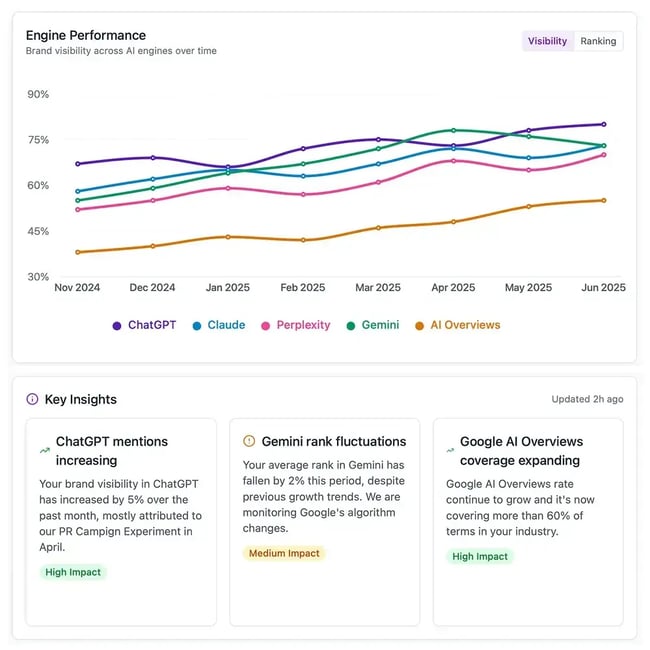
The foundational step in AEO is ensuring a brand appears in the AI-generated answers that buyers see. Inclusion and visibility are direct indicators of an AEO strategy’s effectiveness. This visibility is characterized by presence, positioning, and context, where being cited, summarized, or referenced within an AI response often carries more weight than a page’s traditional organic ranking.
Effective tracking involves:
- Monitoring AI search results for target keywords: Regularly checking AI-driven answer engines for brand mentions and rankings.
- Utilizing AI monitoring tools: Employing platforms that specifically track brand presence and sentiment in AI outputs.
- Analyzing competitor visibility: Understanding how competitors are performing in AI search results.
While visibility is a crucial starting point, it must be correlated with tangible business outcomes like conversions and revenue to provide a complete picture of AEO’s impact.
Trial Signups Influenced by AI Referrals
Trial signups serve as a clear indicator that the discovery phase has progressed to a stage of demonstrated intent. If an AEO strategy is successful, it will manifest in an increase in trial signups, not only as a last-click source but also as an influential factor that nudged buyers toward initiating a trial after exposure in AI-driven answers.
To understand AEO’s contribution to trial volume:
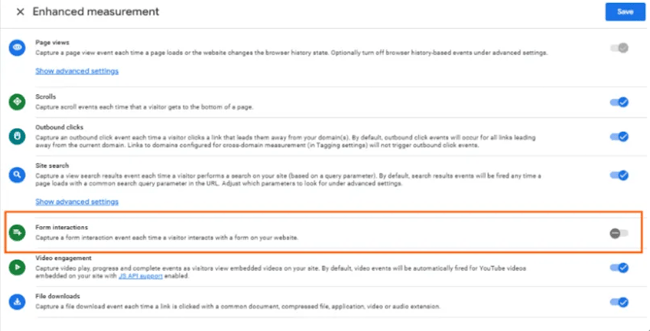
- Monitor Referral Traffic from AI Tools: Identify sessions and trial starts originating from platforms like ChatGPT, Perplexity, and Gemini. This can be configured in Google Analytics 4 (GA4) using events for button clicks, trial requests, or form submissions from users referred by AI.
- Utilize Assisted-Conversion Reporting: Recognize that AI-driven discovery rarely leads to immediate conversions. Buyers exposed to a product in an AI response may convert later through branded search, direct traffic, or other channels. GA4’s segment overlap report can compare users originating from AI sources with those who eventually convert, revealing the extent of overlap and AI’s influence.
This approach helps to accurately assess AEO’s contribution, even when AI is not the final touchpoint. Overlap analysis demonstrates whether AI-driven discovery introduces qualified users who subsequently convert through more traditional channels.

Branded Demand Lift
When a brand gains prominence in an AI-generated answer, prospects may later engage by searching for the brand directly, navigating to the website, or looking up product-specific terms once interest has been piqued. Because AI tools often address initial queries without requiring a click, branded demand becomes a valuable metric of influence, signifying that a brand has been recognized, remembered, and carried forward into the subsequent stages of the buying journey.
Effective tracking of branded demand lift includes:
- Monitoring branded search volume: Observing trends in searches that include the brand name.
- Analyzing search query reports: Identifying search terms that combine brand names with competitor names or comparative phrases (e.g., "brand vs. competitor," "brand alternatives").
- Tracking direct website traffic: Observing increases in users who navigate directly to the site.
Branded demand lift helps SaaS teams bridge the attribution gap created by AI search, providing insights into the long-term impact of AI visibility on brand recognition and future engagement.
Trial-to-Paid Conversion Rate for AI-Influenced Users
While trial volume is important, the ultimate measure of AEO effectiveness lies in its ability to convert trials into paying customers, driving sales and recurring revenue.
Measuring this involves:
- Segmenting trial users by acquisition source: Differentiating users who were exposed to the brand via AI from those acquired through other channels.
- Tracking conversion rates: Comparing the trial-to-paid conversion rates of AI-influenced users against other cohorts.
- Analyzing customer onboarding and retention: Assessing the quality of customers acquired through AI by examining their progression through the onboarding process and long-term retention.
Customer Lifetime Value (CLV) for AI-Influenced Users
For SaaS companies, the long-term value of a customer is a critical financial metric. Tracking CLV for AI-influenced users helps determine whether AEO is attracting customers who are a better fit for the product and are likely to contribute more significantly over time, rather than simply generating a higher volume of trials.
Effective CLV measurement for AI-influenced users entails:
- Cohort analysis: Tracking the revenue generated by cohorts of users acquired through AI over extended periods.
- Analyzing upsell and cross-sell rates: Assessing whether AI-influenced users are more likely to upgrade or purchase additional services.
- Calculating average revenue per user (ARPU) and churn rates: Comparing these metrics for AI-influenced users against other acquisition channels.
Essential AEO Tools for SaaS Marketing Teams
Several tools can empower SaaS marketing teams to implement and measure their AEO strategies effectively.
XFunnel
XFunnel is a dedicated platform for measuring AI search visibility and performance across various large language models and AI-driven answer engines, including ChatGPT, Google AI Overviews/AI Mode, Gemini, Perplexity, and Claude. It tracks brand, product, and content surfacing, citation frequency, and sentiment within AI environments. XFunnel provides insights into sentiment, citation context, share of voice, and competitive positioning, enabling teams to identify areas of visibility and potential gaps. Its specialized focus on AI answer visibility makes it invaluable for understanding where SaaS brands appear in AI-generated results, how they are described, who is seeing them, and where improvements can be made.
AEO Grader
HubSpot’s AEO Grader offers a quick and accessible method to evaluate a brand’s visibility, sentiment, and consistency in AI-generated answers. It highlights potential limitations in discovery or misrepresentations in brand positioning. The AEO Grader assesses how AI systems interpret a brand, including its associations, descriptive language, and the clarity of its content for extraction and citation. This tool is particularly useful for quickly identifying misalignment between a brand’s intended messaging and how it’s being presented in AI search results, thereby mitigating potential negative impacts on buyer evaluation, trials, and pipeline development.
Semrush One
Semrush One is a comprehensive SEO and AEO platform that supports a wide array of functionalities, including keyword research, competitive analysis, site audits, rank tracking, content optimization, and AI visibility monitoring. Its prompt tracking and AI improvement recommendations are designed to align with strategic AEO goals. While a premium tool, its integrated approach to both traditional SEO and emerging AEO needs makes it a powerful asset for SaaS teams looking for an all-in-one solution.
Google Analytics 4 (GA4)
GA4 serves as the primary source of truth for first-party data. While it doesn’t directly measure AI visibility, it provides critical insights into user behavior on a website after AI-driven discovery, including trial starts, form submissions, assisted conversions, and revenue events. For SaaS teams, GA4 is indispensable for understanding how AI-influenced users behave, convert, and progress through the funnel compared to users acquired through other channels. Its free availability and robust analytical capabilities make it a foundational tool for grounding AEO efforts in measurable business outcomes.
Frequently Asked Questions About AEO for SaaS
How is AEO Different from SEO for SaaS?
SEO traditionally focuses on achieving high rankings for "blue link" results, driving clicks and traffic, often targeting middle- to bottom-of-funnel keywords. AEO, conversely, targets top-of-funnel keywords and aims for visibility within AI channels where discovery, summarization, and citation in AI-generated answers occur. The primary difference lies in the objective: SEO aims for direct user interaction with a webpage, while AEO aims for inclusion and accurate representation within AI-generated summaries and responses, even if a click is not immediately generated.
Should We Create Separate Competitor Comparison Pages?
Yes, SaaS companies should strongly consider creating dedicated competitor comparison pages. These pages provide AI systems with clear, extractable context for evaluation-stage queries. Since AI often prioritizes third-party validation for comparative queries, such pages can significantly strengthen evaluation-stage visibility. Influencing third-party publications positively also bolsters this aspect of AEO.
How Do We Allow AI Bots Without Hurting Site Performance?
Unless specific rules are implemented to prevent them, AI bots will generally be allowed to crawl a site based on the directives in the robots.txt file. While the extent to which all AI agents adhere to these directives is still evolving, some, like ChatGPT, have indicated they respect "disallow" instructions. Therefore, standard robots.txt configurations are usually sufficient for managing AI bot access without negatively impacting site performance.
How Do We Connect AEO Traffic to Trials and Pipeline?
Connecting AEO efforts to tangible business results requires a multi-faceted approach. Treat AI as both an assist channel and a potential last-click source. Utilize GA4’s assisted-conversion reporting and segment overlap analysis to understand AI’s influence on conversions over time. Monitor signals like branded demand lift and trial-to-paid conversion rates for AI-influenced users to quantify its contribution to the pipeline.
How Often Should We Update Pricing and Integrations for AEO?
SaaS companies should update pricing and integration information as soon as changes occur. Maintaining fresh, accurate data in product descriptions, feature lists, and pricing pages is crucial for AI systems to trust and cite this information during evaluation. Inaccurate or outdated information can lead AI to draw from less reliable sources, potentially misrepresenting the product’s current offering and hindering its chances of being shortlisted.
Getting Started with AEO
AI-driven search is already reshaping the SaaS industry, influencing how buyers search, discover, evaluate, and shortlist products. The companies that will lead in this new era are those that adapt their foundational SEO strategies for AI-driven discovery, prioritize evaluation-stage visibility, invest in building third-party credibility, structure their content for AI extraction, and meticulously measure success through trials, pipeline, and ultimately, revenue.
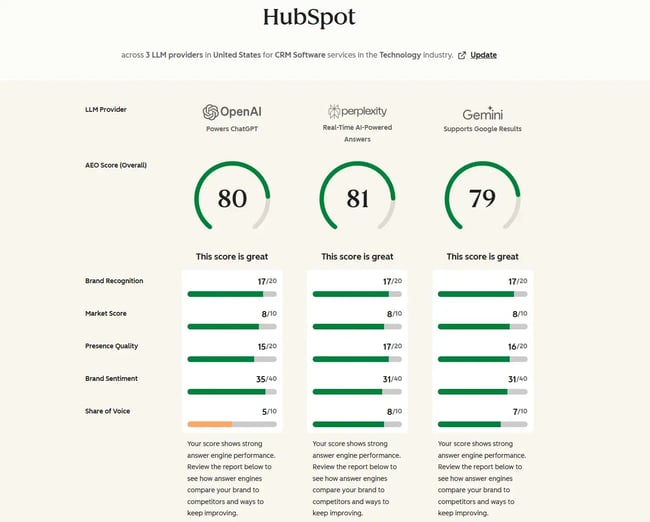
The overarching takeaway is that AEO is not merely a theoretical concept; it must be operationalized. This involves integrating visibility tools like XFunnel with diagnostic platforms such as HubSpot’s AEO Grader, grounding strategic decisions in first-party data from GA4, and continuously aligning content, public relations efforts, and product positioning with the evolving ways buyers conduct their research and make purchasing decisions. By embracing these principles, SaaS companies can effectively navigate the AI-driven search landscape and secure a competitive advantage.
About the Author