The digital search paradigm has undergone a seismic shift. No longer is the primary goal to achieve a coveted spot among the top ten blue links. Instead, the burgeoning influence of AI Overviews, conversational AI like ChatGPT, and specialized answer engines such as Perplexity necessitates a fundamental recalibration of content strategy. Marketers are now compelled to understand and implement Answer Engine Optimization (AEO), a discipline focused on structuring content to be directly understood, extracted, and cited by these advanced AI systems. This transition is not merely theoretical; it’s a data-driven imperative. HubSpot’s 2026 State of AEO Report reveals that a significant 58% of marketers are actively optimizing their content for these emerging answer engines, underscoring AEO’s rapid ascent from a niche experiment to a mainstream strategic priority.
The core of AEO lies in understanding how these AI systems process information. Unlike traditional search engines that primarily ranked web pages, modern answer engines are designed to synthesize information and provide direct, concise answers. This involves a sophisticated parsing process where the AI dissects a webpage into discrete chunks, evaluates their relevance and clarity against a user’s query, and then extracts the most pertinent information for direct presentation. Visibility in this new era is less about outranking competitors and more about becoming a readily extractable and citable source for AI-generated responses. The effectiveness of this extraction is heavily reliant on the inherent structure of the content itself.
The Structural Pillars of Citation Success
Content that frequently earns citations from AI answer engines shares a distinct set of structural characteristics. These traits are not arbitrary but are meticulously designed to facilitate the AI’s ability to parse, understand, and attribute information. At the forefront of these structural themes are question-led headings and direct-answer summaries, often referred to as "TL;DR" sections. These elements work in tandem to map a user’s query directly to a clear, concise answer. Research from AirOps, highlighted in their 2026 State of AI Search Report, indicates that sequential heading structures can increase citation odds by an impressive 2.8 times. This suggests that the logical flow and organization of information are paramount for AI comprehension.
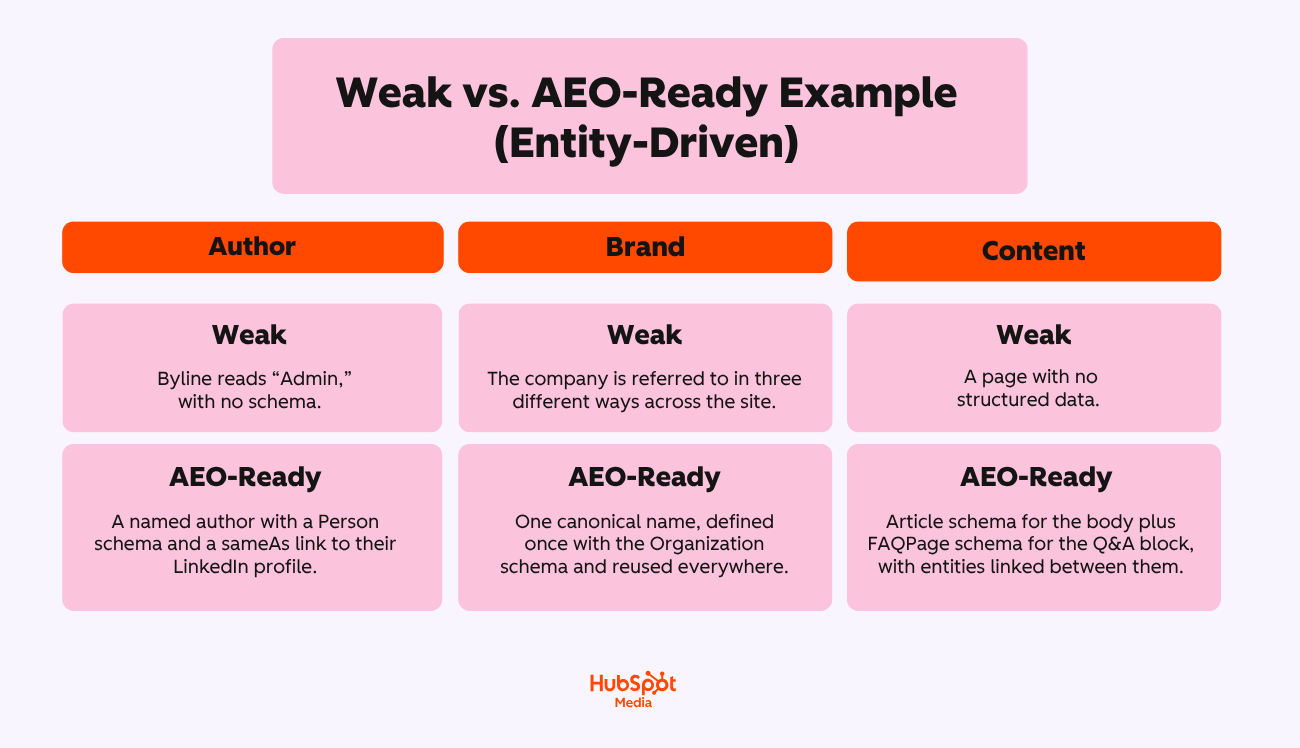
Beyond headings and summaries, the machine-readable layer provided by schema and entity modeling plays a crucial role. Schema markup acts as a translator, providing explicit information about the content’s nature, its author, and the brand it represents. This structured data bridges the gap between human-readable text and machine-understandable facts, significantly enhancing an AI’s confidence in attributing information. Similarly, entity modeling ensures that key people, brands, and products are consistently defined and connected across a website, further solidifying the AI’s understanding of the source.
Deconstructing the Parsing and Citation Process
Answer engines operate on a "parse-then-cite" pipeline. Before a citation can appear in an AI Overview or a Perplexity answer, the engine performs several key actions:
- Content Decomposition: The engine breaks down a webpage into smaller, manageable units, such as paragraphs, lists, or table rows.
- Query Matching: Each unit is then scored based on its relevance and directness in answering the user’s specific query.
- Information Extraction: The highest-scoring and most self-contained units are identified for potential extraction.
- Citation Attribution: Finally, if the extracted information meets the engine’s criteria for quality and trustworthiness, it is presented alongside a citation to the source.
Understanding this pipeline is fundamental to AEO. Answer Engine Optimization (AEO) is, therefore, the strategic practice of structuring content to align perfectly with this AI parsing and citation process, ensuring that information is not only present but also easily extractable and attributable.
Key Structural Themes Driving AEO Success
The architecture of content plays a pivotal role in its ability to be cited by AI. Several recurring structural themes have emerged as critical for AEO:

Theme 1: Question-Led Headings and Direct-Answer Summaries
This theme centers on mirroring user intent and providing immediate clarity.
- Question-Led Headings: These headings directly reflect the queries users are likely to input into search engines. For example, instead of a generic heading like "Content Optimization," a question-led heading would be "How to Optimize Content for AI Search?" This direct alignment makes it easier for AI systems to associate specific content sections with user queries.
- Direct-Answer Summaries (TL;DR): Positioned prominently, often at the beginning of a section or article, these summaries provide a concise, one-to-two-sentence answer to the main question addressed. This "bottom line upfront" approach ensures that the core information is immediately accessible and easily liftable by AI.
- Q&A Blocks: Combining explicit questions with tightly written answers, Q&A blocks represent one of the most citable formats. For maximum potential, these should be clearly delineated, with the question stated unequivocally and the answer following immediately, formatted for easy extraction.
Theme 2: Semantic Schema and Entity Modeling
This theme focuses on providing a machine-readable layer of understanding.
- Schema Markup: Implementing relevant schema types (e.g.,
Article,FAQPage,HowTo,Organization,Person) provides search engines with explicit, structured information about the content and its context. This reduces ambiguity and helps AI systems correctly categorize and understand the content. - Entity Modeling: This involves consistently defining and connecting key entities (people, organizations, products) across a website. Consistent entity signals build confidence for AI systems, enabling them to attribute information to a verified source. This includes using clear, consistent naming conventions and linking related entities.
Theme 3: Authoritative Signals and Trust Markers
AI systems prioritize trustworthy and verifiable sources.
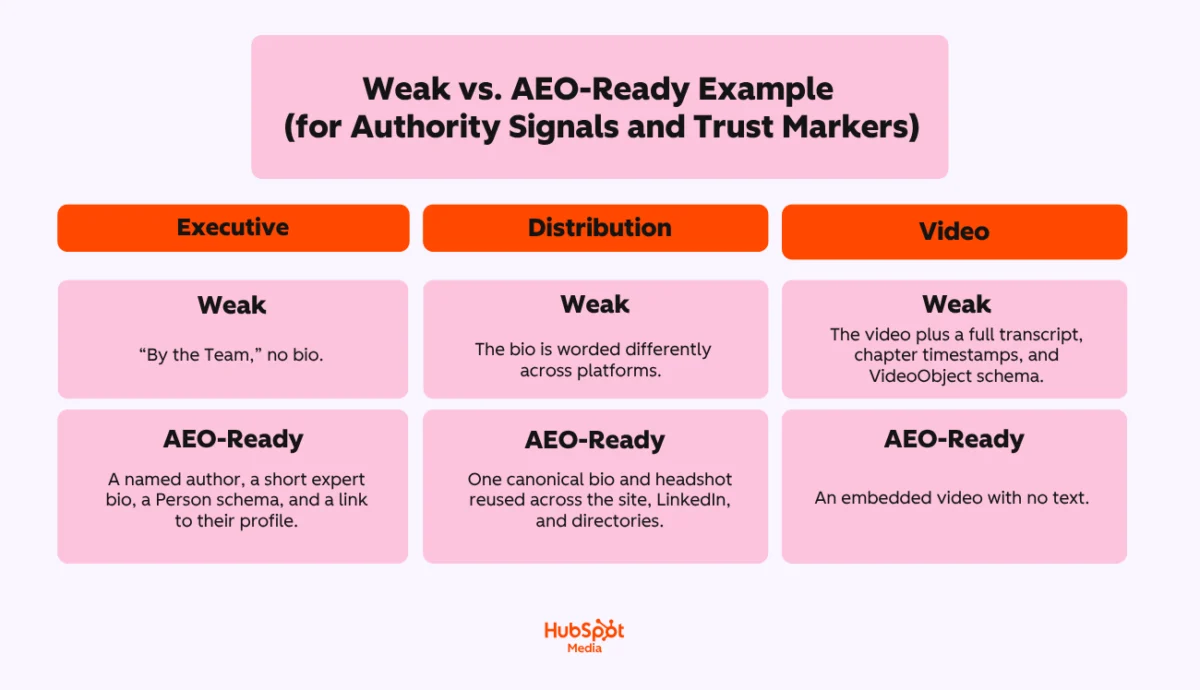
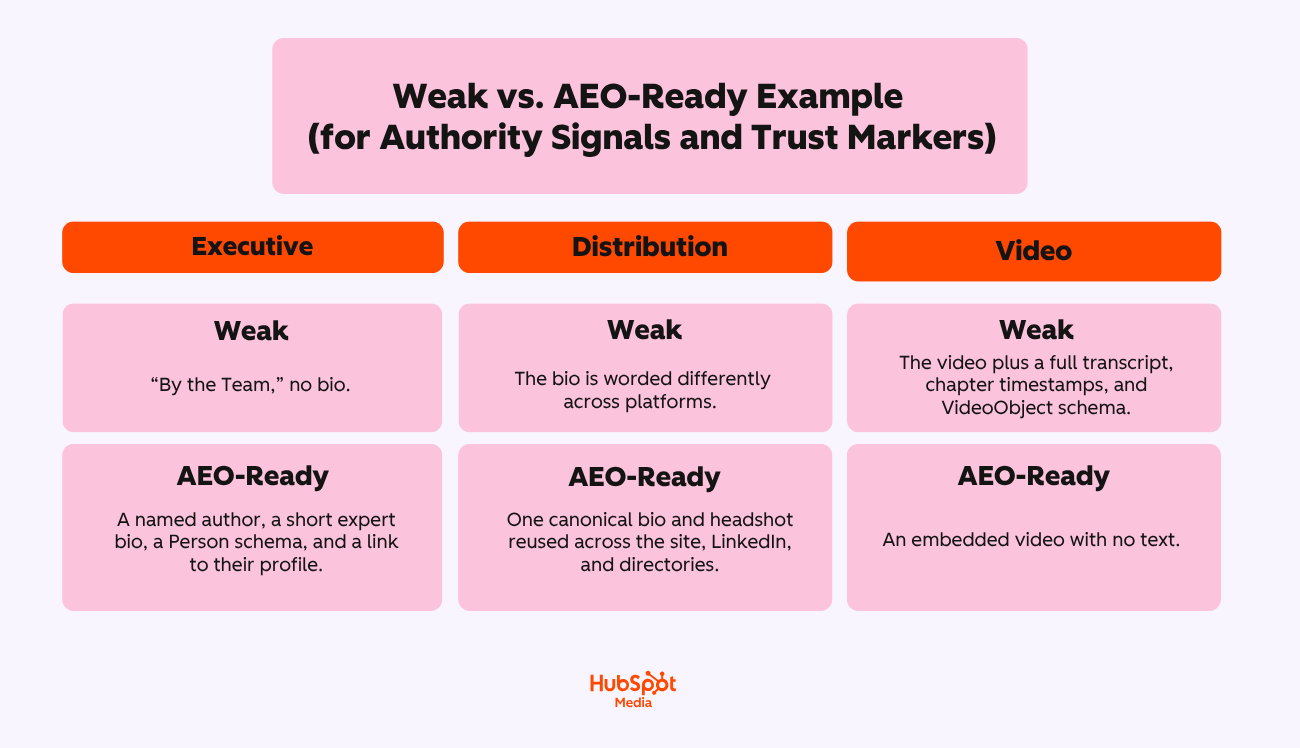
- Authoritative Brand, Executive, and Product Profiles: Well-defined and consistently presented profiles for brands, key executives, and products act as stable entities that AI can recognize and trust. These profiles should be explicit about who and what they represent, often leveraging structured data.
- Distribution Across Trusted Ecosystems: The presence of content and entities across reputable external sources serves as a powerful corroboration signal. When an AI finds consistent information about a brand or topic across multiple trusted websites, it increases the likelihood of citing that source.
- Video Transcripts and
VideoObjectSchema: Making video content accessible to AI involves providing text-based information. This includes accurate video transcripts, timestamps, and the use ofVideoObjectschema markup, which explicitly describes the video’s content and metadata.
Theme 4: Strategic Internal Linking Architecture
The overall site structure is crucial for AI navigation and understanding relationships between content.
- Hub-and-Spoke Model: Organizing content around a central "hub" page that links to related, more specific "spoke" pages creates a clear topical hierarchy. This structure helps AI systems understand the breadth and depth of a topic covered by a website.
- Clear Anchor Text and Early Link Placement: The anchor text used for internal links should be descriptive and accurately reflect the linked content. Placing these links strategically, often early in the content, signals their importance to AI.
- Topic Clusters: Interlinking pages that comprehensively cover a subject forms a topic cluster. This demonstrates topical authority and allows AI to understand how various pieces of content contribute to a broader theme.
Theme 5: Passage-Level Optimization for Extraction
The final theme emphasizes making individual content segments independently understandable.
- Stand-Alone Paragraphs: Each paragraph should ideally answer a single, specific question and be understandable without relying on preceding or succeeding text. This involves opening with the main answer and avoiding ambiguous pronouns or references to external context.
- Lists, Tables, and Definition Boxes: Structured formats like bulleted lists, tables, and distinct definition boxes are highly snippet-friendly and easily extractable by AI.
- Concise, Extractable Sentences: Sentence length and clarity are critical. Shorter, more direct sentences are easier for AI to quote accurately and without misinterpretation.
Aligning AEO with Google’s Quality Guidelines
It is imperative to note that structural optimization for AI citation cannot succeed in a vacuum. Google’s fundamental principle remains "people-first content." Any attempt to "game the system" by applying AEO tactics to low-quality or unhelpful content is likely to backfire. The structural themes discussed above are most effective when they amplify genuinely valuable content, not when they are used to disguise or inflate subpar material.
- Accuracy, Quality, and Relevance: These are non-negotiable prerequisites. Before focusing on structure, ensure the content itself is accurate, high-quality, and directly relevant to the user’s search intent. A good test is to ask: "Would this answer satisfy the searcher even if no AI summarized it?"
- Disclosure of Automation: Transparency is key. When AI assists in content creation, it is crucial to disclose this, especially if it’s a significant part of the process. Google views AI-assisted content as acceptable when it’s helpful and not primarily intended to manipulate rankings. Adding an editor’s note, such as "Reviewed and fact-checked by [Name], [Title]," signals accountability.
- Helpful Content Guardrails: Establishing clear internal guidelines is essential. Content should always be created to genuinely help users. Avoid tactics that prioritize AI extraction over user understanding, such as keyword stuffing or creating content solely to answer a specific AI prompt without broader value.
Measuring the Impact of AEO
The effectiveness of AEO strategies hinges on robust measurement. Simply implementing structural changes is insufficient; proving their impact is crucial for iterative improvement and demonstrating ROI. The key metrics to track include:
- Citation Rate: The percentage of AI Overviews or answer engine responses that cite your content for a given query.
- Mention Quality: An assessment of how accurately and favorably your content is represented in AI citations.
- Organic Traffic: While the direct link between AEO and traditional organic traffic can be complex, improvements in AI visibility can indirectly influence overall search performance.
A measurement loop involving diagnosis, testing, measurement, and iteration is vital. This approach treats structural changes as testable hypotheses, allowing for data-backed adjustments and continuous optimization.
Operationalizing AEO for Scalability
To ensure consistent AEO success across an organization, it must be systematized. Operationalizing AEO involves transforming ad-hoc wins into repeatable workflows. This typically involves two key components:
- Role-Based Checklists: Clearly defining ownership for each step of the AEO process ensures accountability. This might involve assigning tasks related to schema implementation, content structuring, and entity modeling to specific roles within the content team.
- Templates in Content Hubs: Reusable content templates can embed AEO best practices as defaults. By creating templates that incorporate question-led headings, TL;DR sections, and structured data placeholders, content creators can produce citation-ready content more efficiently and consistently. Tools like HubSpot’s Content Hub can facilitate this by allowing for the creation and application of these templates across various content pieces.
Frequently Asked Questions About Structuring Content for Answer Engine Citations
- Do I need a new page for AI Overviews or can I optimize existing content?
In most cases, optimizing existing content is sufficient. AI systems are adept at extracting information from well-structured pages, and creating new pages is rarely necessary unless the existing content is fundamentally inadequate. - Which schema types help most for B2B content citations?
For B2B content, prioritize schema that establishes credibility and structure. This includesArticle,Organization,Person,FAQPage, andHowToschema. - How often should I refresh content to maintain citation rates?
Content refresh frequency should be tied to the pace of change within a topic, rather than a fixed calendar. Updating facts, reconfirming direct answers, and updating structured data are key elements of maintaining citation relevance. - Can I restrict LLMs and still perform in traditional search?
While restricting AI crawlers viarobots.txtis possible, it can limit citation opportunities without necessarily improving traditional search rankings. The structural elements that benefit AEO also tend to enhance traditional SEO.
The transition to an AI-centric search environment presents both challenges and opportunities. By embracing Answer Engine Optimization (AEO) and focusing on clear, structured, and verifiable content, businesses can not only adapt but thrive in this evolving digital landscape. The key lies in treating content structure not as a technical afterthought, but as a foundational element for earning citations and establishing authority in the age of AI.
About the Author