Business-to-business Software-as-a-Service (SaaS) companies are realizing an impressive average Return on Investment (ROI) of 702% from Search Engine Optimization (SEO). However, a significant disconnect exists: many marketing teams are still relying on outdated SEO tool stacks ill-suited for the rapidly evolving search landscape. This outdated approach risks undermining the substantial gains achievable through strategic SEO.
The current search environment demands a paradigm shift. Visibility in AI-generated answers is now as critical as achieving a coveted first-page ranking on traditional search engine results pages (SERPs). For SaaS marketing teams that have not re-evaluated their technological infrastructure in the past two to three years, this recalibration is not just recommended—it’s imperative. The tools that once fueled growth may now be insufficient to navigate the complexities of AI-driven search and the ever-increasing competition for online attention.
This comprehensive guide explores 13 essential SaaS SEO tools, each selected for its specific utility within key stages of the SEO workflow. These stages encompass crucial areas such as in-depth research, meticulous technical audits, nuanced content optimization, strategic AI search visibility, effective internal linking, and robust performance reporting.
Understanding the Unique Demands of SaaS SEO
SEO tools tailored for SaaS companies are sophisticated software platforms designed to assist these businesses in researching, creating, optimizing, and measuring content to enhance their visibility across search engines. The ideal toolset should support the entire SEO workflow seamlessly, eliminating the need for teams to constantly switch between disparate and disconnected platforms.
While many general SEO tools cater to a broad range of industries, their effectiveness for SaaS companies can vary significantly. SaaS businesses often operate with complex websites that serve multiple buyer journeys concurrently. Unlike a simple e-commerce product page, a SaaS company’s website must not only rank for product-specific queries but also educate potential buyers at every stage of the funnel. This educational imperative often involves competing for visibility against authoritative industry resources like G2 and Capterra, requiring a nuanced and robust SEO strategy. Consequently, the chosen SEO tools must be capable of supporting this intricate operational reality.

Specifically, SaaS teams require tools that address a core set of challenges:
- Keyword Research and Competitive Intelligence: Identifying high-intent keywords that align with various stages of the buyer journey.
- Technical SEO Auditing: Ensuring the website’s technical foundation is sound, free from crawl errors, speed issues, or indexation problems.
- On-Page Content Optimization: Refining content to maximize relevance, comprehensiveness, and structure for both search engines and users.
- AI Search and Answer Engine Optimization (AEO) Visibility: Adapting content and strategy to perform well in AI-generated summaries and answers.
- Reporting, Attribution, and CRM Integration: Clearly demonstrating the tangible business impact of SEO efforts, linking organic traffic to pipeline and revenue.
The Indispensable Role of SaaS SEO Tools in Driving Growth
The strategic importance of investing in SaaS SEO has never been more pronounced. Organic search is a rare marketing channel that exhibits compounding growth over time, making it an exceptionally valuable asset for SaaS teams facing mounting pressure to reduce customer acquisition costs (CAC). Unlike paid advertising, which ceases to deliver traffic the moment spending stops, organic traffic offers sustained visibility and lead generation without continuous financial outlay.
For SaaS businesses aiming for sustainable growth, SEO consistently ranks among the highest-leverage investments available. However, simply engaging in SEO activities is insufficient to distinguish high-growth companies from their peers. The true differentiator lies in the systematic and intelligent application of the right tools.
Effective SEO tools transform the process from one of guesswork to data-driven decision-making across search, content, and attribution. In the absence of dedicated tooling, teams often resort to publishing content based on intuition, conducting audits manually, and struggling to connect organic traffic to measurable revenue. A robust platform replaces this inefficiency with automation and clearly defined workflows, empowering every team member to take actionable steps.
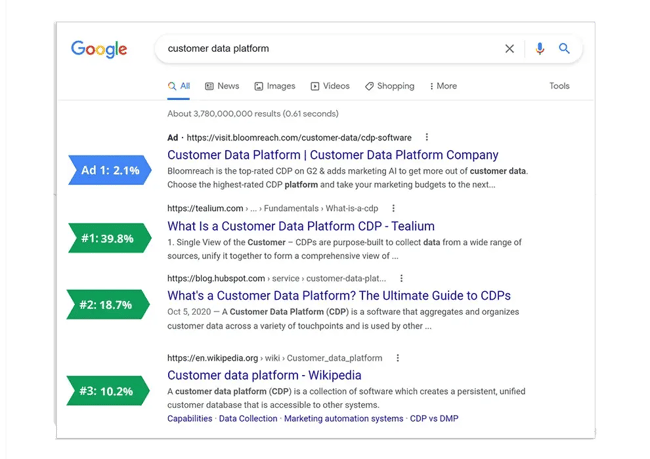
Furthermore, the current search engine results page (SERP) landscape presents a critical challenge. Data indicates that after the top three organic results on Google’s SERP, click-through rates (CTRs) plummet into single digits. This stark reality underscores the necessity for SaaS teams to not only achieve high rankings but to dominate the most prominent positions. Investing in the right tools enables companies to more effectively capture and defend these top spots. Crucially, it also positions them to appear within AI-generated answers, which are increasingly reshaping the SERP, particularly during the initial discovery phases of the buyer journey when users frequently turn to AI for product solutions.
Key Features to Consider in a SaaS SEO Tool Stack
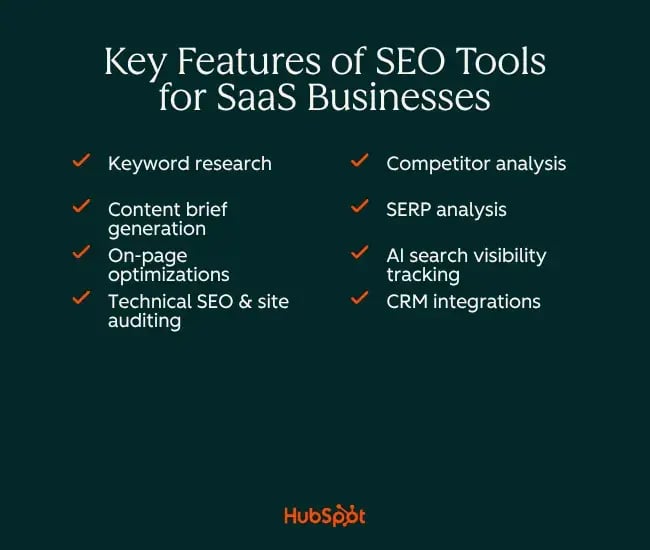
Before adopting an SEO tech stack, SaaS teams must meticulously identify the specific features their workflow necessitates. While individual team needs may vary, the following five features should serve as guiding principles for tool selection:
1. Keyword Research and Competitive Intelligence
For SaaS companies, keyword research transcends merely identifying high-volume search terms. It is about discovering the precise keywords that signal user intent and then mapping this search intent across the entire buyer journey, from initial awareness to final decision-making. The most effective SaaS SEO tools go beyond listing search terms; they illuminate why users are searching, what competitors are ranking for, and where strategic market gaps exist. Therefore, tools should offer:
- Intent Mapping: The ability to categorize keywords by buyer journey stage (awareness, consideration, decision).
- Competitor Keyword Analysis: Insights into the keywords your competitors are successfully ranking for.
- Gap Analysis: Identification of keyword opportunities that competitors are missing.
- Semantic Keyword Discovery: Uncovering related terms and phrases that enhance content comprehensiveness.
Experienced practitioners emphasize that top-performing SaaS SEO teams do not necessarily target the highest-volume keywords solely for traffic acquisition. Instead, they focus on identifying specific, high-intent queries that attract qualified traffic. While third-party tools are invaluable, Google Search Console (GSC) remains an essential, complementary resource for this critical research.
2. Technical SEO Auditing
Technical SEO forms the bedrock of all other SEO efforts. If a website suffers from crawl errors, slow page speeds, broken internal links, duplicate content, or indexation issues, even the most compelling content strategy will fail to yield significant results. SaaS websites, by their nature, are often large and complex, making them particularly susceptible to technical challenges. As product pages multiply and subdomains expand, development cycles may not always prioritize SEO hygiene due to competing demands for resources. A robust SEO SaaS platform should provide automated site crawling, clear issue prioritization, and actionable guidance for remediation.
For a deeper understanding of this foundational aspect, a beginner’s guide to technical SEO offers valuable insights and resources. The author’s experience highlights instances where SaaS sites have forfeited considerable ranking potential simply because comprehensive site crawls had not been performed in years. It is consistently recommended to prioritize a tool with robust technical auditing capabilities before investing in other features. Establishing a clean technical foundation is paramount before scaling content efforts, as unaddressed issues can lead to compounding complexity. Once the groundwork is laid, maintaining these standards becomes a more manageable task.
3. On-Page Content Optimization
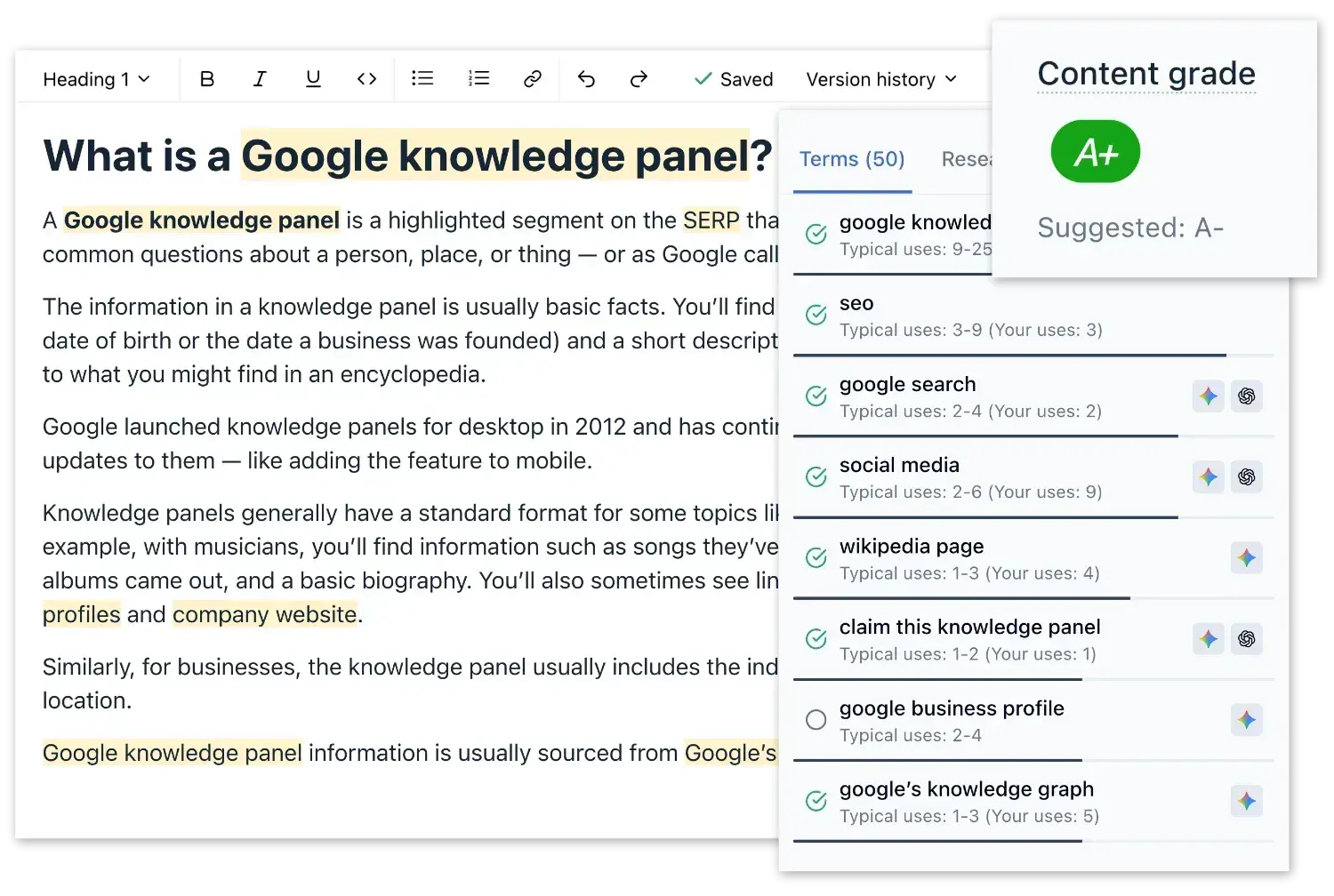
Content optimization tools are indispensable for any SaaS SEO strategy. They offer a comprehensive suite of features, including the analysis of pages against top-ranking competitors and specific recommendations for enhancing relevance, coverage, and structure. As SaaS teams scale their content production, they often manage multiple writers, freelancers, and AI-assisted workflows. The use of a SaaS SEO tool ensures a consistent quality benchmark, with AI-powered features streamlining this process. Look for tools that provide:
- Real-time Scoring: Immediate feedback on content optimization.
- Semantic Term Suggestions: Recommendations for relevant keywords and phrases.
- Readability Guidance: Tools to improve the clarity and accessibility of content.
- Structured Brief Generation: The creation of data-backed briefs to maximize content’s ranking potential from the initial draft.
On-page optimization tools are among the most valuable components of a SaaS SEO stack, particularly during the content briefing stage. They enable the generation of data-driven briefs within minutes, allowing writers to commence work with a clear SEO direction from day one. This efficiency significantly reduces the gap between the first draft and publishable content, consequently lowering editing costs and improving team morale.
4. AI Search and AEO Visibility
With the increasing prevalence of AI search tools such as AI Overviews (AIO), AI Mode, ChatGPT, and Perplexity, which often provide answers without requiring a traditional click, SaaS brands must adapt. They need tools that can measure and optimize their presence not only on traditional search engines but also within these new AI-driven search interfaces. This necessitates tools capable of assessing how content is formatted for citation or for AI models to readily surface. Answer Engine Optimization (AEO) is rapidly becoming as critical as traditional on-page SEO. Tools that support both offer SaaS teams a distinct competitive advantage.
The integration of AI search into SEO is a particularly exciting development. SaaS brands with strong traditional search rankings can experience a substantial loss of traffic to AI Overviews virtually overnight if their content is not structured effectively for the AI environment.
5. Reporting, Attribution, and CRM Integration
SEO initiatives only secure ongoing budget allocation when they can demonstrably prove their impact on revenue. For SaaS companies, this means tracing the journey of organic traffic all the way through to pipeline generation, trial sign-ups, and closed deals. Essential features include customizable dashboards, long-term keyword tracking, seamless integration with Google Analytics and Google Search Console, and, ideally, native CRM connectivity. This integration allows marketing teams to attribute leads and customers back to specific content pieces.
The ability to present SEO performance in business-centric terms, rather than solely relying on rankings and impressions, is what elevates a strategic SEO program from a mere cost center. Over time, many talented SEO specialists and strategies have lost traction and investment simply because they could not establish a clear line of connection between SEO efforts and closed deals. As AI Overviews increasingly capture clicks from websites, SEO professionals face a greater imperative to unequivocally demonstrate SEO’s value.
Essential SaaS SEO Tools for a Modern Tech Stack
The following 13 SaaS SEO tools are categorized by their primary functions, offering a comprehensive solution for modern SaaS SEO workflows. Each tool has been selected based on its demonstrated utility and, where applicable, expert recommendations.
SaaS SEO Tools at a Glance
| Tool | Category | Best For | Integrations | Quick Win |
|---|---|---|---|---|
| HubSpot AEO Grader | AI Search Visibility | Benchmarking brand visibility across ChatGPT, Perplexity, and Gemini. | HubSpot Smart CRM, Marketing Hub | Run a competitor report alongside your own to identify content and messaging gaps. |
| Marketing Hub | SEO & CRM Platform | Unified SEO, attribution, and CRM data. | HubSpot Smart CRM, Google Analytics, GSC, Salesforce | Set up a monthly SEO recommendations scan to preemptively address technical issues before they escalate. |
| Content Hub | CMS & Content SEO | SEO suggestions embedded directly into writing workflows. | HubSpot Smart CRM, Marketing Hub, Google Analytics | Implement schema modules by content type to enhance AI citation potential without requiring developer support. |
| Semrush | Research & Auditing | All-in-one keyword research, competitor analysis, and technical auditing. | GSC, Google Analytics, Trello, Zapier | Run a content gap report against your top three competitors to uncover immediate content opportunities. |
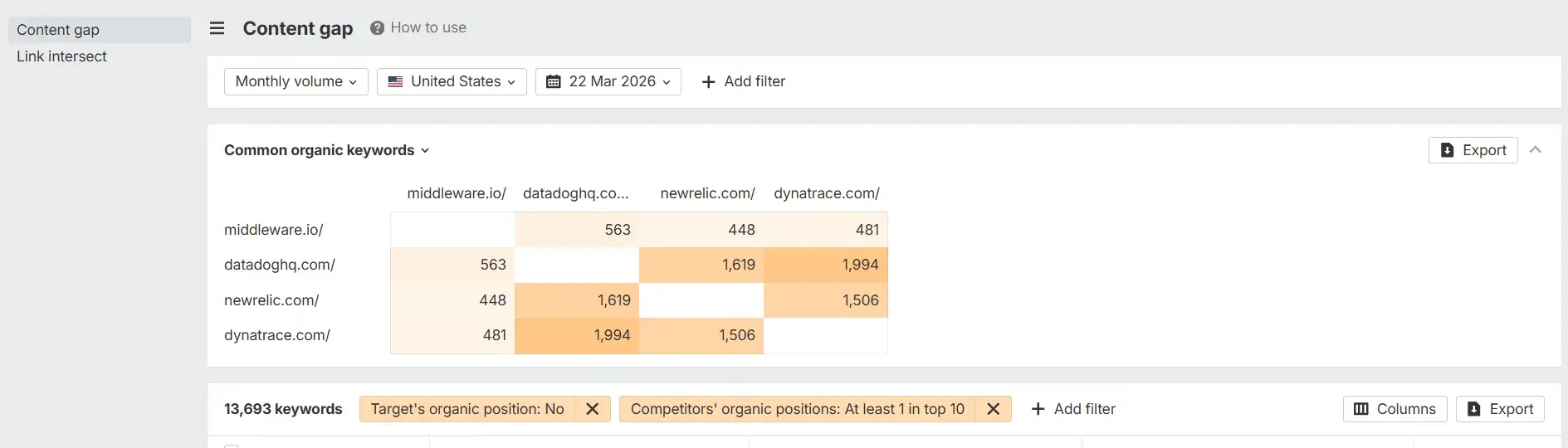
| Ahrefs | Backlink & Competitor Analysis | Deep backlink intelligence and organic traffic estimation. | GSC, Google Analytics | Utilize the Content Gap tool to find keywords that competitors rank for but your website does not. |
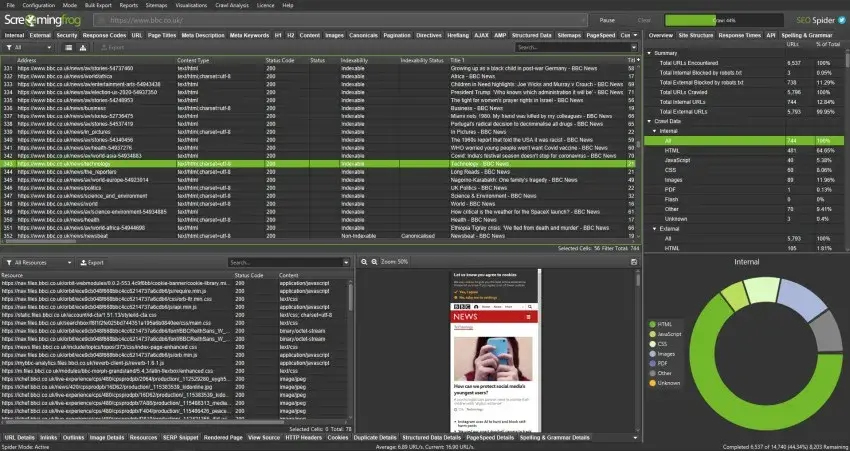
| Screaming Frog | Technical SEO | Granular technical crawling and on-site issue discovery. | GSC, Google Analytics, PageSpeed Insights | Crawl your site and filter by 3XX and 4XX status codes to quickly identify and fix redirect chains and broken links. |
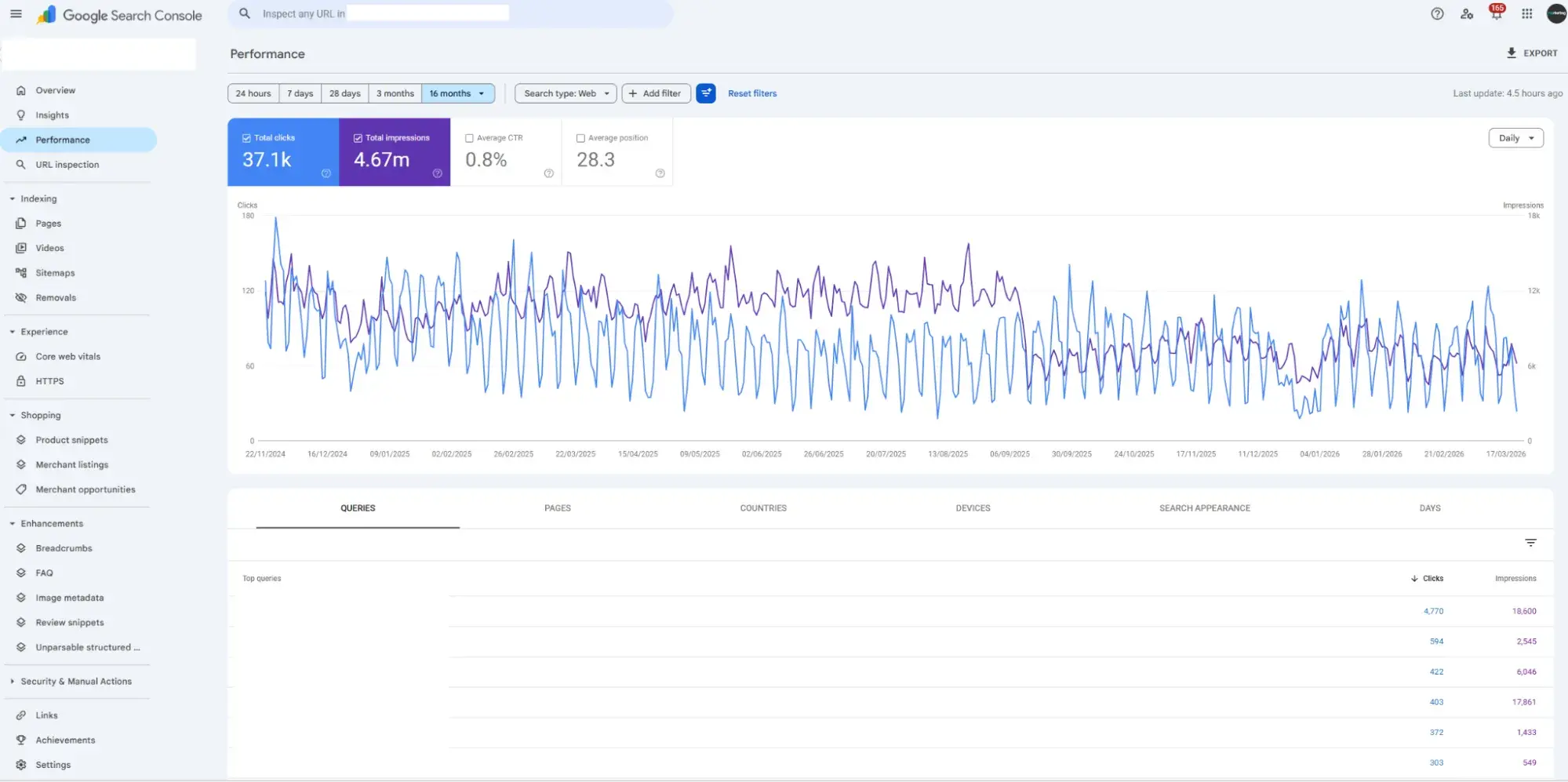
| Google Search Console | Search Performance | Essential first-party data directly from Google. | Google Analytics, Looker Studio, most SEO platforms | Filter queries by impressions with low CTR to pinpoint quick wins where a title tag adjustment could significantly boost clicks. |
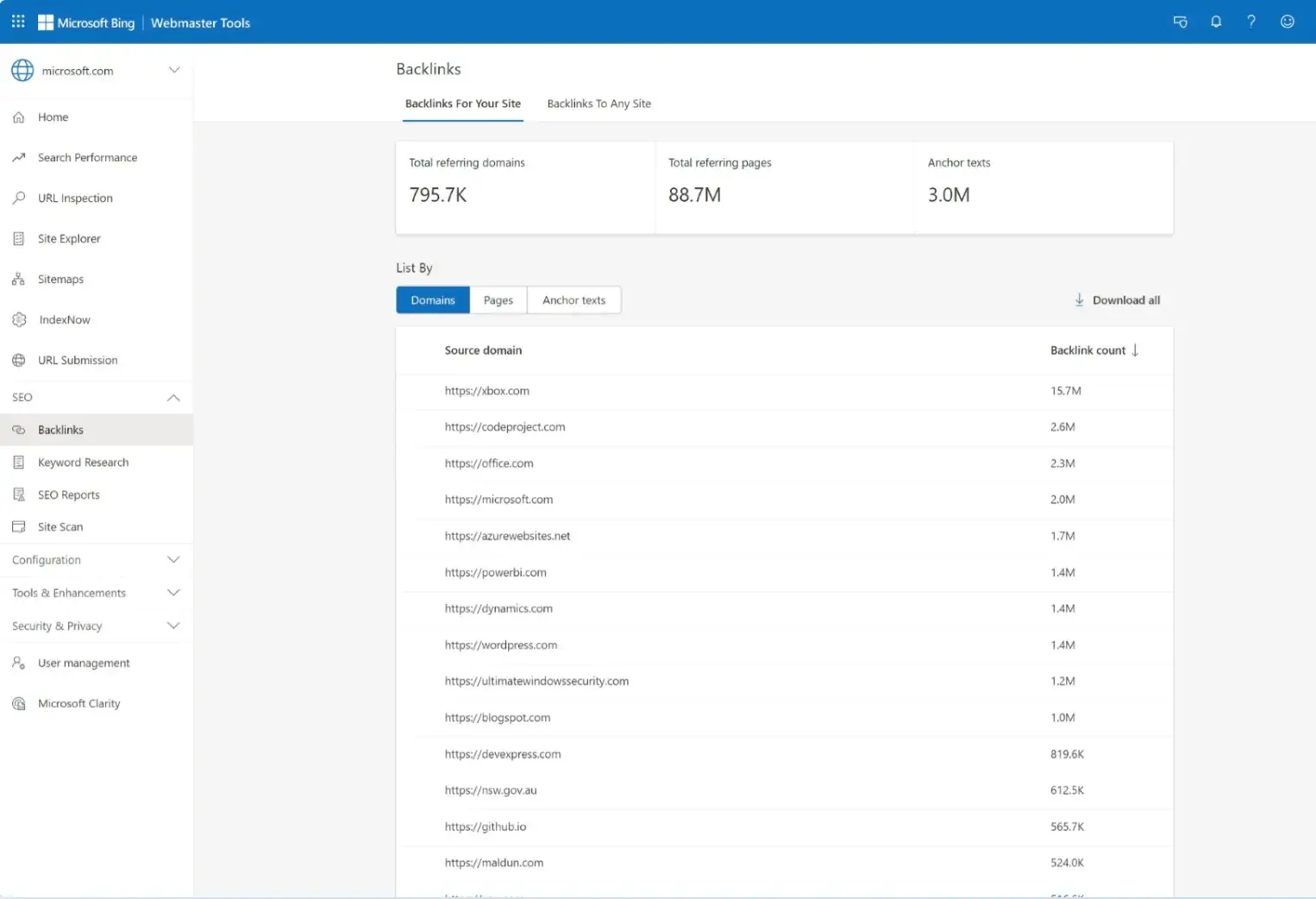
| Bing Webmaster Tools | Search & AI Monitoring | First-party AI citation data and Bing indexation monitoring. | GSC import, Microsoft Clarity | Import your GSC account in one click for Bing data, then check the AI dashboard for citation gaps. |
| Surfer SEO | On-Page Optimization & Briefs | Data-backed briefs and real-time content scoring. | Google Docs, WordPress, Jasper, ChatGPT | Run your top five existing posts through the Content Editor and implement quick-win term suggestions before creating new content. |
| Clearscope | Content Optimization | Clean, reliable term coverage grading across a large content library. | Google Docs, WordPress, HubSpot | Grade your ten highest-traffic pages and optimize any scoring below a B to quickly recover declining rankings. |
| Enfra Chrome Extension | AI Content Workflow | Teams using ChatGPT, Claude, or Gemini seeking live SERP data in their AI workflow. | ChatGPT, Claude, Gemini, GSC | Use "Compare Content to Top 10" on your next draft to instantly identify information gaps before the first edit. |
| Link Whisper | Internal Linking | WordPress SaaS teams seeking automated internal link suggestions. | WordPress, Google Analytics | Run the orphaned pages report and add two to three internal links to each flagged page. |
| Yoast SEO | On-Page SEO & Internal Linking | WordPress teams desiring fundamental on-page SEO and internal linking in one plugin. | WordPress, Semrush, Google Analytics | Enable internal linking suggestions and prioritize the top recommendations for your 10 most important pages. |
SaaS SEO Tools for Briefing, Content Writing, and On-Page Optimization
1. HubSpot Marketing Hub
For SaaS teams aiming to consolidate SEO management, reporting, and CRM attribution into a single platform, HubSpot Marketing Hub offers integrated SEO tools for planning, optimization, and performance analysis. Its SEO features streamline the entire content lifecycle, from topic ideation to ongoing performance evaluation, eliminating the need for separate, disconnected tools.
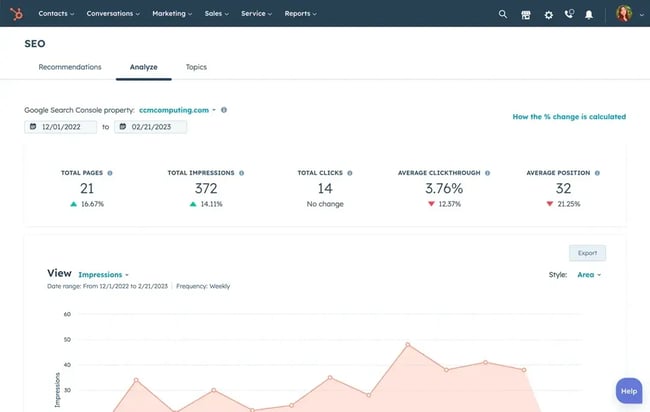
A particularly valuable aspect is the SEO recommendations feature, which allows teams to scan their entire live website—including pages hosted outside of HubSpot—and identify prioritized recommendations across technical SEO, on-page optimization, and accessibility. These issues are categorized by their potential SEO impact and technical difficulty, ensuring that both content teams and developers know precisely where to focus their efforts. Marketing Hub empowers marketers to analyze SEO performance at both the domain and individual page levels, tracking organic sessions, impressions, and keyword positions over time, all within the same environment where campaigns, contacts, and CRM data reside.
The native CRM integration is a significant advantage for SaaS teams, as achieving robust attribution is notoriously difficult when SEO tools operate independently of a CRM. This seamless connection addresses a common pain point expressed by SaaS marketing leaders.
Furthermore, several of Marketing Hub’s SEO recommendations extend into the realm of AEO. Features such as structured data recommendations and schema guidance ensure content is formatted in a manner that AI systems can readily parse and cite. This means companies are not just optimizing for traditional search engines but also for the AI-generated answers that SaaS buyers increasingly encounter first.
- Key Features: Integrated SEO recommendations, rank tracking, content strategy planning, website analytics, and native CRM integration.
- Best for: SaaS teams seeking a unified platform for SEO, CRM, and content performance data, eliminating the need to integrate multiple point solutions.
- Pricing: Marketing Hub offers a free edition. Paid editions begin with Marketing Hub Starter at $10/month per seat. Marketing Hub Professional starts at $890/month (including three Core Seats), and Marketing Hub Enterprise begins at $3,600/month (including five Core Seats).
- What we like: For teams already utilizing HubSpot for marketing automation and contact management, activating the SEO features within Marketing Hub is straightforward and essential.
- Pro tip: Implement the SEO recommendations scan on a recurring monthly basis, rather than as a one-off audit. SaaS websites undergo frequent changes with the addition of new product pages, blog posts, and landing pages, which can introduce technical issues rapidly. Scheduling regular reviews of new recommendations helps maintain a clean technical foundation without necessitating a full manual audit each time.
2. HubSpot Content Hub
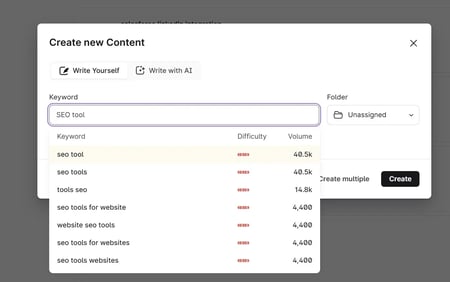
Content Hub supports SaaS SEO workflows by embedding SEO guidance directly within the CMS, enabling content teams to create, manage, and optimize content holistically. It stands out as one of the few platforms that offer a seamless content workflow, from initial drafting to publication.
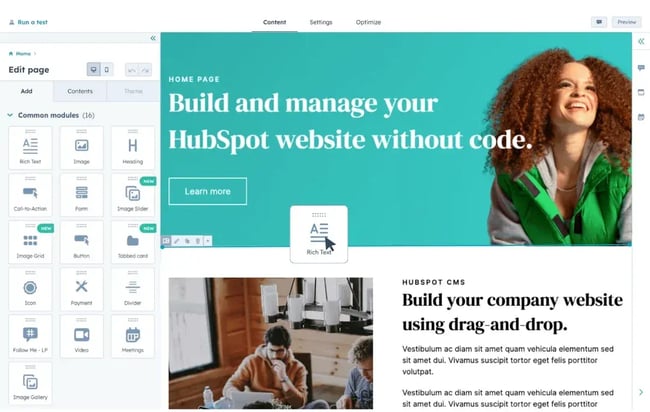
As teams create content within Content Hub, the platform provides contextual SEO suggestions in real time, directly within the editor. This eliminates the need for writers to switch between separate optimization tools and their CMS, thereby improving efficiency. The integrated AI content writer supports AI-assisted drafting and content generation while ensuring alignment with SEO requirements. This feature offers a significant efficiency gain for SaaS teams scaling content production across a growing calendar, especially when combined with the topic cluster framework available in Marketing Hub, which provides writers with clear direction on subject matter and structure.
Content Hub becomes particularly powerful for forward-thinking SaaS SEO teams due to its robust support for structured data and schema markup. HubSpot’s CMS facilitates the direct implementation of JSON-LD schema within templates and modules, ensuring content is schema-ready from inception. As explained by the HubSpot developer team, structured data can be implemented at the template level for consistent schema across content types or via custom modules for more granular control. For SaaS teams investing in AEO, this is critical, as structured data serves as a reliable signal that helps AI systems accurately parse and cite content in generated answers.
- Key Features: Integrated SEO recommendations, AI content writer, schema markup implementation, topic clustering, and content performance analytics.
- Best for: SaaS content teams seeking SEO guidance embedded within their writing workflow and aiming to build schema-ready content at scale without constant developer intervention.
- Pricing: Content Hub offers a free edition. Paid editions commence with Content Hub Starter at $10/month per seat. Content Hub Professional starts at $500/month (including three seats), and Content Hub Enterprise begins at $1,500/month (including five seats).
- What we like: Content Hub integrates SEO guidance directly into the CMS, allowing writers to optimize content during the drafting process rather than relying on separate tools.
- Pro tip: Utilize Content Hub’s modular schema approach over template-level implementation if your SaaS site publishes diverse content types (e.g., blog posts, case studies, product pages). Different schema types (Article, FAQPage, Product, SoftwareApplication) are better suited to each format, and the modular approach allows content teams to select the appropriate schema at publication time without needing developer assistance for each page.
3. Surfer SEO
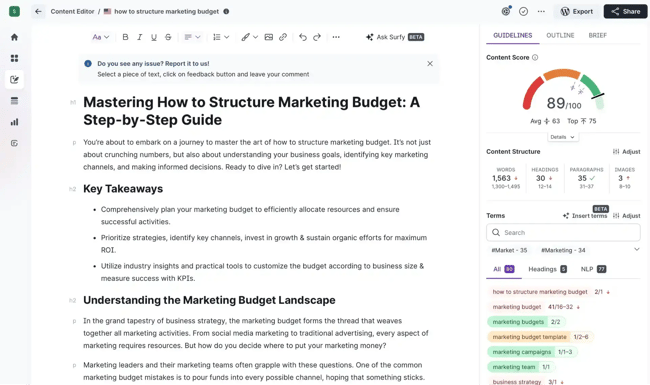
Surfer SEO excels in on-page content optimization and briefing guidance, making it a preferred choice for SaaS content teams that value a data-driven framework for both content planning and refinement. By analyzing top-ranking pages for any given keyword, Surfer generates a content score and a set of term-based recommendations that writers can implement in real time, thereby reducing the guesswork that often impedes the editorial process.
- Key Features: Content editor with real-time scoring, keyword research, SERP analyzer, content brief generator, and AI outline builder.
- Best for: Content writers and SEO managers who require structured, data-backed briefs and real-time on-page guidance to enhance content quality and ranking potential at scale.
- Pricing: Surfer SEO’s Standard plan starts at $99/month (billed annually), with higher tiers available for larger teams and advanced AI search workflows.
- What we like: Surfer SEO provides writers and editors with a shared optimization target, facilitating content briefing, draft evaluation, and improvement of existing pages without relying on conjecture.
- Expert Insight: Manea Stefania, Account & Content Manager at dslx, notes, "Surfer SEO is one of the most practical tools I’ve used for keeping content teams aligned on SEO without micromanaging the writing process. I use the keyword research feature to inform my briefs, and then share the Content Editor with writers so they have a clear SEO direction without it limiting their creativity." Stefania also highlights Surfer’s ability to auto-generate outlines based on competing articles and keyword research, a feature she considers invaluable for SaaS teams looking to scale content output efficiently.
4. Clearscope
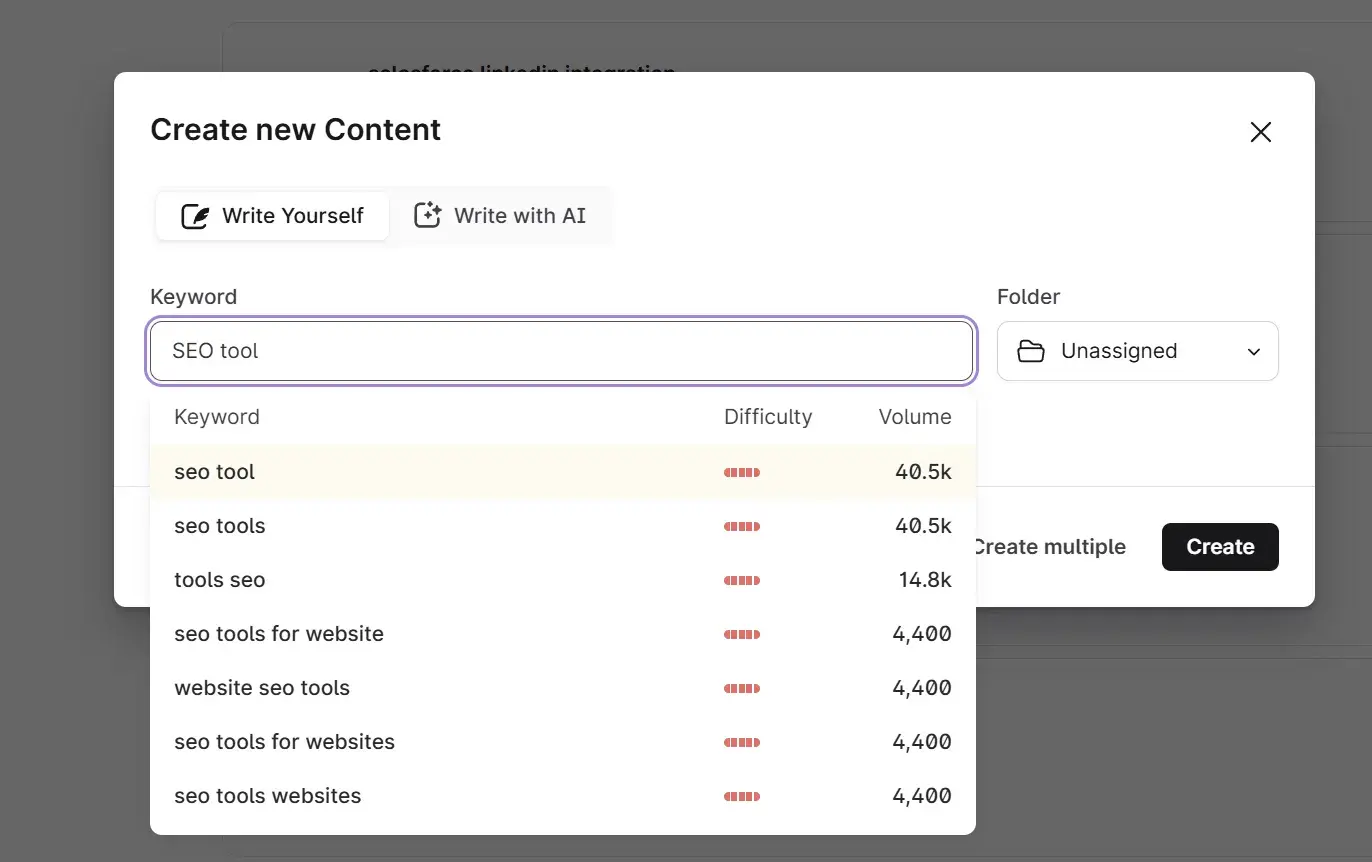
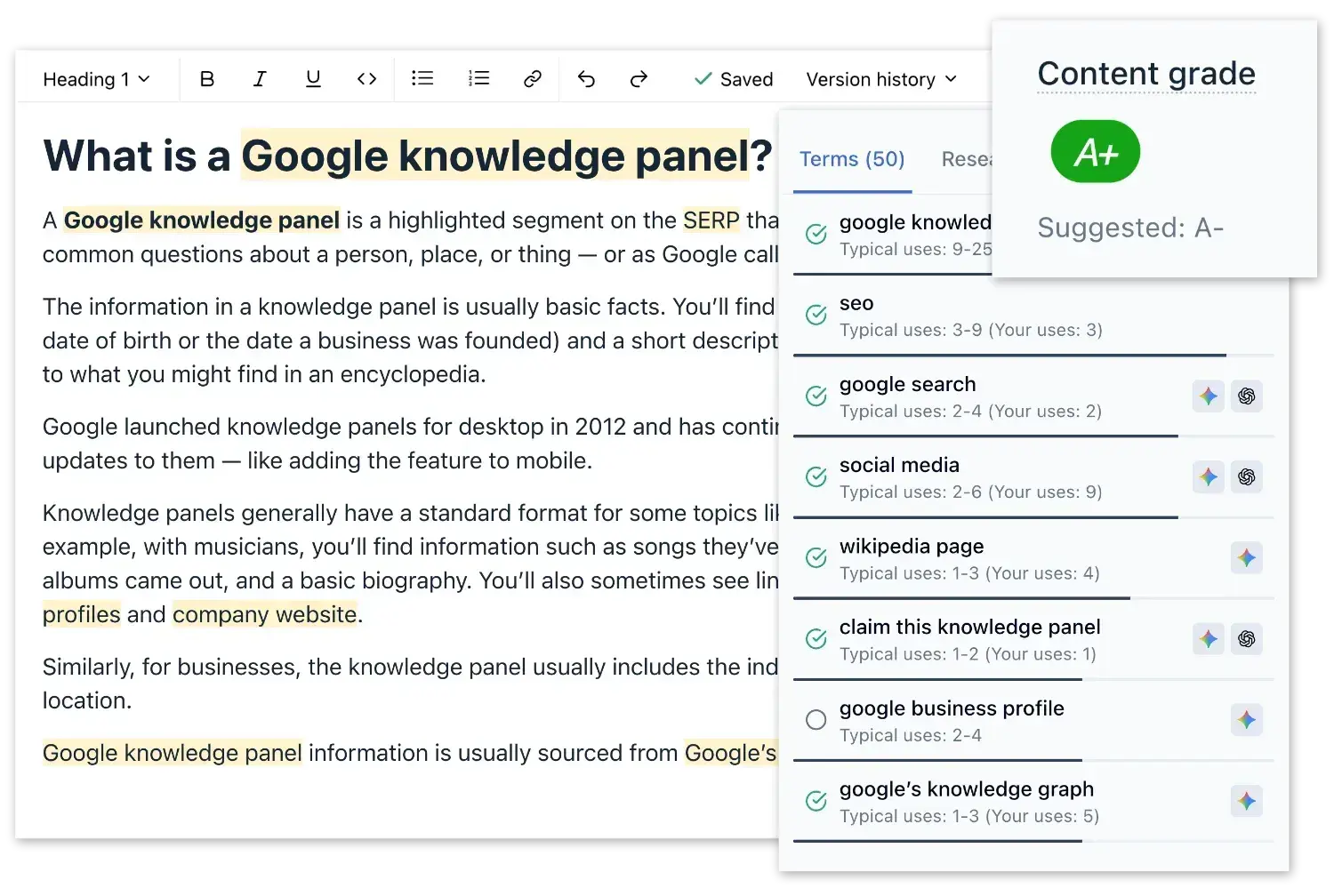
Clearscope is utilized for content optimization and term coverage checks, assisting SaaS content teams in ensuring their pages comprehensively cover the relevant terms and topics associated with a given keyword.
- Key Features: Content grading, term recommendations, topic coverage analysis, and integration with popular CMS platforms.
- Best for: SaaS content teams and editors who prefer a streamlined optimization workflow focused on term coverage and content grading across a substantial library of pages.
- Pricing: Clearscope plans begin at $129/month for Essentials, with Business at $399/month and custom Enterprise pricing.
- What we like: Clearscope’s long-standing presence in the SEO market signifies a depth of experience and refinement in its workflows. Tools with robust SEO foundations are often better positioned to translate that expertise into effective AEO performance, as understanding how search engines interpret content is highly transferable to how AI models process it.
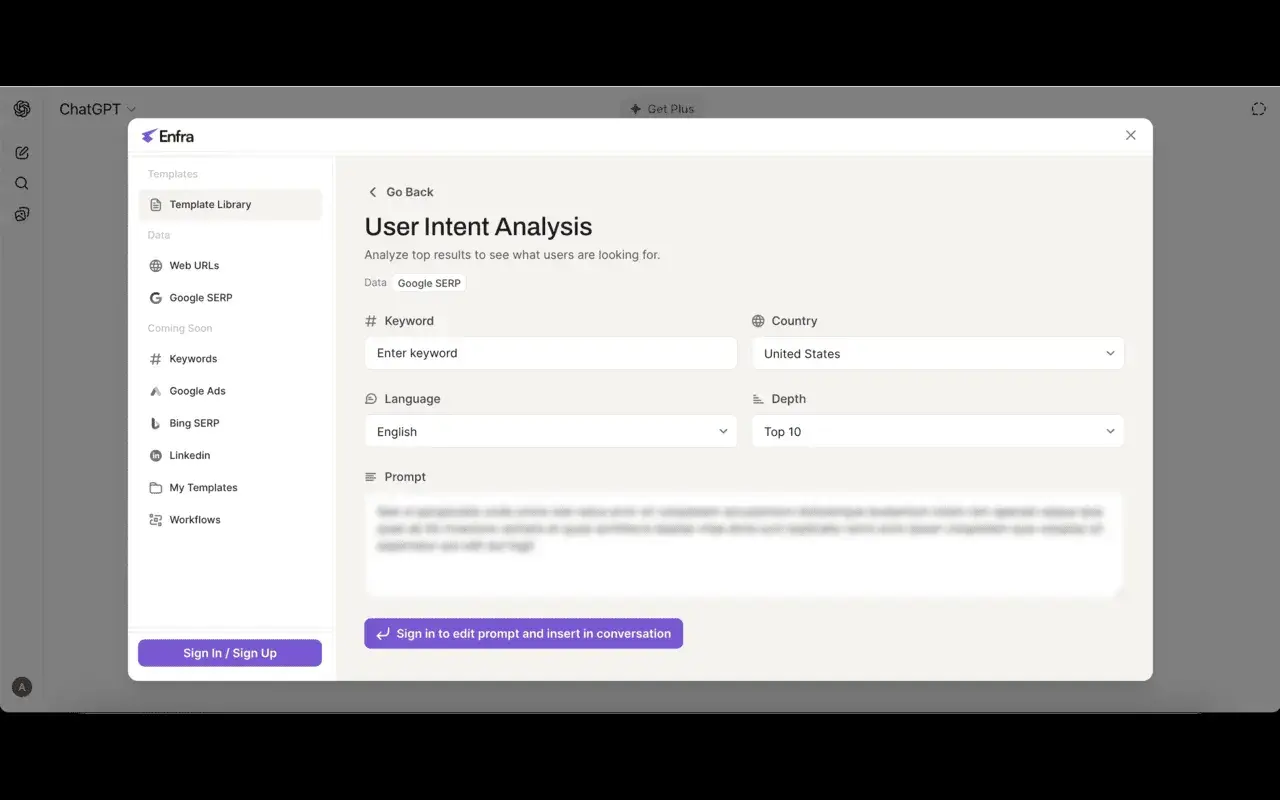
5. Enfra Chrome Extension
For SaaS teams that leverage AI tools like ChatGPT, Claude, or Gemini for content production, Enfra acts as a crucial connective layer between these AI workflows and real-time search data. This makes it a practical addition to a modern SaaS SEO stack.
- Key Features: Live SERP data injection into AI workflows, Google Search Console metric integration, content comparison against top-ranking pages, and AI content planning.
- Best for: SaaS content teams using AI writing tools who need to ground their output in live SERP data and Google Search Console metrics, rather than relying solely on the AI’s static training knowledge.
- Pricing: Enfra’s pricing is not publicly listed on their current website.
- What we like: Enfra empowers SaaS content teams to incorporate live search data into AI-assisted workflows, ensuring briefs and drafts reflect current SERP conditions.
- Expert Insight: Liz Bowers, SEO Manager at Mosaic eMarketing, recommends Enfra, stating, "Enfra is my favorite tool for 2026. It injects live SERP data and your own Google Search Console metrics directly into the interface. Instead of the AI guessing what a ‘good’ article looks like, it sees exactly who is ranking right now and why. For a SaaS company looking to scale, this eliminates hours of manual research." Bowers particularly values the "Compare Content to Top 10" and "Content Plan for ChatGPT" features, which allow for immediate identification of "Information Gaps" and strategic content planning aligned with AI search trends.
SaaS SEO Tools for SEO Management and Attribution
6. HubSpot AEO Grader
HubSpot’s free AEO Grader is specifically designed to help SEO teams assess their websites’ performance in AI search environments, including ChatGPT, Perplexity, and Gemini. This tool provides SaaS teams with a clear, actionable overview of their AI search visibility at no cost. The grader operates by conducting automated queries across GPT-4o, Perplexity, and Gemini, mimicking the actual research patterns prospective customers employ when evaluating solutions within a specific category.
A key advantage of the AEO Grader for SaaS teams is its competitive analysis capability. Marketers can generate reports not only for their own brand but also for any competitor within their market, offering a direct comparison of how AI engines represent their brand relative to the competition. This form of share-of-voice intelligence in AI search is a feature offered by very few tools, especially at no cost. The tool also evaluates source credibility, identifying third-party publications and sites that influence how AI models characterize a brand, providing crucial insights for digital PR and link-building campaigns.
- Key Features: AI search visibility analysis across multiple AI platforms, competitor benchmarking, source credibility assessment, and actionable recommendations.
- Best for: SaaS marketers seeking to understand and enhance their brand’s visibility in AI-generated search results and benchmark their positioning against competitors across ChatGPT, Perplexity, and Gemini without incurring any cost.
- Pricing: The HubSpot AEO Grader is free for a one-time diagnostic. HubSpot also offers HubSpot AEO for ongoing AI search tracking, starting at $50/month.
- What we like: This tool provides quick, high-quality AI visibility analysis. In minutes, it surfaces substantial intelligence on how a brand appears in AI search. Its free nature allows for competitor analysis as well. It serves as a valuable research tool for competitive intelligence.
- Pro tip: Run the AEO Grader for your top two or three competitors, in addition to your own brand. Observing how AI engines prioritize category leaders offers a useful benchmark and often reveals effective messaging angles or content themes that can be incorporated into an AEO strategy.
7. Semrush
Semrush remains one of the most comprehensive SaaS SEO platforms, offering robust capabilities for keyword research, competitor analysis, and site audits. It caters to teams requiring a full suite of features for SEO content, backlinks, technical SEO, and AEO.
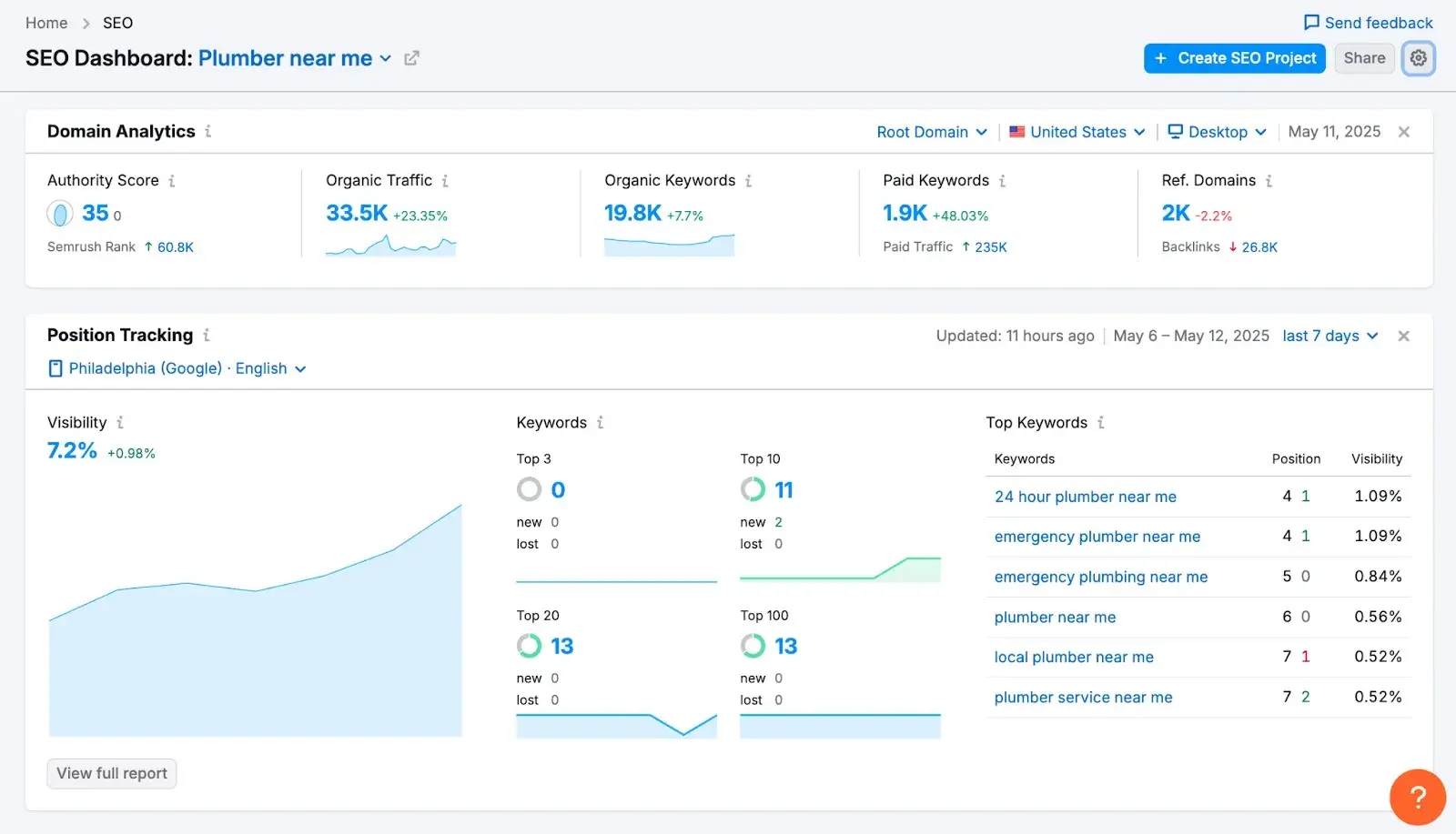
- Key Features: Keyword Magic Tool, site audit, position tracking, backlink analysis, competitor research, and AI writing assistant.
- Best for: SaaS marketing teams needing an all-in-one research and auditing platform that encompasses keyword strategy, competitive intelligence, and technical site health within a single workspace.
- Pricing: Semrush SEO plans start at $117.33/month (billed annually). Teams requiring AI visibility features should consult Semrush’s current pricing for AI-enhanced plans, as classic SEO and AI-enhanced packages are now offered separately.
- What we like: Semrush has consistently evolved with the SEO landscape, integrating AI-assisted features like AI visibility. For SaaS businesses, scalable subscriptions allow teams to adjust based on their specific reporting and data needs, making cost justification easier at various growth stages.
8. Ahrefs
Ahrefs is renowned for its in-depth competitor research and backlink analysis. It has long been the preferred tool for SaaS teams seeking the most granular insights into their own and their competitors’ link profiles. Its extensive crawling infrastructure ensures highly accurate backlink data and organic traffic estimations.
- Key Features: Site Explorer, Keywords Explorer, Content Explorer, Rank Tracker, Site Audit, and backlink analysis.
- Best for: SaaS marketing teams requiring tools for keyword strategy, competitive intelligence, and technical site health within a unified workspace.
- Pricing: Ahrefs paid plans start with Lite at $129/month, Standard at $249/month, and Advanced at $449/month. Limited free access is also available after a paid subscription concludes.
- What we like: Ahrefs provides SaaS teams with a clear view of competitor content performance, backlink profiles, and content gaps. Ila Bandhiya, Senior Digital Marketer at Middleware.io, utilizes Ahrefs to track competitor content performance, uncover content gaps, and identify new keyword opportunities, which directly informs content strategy and scales content operations with measurable results.
9. Screaming Frog
SEO professionals widely regard Screaming Frog as the definitive tool for technical crawling and on-site issue discovery, essential for thorough technical audits of SaaS websites. Screaming Frog can crawl every URL it encounters, providing raw, unfiltered data for analysis.
- Key Features: Comprehensive website crawling, detailed technical SEO issue identification, URL structure analysis, and meta data extraction.
- Best for: SaaS developers, technical SEO specialists, and agencies needing granular crawl data to accurately diagnose and resolve site-wide technical issues.
- Pricing: Screaming Frog SEO Spider offers a free version with a 500-URL crawl limit. Paid licenses are $279 per year.
- What we like: The price-to-value ratio of Screaming Frog is exceptional. For less than the cost of one month on many enterprise SEO platforms, it provides technical crawling capabilities comparable to much more expensive tools. However, users require a solid understanding of technical SEO to interpret its reports and prioritize fixes, as it does not offer the plain-English issue categorization found in cloud-based tools like Sitebulb or Semrush.
10. Google Search Console
Google Search Console (GSC) provides critical reports on search performance and index coverage. Despite being a free tool, it remains an indispensable component of any SaaS SEO stack, serving as the direct communication channel between a website and Google. No third-party tool can replicate the accuracy and authority of the data it provides.
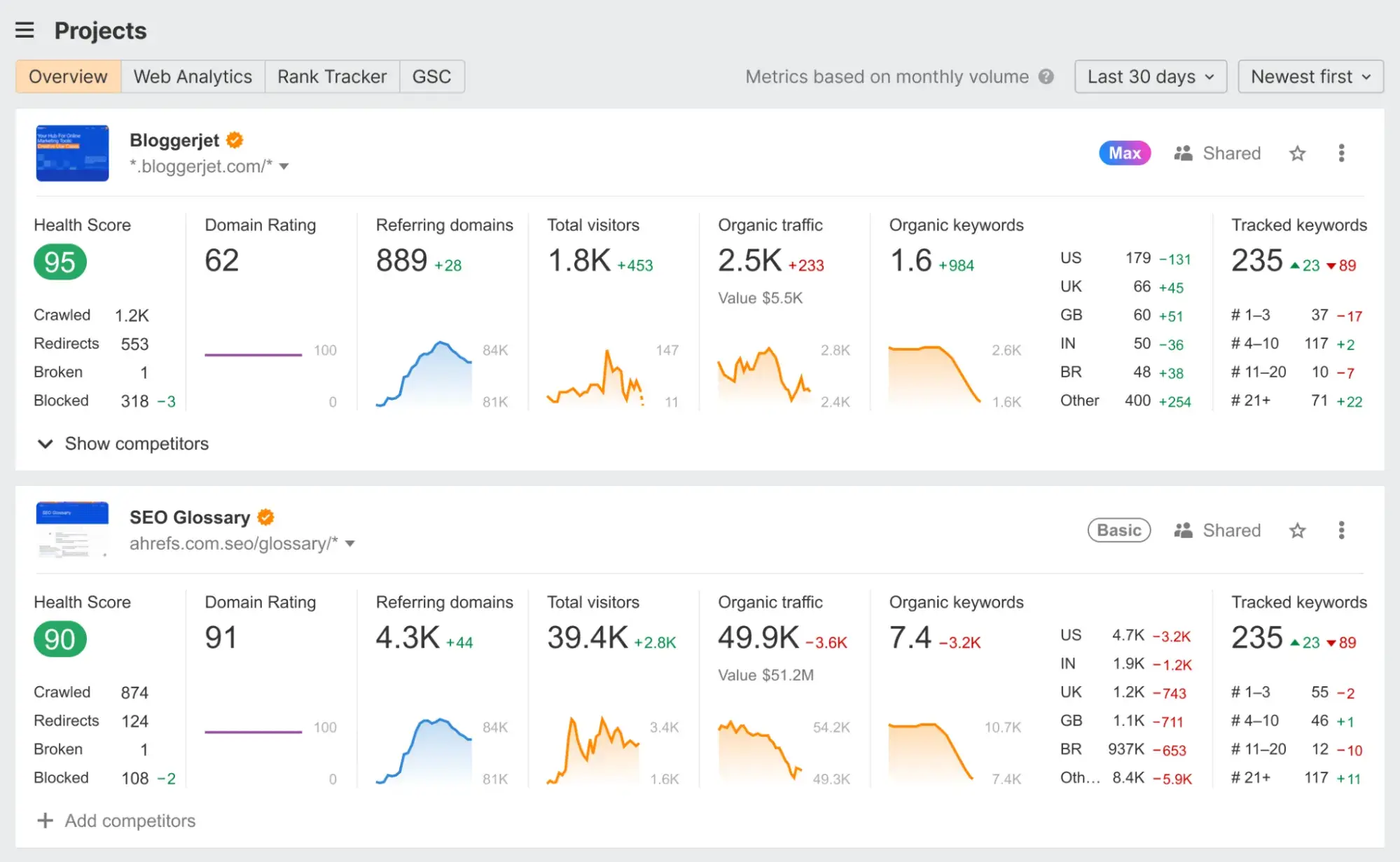
- Key Features: Performance reports (impressions, clicks, CTR, position), index coverage reports, sitemaps submission, mobile usability, and core web vitals.
- Best for: All SaaS teams, irrespective of size or budget. GSC should be the foundational tool installed in any SEO stack.
- Pricing: Free.
- What we like: GSC’s keyword research capabilities are often underestimated. It reveals keywords for which a website already ranks, including "zero search volume" terms that paid tools may not display. These highly specific keywords can often be the highest-converting terms for a SaaS company, directly addressing a buyer’s precise problem.
11. Bing Webmaster Tools
Bing Webmaster Tools offers site monitoring for the Bing search engine. Its recent expansion of AI features makes it a compelling free tool for SaaS teams aiming to understand their visibility in AI-generated search results.
- Key Features: Site indexing status, search performance metrics for Bing, backlink analysis, and AI content citation insights.
- Best for: SaaS SEO teams needing to monitor site health and indexation on Bing, and gain first-party data on how AI-generated answers cite their content.
- Pricing: Free.
- What we like: Bing Webmaster Tools provides SaaS teams with another first-party source for search performance, crawl, and indexation data. It also assists teams in monitoring content appearance across Microsoft’s AI search experiences, making it a valuable free addition to an AI search visibility workflow.
SaaS SEO Tools for Internal Linking
12. Link Whisper
For SaaS sites with a history of content production, internal linking often presents a significant opportunity for improvement. Link Whisper is a WordPress plugin that automates the most time-consuming aspects of an internal linking strategy. It surfaces relevant link suggestions across existing content, enabling content teams to build a stronger site architecture without manually sifting through hundreds of pages.
- Key Features: Automated internal link suggestions, orphaned page detection, internal link reporting, and bulk URL updating.
- Best for: SaaS teams using WordPress sites who need accelerated internal link suggestions, orphaned page identification, and internal link reporting.
- Pricing: Link Whisper is billed annually, with plans starting at $97/year.
- What we like: Link Whisper simplifies internal linking by identifying orphaned pages, enabling bulk URL updates, and providing link recommendations within a unified workflow. Many SaaS sites have a surprising number of high-quality pages with minimal internal linking, hindering their discoverability and prioritization by search engines. Link Whisper expedites the remediation of this issue, offering quick wins that can improve rankings without publishing new content.
13. Yoast SEO
For SaaS teams managing their content hub or blog on WordPress, Yoast SEO offers a reliable foundation for on-page SEO and internal linking without requiring extensive technical expertise. The plugin analyzes existing content and recommends relevant pages to link to during the writing process, helping teams build a more robust site architecture over time. This provides a low-effort method to improve link equity distribution and reduce the number of orphaned pages that negatively impact overall site performance. Beyond internal linking, Yoast also assists with other SEO tactics, including on-page optimization, schema markup, and sitemap management.
- Key Features: On-page analysis, meta tag optimization, internal linking suggestions, XML sitemap generation, and schema markup.
- Best for: SaaS teams on WordPress seeking a reliable, user-friendly plugin that covers fundamental on-page SEO, metadata management, and basic internal linking suggestions in a single, lightweight installation.
- Pricing: The free version covers core on-page SEO functionality. Yoast SEO Premium costs $9.90/month, billed annually at $118.80 (excluding VAT).
- What we like: Yoast consolidates metadata management, redirects, and on-page guidance into a single plugin, reducing the complexity of the tool stack.
Optimizing Your SaaS SEO Tool Stack by Team Size
Not every SaaS team requires every tool on this list. The optimal stack depends on team headcount, budget, and content output goals.
SaaS SEO Tool Stack by Team Size
| Tool | Solo to 2 | Team of 3–5 | Team of 10+ |
|---|---|---|---|
| Marketing Hub | ✓ | ✓ | ✓ |
| Content Hub | ✓ | ✓ | ✓ |
| HubSpot AEO Grader | ✓ | ✓ | ✓ |
| Google Search Console | ✓ | ✓ | ✓ |
| Bing Webmaster Tools | ✓ | ✓ | ✓ |
| Semrush | ✓ | ✓ | ✓ |
| Ahrefs | ✓ | ✓ | ✓ |
| Screaming Frog | ✓ | ✓ | |
| Surfer SEO | ✓ | ✓ | ✓ |
| Clearscope | ✓ | ✓ | |
| Enfra Chrome Extension | ✓ | ✓ | ✓ |
| Link Whisper | ✓ | ✓ | ✓ |
| Yoast SEO Premium | ✓ | ✓ | ✓ |
Solo to 2 Marketers
A solo marketer or a two-person SaaS team should prioritize free first-party data sources, a core optimization workflow, and a straightforward method for linking SEO activities to business outcomes. This includes essential tools like Google Search Console, Bing Webmaster Tools, and the HubSpot AEO Grader. For a consolidated approach, Marketing Hub offers integrated SEO, CRM, and reporting capabilities, representing a more efficient investment than piecing together multiple individual tools.
Team of 3 to 5
A small SaaS marketing team typically requires enhanced structure for research, briefing, content creation, optimization, internal linking, and reporting. This phase often involves integrating tools like Semrush or Ahrefs for deeper competitive and keyword analysis, alongside content optimization tools such as Surfer SEO or Clearscope. Link Whisper can significantly streamline internal linking efforts for WordPress sites.
Team of 10+
Larger SaaS teams necessitate a shared SEO system that accommodates multiple contributors, facilitates clearer reporting structures, and supports more frequent technical and content refresh cycles. This scale often benefits from comprehensive platforms like Semrush or Ahrefs, supplemented by specialized tools for advanced content optimization and AI visibility. Robust CRM integration, as provided by HubSpot Marketing Hub, becomes paramount for managing complex attribution models and demonstrating ROI across a larger organization.
Frequently Asked Questions About SaaS SEO Tools
What is the best way to track AI search visibility for a SaaS brand?
Begin with the HubSpot AEO Grader to obtain a snapshot of how ChatGPT, Perplexity, and Gemini represent your SaaS brand. This tool helps teams ascertain whether AI engines mention the brand, how they describe it, and how this visibility compares to competitors. For ongoing tracking, complement AEO reporting with Bing Webmaster Tools’ AI Performance dashboard and traditional SEO data from Google Search Console. Collectively, these tools provide SaaS teams with insights into both search visibility and AI citation activity.
How should a small SaaS team prioritize SEO tools on a tight budget?
Prioritize free, first-party data tools such as Google Search Console, Bing Webmaster Tools, and the HubSpot AEO Grader, which offer accurate and reliable data. Subsequently, consider HubSpot Marketing Hub, which unifies SEO, CRM, and reporting functionalities into a single platform, offering greater efficiency than integrating multiple point solutions.
Which SaaS SEO tools integrate best with a CRM for attribution?
HubSpot Marketing Hub stands out as the premier option for CRM-connected SEO reporting. Its SEO tools integrate seamlessly with HubSpot Smart CRM, enabling marketing teams to attribute organic traffic directly to contacts, deals, and closed revenue without custom integration work.
How often should a SaaS company refresh high-intent content?
High-intent content, including comparison pages, alternative solution pages, and bottom-of-funnel category terms, should be reviewed at least every 3 to 6 months. This frequency is necessary due to the rapid shifts in competitor content and SERP features within these critical categories.
Do I need both a content optimizer and a brief generator?
Not necessarily from the outset. Tools like Surfer SEO offer integrated brief generation and on-page optimization capabilities, making them a practical single investment for smaller teams. Larger SaaS teams may eventually diversify their toolset, dedicating specific tools to detailed brief creation, separate editorial workflows, or enhanced content governance as their needs evolve.
The Right SaaS SEO Tools: The Bridge Between Guessing and Growing
The tools outlined in this guide span every critical stage of a modern SaaS content operation. A comprehensive SaaS content engine encompasses research, briefing, creation, optimization, content refreshes, internal linking, and reporting. The appropriate tool stack ensures that data, rather than guesswork, informs each of these stages.
For SaaS teams looking to establish a foundational strategy, beginning with HubSpot is highly recommended. Marketing Hub connects SEO efforts directly to CRM attribution, Content Hub integrates SEO guidance into the content workflow, and the HubSpot AEO Grader helps teams understand how AI engines represent
About the Author