In today’s hyper-connected world, customer expectations for support have evolved dramatically. No longer content with fragmented interactions, consumers demand immediate, personalized assistance across their preferred communication channels. This escalating demand is driving a significant industry shift towards omnichannel customer service models, a strategic approach designed to weave together diverse communication touchpoints into a cohesive and seamless customer journey.
Omnichannel customer service is not merely about offering support through multiple channels; it’s about creating an integrated ecosystem where customer history, context, and key data are shared and accessible across every interaction point. This unified approach empowers support teams with a holistic understanding of each customer, enabling faster, more efficient, and deeply personalized resolutions. The benefits are substantial, impacting everything from first-contact resolution times to overall customer satisfaction rates. Research indicates that companies utilizing integrated omnichannel solutions can experience up to a 31% reduction in first-resolution times and a 39% decrease in customer wait times compared to those operating in silos. Furthermore, omnichannel service has been shown to lift customer satisfaction (CSAT) scores to 67%, a stark contrast to the mere 28% achieved by disconnected multichannel setups.
Understanding the Omnichannel Distinction: Beyond Multichannel
While the terms "omnichannel" and "multichannel" are often used interchangeably, a critical distinction exists that underpins their effectiveness. Multichannel support involves offering customer service through various channels – such as email, phone, live chat, and social media – but these channels often operate independently. This can lead to a disjointed experience for the customer, who may be required to repeat information when switching from one channel to another, and for agents, who lack a comprehensive view of the customer’s prior interactions.
Omnichannel customer service, conversely, elevates multichannel support by connecting these disparate channels into a single, unified experience. In an omnichannel model, customer conversations, purchase history, previous support tickets, and other vital contextual information are seamlessly shared across all touchpoints. This ensures that when a customer transitions from a web chat to an email or a phone call, the support agent has immediate access to the entire conversation history, eliminating the need for the customer to re-explain their issue. Modern omnichannel platforms typically consolidate support requests into a shared inbox or ticketing queue, providing agents with a 360-degree view of each customer’s journey.
The Multifaceted Benefits of an Omnichannel Approach
The strategic implementation of omnichannel customer service yields a wealth of advantages for both businesses and their clientele. These benefits extend beyond mere operational efficiency to foster deeper customer relationships and drive long-term loyalty.
Reducing Customer Friction: A significant pain point in traditional customer service is the repetitive nature of interactions. Research from Salesforce highlights that a staggering 56% of customers are forced to re-explain their issue each time they are transferred to a new person or department. Omnichannel service directly addresses this by preserving conversation history and customer context across all touchpoints. This allows customers to seamlessly pick up where they left off, significantly reducing frustration and creating a smoother, more effortless support experience.
Enabling Faster and More Efficient Support: Centralizing customer context, history, and account information within an omnichannel platform dramatically reduces the time agents spend searching for previous interactions. With tools like HubSpot’s Smart CRM, agents gain access to a unified customer record automatically enriched with data from emails, calls, and web interactions, providing comprehensive context before any conversation begins. This unified timeline minimizes context switching and information gathering, allowing agents to focus directly on resolving customer issues. Consequently, agents can prioritize urgent requests more effectively and handle a larger volume of inquiries without compromising the quality of service.
Creating Personalized Customer Experiences: In an era where 82% of customers prefer companies to understand their needs and anticipate their requirements, personalization is paramount. Omnichannel customer service facilitates this by equipping agents with a complete view of the customer, including past purchases, previous support interactions, and other critical account details. This rich data allows agents to tailor their conversations, offer relevant recommendations, and build stronger trust. Integrating AI-powered customer agents further enhances personalization by leveraging customer data to tailor agent interactions with specific content and specialized routing rules.
Providing Visibility into the Entire Customer Journey: An omnichannel strategy offers organizations an unparalleled, holistic perspective on how customers engage across all support channels. This consolidated view eliminates the need for siloed channel analysis, enabling customer support leaders to identify overarching trends, pinpoint bottlenecks, and discover opportunities for improvement throughout the entire customer journey. This strategic visibility empowers CX teams to refine workflows, optimize staffing levels, and proactively address customer pain points before they escalate.
Improving Collaboration Within Support Teams: A connected service platform with unified customer data transforms customer handoffs between agents into a seamless process. Whether a case is transferred or a customer switches channels mid-conversation, the receiving agent has immediate access to the necessary history and context to provide uninterrupted assistance. This automatic transfer of vital information minimizes redundant work, reduces miscommunication, and ensures that no critical context is lost. Platforms like HubSpot’s Service Hub, with its integrated CRM and AI-generated conversation summaries, exemplify this seamless transition.

Key Features of an Effective Omnichannel Customer Service Platform
The successful implementation of an omnichannel strategy hinges on the capabilities of the underlying technology. Several key features are essential for any robust omnichannel customer service platform.
Shared Inbox: A unified shared inbox consolidates conversations from all channels into a single workspace. This eliminates the need for agents to monitor multiple inboxes and applications, fostering better collaboration, simplifying ticket prioritization, and providing leadership with a clearer view of queue health and agent capacity.
CRM Data Connection: Seamless integration with Customer Relationship Management (CRM) systems is crucial. This connects service interactions directly to a single customer record, providing agents with access to purchase history, subscription details, and previous support tickets, enabling quicker and more personalized support.
Intelligent Routing: Automated routing mechanisms ensure that conversations are directed to the most appropriate person or team based on predefined rules or AI-driven insights. This can be based on factors such as product expertise, language, geography, or customer tier, leading to reduced wait times and improved first-contact resolution rates.
AI and Automation: Leveraging Artificial Intelligence (AI) is central to modern omnichannel platforms. AI can summarize conversations, draft responses, classify tickets, detect sentiment, recommend relevant content, and automate repetitive tasks. AI-powered chatbots and agents can also autonomously resolve common customer issues, further enhancing efficiency.
Connected Knowledge Base: An integrated knowledge base allows customers to find answers to their questions independently through self-service resources like FAQs and troubleshooting guides. Support teams also benefit from easy access to this documentation, improving response times and consistency. Some platforms even utilize AI to automatically generate self-service content from successful service interactions.
SLA Management: Service Level Agreements (SLAs) are critical for maintaining service quality. Omnichannel platforms should automatically apply SLAs to tickets based on predefined criteria and alert teams when deadlines are at risk. This automates ticket prioritization and standardizes service delivery.
Data Analytics: Comprehensive reporting and analytics dashboards provide insights into key performance indicators (KPIs) such as response time, resolution time, customer satisfaction, and ticket volume across all channels. This data is essential for identifying trends, optimizing workflows, and forecasting staffing needs.
Security and Permissions: Robust security features are paramount for protecting sensitive customer and company data. This includes granular permission structures to control access to data and ensure compliance with regulatory requirements. AI-powered platforms should also offer transparent AI recommendations and data protection controls.
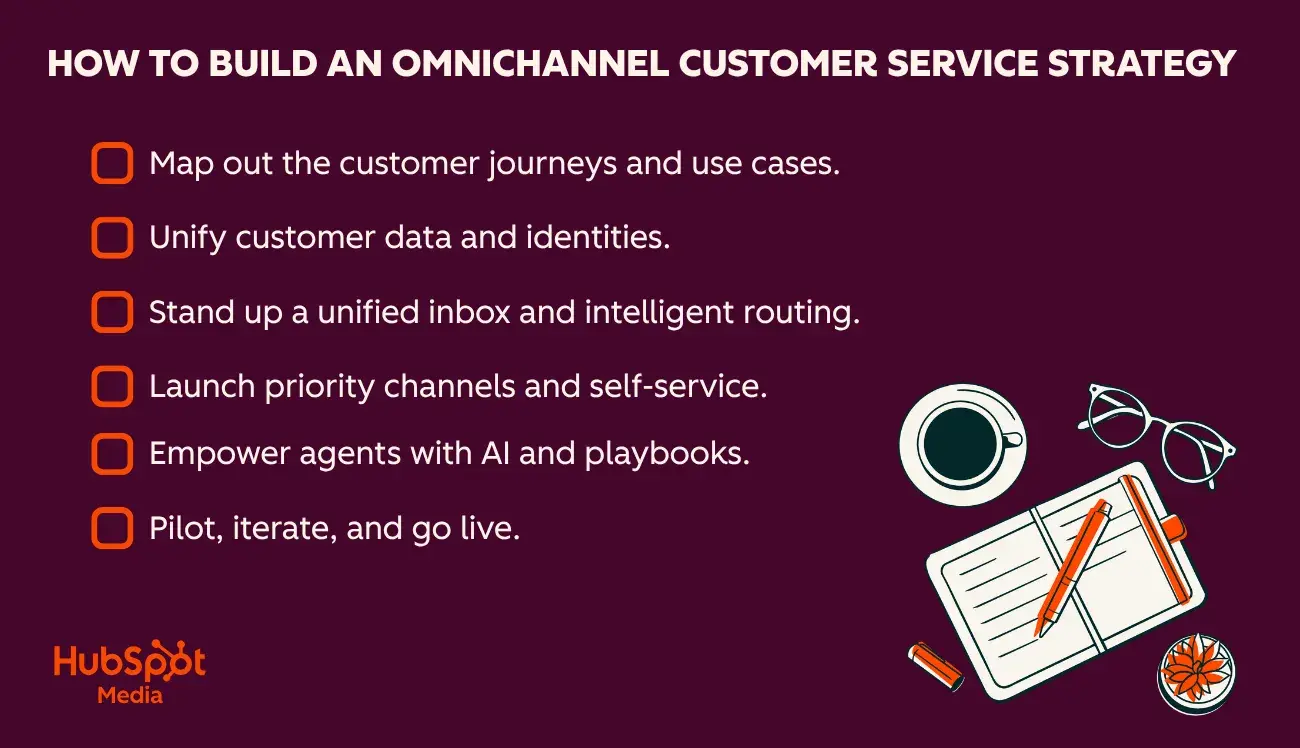
Building a Successful Omnichannel Customer Service Strategy
A well-defined strategy is the bedrock of effective omnichannel customer service. This involves a phased approach, focusing on foundational elements before expanding to new channels.
Mapping Customer Journeys and Use Cases: Understanding every touchpoint in the customer journey and identifying preferred channels at each stage is the first step. Documenting common support use cases helps pinpoint areas of friction and identify opportunities for automation. Incorporating customer feedback is vital, as customers often readily highlight their pain points.

Unifying Customer Data and Identities: The success of an omnichannel strategy relies on complete, unified customer data. Integrating customer data into a centralized platform that connects conversations, purchase history, and support interactions creates a single, comprehensive customer profile. This enables agents to work efficiently and offer personalized support, while customers can move between channels without losing context.
Establishing a Unified Inbox and Intelligent Routing: Once customer data is unified, all support inquiries should flow into a shared inbox. Implementing intelligent routing rules automatically assigns conversations based on factors like issue type, sentiment, or customer tier. This enhances agent efficiency and provides better visibility into the overall support queue.
Launching Priority Channels and Self-Service: It is advisable to launch channels in a phased manner, starting with the channels most frequently used and preferred by customers. Investing in self-service resources such as knowledge bases, FAQs, and AI chatbots is also crucial for empowering customers to find solutions independently.
Empowering Agents with AI and Playbooks: AI should be viewed as a tool to augment human agents, not replace them. AI can assist with intent detection, summarization, and suggested replies, while also automating repetitive tasks. Developing playbooks for common support procedures, including escalation processes and troubleshooting workflows, further enhances agent effectiveness.
Piloting, Iterating, and Going Live: Rolling out an omnichannel strategy in phases, beginning with a pilot program, allows for performance monitoring and quick adjustments. Gathering feedback from both customers and agents is essential for identifying areas of improvement. Once workflows are refined and performance goals are met, the strategy can be expanded across the organization.
Measuring Success: Omnichannel Customer Service Metrics and Governance
Effective governance of an omnichannel strategy requires consistent monitoring of key performance indicators (KPIs) aligned with business outcomes. Metrics such as Customer Satisfaction (CSAT), Customer Effort Score (CES), First Response Time (FRT), Average Resolution Time (ART), and Net Promoter Score (NPS) should be tracked across all channels. Additionally, monitoring the "AI feedback score" on AI capabilities helps gauge agent satisfaction with AI-generated recommendations and identify areas for improvement.
Regular review cadences are crucial for proactive performance management. Weekly Operational Reviews focus on day-to-day support health, monitoring metrics like ticket volume, response and resolution times, and SLA compliance. These reviews typically involve customer service managers, team leads, and operations staff. Monthly Customer Journey Reviews offer a broader perspective on the end-to-end customer experience, analyzing customer feedback, CSAT trends, and channel performance across the entire journey. These reviews often include customer service and experience leadership. Quarterly Strategy and Roadmap Reviews align the omnichannel strategy with broader business goals, examining long-term trends and customer insights. These sessions, attended by senior leadership, inform future investments and strategic planning.
Selecting the Right Omnichannel Customer Service Platform
Choosing the appropriate platform requires a strategic assessment beyond a simple feature checklist. Key questions decision-makers should consider include:
- Channel Support: Does the platform support the channels your customers actively use and prefer, and can it facilitate seamless transitions between them?
- Unified Customer View: Can the platform effectively connect customer conversations with CRM records, purchase history, and other critical business systems to provide agents with a complete customer view?
- Scalability: Will the platform accommodate future business growth, including increased ticket volume, additional channels, and evolving customer expectations?
- Reporting and Analytics: Does the platform offer robust reporting and analytics capabilities to measure cross-channel performance and provide actionable insights in a user-friendly format?
- AI Capabilities: Do the platform’s AI features align with your support strategy, offering high-quality output, strong data privacy, and appropriate governance?
Platforms like HubSpot’s Service Hub offer integrated solutions designed to scale support across channels, unify customer data, and leverage AI and analytics for comprehensive insights.
The Foundation of Future Customer Engagement
Omnichannel customer service represents a fundamental evolution in how businesses interact with their customers. It moves beyond a multichannel approach to create a truly integrated and personalized experience. Success requires careful planning, the adoption of the right technology, and a continuous commitment to improvement. By embracing a well-executed omnichannel strategy, organizations can not only meet but exceed evolving customer expectations, fostering stronger relationships and driving sustainable business growth in the digital age. Connected data serves as the indispensable foundation for this customer-centric future.
About the Author