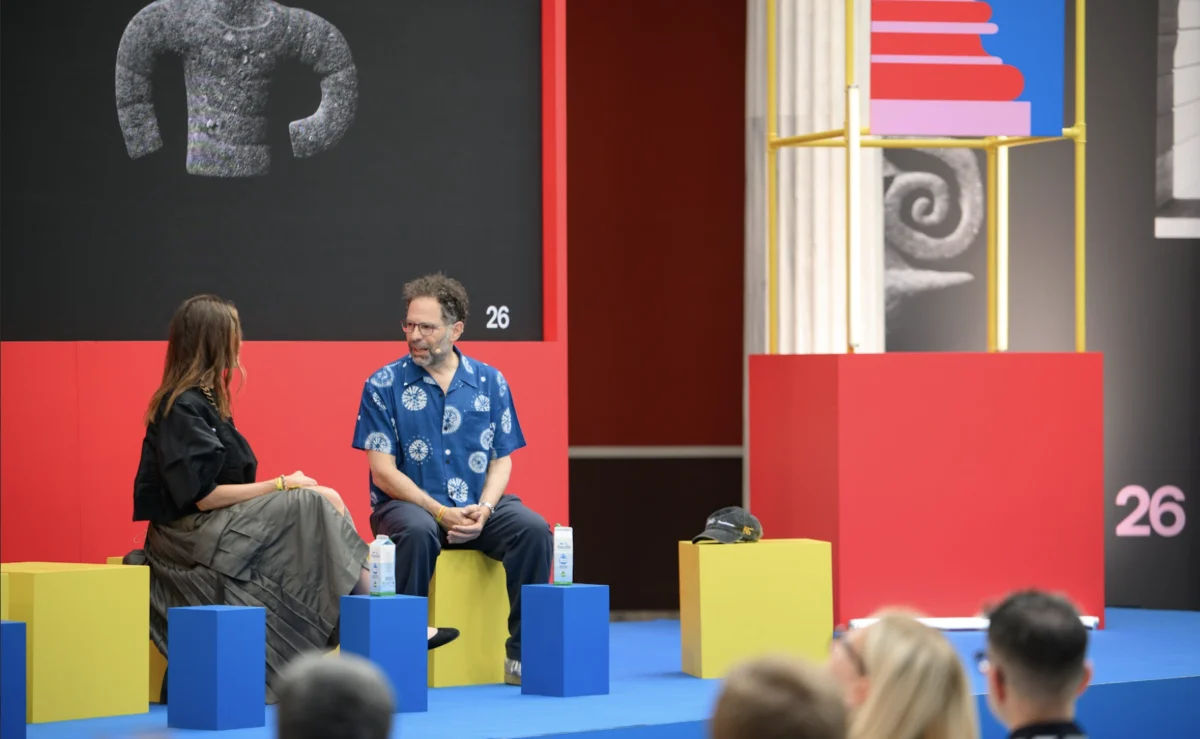
In a candid conversation held amidst the vibrant energy of a tech festival in Athens late last May, Neil Rimer, a co-founder of the influential venture capital firm Index Ventures, articulated a sentiment that has lingered long after the interview: a "strong sense that there will be some sort of a redistribution" of the immense wealth accumulating around artificial intelligence. Rimer elaborated on this prediction, stating, "It’ll either be voluntary or it’ll be involuntary, but it’ll happen, and I hope it’s voluntary," adding his belief that tech leaders "can play a leading role in seeing that through."
While such pronouncements might typically be dismissed as standard populist rhetoric, coming from Rimer, a figure synonymous with the exceptionally successful ventures of Index Ventures over the past three decades, the statement carries significant weight. Index Ventures has a formidable track record, having raised approximately $15 billion from external investors since its inception. In the past year alone, the firm reportedly garnered nearly $9 billion from significant exits, including the initial public offering (IPO) of design platform Figma and Google’s acquisition of cybersecurity firm Wiz.
Rimer, who stepped back from the day-to-day operations of Index Ventures in 2021, now dedicates a substantial portion of his time to Athens, a city deeply connected to his personal life through his wife and children. His attire at the interview—a rumpled button-down shirt and jeans—contrasted with the more conventional sartorial choices of many of his peers, yet his insights resonated with the profound shifts occurring in the technology and philanthropic landscapes.
Beyond his investment acumen, Rimer has actively engaged in philanthropic endeavors. He serves on the board of Endeavor Greece, an organization dedicated to mentoring entrepreneurs in emerging markets. Furthermore, he chaired the board of Human Rights Watch from 2019 to 2025. In a notable act of generosity in late 2021, Rimer, along with his father and brothers, contributed $13 million to McGill University. This significant donation facilitated the renovation of a campus building, now named the Rimer Building, and established a new Institute for Indigenous Research and Knowledges.
Rimer’s comments on redistribution arrive at a particularly interesting juncture for philanthropy, a sector experiencing notable shifts. The Giving Pledge, a 2010 initiative by Warren Buffett and Bill Gates encouraging billionaires to commit half their fortunes to charity, appears to be losing traction. Initial enthusiasm, with 113 families signing in the first five years, has waned considerably. Reports indicate a significant decline in new signatories, with only four families joining in 2024, according to a March New York Times article that highlighted a growing skepticism towards traditional philanthropy among some of the wealthiest individuals in the tech industry. The article also cited Elon Musk’s perspective, who has stated that his businesses "are philanthropy."
This trend extends beyond the Giving Pledge. While total charitable giving in the United States reached a record $592.5 billion in 2024, the number of American households participating in charitable giving has been in decline for five consecutive years, with a 4.5% drop in 2024 alone, according to data from the Stanford Social Innovation Review. In 2000, two-thirds of households made donations; by current estimates, roughly half do. Even affluent households have seen a decrease in their giving rates, falling from 90% in 2017 to 81% last year, according to data compiled by Bank of America and the Lilly Family School of Philanthropy.
The shifting patterns of giving are also reflected within Index Ventures’ own investment portfolio. The firm’s investments include Anthropic, a leading AI research company. Business Insider recently consulted with financial planner Alex Caswell, who noted that many of his newly wealthy clients, particularly those connected to Anthropic and the effective altruism movement, are not prioritizing large charitable commitments. While Anthropic offers to match employee donations of up to 25% of their equity to charity, and some clients utilize this, Caswell observed that the majority are not integrating philanthropy into their long-term financial plans. Instead, their focus is predominantly on angel investing or launching their own ventures. "That’s what I’m seeing more than the desire to become philanthropic," Caswell told Business Insider.
The apparent decline in voluntary giving has predictably coincided with legislative efforts to address wealth concentration. In California, voters are set to decide on a proposed 5% one-time wealth tax targeting the state’s billionaires. In anticipation of such measures, some prominent figures, including Google founders Sergey Brin and Larry Page, have relocated their primary residences to South Florida, potentially to mitigate exposure to such taxes.
The impending IPO of OpenAI in 2027 is also being viewed through the lens of these potential tax implications. Reports suggest that one cynical motivation for the company’s public offering might be to preemptively address the proposed California wealth tax, which, if passed, would assess net worth based on an individual’s global assets as of the end of the current calendar year.
As expected, significant opposition exists regarding wealth redistribution measures of this magnitude. This opposition includes Governor Gavin Newsom and a segment of economists who point to the historical trend of industrialized nations repealing similar wealth taxes since 1990, often after witnessing the departure of their wealthy residents.
Alternative solutions are also being debated, some as controversial as direct taxation. OpenAI has reportedly explored the possibility of granting the federal government a 5% equity stake in the company. While CEO Sam Altman has framed this as a method of sharing AI’s societal benefits with the public, critics perceive it as an attempt to secure political favor in Washington. Historically, Silicon Valley has shown little enthusiasm for incorporating government entities into its ownership structures. Veteran investor Roelof Botha humorously remarked during a previous interview that "I’m from the government, and I’m here to help" are among the "most dangerous words in the world."
The sheer volume of wealth currently concentrated outside traditional philanthropic channels warrants careful consideration. Elon Musk, following SpaceX’s recent IPO, has become the first individual to surpass a $1 trillion net worth. Forbes recognized 45 new AI billionaires in its 2026 rankings, collectively possessing $2.9 trillion, and this figure predates the public offerings of Anthropic and OpenAI. The aforementioned Business Insider report on Anthropic employees highlighted that upon the completion of their respective IPOs, employees of these two companies combined would hold enough wealth to purchase nearly one-third of all homes in the San Francisco metropolitan area.
While this level of wealth concentration may feel unprecedented, its historical extremity is a subject of ongoing debate. The share of wealth held by the top 1% of U.S. households reached 31.7% in the third quarter of the previous year, a record high since the Federal Reserve began tracking this data in 1989. This figure is approximately equivalent to the total wealth held by the remaining 90% of households outside the top decile.
This concentration, however, remains below the 45% peak held by the top 1% during the Gilded Age in 1916. When the focus narrows to the very wealthiest individuals, the disparity becomes more pronounced. Renowned economist Gabriel Zucman calculates that around 1910, at the zenith of the Gilded Age, America’s four largest fortunes constituted a combined 4% of U.S. GDP. In the present day, the equivalent echelon—now comprising 19 households rather than four—commands 14% of U.S. GDP.
Rimer’s dichotomy of voluntary versus involuntary redistribution finds historical parallels in periods of similar wealth concentration in the United States. In 1889, Andrew Carnegie, at the height of the first Gilded Age, published his seminal essay, "The Gospel of Wealth." In it, he argued that wealthy individuals should treat their fortunes as trusts, to be disbursed for the public good during their lifetimes, deeming it a disgrace to die rich. This essay became a foundational text for modern philanthropy and an intellectual precursor to the Giving Pledge.
However, this voluntary approach did not entirely avert the alternative. By the mid-1930s, Louisiana Senator Huey Long garnered significant national support with his "Share Our Wealth" program, advocating for steep taxes on the wealthy to fund a guaranteed income for all Americans. Concerned about losing working-class support to Long, President Franklin D. Roosevelt enacted what the press dubbed the "soak-the-rich tax," which elevated the top marginal income tax rate to as high as 79%. While this legislation redistributed less wealth than Long had envisioned, it stands as a clear historical instance of politically mandated redistribution emerging in response to the failure of voluntary giving to adequately address societal pressures.
Rimer, with his extensive career in the tech industry, is undoubtedly aware of these historical dynamics. What currently fascinates him, however, is the "moral center of tech companies." This fascination traces back to his time as a Stanford undergraduate in 1984, when Apple offered discounted Macintoshes to students. He recalls Steve Jobs and Apple’s other founders being viewed as "heroes" for creating products he believed genuinely benefited the world.
What now troubles him, he shared, is witnessing his own children discuss certain tech companies in a manner reminiscent of how previous generations spoke about defense contractors or cigarette manufacturers—industries often associated with ethical concerns.
Critics may point out that Rimer, as an investor in companies like Anthropic, is a direct beneficiary of the very wealth he suggests will eventually require redistribution. However, he expresses a preference for his fellow beneficiaries to proactively choose to return a portion of their gains, rather than having it mandated through external pressures. Rimer appears to be betting on the expectation that individuals will opt for the "easy way"—voluntary contribution—before historical forces necessitate the "hard way"—forced redistribution.
About the Author